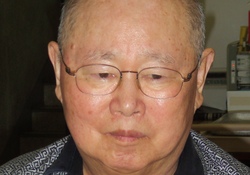
▲ 정길선 박사 ©브레이크뉴스 |
네덜란드 동인도 회사는 본국과 의사소통의 어려움과 더불어 수입 감소에도 높은 배당금 지불로 부채가 늘어나면서 1798년 파산하였다. 동인도 회사의 파산 이후 네덜란드 정부는 네덜란드 무역 종합 상사를 설립하여 인도네시아를 포함한 식민지들과 동남아시아와 일본과의 교역을 맡았다. 이러한 상태는 이후로도 약 150년 간 지속되었다. 동아시아 교역로 개척을 목표로 태평양을 횡단한 네덜란드 무역선 ‘리프데(Liefde)’ 호가 1600년 4월 일본 분고에 표착한 것은, 그 동안 동아시아 진출과 교역권을 독점적으로 행사하던 포르투갈의 시대가 종언을 고하고 네덜란드 시대가 열리는 상징적인 사건이라 볼 수 있다. 당시 쇼군이었던 도쿠가와 이에야스는 예수회 선교사들의 모두 처형 건의를 무시하고 항해사를 직접 접견하고, 서양 정세, 신무기와 전술, 항해술과 조선술을 듣고 고문으로 임명하였다. 당시 쇼군은 권력 기반 강화를 위해 경제력에 최우선을 두고 새로운 교역 통로 개발과 은 추출법 입수를 목표로 스페인에 접근하였으나 스페인의 기피로 네덜란드와의 통상에 나서면서, 1609년 히라도에 상관 설치를 허가하였다.
VOC는 1641년 포르투갈이 떠난 데지마 상관을 받고 독점 무역권과 함께 가격 통제를 면제받는 등 세액을 받게 되었고, 이로써 네달란드는 200여 년간 일본과의 교역을 독점하게 된다. 네덜란드 인들은 선교 없는 교역을 내세워 막부를 설득하고 1641년 포르투갈이 떠난 데지마에 네덜란드 상관을 차렸다. 이후 일본의 유럽인과의 교역은 네덜란드가 독점했다. 데지마와 나가사키를 연결하는 다리로 상품만 오간 것이 아니다. 네덜란드 인들이 선교를 내세우지 않았기 때문에 막부는 데지마를 통해 발달한 서양 학문을 수입하더라도 위험한 기독교 사상이 유입되지 않으리라 기대했다. 에도 막부의 8대 쇼군 도쿠가와 요시무네(徳川吉宗)가 서양 서적의 수입 금지를 완화하면서 다양한 학문 분야의 서적들이 데지마를 통해 폭발적으로 전해졌다. 그러한 이유로 인해 서양 학문을 지칭하는 단어가 남쪽 오랑캐의 학문인 남만학에서 난학(蘭學)으로 바뀌었고, 이를 연구하는 학자들은 ‘지란당(芝蘭堂)’이라는 학술 단체를 만들어 정보를 교류했다.
난학의 도입 초기에 특히 중요한 것은 의학이었다. 교역이 허용된 네덜란드 인이라 해도 상관장과 부상관장이 아니면 데지마를 벗어나 일본에 상륙하는 일이 드물었다. 일본인 역시 통역사와 창녀 등 제한된 인원만 데지마에 들어갈 수 있었다. 하지만 예외적으로 네덜란드 의사는 때때로 홀란드 다리를 건너 일본 고위층의 진료에 참여했고, 일본인 의사도 데지마에 와서 의학을 배웠다. 일본인 의사들은 서양 의학을 배우면서 인간의 육체가 음양오행설에 기반한 동양의학과는 전혀 다르고 <타펠 아나토미아(Tafel Anatomia)>와 정확하게 일치한다는 것에 충격을 받게 된다. 당시 일본인 의사 스기타 겐파쿠는 네덜란드어로 된 의학서의 인체 해부도를 보고 중국 의학서와 비교해 얼마나 정확한 것인지 알기 위해 1771년에 처형된 죄인의 인체 해부에 입회했다. 그 결과, 그는 중국 의학서가 얼마나 많이 오류가 있는지 알 수 있었다. 그는 해부 현장에서 돌아오는 길에 네덜란드어로 된 해부학 책을 일본어로 번역하기로 다짐했다. 스기타와 그의 동료들이 1774년에 일본어로 출간한 <해체신서(解體新書)> 5권이 그것이었다. 이 책의 출판으로 인해 일본의 근대가 시작되었다는 평가도 있다. 일본 도쿄대학의 전신이 이 때 설치된 난학 연구소였다.
막부 역시 데지마를 무역 창구로만 사용하지 않았다. 그들은 네덜란드에 교역을 허용하면서 매년 서양 정세를 집대성한 <오란다풍설서(オランダ風説書)>를 작성해 보고하도록 요구했다. 1641년 처음 작성한 <오란다풍설서(オランダ風説書)>는 유럽 각국 뿐 아니라 인도, 청나라, 미국의 정보도 기재되어 쇄국 기간 중 막부가 국외 사정을 파악하는 데 중요한 구실을 했다. 일본 경제는 16~17세기에 막대한 은과 자기의 수출로 급격하게 성장했다. 더불어 이 때부터 교역에 대해 일본은 동남아시아 무역 경쟁에 본격적으로 뛰어 들어 해상 실크로드의 중심지였던 말라카까지 진출하고 이후 바타비아, 테르나테(Ternate) 등으로 넓혀 나갔다. 그리고 필리핀의 마닐라와 베트남의 호이안을 거점으로 중계무역을 했다. 네덜란드 동인도 회사의 데지마 무역관은 1854년 미국과 일본의 화친 조약으로 일본이 개항될 때까지 유럽과의 무역을 독점하며 막대한 수익을 올렸다.
그리고 일본의 쇄국으로 알려진 213년 동안 네덜란드와 일본 사이에 707척의 선박이 왕래했다. 일본은 주로 은과 구리와 자기를 수출한 반면에 일본에는 유럽 상품뿐 아니라 서구 지식이 밀려 들어왔다. 특히 약 1만 권의 서양 서적, 특히 네덜란드 서적이 수입되었다. 일본 사람들은 네덜란드의 다른 이름인 홀랜드(Holland)를 한자로 ‘화란(和蘭)’이라 불렀다. 일본에서 ‘화란 학문’ 곧 ‘난학(蘭學)’의 인기가 급상승했다. 네덜란드 서적을 통해 서양을 연구하는 학문이 난학(蘭學)인 것이다. 일본인 통역사와 상인들이 네덜란드 무역관의 상인들과 접촉하며 서양 문물을 수용하기 시작했다. 이러한 과정에서 네덜란드 무역관의 의사와 지식인들은 자연스럽게 일본 청년들과 교제하게 되었다. 당시 네덜란드 의사 대부분이 유태인이었다. 이후 에도를 중심으로 일본의 서양 문물 수용이 빠르게 진행되어 1800년대 초에는 난학 전문가들이 1,000여 명을 넘어섰다. 서양의 많은 문물이 난학을 통해 일본에 들어왔다. 그 이후 명칭도 ‘난학에서 양학(洋學)으로, 이후 서학(西學)’ 등으로 다양하게 불리어졌다.
일본은 이렇게 일찍이 서구 문물을 받아들여 세계 동향을 제대로 인식할 수 있었다. 에도 막부는 나가사키의 네덜란드 인들을 1년에 한 번씩 불러들였다. 이 때 막부는 그들이 보고하는 <오란다풍설서>를 통해 국제 정세를 파악할 수 있었다. 이후 메이지 정부는 난학을 통해 모든 정보를 얻었다. 19세기 메이지 시대에 개방과 개항, 막부 타파, 구습 철폐, 부국 강병론 등을 주장하여 일본 근대화의 기수로 불리는 후쿠자와 유키치(福澤諭吉)는 일본의 장래가 젊은이들의 학문 탐구에 있다고 보고 게이오 대학(慶應大學)을 설립했으며 산케이 신문(産経新聞)의 전신인 지지신보(時事新報)를 창립했다. 그리고 그는 일본은 아시아를 탈피하여 구미 열강의 일원이 되어야 한다는 이른바 ‘탈아입구론(脫亞入歐論)’을 주창했다. 이렇게 난학은 조공과 책봉의 중화사상 정치 질서와 결별하고 서구를 지향하는 일본 근대화의 출발점이었다. 이와 같이 ‘탈아론(脫亞論)’은 후일 대동아공영권과 태평양전쟁의 사상적 출발점이었다.
*필자/ 정길선.
노바토포스 회원, 역사학자, 고고인류학자, 칼럼니스트, 러시아 과학아카데미 유라시아 고고인류학연구소 연구교수.
*아래는 위 기사를 '구글 번역'으로 번역한 영문 기사의 [전문]입니다. '구글번역'은 이해도 높이기를 위해 노력하고 있습니다. 영문 번역에 오류가 있을 수 있음을 전제로 합니다.<*The following is [the full text] of the English article translated by 'Google Translate'. 'Google Translate' is working hard to improve understanding. It is assumed that there may be errors in the English translation.>
the trade of the shogunate in the Netherlands and Japan, the prevalence of 蘭
columnist Jeong Gil-sun
The Dutch East India Company went bankrupt in 1798 as its debt increased due to high dividend payments despite a decrease in imports as well as difficulties in communicating with its home country. After the bankruptcy of the East India Company, the Dutch government established the Dutch General Trading Corporation, which took charge of trading with colonies including Indonesia, Southeast Asia, and Japan. This condition continued for about 150 years thereafter. The arrival of the Dutch trading ship 'Lifde', which crossed the Pacific Ocean to Japan's Bungo in April 1600 with the aim of developing an East Asian trading route, can be seen as a symbolic event that the era of Portugal, which has been exclusively exercising its entry into and trade rights in East Asia, came to an end and the Dutch era opened. Tokugawa Ieyasu, the shogun at the time, ignored the recommendations of execution of all the Jesuit missionaries, met the sailors in person, and appointed him as an advisor after hearing about the Western situation, new weapons and tactics, navigation and shipbuilding techniques. At that time, the shogun approached Spain with the aim of developing a new trade channel and obtaining silver extraction methods to strengthen his power base, but due to Spain's avoidance, he allowed the establishment of a trading post at Hirado in 1609.
The VOC was given tax money such as receiving Dejima Corporation, which Portugal left in 1641, and being exempted from price control along with exclusive trading rights, which allowed the Netherlands to monopolize trade with Japan for more than 200 years. The Dutch persuaded the shogunate by suggesting trade without missionary work and established a Dutch Corporation in Dejima, which Portugal left in 1641. Since then, Japan's trade with Europeans was monopolized by the Netherlands. Products were not the only bridge connecting Dejima and Nagasaki. As the Dutch did not pursue missionary work, the shogunate expected that importing Western studies developed through Dejima would not bring in dangerous Christian ideas. As Yoshimune Tokugawa, the eighth generation of the Edo Shogunate, eased import ban on Western books, books in various disciplines were delivered explosively through Dejima. For this reason, the word referring to Western studies has changed from Nammanhak, a study in southern barbarians, to 蘭, and scholars studying this changed to form an academic organization called 芝蘭 to exchange information.
In the early days of the introduction of orchid, medicine was particularly important. Even the Dutch, who were allowed to trade, rarely landed in Japan after leaving Dejima unless it was the commander and the deputy director. Only a limited number of Japanese people, such as interpreters and prostitutes, were allowed to enter Dejima. However, exceptionally, Dutch doctors sometimes crossed the Holland Bridge to participate in the treatment of high-ranking Japanese people, and Japanese doctors also came to Dejima to learn medicine. As Japanese doctors learn Western medicine, they are shocked that the human body is completely different from oriental medicine based on the theory of yin and yang and exactly matches with "Tafel Anatomy". At that time, Japanese doctor Sugita Genpaku attended the human anatomy of a executed sinner in 1771 to see how accurate it is compared to Chinese medical books by looking at the human anatomy diagram of the medical book in Dutch. As a result, he could see how many errors there were in the Chinese medical book. On his way back from the dissection site, he resolved to translate the anatomical book in Dutch into Japanese. It was the five volumes of "The 解 Book", published in 1774 in Japanese by Sugita and his colleagues. There is also an evaluation that the modern Japanese era began due to the publication of this book. The predecessor of the University of Tokyo in Japan was the Nanology Research Institute established at this time.
The shogunate also did not use Dejima only as a trading channel. They requested the Netherlands to prepare and report the オランダ風説 Book, which compiled Western situations every year while allowing trade. The オランダ風説 Book, which was first written in 1641, also contained information on India, the Qing Dynasty, and the United States as well as European countries, and played an important role in the shogunate's understanding of foreign circumstances during the period of isolation. In the 16th and 17th centuries, the Japanese economy grew rapidly with enormous silver and porcelain exports. In addition, from this time on, Japan earnestly entered the trade competition in Southeast Asia, expanded to Malacca, the center of the maritime silk road, and later expanded to Batavia and Ternate. It also carried out relay trade based on Manila in the Philippines and Hoi An in Vietnam. The Dutch East India Company's Dejima Trading Center made enormous profits by monopolizing trade with Europe until Japan opened its port in 1854 due to the Treaty of Peace between the United States and Japan.
And during 213 years, known as the isolation of Japan, 707 ships traveled between the Netherlands and Japan. Japan mainly exported silver, copper, and porcelain, while Japan was flooded with not only European goods but also Western knowledge. In particular, about 10,000 Western books, especially Dutch books, were imported. The Japanese called Holland, another name of the Netherlands, '蘭' in Chinese characters. In Japan, the popularity of 'Hwaran Studies' or '蘭 Studies' skyrocketed. Nanhak is the study of the West through Dutch books. Japanese interpreters and merchants came into contact with merchants at the Dutch trade center and began to accept Western culture. During this process, doctors and intellectuals at the Dutch trade center naturally became acquainted with young Japanese people. At that time, most Dutch doctors were Jewish. Since then, Japan's acceptance of Western culture, mainly in Edo, has progressed rapidly, and in the early 1800s, the number of Nanhak experts exceeded 1,000. Many Western cultures entered Japan through Nanhak. Since then, the name has been variously called 'Nanhak to Western Studies' and later Western Studies.
Japan was able to properly recognize world trends by accepting Western culture so early. Once a year, the Edo Shogunate brought in the Dutch from Nagasaki. The shogunate was then able to grasp the international situation through their report, The Landa Pungseol. The Meiji government later learned all the information through difficulties.
Yukichi Fukuzawa (福澤諭吉), who was called the flag bearer of Japan's modernization during the Meiji era for his insistence on opening up and opening ports, breaking down shogunate, abolishing old customs, and strengthening the nation's wealth during the 19th century, founded Keio University (慶應 University), believing that Japan's future lies in the academic exploration of young people, and founded the Jiji Sinbo, the forerunner of the 産経 聞. He also advocated the so-called "脫亞入歐 theory," which called for Japan to break away from Asia and become a member of the Western powers. Thus, Nanhak was the starting point of Japan's modernization, which broke away from the Chinese ideological and political order of tributes and Chaekbong, and pursued the West. Thus, the "脫亞 theory" was the ideological starting point of the later Greater Asia Co-prosperity Zone and the Pacific War.