북한 비핵화는 물 건너갔다는 게 전문가들의 중론이다. 미국이 한국에 대하여 ‘민감국가 지정’에 대한 여야 시각이 조기대선과 맞물려 첨예하게 대립하고 있다. 국가안보가 어느 한 개인이나 정파를 위하여 이용당하는 게 바람직한가? 미국이 어느 날 국제경찰을 포기하고 한미동맹을 파기 더 나아가 주한미군 철수를 단행한다면 북핵 위기 앞에 어떤 대안이 있는가? 정치권은 답을 내놓아야 한다.
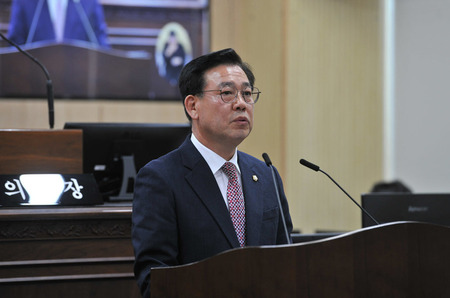
 ▲ 임종득 의원은 “그동안 북한의 비핵화를 위해 많은 노력을 기울여왔음에도 북한은 핵을 포기하지 않고 위협을 고도화하고 있어 우리도 새로운 전략이 필요한 시점”이라며 “국회 국방위원회 위원으로서, 북핵 위협으로부터 국민을 안전하게 지켜낼 수 있도록 역할을 다하겠다.”고 밝혔다. © 김충열 정치전문기자 |
국민의힘 임종득 국회의원(경북 영주시영양군봉화군)은 현실로 다가오는 북핵 위협의 효과적인 대응 방안을 모색하기 위해 작년 8월에 이어 20일(목) ‘북핵 위협 현실화에 따른우리의 핵 대응 전략’2차 토론회를 개최했다.
우크라이나 전쟁을 겪으며 글로벌 안보환경은 2차 세계대전 이후 가장 위태로운 격변기를 겪고 있다. 중국도 빠르게 핵 전력을 증강하고 있고 러시아는 노골적으로 핵 위협을 일삼아 왔다. 심지어 미국 트럼프 대통령은 취임 첫날부터 북한에 대해 핵보유국이라는 표현을 사용하며 세계적으로 파장을 일으키기도 했다.
트럼프-젤렌스키 대통령 간 정상회담은 국제 사회에 큰 충격을 주었다. 향후 트럼프 대통령이 추동하는 외교 질서 변화에 따라 미국의 동맹국들이 독자 핵무장에 나설 가능성이 있다는 가능성도 제기되고 있다. 여러 세대에 걸쳐 구축한 동맹을 트럼프 정부가 송두리째 흔든다면 동맹국들은 미국의 지속적인 보호를 전제로 한 선택의 일부를 재고할 수밖에 없다는 주장이다.
북중러, 핵무장...한미동맹의 최전선인 대한민국에 비핵화가 美 국익에 부합한가?
우리나라도 1975년 NPT에 가입했지만 북중러의 핵확산 기조가 계속되고 있는 상황에 아무런 대책없이 미국만 믿고 있다면 우크라이나의 현재가 우리의 미래가 되지 않는다는 보장이 없다. 이를 위해 트럼프 2기 행정부에서도 재확인한 북한의 비핵화 목표가 잘 유지될 수 있도록 외교 총력전을 전개함은 물론 북한 탄도미사일 요격을 위한 무기체계 전력화에도 힘을 기울여야 한다는 주장이 힘을 받고 있다.
더욱 가까워진 북핵 위협에 대한 대응 방안을 모색하기 위해 국회와 각계 전문가들이 힘을 모았고, 22대 국회 국방위원회 위원인 임종득 의원이 국제정치적 관점, 군사적 관점, 과학 기술적 관점에서 바라본 북핵 대응 방안을 논의하고 정책에 반영하기 위한 움직임이 재조명되고 있다.
이날 토론회는, 핵무장 당위성 및 추진방법’을 주제로 한 김민석 서울안보포럼 이사장의 기조연설로 시작됐다. 이어 송승종 대전대 군사학과 특임교수가‘트럼프 2.0 시대의 한미동맹 전망과 핵 확장 억제의 실효적 보장 방안’을, 정성장 세종연구소 한반도전략센터장이‘북한 핵 위협에 대한 우리의 핵전략’을, 최승우 서울안보포럼 북핵대응센터장이‘북한의 핵전략 변화와 군사적 대응방안’을, 함형필 국방연구원 안보전략연구센터장이‘기술·전략적 측면에서의 핵무장의 선결 조건과 과정’을 주제로 발제를 했고, 이하일 조선일보 외교안보에디터, 이병욱 제주대학교 교수. 서울안보포럼 정찬권 박사가 토론을 진행했다.
임종득 의원은 “그동안 북한의 비핵화를 위해 많은 노력을 기울여왔음에도 북한은 핵을 포기하지 않고 위협을 고도화하고 있어 우리도 새로운 전략이 필요한 시점”이라며 “국회 국방위원회 위원으로서, 북핵 위협으로부터 국민을 안전하게 지켜낼 수 있도록 역할을 다하겠다.”고 밝혔다. hpf21@naver.com
* 아래는 위 기사를 '구글 번역'으로 번역한 영문 기사의 [전문]입니다. '구글번역'은 이해도 높이기를 위해 노력하고 있습니다. 영문 번역에 오류가 있을 수 있음을 전제로 합니다.
*The following is [the full text] of the English article translated by 'Google Translate'. 'Google Translate' is working hard to improve understanding. It is assumed that there may be errors in the English translation.
Rep. Lim Jong-deuk holds 2nd discussion on <Our Nuclear Response Strategy in Response to the Realization of North Korea's Nuclear Threat>
Is denuclearization in South Korea, the front line of the ROK-US alliance, in line with the national interest of the United States?
The general opinion of experts is that North Korea's denuclearization is out of the question. The ruling and opposition parties' views on the US's designation of South Korea as a 'sensitive country' are sharply divided, coinciding with the early presidential election. Is it desirable for national security to be used for a single individual or political party? If the US one day abandons its role as an international policeman, breaks the ROK-US alliance, and even withdraws US troops from South Korea, what alternatives are there in the face of the North Korean nuclear crisis? The political world must provide an answer.
Rep. Lim Jong-deuk of the People's Power Party (Yeongju-si, Yeongyang-gun, Bonghwa-gun, Gyeongbuk) held the 2nd discussion on 'Our Nuclear Response Strategy in Response to the Realization of North Korea's Nuclear Threat' on Thursday, the 20th, following August of last year, to seek effective countermeasures against the North Korean nuclear threat that is becoming a reality.
The global security environment is experiencing the most dangerous upheaval since World War II as a result of the Ukrainian War. China is also rapidly increasing its nuclear power, and Russia has been openly making nuclear threats. Even US President Trump caused a stir worldwide by using the expression “nuclear state” regarding North Korea on the first day of his inauguration.
The Trump-Zelensky summit shocked the international community. There is also the possibility that US allies may independently arm themselves with nuclear weapons in accordance with the changes in diplomatic order promoted by President Trump in the future. The argument is that if the Trump administration shakes up the alliances built over several generations, allies will have no choice but to reconsider some of the choices that presuppose the continued protection of the US.
North Korea, China, and Russia are armed with nuclear weapons... Is denuclearization of South Korea, the front line of the ROK-US alliance, in the interests of the US?
Although our country joined the NPT in 1975, if we rely solely on the US without any countermeasures in the face of the ongoing nuclear proliferation trend by North Korea, China, and Russia, there is no guarantee that Ukraine’s present will not become our future. To this end, the argument that we should not only deploy all-out diplomatic efforts to ensure that the goal of denuclearization of North Korea, which was reaffirmed during the second Trump administration, is well-maintained, but also focus on strengthening the power of weapons systems to intercept North Korean ballistic missiles is gaining strength.
The National Assembly and experts from various fields have joined forces to seek countermeasures against the increasingly imminent North Korean nuclear threat, and the movement of Representative Lim Jong-deuk, a member of the 22nd National Assembly Defense Committee, to discuss countermeasures against North Korea’s nuclear weapons from international political, military, and scientific and technological perspectives and to reflect them in policy is being reexamined.
The discussion began with a keynote speech by Kim Min-seok, Chairman of the Seoul Security Forum, on the topic of “The Justification for Nuclear Armament and How to Promote It.” Next, Professor Song Seung-jong of the Department of Military Science at Daejeon University gave a presentation on ‘The Prospects for the ROK-US Alliance in the Trump 2.0 Era and Effective Guarantees of Nuclear Expansion Deterrence,’ Director Jeong Seong-jang of the Korean Peninsula Strategy Center at the Sejong Institute gave a presentation on ‘Our Nuclear Strategy for the North Korean Nuclear Threat,’ Director Choi Seung-woo of the Seoul Security Forum’s North Korean Nuclear Response Center gave a presentation on ‘Changes in North Korea’s Nuclear Strategy and Military Response Measures,’ and Director Ham Hyeong-pil of the Security Strategy Research Center at the Korea Institute for Defense Analyses gave a presentation on ‘Prerequisites and Processes for Nuclear Armament in Technological and Strategic Aspects.’ Lee Ha-il, Foreign Affairs and Security Editor at the Chosun Ilbo, Professor Lee Byeong-wook of Jeju National University, and Dr. Jeong Chan-kwon of the Seoul Security Forum moderated the discussion.
Rep. Lim Jong-deuk said, “Despite our efforts to denuclearize North Korea, North Korea is not giving up its nuclear weapons and is intensifying its threats, so we also need a new strategy,” and added, “As a member of the National Assembly’s National Defense Committee, I will do my best to protect our people from the North Korean nuclear threat.” hpf21@naver.com