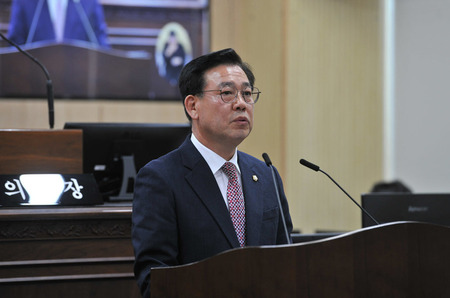
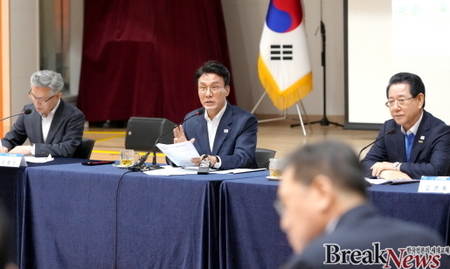
▲ 서천군의회 한경석 의원이 제331회 정례회 행정사무감사에서 지방정부 발주 공사의 고질적 문제점을 지적하고, 전 과정에 걸친 개선 방안을 조속히 마련할 것을 촉구했다. © 서천군의회 한경석 의원실 제공 |
“군민의 혈세가 투입되는 공공공사는 민간보다 더 투명하고 책임감 있게 추진되어야 합니다.”
서천군의회 한경석 의원이 지방정부 발주 공사의 구조적 부실과 반복되는 하자 문제를 강도 높게 비판하며, 계획부터 사후관리까지 전 과정을 대대적으로 혁신할 것을 촉구하고 나섰다.
한 의원은 최근 열린 제331회 정례회 행정사무감사에서 “군 발주공사는 ‘눈먼 공사’라는 오명이 있을 정도로 예산 낭비와 품질 저하에 대한 우려가 끊이지 않는다”고 지적하며, “민간 공사에 비해 부가가치는 높지만, 하자가 발생해도 대충 넘어가는 관행이 여전히 뿌리 깊다”고 목소리를 높였다.
이어 그는 공공 공사의 신뢰 회복을 위한 다섯 가지 핵심 개선 방향을 제안하며, 실효성 있는 제도적 대책 마련을 군에 강력히 요구했다.
한 의원은 “기초조사와 수요 예측이 부실하면, 시작부터 삐걱거리는 공사가 될 수밖에 없다”며, 지질조사, 수요분석 등의 철저한 선행조사와 외부 전문가의 설계 참여를 통해 비용 대비 효과 분석을 강화해야 한다고 강조했다. 계획 단계부터의 정밀한 준비 없이는 품질 확보도 불가능하다는 지적이다.
공공입찰의 낙찰 방식에도 날을 세웠다. 그는 “최저가 낙찰제에만 의존하면, 결과적으로 저가 시공으로 인한 하자가 반복될 수밖에 없다”며, 담합을 방지할 수 있는 투명한 입찰 시스템 운영과 더불어, 지역업체에 대한 공정한 기회 제공이 병행되어야 한다고 주장했다.
이어, 현장 품질 관리를 위해서는 기술직 공무원의 전문성을 높이고 은퇴한 민간 전문가의 경험을 적극 활용할 필요가 있다고 제언했다. 아울러 “중간 점검과 단계별 검수 절차를 제도화하고, 감리의 독립성과 책임성을 확보해야 한다”고 덧붙였다.
시공 이후의 관리 부실 역시 문제로 지적됐다. 한 의원은 하자 발생 시 대응 체계가 미흡한 현실을 짚으며, “주민이 직접 하자를 제보할 수 있는 신고 채널을 활성화하고, 하자 발생 시 신속히 조치할 수 있는 행정적 기반을 갖춰야 한다”고 강조했다.
끝으로, 한 의원은 하자 이력이 있는 업체에 대해 입찰 제한 등의 페널티를 강화하고, 우수 사례는 공유하고 부실 사례는 투명하게 공개해야 한다고 주장했다. 나아가 외부 감사와 주민 감사청구 제도를 보다 활발히 운영해 공공성의 실질적 회복이 필요하다고 덧붙였다.
한경석 서천군의원은 “지금처럼 대충 설계하고, 대충 시공하며, 하자도 대충 넘어가는 구조가 반복된다면 예산은 줄줄 새고, 군민의 신뢰는 무너질 수밖에 없다”고 경고하면서, “이제는 품질과 책임이 살아 있는 공공 공사 시스템을 만들어야 할 때”라며, 군의 강력한 의지와 실천을 촉구했다.
*아래는 위 기사를 '구글 번역'으로 번역한 영문 기사의 [전문]입니다. '구글번역'은 이해도를 높이기를 위해 노력하고 있습니다. 영문 번역에 오류가 있을 수 있음을 전제로 합니다.<*The following is [the full text] of the English article translated by 'Google Translate'. 'Google Translate' is working hard to improve understanding. It is assumed that there may be errors in the English translation.>
“Public works projects that involve taxpayers’ money should be carried out more transparently and responsibly than private works projects.”
Seocheon County Council member Han Kyung-seok strongly criticized the structural incompetence and repeated defects in local government-commissioned construction projects, and called for a major reform of the entire process from planning to aftercare.
During the 331st regular session of the administrative audit held recently, Assemblyman Han pointed out that “there are endless concerns about budget waste and quality deterioration in county-commissioned construction projects to the point where they have the stigma of being ‘blind construction projects,’” and raised his voice, saying, “Although the added value is higher than private construction projects, the practice of glossing over defects is still deeply rooted.”
He then proposed five key improvement directions for restoring trust in public works projects, and strongly requested that the county establish effective institutional measures.
One lawmaker emphasized that “if the basic survey and demand forecast are poor, the construction will inevitably be shaky from the start,” and emphasized that cost-effectiveness analysis should be strengthened through thorough preliminary surveys such as geological surveys and demand analysis and the participation of external experts in design. He pointed out that quality assurance is impossible without precise preparation from the planning stage.
He also criticized the bidding method of public procurement. He said, “If we rely only on the lowest bid system, defects due to low-cost construction will inevitably be repeated,” and insisted that a transparent bidding system that can prevent collusion should be operated, along with providing fair opportunities to local companies.
He then suggested that in order to manage on-site quality, it is necessary to enhance the expertise of technical civil servants and actively utilize the experience of retired private experts. He added, “We should institutionalize intermediate inspections and step-by-step inspection procedures, and secure independence and responsibility for supervision.”
Poor management after construction was also pointed out as a problem. One member of the National Assembly pointed out the reality that the response system in the event of a defect is inadequate, and emphasized, “We need to activate a reporting channel where residents can directly report defects, and establish an administrative foundation that can take swift action when a defect occurs.”
Finally, one member of the National Assembly argued that penalties such as bidding restrictions should be strengthened for companies with a history of defects, that best practices should be shared, and that poor practices should be transparently disclosed. Furthermore, he added that external audits and the resident audit request system should be operated more actively to restore publicness.
Han Gyeong-seok, a member of the Seocheon County Assembly, warned, “If the current structure of roughly designing, roughly constructing, and roughly ignoring defects continues, the budget will continue to leak out, and the trust of the county residents will inevitably collapse.” He added, “It is time to create a public construction system where quality and responsibility are alive,” and urged the county to have a strong will and practice.
원본 기사 보기:브레이크뉴스대전세종충청