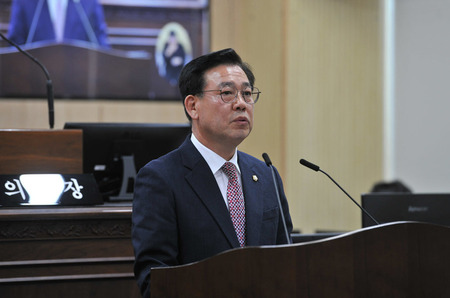
▲ 필자/정길선 박사 ©브레이크뉴스 |
폴란드 점령군이 항복하고 모스크바가 해방되자, 국민군 총사령관 포자르스키(Pozarski) 공작은 이듬해인 1613년에 새 정부를 구성하기 위해 젬스키소보르를 소집했다. 러시아 역사상 모든 자유 계급(All free classes)의 대표가 처음 참석한 것으로 평가되는 이 국민 의회는, 로마노프 집안의 17세 소년인 미하일 로마노프(Mikhail Romanov)를 차르에 선출하여 로마노프 왕조를 출발시켰다. 이 때는 우리 역사에서 볼 때 조선 왕조에 해당하고 광해군 시기로 생각된다. 미하일 로마노프는 이반 Ⅳ세의 첫 번째 황후의 오빠의 손자이다.
그는 최고 통치자가 되기에는 마음이 약한 사람이었다고 한다. 그의 즉위와 더불어 그동안 폴란드에 인질로 잡혀 있던 부친 필라레트 로마노프(Filaret Romanov)가 돌아와 1613~1633년의 기간에 공동차르(Cotsar)로 선언되었다. 로마노프 왕조는 이처럼 국민군과 그리고 비교적 광범위한 계층의 이익을 대표한 국민 의회에 의해 탄생되었다. 그러나 그 통치자들은 국민과의 협조를 통한 통치보다는 모스크바 대공국 때 굳어진 전제 정치에 의존했다.
미하일의 즉위 때부터 약 10년 동안 왕조의 기반이 불안정한 상태에서 젬스키소보르는 해마다 개최되었다. 그러나 왕조 초기의 문제가 어느 정도 안정 되자 차르는 젬스키소보르를 멀리하기 시작했고, 1670년대 이후에는 거의 소집하지 않았다. 일정한 선출 방식이 마련된 예도 전혀 없었고, 소집될 때마다 구성원의 사회적 성격도 달라졌다. 귀족이나 향신(鄕紳)도 관료 기구로의 충원을 더 희망했고 대의 기구의 발전에는 관심이 없었다. 이로써 러시아는 전제정치로 치닫게 되는데, 만일 로마노프 왕조의 초기 지도자들이 젬스키소보르를 발전시켜 나가고, 그 왕조 탄생의 토대로 자리 잡았던 국민과의 협력을 중시했더라면 러시아의 역사와 세계의 역사는 크게 달라졌을 것으로 생각된다.
로마노프 왕조의 기원에 대해서는 여전히 논란 속에 있지만, 모스크바 귀족 가문 중의 하나로 보는 설이 유력하다. 그러나『러시아연대기』에 따르면 로마노프 가문의 선조는 ‘코빌라(암말)’ 라는 별칭을 가진 안드레이 이바노비치(Andrei Ivanovic)이다.
그는 1347년 벨리키 블라디미르 및 모스크바 공후였던 시메온 이바노비치 고르디(Simeon Ivanovic Gordi)를 위해 봉직한 인물이었다. 그의 후손인 표트르 니키티치 자하린(Piotr Nikitic Jaharin), 차르 미하일 표도로비치(Milkail Piodrvic)의 부친인 총주교 필라레트(Pillaret)는 이를 기리기 위해 그들의 이름과 부칭에서 ‘로마노프(Romanov)’라는 성(姓)을 정한 것에서 로마노프 가문의 역사가 시작되었던 것으로 보고 있다.
로마노프 가문이 세간의 주목을 받게 된 것은 16세기 류리크 왕조의 인척이 되면서부터이다. 1547년 로만 유리예비치의 딸 아나스타시야 로마노브나 자하리나(Romanov Jaharina)가 이반 4세의 왕후가 된 것이다. 이러한 연유로 류리크 왕조가 절멸하고 왕위계승 문제가 대두되었을 때 로마노프 가문은 왕권 경쟁의 후보로서 이름을 올리게 되었다. 1613년 필라레트의 아들 미하일 표트르비치 로마노프가 새로운 왕으로 선출됨으로써 로마노프 왕조의 통치가 시작되었다.
로마노프 왕조의 통치는 근본적으로 전제군주제의 기틀 안에서 이루어졌다. 섭정이나 측근 정치에 의존하는 시기도 있었고, 재능 있는 인물들이 영향력을 발휘하기도 했으나 궁극적으로 모든 국가 사안은 군주의 자의적 판단에 따라 최종적으로 결정되었다. 따라서 군주 개인의 성향과 능력에 따라 국가 발전의 행로가 결정되었다고 해도 과언이 아니다. 전제정이 가지는 이러한 특성으로 인해 모든 계층의 구성원들이 ‘아버지 차르’의 권위주의적 지배에 의지하는 가부장적 국가형태가 조성되었다.
전제정치와 함께 로마노프 왕조의 정치 체제를 지탱한 것은 관료제였다. 거대한 국가를 통치하기 위해서는 군주를 위해 복무할 관료들의 참여가 불가피했다. 전제정의 행정실무를 담당한 관료들은 대부분 귀족 계층이었다. 이들 귀족 관료들의 부패와 피지배 계층과의 갈등은 원활한 국가 통치를 저해하는 주된 원인이었다. 따라서 개혁의 시기마다 이러한 문제들을 해결하고 행정의 비효율성을 극복하기 위한 시도들이 이어졌다. 왕조의 영토가 확장됨에 따라 중앙과 지방을 아우르는 효율적인 관료제 확립은 국가 발전의 필수적 요소였다.
로마노프 왕조가 시작된 당시 러시아의 영토는 유럽러시아 지역과 예니세이 강 서안의 서부 시베리아 지역으로 한정되어 있었다. 로마노프 왕조 초기의 대외 정책은 이른바 ‘동란 시대’로 알려진 폴란드-스웨덴과의 전쟁과 침략으로 함락된 북서부 지역의 영토 회복과 남부 국경 지대의 국방력 강화에 집중되었다. 초기 통치자들은 군사력 강화 정책을 통해 스웨덴, 폴란드에 대항했으나 큰 성과는 거두지 못하였다. 반면, 시베리아의 식민지 개척은 성공적으로 이끌어 상당한 영토 확장을 이루어냈다.
한편 이러한 로마노프 왕조가 발전해 나가기 위해서는 해양으로 진출할 수 있는 출구 확보가 관건이었다. 따라서 북서부의 스웨덴, 서부의 폴란드, 남부의 오스만투르크와의 관계는 러시아 대외 정책에서 해결해야 할 근본적인 문제였다. 표트르 1세와 예카테리나 2세는 이러한 문제들을 성공적으로 해결함으로써 러시아를 유럽의 주요 국가로 성장시킬 수 있었다. 표트르 1세는 오스만투르크, 스웨덴과의 전쟁을 통해 아조프 해 연안 지역과 잉구리야, 카렐리야 일부, 에스트란디야(Esttandia), 리플란디야(Liplandia) 지역 등 러시아 북부 및 발트 해 연안 지역을 병합했다. 예카테리나 2세는 1, 2차 투르크 전쟁의 승리로 흑해 지역에서의 영향력을 공고히 했고, 세 차례의 폴란드 분할에 참여함으로써 벨로루시 및 발트 해 지역의 영토들을 획득하는데 성공했다.
19세기에도 로마노프 왕조의 영토 확장은 계속되었다. 알렉산드르 1세는 동(東) 그루지야(1801년), 핀란드(1809년), 베사라비야(Besarabia, 1812년), 아제르바이잔(1813년), 폴란드 왕국(1815년)을, 알렉산드르 2세는 중앙아시아, 북카프카스, 극동, 바투미 등을 병합했다. 로마노프 왕조가 존속했던 300여 년 동안 러시아는 지속적인 영토 확장으로 발트 해와 흑해로부터 태평양 연안까지 유라시아 대륙을 아우르는 대제국을 건설했다.
종교적인 부분으로 볼 때 988년 블라디미르 대공이 비잔틴 제국으로부터 동방정교회를 받아들여 국교로 삼은 이래로 정교회는 모든 러시아 인들의 삶에 깊은 영향을 끼쳤다. 일상의 관습에서부터 교육, 문학, 예술들, 특히 회화, 건축, 음악, 정치에 이르기까지 정교회는 로마노프 왕조의 문화적 토대가 되었다. 로마노프 왕조는 전제 체제와 민족주의를 뒷받침하는 요소로서 정교회를 특별히 중요시하며 통치의 기제로 활용했다. 특히 차르였던 알렉세이(Alexei) 시대에는 니콘의 교회 개혁 과정에서 교권에 대한 세속 권력의 우월성을 확인했고, 표트르 1세는 신성종무원을 설립하여 독자적이었던 교회 행정 체계를 정부산하 기구로 편입시켰다. 교회와 그 수장인 총주교의 권위를 세속 권력에 복속시킴으로써 군주의 위상을 강화하고 통치권을 강화했다. 이를 기반으로 로마노프 왕조는 실질적인 정교 왕국이자 간접적인 제정일치의 사회로 발전할 수 있었다.
로마노프 왕조의 전개 과정에서 러시아는 평화적 교류나 물리적인 충돌을 통해 다양한 이민족 문화와 접촉하게 되었다. 유입된 타 문화의 요소들이 고유의 슬라브적 문화를 기반으로 융합됨으로써 러시아 문화는 더욱 풍성해졌다. 의식주의 물질적 요소에서부터 언어나 관습의 제도적 요소, 종교적 관념과 가치관의 정신적 요소에 이르기까지 이러한 융합의 흔적들은 현대 러시아의 삶 속에도 여전히 남아 있다. 특히 근대화 과정에서 적극적으로 수입된 서구의 문화는 러시아의 토양 속에서 새로운 전형을 창조해 내는 토대가 되기도 했다.
문학과 예술 분야에서 두드러지는 이러한 성과는 문화 예술의 강국으로서 러시아의 위상을 높였으며 역으로 모방과 학습의 대상이 되어 다른 문화권에 깊은 영향을 끼쳐왔다. 톨스토이와 도스토예프스키로 대표되는 러시아 문학, 차이코프스키와 라흐마니노프로 이어지는 러시아 고전주의 음악, 스타니슬라브스키와 체호프의 사실주의 연극 미학, 디야길레프의 러시아 발레, 말레비치와 칸딘스키, 샤갈의 ‘러시아 아방가르드’ 등은 로마노프 왕조의 탁월한 문화적 성취를 대변해 주는 것이다.
로마노프 왕조가 서유럽 가문과의 혼인을 시도한 최초의 사례는 차르 미하일 1세의 통치 시기였다. 차르의 부친 필라레트는 국제정치 속의 고립을 벗어나기 위해 덴마크, 스웨덴 등 북유럽 왕가와의 결혼을 추진했다. 그러나 러시아 정교로의 개종을 결혼 조건으로 내걸었기 때문에 실제로 서유럽, 북유럽 왕실과의 결혼은 이루어지지 않았다. 18세기에 들어 러시아와 스웨덴 간의 북방 전쟁이 계속되는 동안 표트르 1세는 외교를 통해 러시아의 영향력을 강화하는 방안에 대해 고민하기 시작했다. 러시아가 스웨덴을 격파한 후 쿠를리안디야(Kurliandia)로 알려진 지금의 라트비아 서부 지역, 게르만 계 공국들을 점령하자, 프로이센 왕 프리드리히 빌헬름 1세는 표트르 1세와의 회동을 통해 러시아의 팽창을 막으려 했다.
그리하여 표트트 1세와의 회동을 요청했고, 1709년 10월 마리엔베르데르(Marienberder)에서 만난 두 군주는 양국의 우호적 관계를 약정하고, 그 증표로서 왕실 간의 혼인을 합의하게 된다. 이에 따라 1710년 10월 프로이센 왕의 조카 프리드리히 빌헬름과 표트르 1세의 이복형제인 이반 5세의 둘째 딸 안나(Anna)의 혼인이 이루어졌다. 안나의 언니 예카테리나도 국익의 차원에서 독일 메클렌부르크(Meclinburg) 시베린(Siberin) 공국의 카를 레오폴드(Karl Leopold)와 1716년 결혼했다. 이들 사이에서 태어난 안나는 브라운시베이크(Brawnsibeik) 공후 안톤 울리히(Antonio Julichi)와 결혼하여 이후의 러시아 모스크바 공국의 차르 이반 6세를 낳았다. 표트르 1세는 자신의 아들 알렉세이와 딸 안나도 서유럽의 유력 가문과 혼인시켰다.
첫째 부인 예프도키야(Yevdokiya)와의 사이에서 태어난 알렉세이는 신성로마제국 카를 6세의 처제인 브라운시베이크 공녀 소피아(Sopia)와 1711년 결혼했다. 이들의 아들은 1727년 표트르 2세로 러시아 황제에 즉위했다. 두 번째 부인 예카테리나와의 사이에서 태어난 안나는 스웨덴 왕 카를 12세의 조카인 독일 고르시테인(Gorsitein) 고토르프(Gotorv) 공후 카를 프리드리히(Karl Pridrichi)와 1725년 결혼했다. 이처럼 로마노프 왕조의 유럽 유력 가문과의 혼인은 18세기에 집중적으로 성립되었다. 이것은 로마노프 왕조가 유럽의 유력 혈통 속에 용해되는 수준으로까지 확대되었다.
로마노프 왕조의 남성 직계는 1730년 표트르 2세 사후 단절되었다. 후계와 연관된 정치적 위기 상황 속에 이반 5세의 후손들이 제위를 계승했다. 이반 5세의 딸 안나 이바노브나(Anna Ivanovna, 1730~1740)와 증손자 이반 6세(Ivan VI, 1740~1741)의 재위 기에는 브라운시베이크 가문의 대리인들이 실질적으로 러시아를 통치했다. 1741년 러시아 내부의 정변으로 인하여 제위는 표트르 1세의 후손들 수중에 들어갔다. 그러나 직계 후손들을 가지지 못한 표트르 1세의 딸 옐리자베타 페트로브나(Elizabeta Petrovna)는 제위를 자신의 조카인 고르시테인-고토르프 공국의 표트르 3세에게 물려주었다. 고르시테인-고토르프 가문은 덴마크 올덴부르크(Oldenburg) 왕조의 직계로 표트르 3세부터 니콜라이 2세까지 로마노프의 러시아 제위를 계승했다. 19세기에도 로마노프 왕조의 유럽 명문 가문과의 혼인 전통은 계속되었다.
파벨(Pavel I) 1세는 뷔르템베르크(Biltemberg) 공국, 알렉산드르 1세는 바덴(Baden) 공국, 니콜라이 1세는 프로이센 왕국, 알렉산드르 2세는 게센(Gesen) 공국, 알렉산드르 3세는 덴마크 왕국, 니콜라이 2세는 게센 공국과 혼인 관계를 맺고 그들 가문과 인연을 가지게 됨으로 인해 로마노프 왕가는 유럽 여러 가문들과 혼혈된 가문으로 점점 그 순수혈통들이 사라지게 되었다. lukybaby7@gmail.com
*필자/ 정길선.
노바토포스 회원, 역사학자, 고고인류학자, 칼럼니스트, 러시아 과학아카데미 유라시아 고고인류학연구소 연구교수.
*아래는 위 기사를 '구글 번역'으로 번역한 영문 기사의 [전문]입니다. '구글번역'은 이해도 높이기를 위해 노력하고 있습니다. 영문 번역에 오류가 있을 수 있음을 전제로 합니다.<*The following is [the full text] of the English article translated by 'Google Translate'. 'Google Translate' is working hard to improve understanding. It is assumed that there may be errors in the English translation.>
The era of the Russian Romanov dynasty and the reign of Michael I
-Jeong Gil-seon, columnist
After the Polish occupation forces surrendered and Moscow was liberated, Duke Pozarski, commander-in-chief of the National Army, convened Zemskisobor to form a new government the following year, 1613. This National Assembly, which is considered the first in Russian history to have representatives of all free classes, elected Mikhail Romanov, a 17-year-old boy from the Romanov family, as tsar, starting the Romanov dynasty. This time in our history corresponds to the Joseon Dynasty and is thought to be the period of Gwanghaegun. Mikhail Romanov is the grandson of the older brother of the first Empress Ivan IV.
It is said that he was a weak-hearted person to become the supreme ruler. With his accession, his father, Filaret Romanov, who had been held hostage in Poland, returned and was declared Cotsar from 1613 to 1633. The Romanov dynasty was thus created by the National Army and the National Assembly, which represented the interests of a relatively broad class of people. However, those rulers relied on the autocracy established during the Grand Duchy of Moscow rather than governing through cooperation with the people.
For about 10 years from the time of Michael's accession to the throne, while the foundation of the dynasty was unstable, Zemski Sobor was held every year. However, once the affairs of the early dynasty had stabilized somewhat, the tsar began to distance himself from Zemskisobor, and rarely convened one after the 1670s. There was no case in which a certain method of selection was established, and the social characteristics of the members changed each time it was convened. Nobles and local officials also hoped to increase the number of bureaucratic organizations and were not interested in the development of representative organizations. As a result, Russia was heading toward despotism. If the early leaders of the Romanov dynasty had developed Zemsky Sobor and emphasized cooperation with the people, which was the foundation for the birth of the dynasty, the history of Russia and the world would have been greatly different. It is thought that
There is still controversy about the origins of the Romanov dynasty, but the prevailing theory is that it was one of the Moscow noble families. However, according to the Russian Chronicle, the ancestor of the Romanov family is Andrei Ivanovic, nicknamed ‘Kovilla (Mare).’
He served for Veliky Vladimir and Simeon Ivanovic Gordi, Prince of Moscow, in 1347. His descendants, Piotr Nikitic Jaharin and Patriarch Pillaret, the father of Tsar Milkail Piodrovic, adopted the surname 'Romanov' in their names and patronymics in honor of him. It is believed that the history of the Romanov family began with the decision of the name.
The Romanov family began to receive public attention when they became relatives of the Rurik dynasty in the 16th century. In 1547, Roman Yuryevich's daughter, Anastasia Romanovna Zaharina, became the queen consort of Ivan IV. For this reason, when the Rurik dynasty was exterminated and the issue of succession to the throne arose, the Romanov family was named as a candidate for competition for the throne. In 1613, the reign of the Romanov dynasty began with the election of Filaret's son, Mikhail Pyotrovich Romanov, as the new king.
The Romanov dynasty's rule was fundamentally carried out within the framework of an absolutist monarchy. There were times when the government depended on regents or close associates, and there were times when talented people exerted influence, but ultimately, all national affairs were ultimately decided based on the arbitrary judgment of the monarch. Therefore, it is no exaggeration to say that the path of national development was determined by the monarch's individual inclinations and abilities. These characteristics of despotism led to the creation of a patriarchal state in which members of all classes depended on the authoritarian rule of the ‘father tsar’.
Along with autocracy, what supported the political system of the Romanov dynasty was bureaucracy. In order to govern a large country, the participation of officials who would serve the monarch was inevitable. Most of the officials in charge of administrative affairs in the autocracy were from the aristocratic class. The corruption of these aristocratic officials and the conflict with the ruled classes were the main causes that hindered the smooth governance of the country. Therefore, in each period of reform, attempts were made to solve these problems and overcome administrative inefficiencies. As the dynasty's territory expanded, the establishment of an efficient bureaucracy encompassing both the center and the provinces was an essential element of national development.
At the time the Romanov dynasty began, Russia's territory was limited to European Russia and western Siberia on the west bank of the Yenisei River. The foreign policy of the early Romanov dynasty was focused on recovering the territory in the northwestern region that had fallen due to the war and invasion with Poland and Sweden, known as the ‘Era of Troubles’, and strengthening the defense capabilities of the southern border area. Early rulers resisted Sweden and Poland through a policy of strengthening military power, but without much success. On the other hand, the colonization of Siberia was successful and resulted in significant territorial expansion.
Meanwhile, for the Romanov dynasty to develop, securing an outlet to the sea was key. Therefore, relations with Sweden in the northwest, Poland in the west, and the Ottoman Turks in the south were fundamental problems to be solved in Russian foreign policy. Peter I and Catherine II were able to successfully resolve these problems and grow Russia into a major European country. Through wars with the Ottoman Turks and Sweden, Peter I annexed northern Russia and the Baltic coastal region, including the Azov Sea coastal region, parts of Inguria, Karelia, Esttandia, and Liplandia. . Catherine II consolidated her influence in the Black Sea region with her victories in the First and Second Turkish Wars, and she succeeded in acquiring territories in Byelorussia and the Baltic region through her participation in three partitions of Poland.
The Romanov dynasty's territorial expansion continued in the 19th century. Alexander I ruled Eastern Georgia (1801), Finland (1809), Besarabia (1812), Azerbaijan (1813), and the Kingdom of Poland (1815), while Alexander II ruled Central Asia and North Korea. The Caucasus, the Far East, and Batumi were annexed. During the 300 years that the Romanov dynasty existed, Russia continued to expand its territory and built a large empire that encompassed the Eurasian continent from the Baltic and Black Seas to the Pacific coast.
In terms of religion, the Orthodox Church has had a profound influence on the lives of all Russians since Grand Duke Vladimir accepted the Eastern Orthodox Church from the Byzantine Empire in 988 and made it the state religion. From daily customs to education, literature, and the arts, especially painting, architecture, music, and politics, Orthodoxy became the cultural foundation of the Romanov dynasty. The Romanov dynasty placed particular importance on the Orthodox Church as an element supporting its autocratic system and nationalism and used it as a mechanism of governance. In particular, during the time of Tsar Alexei, the superiority of secular power over the church authority was confirmed during Nikon's church reform, and Peter I established the Holy Synod and incorporated the independent church administrative system into a government-affiliated organization. By subordinating the authority of the church and its head, the patriarch, to secular power, the monarch's status was strengthened and his authority to rule was strengthened. Based on this, the Romanov dynasty was able to develop into a de facto Orthodox kingdom and an indirect society of imperial unity.
During the development of the Romanov dynasty, Russia came into contact with various ethnic cultures through peaceful exchanges or physical conflicts. Russian culture became richer as elements from other cultures were integrated into the original Slavic culture. Traces of this fusion still remain in modern Russian life, from material elements of food, clothing, and shelter to institutional elements of language and customs, and spiritual elements of religious ideas and values. In particular, Western culture, which was actively imported during the modernization process, served as the foundation for creating a new model on Russian soil.
These outstanding achievements in the fields of literature and art have raised Russia's status as a powerhouse of culture and arts, and have, in turn, become an object of imitation and learning and have had a profound impact on other cultural spheres. Russian literature represented by Tolstoy and Dostoevsky, Russian classical music leading to Tchaikovsky and Rachmaninov, realist theater aesthetics of Stanislavsky and Chekhov, Diaghilev's Russian ballet, Malevich and Kandinsky, and Chagall's 'Russian avant-garde' are outstanding examples of the Romanov dynasty. It represents cultural achievement.
The first instance of the Romanov dynasty attempting to intermarry with a Western European family was during the reign of Tsar Michael I. The Tsar's father, Filaret, sought to marry into a Northern European royal family such as Denmark or Sweden to escape isolation in international politics. However, since conversion to Russian Orthodoxy was set as a condition for marriage, marriages with Western and Northern European royal families did not actually take place. In the 18th century, while the Northern War between Russia and Sweden continued, Peter I began to think about ways to strengthen Russia's influence through diplomacy. After Russia defeated Sweden and occupied the Germanic principalities in what is now western Latvia, known as Kurliandia, King Frederick William I of Prussia attempted to stop Russian expansion through a meeting with Peter I.
Accordingly, he requested a meeting with Peter I, and the two monarchs met in Marienberder in October 1709 and agreed to a friendly relationship between the two countries, and as a token of this, they agreed to a royal marriage. Accordingly, in October 1710, the marriage of Friedrich Wilhelm, the nephew of the King of Prussia, and Anna, the second daughter of Ivan V, the half-brother of Peter I, took place. Anna's older sister, Catherine, also married Karl Leopold of the Duchy of Mecklenburg and Siberin, Germany, in 1716 for national interest. Her daughter, Anna, married Anton Julichi, Prince of Brawnsibeik, and she gave birth to Ivan VI, the future Tsar of the Russian Duchy of Moscow. Peter I also married his son Alexei and his daughter Anna into influential families in Western Europe.
Alexei, the son of his first wife Yevdokiya, married Princess Sophia of Braunseibaek, sister-in-law of Charles VI of the Holy Roman Empire, in 1711. Their son ascended the throne of Russia as Peter II in 1727. Anna, by her second wife Catherine, married Prince Karl Friedrich of Gotorv, Gorsitein, Germany, nephew of King Charles XII of Sweden, in 1725. In this way, marriages of the Romanov dynasty with influential European families were established intensively in the 18th century. This expanded to the point where the Romanov dynasty dissolved into the influential bloodlines of Europe.
The direct male line of the Romanov dynasty was cut off after the death of Peter II in 1730. In the midst of a political crisis related to succession, Ivan V's descendants inherited the throne. During the reigns of Ivan V's daughter Anna Ivanovna (1730-1740) and great-grandson Ivan VI (1740-1741), representatives of the Braunshevik family practically ruled Russia. Due to a coup d'état within Russia in 1741, the throne passed into the hands of Peter I's descendants. However, Peter I's daughter Elizabeta Petrovna, who had no direct descendants of her own, passed her throne to her own nephew, Peter III of the Gorshtein-Gottorp Principality. The Gorshteyn-Gottorp family is a direct descendant of the Danish Oldenburg dynasty and succeeded the Romanovs to the Russian throne from Peter III to Nicholas II. In the 19th century, the Romanov dynasty's tradition of marrying into prestigious European families continued.
Pavel I is the Duchy of Württemberg, Alexander I is the Duchy of Baden, Nicholas I is the Kingdom of Prussia, Alexander II is the Duchy of Gesen, Alexander III is the Kingdom of Denmark, and Nicholas II is the Duchy of Gesen. As a result of marriage and ties with their families, the Romanov royal family became a family of mixed blood with various European families, and its pure bloodlines gradually disappeared. lukybaby7@gmail.com
*Writer/ Jeong Gil-seon.
Novatopos member, historian, archaeological anthropologist, columnist, research professor at the Institute of Eurasian Archeology and Anthropology of the Russian Academy of Sciences.