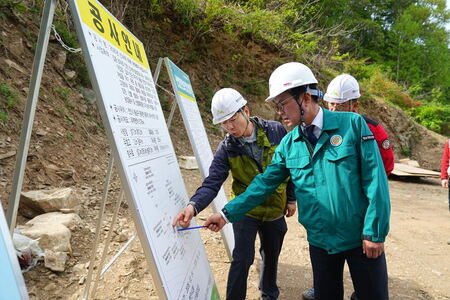
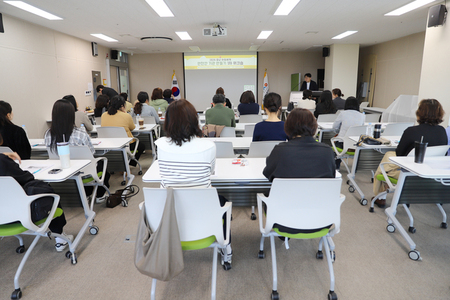
▲ 진주 원당고분군 발굴조사 현장보고회 모습 |
[브레이크뉴스=정철규 기자] 진주시는 27일 일반성면 운천리 일원의 ‘진주 원당고분군(M2호분) 시굴 및 발굴조사’가 완료되어 현장보고회를 개최했다.
보고회에는 일반성면 주민과 관련 전공자, 토지 소유자 등 70명이 자리하여 발굴조사 결과와 유물을 공개하며 원당고분군의 가치와 관리의 중요성에 대해 공감대를 형성하는 시간을 가졌다.
이번 발굴조사는 경상남도와 진주시의 가야문화재 조사연구 지원사업의 일환으로 진행됐다.
지난해 시굴조사에서 현재까지 조사된 가야 고분 중 최대 크기의 개석(길이 290cm, 너비 208cm, 두께 30cm)이 발견되어 학계의 주목을 받았으며, 올해 3월부터 발굴조사를 재개해 이번 달 조사를 마무리했다.
봉토부 트렌치 조사를 통해 토제(흙둑) 축조방식 등 아라가야 왕릉인 함안 말이산고분군 봉토분과 유사한 축조기술을 일부 확인했다.
또한 봉토 기저부에 두꺼운 토대를 조성하고 지정목을 박아 정지하는 등 다양한 축조기술이 복합적으로 나타나 진주 원당고분군만의 독자성과 다양한 축조 기술적 교류를 유추해 볼 수 있었다.
매장주체부는 중앙 연도식의 횡혈식 석실로 2차례 이상의 추가장 흔적이 확인됐다.
출토유물 중 토기는 6세기 중엽 가야 말기 형식으로 복합적인 양상(소가야+대가야+재지계)을 보이며, 금속기류는 대가야 세력권을 나타내는 축소모형철기, 백제 사비기 양식으로 추정되는 대장식구를 비롯한 철제 관고리, 관정 등이 출토됐다.
이를 통해 진주 원당고분군 축조 세력은 대가야, 백제 등과 정치적 교섭을 했던 중요 세력임을 확인할 수 있다.
발굴을 진행한 (재)동아세아문화재연구원 관계자는 “개석까지 비교적 완전한 상태로 발견된 진주 원당고분군 M2호분은 가야 최대급의 횡혈식 석실로, 가야 말기의 진주지역 정세를 파악하는 중요 자료이다. 추가적인 조사를 실시해 고분의 축조방법과 추가장 형태를 비롯한 상장의례를 구체적으로 밝힐 필요가 있다”고 말했다.
조규일 시장은 “진주 원당고분군이 지닌 역사적 가치와 의미를 지역 주민과 함께 공유하며 알리도록 노력하겠다”며 “6세기 가야지역의 횡혈식 석실 연구에 있어 새로운 방향성을 제시할 것을 기대하며 추가 발굴을 추진할 수 있도록 국비 신청 등 예산확보를 위해 최선을 다하겠다”고 말했다.
*아래는 위 기사를 '구글 번역'으로 번역한 영문 기사의 [전문]입니다. '구글번역'은 이해도 높이기를 위해 노력하고 있습니다. 영문 번역에 오류가 있을 수 있음을 전제로 합니다.<*The following is [the full text] of the English article translated by 'Google Translate'. 'Google Translate' is working hard to improve understanding. It is assumed that there may be errors in the English translation.>
Completion of excavation and excavation survey of Wondang Ancient Tombs in Jinju
On-site reporting session held to reexamine Gaya history in Jinju area
On the 27th, Jinju City held an on-site report after completing the ‘Jinju Wondang Tomb Group (M2 Tomb) excavation and excavation survey’ in Uncheon-ri, General Seong-myeon.
At the briefing session, 70 people, including residents of Gongseong-myeon, experts in related fields, and land owners, shared excavation results and artifacts and formed a consensus on the value of the Wondang Ancient Tombs and the importance of management.
This excavation was conducted as part of the Gaya cultural heritage research and research support project of Gyeongsangnam-do and Jinju City.
During last year's excavation survey, the largest open stone (290 cm in length, 208 cm in width, 30 cm in thickness) among the Gaya tombs investigated to date was discovered, attracting attention from academia. The excavation was resumed in March of this year and concluded this month.
Through the trench investigation of the embankment area, some construction techniques similar to the embankment tombs of Malisan Ancient Tombs in Haman, the royal tombs of Aragaya, including the earthen embankment method, were confirmed.
In addition, various construction techniques such as creating a thick foundation at the base of the fief and inserting designated trees to stop it were used in a complex manner, allowing us to infer the uniqueness of Jinju Wondang Tomb Group and various exchanges of construction techniques.
The main burial area was a central flume-type, horizontal pit stone chamber, and traces of more than two additional burials were confirmed.
Among the excavated artifacts, the earthenware shows a complex aspect (Sogaya + Daegaya + Jaejigye) in the form of the late Gaya period in the mid-6th century, and the metal utensils include scale model ironware representing the Daegaya sphere of influence, and iron pipes including a captain's tool presumed to be in the Sabi period of Baekje. Rings, tube wells, etc. were excavated.
Through this, it can be confirmed that the power that built the Wondang Ancient Tombs in Jinju was an important power that had political negotiations with Daegaya and Baekje.
An official from the East Asia Cultural Heritage Research Institute, which conducted the excavation, said, “Tomb M2 of the Wondang Ancient Tombs in Jinju, which was discovered in a relatively complete condition, even down to the stone, is the largest horizontal pit-type stone chamber in Gaya, and is important data for understanding the situation in the Jinju area in the late Gaya period. “There is a need to conduct additional research to reveal in detail the construction method of the tomb and the funeral rites, including the type of burial,” he said.
Mayor Cho Gyu-il said, “We will strive to share and publicize the historical value and meaning of Jinju Wondang Ancient Tombs with local residents,” and added, “We hope to present a new direction in the research of the 6th-century Gaya region’s horizontal pit stone chambers, and we can pursue additional excavations.” “We will do our best to secure the budget, including applying for government funding,” he said.
원본 기사 보기:브레이크뉴스경남