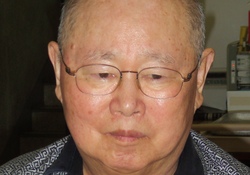
▲ 정길선 박사 ©브레이크뉴스 |
프란츠 안톤 폰 게르스트네르(Франц Антон фон Герстнер, 1795~1840), 프란츠 안톤 폰 거스너(Franz Anton Ritter von Gerstner)는 오스트리아 및 체코의 철도 기술자로 러시아 최초의 철도 건설자로 러시아 역사에 한 획을 그은 인물이다. 그는 1795년 체코 프라하에서 출생했다. 1806년 프라하의 기술학교에서 그의 아버지에 의해 재조직된 체코 기술공학연구소에서 공부했다. 1819년 연구소를 졸업한 후 오스트리아 비엔나 기술공학연구소에 들어가 학생들에게 실용적인 기하학과 토지 측량을 가르쳤다.
그는 몰도바와 다뉴브 강 사이의 철도 건설 프로젝트를 실행하기 위해 노력했으며 이를 위해 1822년 영국으로 여행 가서 건설 중인 최초의 철도를 연구했다. 1824년 9월 7일 루마니아로 돌아온 후 그는 버드와이스와 린츠 사이의 철도건설 및 운영에 대해 50년 동안 책임질 수 있는 권리를 획득했다. 1826년에 그는 결혼 후, 다시 영국으로 여행을 가게 되면서 철도에 대한 공부에 매진하게 된다. 1828년에 버드와이스와 케르시바움 사이 철도의 첫 번째 구간에 정기 교통이 개통되었다. 건설 비용이 예상보다 비쌌기 때문에 더 경제적인 해결책을 찾아야 했고, 이를 위해 그는 1829년 다시 영국으로 떠나게 된다.
그곳에서 그는 증기기관차가 이미 철도에서 말로 견인하는 것을 대체했다. 그는 최초의 오스트리아 철도 건설에 참여했고 1825-1829년에 오스트리아 최초의 철도가 탄생하는데 기여했다. 1832년과 1833년에 그는 철도 관련 서책인 를 3권으로 출판했으며 여기에 리버풀-맨체스터 철도 건설에 대한 관찰 결과를 설명했다. 마침 그는 광업 공병단의 참모장 K.V. 체프킨의 초청으로 광업 부서를 대신하여 우랄 광산 공장을 검토하기 위해 1834년 8월 러시아에 도착했다. 여기에서 그는 러시아에서 철도 건설에 대해 진지하게 고민했다 한다.
1835년 1월 6일 상트페테르부르크에서 모스크바까지, 모스크바에서 니즈니노브고로드와 카잔까지 철도망 건설에 대한 계획을 세웠던 그는 1835년 1월 6일 황제 니콜라스 1세에게 보고서를 제출했다. 몇 주 후 이 보고서는 황제의 개인 주재 아래 특별 위원회에서 심의 대상이 되었고 러시아의 철도 조직이 만장일치로 유용하다고 만장일치로 인정되었지만 재정적 측면에서 다양한 반발이 초래되었다. 더구나 그의 제안에서 무엇보다도 러시아에서 20년 동안 건설된 모든 철도는 자신의 재산으로 인정해달라는 요구는 용납되기 어려운 것이었다.
그러나 1835년 초, 그의 제안과 요구서는 황제 니콜라이 1세에게 접수되었다. 프란츠는 짜르스꼬에 셀로 구간의 철도 건설에 대한 계획을 차르에게 제출했으며, 그 후 프란츠의 보고서는 황제가 통신 책임자인 톨레프에게 전달했다. 그는 앞서 프란츠가 주선한 회의에 참석한 인물이었다. 제안을 고려하기 위해 위원회가 만들어졌고 통신 기술 부대의 장교인 프란츠가 건설한 철도를 연구하기 위해 톨레프가 오스트리아로 파견되었다. 톨레프가 돌아온 후, 구성된 철도 건설 위원회에서 러시아의 철도 건설이 유용하고 기술적으로 가능하다고 인정했고 프란츠는 짜르스꼬에 셀로의 철도 건설에 대한 허가를 받았다.
1836년 3월 프란츠는 독일, 벨기에, 프랑스, 영국을 방문하여 그곳의 철도를 검사하고 철도에 필요한 모든 공급품을 주문했다. 그런 다음 그는 첫 번째 시험 열차에 운전사로 직접 탑승했고 증기기관차 제어 장치 중 하나인 터빈에 강한 타격을 입혔다. 한편 짜르스꼬에 셀로의 철도 건설에 대한 니콜라이 1세 황제의 법령은 1836년 4월 15일에 공포되었다. 1836년 11월, 맑지만 매우 추운 날씨에서 기관차는 빠블롭스크와 짜르스꼬에 셀로 사이의 구간에서 처음으로 테스트 되었다. 시승은 니콜라이 1세 황제의 가족과 사회 각계 각층의 많은 사람들이 참석한 가운데 진행되었다. 이 건설은 A. A. 보브린스끼 백작이 주요 주주인 민간 주식 회사에서 자금을 조달했다.
짜르스꼬에 셀로 철도의 공식 개통은 1837년 10월 30일에 열렸고, 철도 완성을 본 프란츠는 미국으로 떠났고 그곳에서 1840년 필라델피아에서 사망했다.
*필자/ 정길선.
노바토포스 회원, 역사학자, 고고인류학자, 칼럼니스트, 러시아 과학아카데미 유라시아 고고인류학연구소 연구교수.
*아래는 위 기사를 '구글 번역'으로 번역한 영문 기사의 [전문]입니다. '구글번역'은 이해도 높이기를 위해 노력하고 있습니다. 영문 번역에 오류가 있을 수 있음을 전제로 합니다.<*The following is [the full text] of the English article translated by 'Google Translate'. 'Google Translate' is working hard to improve understanding. It is assumed that there may be errors in the English translation.>
The Story of Franz Anton von Gerstner, the Father of the Russian Railways
Columnist Gil-seon Jeong
Franz Anton von Gerstner (1795-1840), also known as Franz Anton Ritter von Gerstner, was an Austrian and Czech railway engineer who left a mark on Russian history as the first railway builder in Russia. He was born in Prague, Czech Republic in 1795. In 1806, he studied at the Czech Institute of Technology, which was reorganized by his father at the Technical School in Prague. After graduating from the institute in 1819, he entered the Institute of Technology in Vienna, Austria, where he taught practical geometry and land surveying to students.
He worked to implement a railway construction project between Moldova and the Danube River, and for this purpose, he traveled to England in 1822 to study the first railway under construction. After returning to Romania on 7 September 1824, he acquired a 50-year contract for the construction and operation of the railway between Budweiss and Linz. In 1826, after his marriage, he traveled to England again, where he devoted himself to his studies of railways. In 1828, regular traffic was opened on the first section of the railway between Budweiss and Kershbaum. Since the construction costs were higher than expected, a more economical solution had to be found, and for this he left for England again in 1829. There, steam locomotives had already replaced horse traction on the railways. He participated in the construction of the first Austrian railways and contributed to the creation of the first railway in Austria between 1825 and 1829. In 1832 and 1833, he published a three-volume book on railways, in which he described his observations on the construction of the Liverpool-Manchester railway. He was in the company of the Chief of Staff of the Mining Engineers, K.V. At the invitation of Chepkin, he arrived in Russia in August 1834 to inspect the Ural Mining Plant on behalf of the Mining Department. It is said that here he seriously thought about the construction of railways in Russia.
On January 6, 1835, he submitted a report to Emperor Nicholas I, having made plans for the construction of a railway network from St. Petersburg to Moscow and from Moscow to Nizhny Novgorod and Kazan. A few weeks later, this report was considered by a special commission under the personal presidency of the Emperor, and although the organization of railways in Russia was unanimously recognized as useful, it was met with various objections on financial grounds. Moreover, his proposal, above all, demanded that all railways built in Russia in the past twenty years be recognized as his property, which was difficult to accept.
However, in early 1835, his proposal and demands were received by Emperor Nicholas I. Franz submitted his plan for the construction of the railway from Tsarskoe to Selo to the Tsar, and the Emperor then forwarded Franz's report to Tolev, the chief of communications, who had previously attended the meeting that Franz had arranged. A committee was formed to consider the proposal, and Tolev, an officer in the communications engineering corps, was sent to Austria to study the railway that Franz had built. After Tolev's return, the railway construction committee that was formed recognized that the construction of railways in Russia was useful and technically feasible, and Franz received permission to build the railway from Tsarskoe to Selo.
In March 1836, Franz visited Germany, Belgium, France, and England, inspecting the railways there and ordering all the necessary supplies for the railways. He then boarded the first test train as a driver himself and struck a turbine, one of the control devices of a steam locomotive, hard. Meanwhile, the decree of Emperor Nicholas I on the construction of the Tsarskoe Selo Railway was issued on April 15, 1836. In November 1836, in clear but very cold weather, the locomotive was first tested on the section between Pavlovsk and Tsarskoe Selo. The trials took place in the presence of the family of Emperor Nicholas I and many people from all walks of life. The construction was financed by a private joint-stock company, the main shareholder of which was Count A. A. Bobrinsky.
The official opening of the Tsarskoe Selo Railway took place on October 30, 1837, and after seeing the completion of the railway, Franz left for the United States, where he died in Philadelphia in 1840.