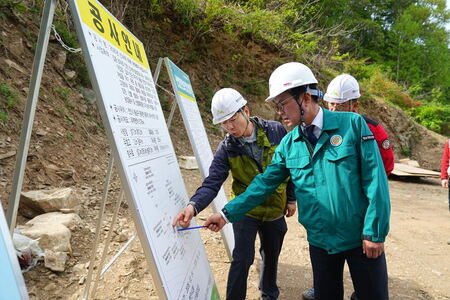
▲ 광양시와 시의회가 유럽 수소기술 선진국인 독일을 지난 16일부터 22일까지 5박 7일간 견학하고 광양의 수소도시 조성사업에 대한 구체적인 실행 전략과 협력 방안을 모색했다. |
전남 광양시와 시의회가 유럽 수소기술 선진국인 독일을 지난 16일부터 22일까지 5박 7일간 견학하고 광양의 수소도시 조성사업에 대한 구체적인 실행 전략과 협력 방안을 모색했다고 25일 밝혔다.
이번 방문에는 김기홍 광양시 부시장, 최대원 광양시의회 의장, 시의회 산업건설위원회 소속 의원 및 관계 공무원 등 14명이 참여했다.
광양시에 따르면 방문단은 먼저 독일 베를린의 지멘스 에너지를 방문했다.
지멘스 에너지는 기가와트(GW)급 수전해 공장 및 자동화 생산 라인을 운영 중이며 2025년까지 최소 3GW까지 생산 규모 확대를 목표로 하고 있다.
연평균 30만 톤의 그린수소 생산을 위해 약 3,000만 유로(약 420억 원)를 투자한 지멘스 에너지는 2,000 평방미터 규모의 수전해 생산 라인을 증설한 바 있다.
특히 방문단은 고분자전해질막(PEM) 수전해 시스템 자동화 생산 라인과 지멘스 에너지 주력사업 중 하나인 100% 수소로 가동 가능한 산업용 가스 터빈 기술을 견학했다.
이 기술은 무탄소 청정 발전 분야에서 주목받고 있으며, 광양시 관계자와 시의원들은 수전해 방식을 광양시의 친환경 에너지 생산과 기후변화 대응 전략에 접목할 수 있을지 열띤 논의를 통해 가능성을 타진했다.
이튿날 방문단은 독일 로이나에 위치한 프라운호퍼 풍력에너지시스템 IWES 연구소(수소 연구소)를 찾아, 야외 테스트 필드에 설치된 컨테이너형 최대 5MW급 수전해 장치 및 수소 분석·정제 시스템을 견학하며 최신 기술 동향을 파악했다
연구소는 린데(Linde)사와 협력해 수소효율, 수소품질 등을 분석 중이며, 특히 전해 셀의 실험 및 모델기반 분석, 부품부터 스택 수준까지의 실험을 통해 수소 품질 개선과 저장 효율성 향상에 주력하고 있다.
특히 프라운호퍼 IWES 연구소는 KENTECH(한국에너지공과대학)과 산업 파트너 관계에 있으며 지난 2021년 협약을 체결하고 수소 물류 체인 최적화와 장기적인 협력 관계 구축을 목표로 수소 생산 분야, 저장 및 운송 분야, 활용 분야, 소재 연구 분야, 안정성 분야 등에서 협력을 약속한 바 있다.
광양시는 이번 방문을 계기로 프라운호퍼 IWES연구소와 광양 수소도시 사업 및 수소 생산시설 자문 협력을 위한 업무협약을 체결했다.
협약식에는 김기홍 광양시 부시장, 최대원 광양시의회 의장, 얀 벤스케 프라운호퍼 IWES 부소장, 요하네스 회플링거 로이나 수소랩장을 비롯한 관계자 20여 명이 참석했으며 협약을 통해 광양 수소도시 사업 및 수소 생산시설 자문 등에 협력을 강화하기로 했다.
협약의 주요 내용으로는 ▲ 수전해 기반 수소 생산·활용 관련 소재·부품·시스템 개발 및 검사 등 연구개발 협력 ▲공동 프로젝트 발굴을 통한 수소 가치사슬 기업 육성 ▲광양 수소도시 조성사업 협력 및 수소 생산시설 자문 등이 포함됐다.
방문단은 마지막 일정으로 세계 최대 패시브하우스 단지인 하이델베르크의 반슈타트(Bahnstadt)를 견학했다. 이 지역은 약 116헥타르 규모로 버려진 철도와 화물역을 중심으로 재개발을 추진해 조성된 곳이다.
현재 약 2,500채의 패시브하우스가 들어서 있으며 주거 시설뿐 아니라 업무 시설, 병원, 연구소, 상업 시설 등 다양한 인프라가 구축돼 있다.
특히 반슈타트는 모든 건물이 패시브하우스 표준에 따라 지어져 에너지 효율이 극대화다는 것이 특징이다.
이 지역의 에너지는 100% 신재생 에너지로 운영되며, 지역난방 시스템을 통해 효율적으로 분배된다.
또 바이오매스 열병합발전소(CHP)를 활용해 재생에너지를 생산하며, 이를 통해 일반 건축물 대비 약 90%의 에너지를 절감하고 있다. 하이델베르크시는 반슈타트의 성공 사례를 기반으로 2050년까지 도시 전체를 100% 신재생 에너지로 운영하는 것을 목표로 삼고 있다.
김기홍 광양시 부시장은 "독일 선진지 견학은 광양시 수소도시 조성사업의 완성도를 높이고 글로벌 수소 경제 구축에 기여할 수 있는 중요한 발판이 될 것"이라며 "프라운호퍼 연구소와 체결한 업무협약의 실현을 위해 KENTECH(한국에너지공과대학)과 수전해 생산 방식을 함께 검증하는 등 긴밀한 협력을 이어나가겠다"고 밝혔다.
최대원 광양시의회 의장은 "수소도시 구축에 대한 이해의 폭을 넓히는 계기가 됐다"며 "광양시가 대한민국 수소 산업을 선도할 수 있도록 시의회 차원에서도 적극적으로 지원하겠다"고 강조했다.
[아래는 구글로 번역한 영문기사 전문입니다. 영문번역에 오류가 있을 수 있음을 전제로 합니다. Below is the full English article translated by Google. It is assumed that there may be errors in the English translation.]
Gwangyang City and the city council of Jeollanam-do announced on the 25th that they visited Germany, a leading European hydrogen technology country, for 5 nights and 7 days from the 16th to the 22nd and explored specific implementation strategies and cooperation plans for the hydrogen city development project in Gwangyang.
14 people including Gwangyang City Vice Mayor Kim Ki-hong, Gwangyang City Council Chairman Choi Dae-won, members of the city council’s Industry and Construction Committee, and related public officials participated in the visit.
According to Gwangyang City, the delegation first visited Siemens Energy in Berlin, Germany.
Siemens Energy is currently operating a gigawatt (GW)-class electrolysis plant and automated production line, and is aiming to expand its production scale to at least 3 GW by 2025.
Siemens Energy, which invested approximately 30 million euros (approximately 42 billion won) to produce an average of 300,000 tons of green hydrogen per year, has expanded its electrolysis production line by 2,000 square meters.
In particular, the delegation toured the automated production line of the polymer electrolyte membrane (PEM) electrolysis system and the industrial gas turbine technology that can operate on 100% hydrogen, one of Siemens Energy's main businesses.
This technology is attracting attention in the field of carbon-free clean power generation, and Gwangyang City officials and city council members had a heated discussion on whether the electrolysis method could be applied to Gwangyang City's eco-friendly energy production and climate change response strategy, and explored the possibility.
The next day, the delegation visited the Fraunhofer Institute for Wind Energy Systems IWES (Hydrogen Research Institute) located in Leuna, Germany, and toured the container-type electrolysis device with a maximum capacity of 5MW and the hydrogen analysis and purification system installed in an outdoor test field to learn about the latest technology trends.
The institute is analyzing hydrogen efficiency and hydrogen quality in cooperation with Linde, and is focusing on improving hydrogen quality and storage efficiency through experiments and model-based analyses of electrolysis cells and experiments from components to stack levels.
In particular, the Fraunhofer IWES Institute is an industrial partner of KENTECH (Korea Institute of Energy Technology), and signed an agreement in 2021, and promised cooperation in hydrogen production, storage and transportation, utilization, material research, and stability with the goal of optimizing the hydrogen logistics chain and establishing a long-term cooperative relationship.
During this visit, Gwangyang City signed a business agreement with the Fraunhofer IWES Institute for consulting on the Gwangyang Hydrogen City project and hydrogen production facilities.
About 20 people, including Gwangyang City Vice Mayor Kim Ki-hong, Gwangyang City Council Chairman Choi Dae-won, Fraunhofer IWES Vice President Jan V?nsk?, and Hydrogen Lab Director Johannes H?fflinger Leuna, attended the signing ceremony, and decided to strengthen cooperation in the Gwangyang Hydrogen City project and hydrogen production facility consulting.
The main contents of the agreement include ▲ Research and development cooperation such as development and inspection of materials, parts, and systems related to hydrogen production and utilization based on water electrolysis ▲ Fostering hydrogen value chain companies through joint project discovery ▲ Cooperation on the Gwangyang hydrogen city development project and consulting on hydrogen production facilities.
The last stop on the itinerary was Bahnstadt in Heidelberg, the world's largest passive house complex. This area is approximately 116 hectares in size and was created through redevelopment centered around abandoned railway and freight stations.
Currently, there are approximately 2,500 passive houses, and various infrastructures such as residential facilities, office facilities, hospitals, research institutes, and commercial facilities have been built.
Bahnstadt is particularly characterized by the fact that all buildings are built according to passive house standards, maximizing energy efficiency.
The energy in this area is 100% renewable energy and is distributed efficiently through the district heating system.
In addition, it produces renewable energy using biomass combined heat and power (CHP), which saves about 90% of energy compared to general buildings. Based on the success story of Bahnstadt, Heidelberg aims to operate the entire city with 100% renewable energy by 2050.
Gwangyang City Deputy Mayor Kim Ki-hong said, “This visit to advanced German regions will be an important stepping stone to enhance the completion of Gwangyang City’s hydrogen city development project and contribute to the establishment of a global hydrogen economy,” and added, “We will continue to work closely with KENTECH (Korea Institute of Energy Technology) to verify the electrolysis production method in order to realize the business agreement signed with the Fraunhofer Institute.”
Gwangyang City Council Chairman Choi Dae-won also emphasized, “This was an opportunity to broaden the understanding of hydrogen city development,” and “We will actively support Gwangyang City at the city council level so that it can lead the hydrogen industry in Korea.”
원본 기사 보기:브레이크뉴스전남동부