국회 기획재정위원회 소속 정일영 의원(더불어민주당·인천 연수을)은 “기획재정부로부터 받은 자료와 국무회의 회의록을 분석한 결과, 지난해 예비비 약 6,800억 원이 국가정보원으로 흘러간 것으로 추정된다”고 밝혔다. 이는 지난해 예비비 전체 지출의 40%에 해당하는 규모이다.
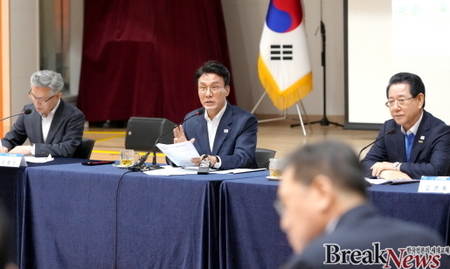
 ▲ 정일영 의원은 “지난 13일 헌법재판소 8차 탄핵심판에서 윤석열이 홍장원 국정원 1차장에게‘국정원은 특활비나 자금이 많으니 방첩사를 잘 챙기라’고 지시한 바 있다는 진술이 있었다”라며“작년 국무회의에서 승인된 예비비 중 2급 비밀에 해당하는 지출건과 12.3 비상계엄의 연관성에 대해 향후 수사기관이 철저히 조사해야 한다”고 밝혔다. © 김충열 정치전문기자 |
지난해 국무회의에서 통과된 예비비 지출안 총 19건 중 4건이 ‘2급 비밀’에 해당하며 이는 약 6,800억 원 규모로 추정된다. 4건은 △국가안전보장활동지원(2월 27일), △첨단산업기술 유출 방지(5월 28일), △글로벌 원자재 공급망 긴급 확보(8월 13일), △사이버안보 위협 대응 경비(12월 3일) 명목으로 국무회의 심의를 통과했다. 2급 비밀에 해당하는 예비비 지출안건은 온라인에 공개된 국무회의록을 통해 확인할 수 있으나, 지출액은 공개되지 않는다.
기획재정부가 정 의원실에 제출한 자료에 따르면 2024년 예비비 총액은 4.2조 원이며, 말일 기준 예비비 잔액은 2.5조 원으로 확인되었다. 국무회의록 분석 결과, 예비비 지출총액은 1.7조 원으로 이중 일반안건에 해당하는 예비비 지출안 15건에 약 1조160억 원이 사용된 것으로 나타났다. 전체 예비비 지출액에서 일반예비비와 목적예비비 등 일반안건을 제외하면 약 6,800억 원에 달하는 예비비가 국가 안보를 명분으로 지출된 것으로 추정된다.
「국가재정법」제51조에 따르면 예비비 사용 신청은 각 중앙관서의 장이 기획재정부 장관에게 하고, 기획재정부 장관이 예비비 사용계획명세서를 작성하여 국무회의 심의를 통해 최종적으로 대통령 승인 절차를 거쳐 사용하게 되어 있다.
정일영 “지난해 국정원 관련 예비비 지출과 12.3 비상계엄의 연관성 조사 필요”
정일영 의원은 “지난 13일 헌법재판소 8차 탄핵심판에서 윤석열이 홍장원 국정원 1차장에게‘국정원은 특활비나 자금이 많으니 방첩사를 잘 챙기라’고 지시한 바 있다는 진술이 있었다”라며“작년 국무회의에서 승인된 예비비 중 2급 비밀에 해당하는 지출건과 12.3 비상계엄의 연관성에 대해 향후 수사기관이 철저히 조사해야 한다”고 밝혔다.
또한, 정 의원은“예비비는 국회의 사전 심사 없이 정부의 필요에 따라 원칙에 어긋나게 사용될 수 있다는 점에서 문제가 크다”고 지적하며 “예비비 지출의 투명성을 높일 수 있도록 ‘국가재정법’개정이 필요하다”고 전했다.
한편, 정일영 의원은 작년 8월 예비비의 사용 요건을 구체화하고, 예비비의 세부내역을 국회에 제출하도록 하는「국가재정법 개정안」을 대표발의한 바 있다. 또한, 지난 25일 국회에서 예비비의 투명한 집행과 국회의 통제권 강화를 위한 토론회를 주최하여 예비비 제도의 개선방안을 마련하는데 앞장서고 있다. hpf21@naver.com
* 아래는 위 기사를 '구글 번역'으로 번역한 영문 기사의 [전문]입니다. '구글번역'은 이해도 높이기를 위해 노력하고 있습니다. 영문 번역에 오류가 있을 수 있음을 전제로 합니다.
*The following is [the full text] of the English article translated by 'Google Translate'. 'Google Translate' is working hard to improve understanding. It is assumed that there may be errors in the English translation.
Rep. Jeong Il-young: “We estimate that the National Intelligence Service spent approximately 680 billion won in reserve funds last year… We need to investigate the 12.3 martial law issue”
This is equivalent to 40% of the total reserve fund expenditure of 1.7 trillion won last year
Rep. Jeong Il-young (Democratic Party of Korea, Incheon Yeonsu-eul), a member of the National Assembly Planning and Finance Committee, said, “As a result of analyzing the data received from the Ministry of Strategy and Finance and the minutes of the State Council meeting, we estimate that approximately 680 billion won of reserve funds flowed to the National Intelligence Service last year.” This is equivalent to 40% of the total reserve fund expenditure last year.
Of the 19 reserve fund expenditure bills passed at the State Council meeting last year, four are classified as ‘level 2 secrets’ and are estimated to be worth approximately 680 billion won. Four items passed the State Council deliberation under the names of △Support for National Security Activities (February 27), △Prevention of Leakage of Advanced Industrial Technology (May 28), △Emergency Securing of Global Raw Material Supply Chain (August 13), and △Cybersecurity Threat Response Expenses (December 3). The reserve fund expenditure items, which are classified as level 2 secrets, can be confirmed through the State Council minutes published online, but the expenditure amounts are not disclosed.
According to the data submitted by the Ministry of Strategy and Finance to Rep. Jeong's office, the total reserve fund amount for 2024 is 4.2 trillion won, and the reserve fund balance as of the end of the year was confirmed to be 2.5 trillion won. According to the analysis of the State Council minutes, the total reserve fund expenditure amount was 1.7 trillion won, of which approximately 1.16 trillion won was spent on 15 reserve fund expenditure items corresponding to general agenda items. Excluding general items such as general reserve funds and purpose reserve funds from the total reserve fund expenditure, it is estimated that approximately KRW 680 billion of reserve funds were spent under the pretext of national security.
According to Article 51 of the National Finance Act, the head of each central government agency submits an application for reserve fund use to the Minister of Strategy and Finance, who then prepares a reserve fund use plan statement, which is then reviewed by the State Council and finally approved by the President before being used.
Jeong Il-young: “Investigation into the connection between last year’s NIS-related reserve fund expenditures and the 12.3 emergency martial law is necessary”
Rep. Jeong Il-young stated, “During the 8th impeachment trial held by the Constitutional Court on the 13th, there was a statement that Yoon Seok-yeol instructed Hong Jang-won, the 1st Vice Director of the NIS, to ‘take good care of the counterintelligence force because the NIS has a lot of special activity funds and funds.’” He added, “Investigative agencies should thoroughly investigate the connection between the 2nd-level secret expenditures approved at the State Council last year and the 12.3 emergency martial law.”
Rep. Jeong also pointed out, “The reserve fund is problematic in that it can be used against the principles according to the government’s needs without prior review by the National Assembly,” and said, “The ‘National Finance Act’ needs to be revised to increase the transparency of reserve fund expenditures.”
Meanwhile, Rep. Jeong Il-young proposed the “National Finance Act Amendment” last August to specify the requirements for using the reserve fund and to submit detailed information on the reserve fund to the National Assembly. He also hosted a discussion on transparent execution of the reserve fund and strengthening the National Assembly’s control on the 25th at the National Assembly, taking the lead in preparing measures to improve the reserve fund system. hpf21@naver.com