▲필자/ 곽태환 박사. 전 통일연구원 원장/한반도미래전략연구원 이사장. ©브레이크뉴스 |
한반도의 비무장지대(DMZ)는 1953년 한국정전협정에 의해 설치된 군사적 완충 지대로서, 한반도 정전체제(Armistice Regime)의 핵심적 공간이다. 그러나 DMZ는 단순한 군사적 공간을 넘어, 남북관계, 한미동맹, 국제법, 국내 정치가 교차하는 복합적 영역으로 기능해 왔다. 특히 최근 DMZ 출입 통제권을 둘러싼 논쟁은 대한민국의 헌법과 정전협정 체제의 군사적 규율이 충돌하는 대표적 사례로 평가된다.
최근 국내와 정부 내부에서 통일부와 청와대 국가 안보실 간 입장 차이가 표면화되면서, DMZ 출입 권 문제는 다시금 대한민국의 안보체제의 구조적 긴장을 드러냈다. 통일부 장관은 DMZ 출입 통제권을 UNC가 행사하는 현실을 “주권국가의 체면 문제”로 규정하며 국내법적 권한 회복을 주장하였다. 한편, 국가안보실장은 정전협정 체제의 안정성과 UNC(유엔사)와의 조율을 우선하는 입장을 피력하였다.
본 칼럼은 DMZ 출입 통제권을 둘러싼 법적·정치적 갈등을 분석한다. DMZ 출입 통제는 정전협정 체제, UNC의 법적 지위, 대한민국 헌법 질서, 그리고 한미동맹 구조가 교차하는 복합적 이슈이다. 따라서 정전협정 제1조 제10항 의 법적 해석, UNC의 권한 주장, 헌법과의 충돌, 그리고 정책적 선택지를 분석함으로써 DMZ 출입 통제권 문제의 해법 모색을 위한 정책제언이 기본목적이다.
DMZ 출입 통제권의 법적 구조
1. 정전협정 제1조 제10항의 법적 성격과 해석
한국정전협정은 한국전쟁을 종결하는 평화조약이 아니라, 전쟁행위의 정지를 규율하는 군사협정이다. 따라서 정전협정은 국가 간 조약과 달리, 군사적 활동 제한, 완충지대 설치, 그리고 감시·통제 체계 등을 규정하지만, 영토 주권이나 국내 행정권을 이전하는 조약은 아니다. 그리고 대한민국(ROK)은 정전협정의 서명 당사자가 아니며, UNC가 서명 당사자로 기능한다는 점에서 법적 모호성이 존재한다.
정전협정 제1조는 군사분계선(MDL)과 비무장지대(DMZ)의 설치, 관리, 통제에 관한 규정을 담고 있다. 그중 제10항은 다음과 같이 규정한다. “군사분계선 남북으로 각 2km의 구역 내에서의 민사행정 및 구호 활동은 각 측 사령관의 책임 하에 수행된다.”
UNC(유엔사)는 이 조항을 근거로 DMZ 남측 구역의 민사·구호 활동에 대한 책임 → 출입 통제권이라는 논리를 전개한다. 즉, “책임(responsibility)”을 “권한(authority)”로 확장 해석하는 방식이다.
그러나 국제법적으로 “책임”은 반드시 “배타적 권한”을 의미하지 않는다. 특히 정전협정은 군사적 정지 협정이므로, 군사 활동 제한, 감시·통제, 충돌 방지 등의 목적을 위한 최소한의 권한만을 부여하는 것이 원칙이다. 따라서 제1조 제10항이 민간인 출입 승인권까지 UNC에 부여했는지 여부는 해석의 여지가 크다.
2. UNC의 권한 주장: ‘정전협정 이행 책임과 출입 통제권’
UNC의 권한 주장은 4가지 논리를 제시한다. (1) DMZ는 정전협정의 직접적 적용 대상이다. (2) 정전협정 이행 책임은 UNC 사령관에게 있다. (3) DMZ 내 민사·구호 활동은 UNC의 책임 하에 이루어진다. (4) 따라서 DMZ 출입은 UNC의 승인 없이는 불가하다는 입장이다.
이 논리는 정전협정의 군사적 성격을 광범위하게 확장하는 해석이다. UNC는 이를 “군사적 안전성 확보”라는 명분으로 정당화하고 있다. 그러나 UNC는 UN 안보리 결의에 기반하나, 실질적으로는 미군 사령관이 지휘하는 다국적 군사기구이다. 따라서 UNC의 법적 지위는 (1) UN 산하기구인가? (2) 미국 주도의 다국적 군사기구인가? (3) 정전협정 이행을 위한 특수기구인가라는 논쟁이 존재한다. 이러한 논쟁은 DMZ 출입 통제권의 정당성 문제와 직결된다.
UNC의 법적 지위와 관련하여 엄격하게 UN 산하 기구가 아니며, UN 사무총장도 여러 차례 “UNC는 UN의 지휘·통제 하에 있지 않다”고 명확히 밝힌 바 있다. 따라서 UNC의 권한은 국제법적으로도 모호함이 존재한다.
3. 대한민국 헌법·국내법과의 충돌
대한민국 헌법은 대한민국의 영토는 한반도 전체이고, 대통령은 군 통수권자이며, 행정권은 정부에 속하며, 그리고 입법권은 국회에 속한다. 따라서, DMZ 남측 구역은 대한민국 영토이며, 따라서 원칙적으로 출입 승인, 행정 집행, 그리고 민간 활동 규제 등은 대한민국 정부의 권한이다. 그러나 현실에서는 한국군 장성, 장관, 청와대 국가안보실 고위 인사조차 UNC 승인 없이 DMZ 특정 구역에 출입할 수 없다는 것이 사실이다. 이는 헌법상 행정권·군 통수권과 충돌하는 구조이다.
4. 국제법적 쟁점
첫째, 정전협정의 법적 지위이다. 정전협정은 평화조약이 아니며, 전쟁 상태를 종결시키지 않는다. 따라서 정전협정은 국가 주권을 제한하는 상위 규범이 될 수 없다는 해석이 가능하다.
둘째, UNC의 법적 지위이다. UNC는 UN 안보리 결의에 의해 “창설”되었으나 UN의 지휘·통제를 받지 않으며 미국이 실질적 지휘권을 행사한다. 따라서 UNC가 한국 영토 내에서 출입 통제권을 행사할 국제법적 근거는 미약하다.
셋째, DMZ의 영토 주권 문제이다. DMZ는 남북한이 각 2km씩 후퇴하여 만든 완충지대이며 영토 주권은 여전히 남북한에 귀속된다. 따라서 DMZ 남측 구역은 대한민국 영토이며, UNC의 ‘관할권’은 군사적 목적에 한정된다.
앞에서 지적한 바와 같이, 정전협정 제1조 제10항은 DMZ 내 “민사행정 및 구호 활동은 각 측 사령관의 책임 하에 수행된다”고 규정한다. UNC는 이 조항을 근거로 DMZ 남측 구역의 민사·구호 활동에 대한 책임이 UNC 사령관에게 있으며, 따라서 출입 통제권 역시 UNC의 권한이라고 주장한다.
그러나 이러한 해석은 국제법적으로 논쟁의 여지가 크다. 정전협정은 군사적 정지 협정이며, 민간 행정권이나 출입 승인권을 UNC에 포괄적으로 부여했다고 보기 어렵다. “책임(responsibility)”은 군사적 안전을 위한 최소한의 조치 범위를 의미할 뿐, 민간인의 출입을 전면적으로 통제할 권한을 의미하지 않는다.
대한민국 헌법과의 충돌은 더욱 명확하다. DMZ 남측 구역은 대한민국 영토이며, 헌법상 행정권·군 통수권·입법권은 대한민국 정부와 국회에 귀속된다. 그럼에도 한국군 장성, 장관, 국가안보실 고위 인사조차 UNC 승인 없이는 DMZ 특정 구역에 출입할 수 없다. 이는 헌법적 주권이 실질적으로 제한되는 구조적 문제를 드러낸다.
한국 정부 내부의 정책 갈등: 통일부 vs 국가 안보실
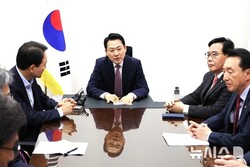
 ▲ DMZ을 방문한 정동영 퉁일부 장관(맨 앞 왼쪽). |
 ▲ 곽태환 ©곽태환 박사 |
1. 통일부의 ‘주권 회복’ 접근
정동영 통일부 장관은 DMZ 출입 통제권 문제를 “주권국가의 체면 문제”, “국민 정서에 맞지 않는 비정상적 구조”로 규정하였다. 그의 핵심 논지는 (1) DMZ 출입 통제권은 한국 정부가 가져와야 한다. (2) UNC의 출입 통제는 정전협정의 자의적 확대 해석이다. (3) DMZ 평화적 이용법 제정을 통해 국내법적 권한을 명확히 해야 한다. 그리고 (4) 남북 교류·평화적 이용 확대를 위해 출입권 정상화가 필요하다.
따라서 통일부의 접근은 정치·주권 중심 접근이며, DMZ를 “평화·협력 공간”으로 재구성하려는 시도이며, 필자는 전적으로 공감한다.
2. 국가안보실의 ‘정전체제·안정성’ 접근
위성락 국가안보실장은 공개적 발언을 남기지 않았으나, 국가안보실의 전통적 입장과 실무적 역할을 고려하면 다음과 같은 입장을 견지하였을 것으로 보인다. (1) 정전협정 체제의 안정성 유지. (2) UNC와의 마찰 최소화. (3) 군사적 충돌 가능성 최소화. (4) 한미동맹 관리. (5) DMZ 출입 통제 완화에 대한 신중한 접근을 견지한 입장일 것이다. 즉, 위성락 실장의 접근은 군사·안보 중심 접근이며, DMZ를 “군사적 긴장 관리 공간”으로 보는 관점으로 판단된다.
한국 정부의 안보 정책 결정은 대통령, 국가안보실, 국방부. 통일부, 외교부, 국정원, 한미연합사, UNC 등이 복합적으로 얽혀 있다. 특히 DMZ 문제는 통일부–국방부–안보실–UNC가 모두 관여하는 영역이므로 정책 조율이 매우 어렵다고 판단된다.
정책 제언
UNC 사령관은 주한미군 사령관과 한미연합사령관을 겸직하며, DMZ 출입 통제는 UNC 명의로 행사되지만 실질적으로는 미군 지휘체계를 통해 이루어진다. 한국군은 DMZ 남측 구역에서 경계·감시·군사시설 운영 등 실질적 활동을 수행하지만, 출입 승인 등 핵심 권한은 UNC가 행사한다.
DMZ 출입 승인 과정에서 UNC의 거부권은 사실상 절대적이며, 한국 정부는 이를 우회할 제도적 수단을 갖고 있지 않다. 이러한 지휘구조는 정전협정 체제의 특수성과 한미동맹 구조가 결합하여 형성된 결과이지만, 한국의 헌법적 주권과 충돌하는 지점이 많다. 특히 DMZ 출입 통제권 문제는 한국이 정전체제의 실질적 당사자임에도 불구하고, 정전협정의 서명 당사자가 아니라는 역사적·법적 한계를 드러낸다.
비무장지대(DMZ) 출입 통제권을 둘러싼 논쟁은 단순한 행정 절차나 부처 간 견해 차이를 넘어, 한국 안보체제의 구조적 모순을 집약적으로 드러내는 사안이다. 본 칼럼은 정전협정 제1조 제10항의 법적 해석, UNC의 국제법적 지위, 대한민국 헌법 질서, 그리고 한국 정부 내부의 정책 조율 구조를 분석함으로써, DMZ 출입 통제권 문제의 본질이 정전체제의 불완전성, 주권 질서의 제약, 동맹 구조의 복잡성, 그리고 국내 정책 체계의 분절성에서 비롯된다는 점을 확인하였다.
정전협정은 군사적 적대행위를 정지시키기 위한 군사협정으로서, 평화조약과 달리 영토 주권이나 행정권을 이전하는 성격을 갖지 않는다. 그럼에도 UNC는 정전협정의 이행 책임을 근거로 DMZ 출입 통제권을 행사해 왔으며, 이는 책임(responsibility)을 권한(authority)으로 확장하는 해석에 기반한다. 이러한 해석은 국제법적으로도 논쟁적이며, 대한민국 헌법 질서와 충돌할 여지가 크다. DMZ 남측 구역은 명백히 대한민국 영토이며, 헌법상 행정권·군 통수권·입법권은 대한민국 정부와 국회에 귀속된다. 그럼에도 한국 고위 인사조차 UNC 승인 없이는 DMZ 특정 구역에 출입할 수 없는 현실은 헌법적 주권이 실질적으로 제한되는 구조적 문제를 드러낸다.
이재명 정부의 통일부와 국가안보실 간 상반된 접근은 이러한 구조적 모순을 서로 다른 방식으로 해석한 결과이다. 통일부는 DMZ 출입 통제권 문제를 주권 회복과 평화적 이용 확대의 관점에서 접근한 반면, 안보실은 정전협정 체제의 안정성과 UNC와의 조율을 우선하는 군사·안보 중심 접근을 취했다. 두 입장의 차이는 한국 안보체제가 주권·정전체제·동맹이라는 세 가지 축이 서로 충돌하는 구조적 환경 속에서 운영되고 있음을 보여준다. 따라서 DMZ 출입 통제권 문제는 특정 정부나 특정 인물의 리더십만으로 해결될 수 있는 문제가 아니라, 정전체제 자체의 구조적 제약에서 비롯된 문제로 이해해야 할 것이다.
이러한 분석을 바탕으로, 본 연구는 다음과 같은 정책적 제언을 제시하고자 한다.
첫째, 정전체제의 법적 구조를 재정의하는 중장기 전략이 필요하다. 정전협정의 법적 성격과 UNC의 권한 범위는 국제법적으로 재검토될 필요가 있으며, UN 및 관련국과의 협의를 통해 정전체제의 현대화를 추진하는 것이 장기적으로 DMZ 출입 통제권 문제의 근본적 해결에 기여할 수 있다. 평화체제 전환 논의와 DMZ 관리체계 개편을 연계하는 전략 역시 고려할 수 있다.
둘째, 대한민국 헌법 질서와 정전체제 간 충돌을 완화하기 위한 국내 제도 정비가 필요하다. DMZ 출입 절차를 명확히 규정하는 국내법 제정 또는 개정, 민간·비군사적 활동에 대한 한국 정부의 1차 승인권 명문화, UNC와의 충돌을 최소화하기 위한 사전 협의 절차의 제도화 등이 그 예이다. 이러한 조치는 헌법적 주권을 강화하면서도 정전체제와의 충돌을 최소화하는 현실적 접근이다.
셋째, UNC의 국제법적 지위와 권한에 대한 투명성을 확보하고 정례적 협의체를 구축할 필요가 있다. UNC의 권한 범위와 정전협정 해석에 대한 공식적 협의체를 구성하고, DMZ 출입 승인 기준의 투명성을 확보하며, 민간·학술·환경 목적 출입에 대한 예측 가능한 승인 절차를 마련하는 것이 중요하다. 이는 UNC와의 갈등을 줄이면서도 한국 정부의 정책적 공간을 확대하는 효과가 있다.
넷째, 한국 정부 내부의 정책 조율 메커니즘을 강화해야 한다. DMZ 출입 통제권 문제는 통일부·국방부·국가 안보실·외교부·연합사·UNC가 모두 관여하는 복합적 영역이므로, 범정부 차원의 조정 기구 설치, 부처 간 정책 조율 프로토콜 마련, 국익중심의 실용주의적 그리고 합리적 의사결정 체계 강화, DMZ 정책에 대한 중장기 로드맵 수립 등이 필요하다. 이러한 조율 메커니즘은 정부가 일관된 정책 방향을 제시하기 위한 제도적 기반이 된다.
결론적으로, DMZ 출입 통제권 문제는 한국의 주권, 정전체제의 미래, 한미동맹의 구조, 그리고 한반도 평화체제 구축이라는 전략적 과제를 연결하는 핵심적 쟁점이다. 본 칼럼에서 제시한 분석과 정책 제언은 DMZ 출입 통제권 문제를 둘러싼 구조적 모순을 해결하고, 향후 정책적·전략적 논의의 기초를 마련하는 데 기여할 것으로 기대한다.
▲ 필자/곽태환 박사. ©브레이크뉴스
*필자/곽태환 박사
전 통일연구원 원장/한반도미래전략연구원 이사장. 미 Claremont 대학원 대학교 국제관계학 박사. 전 미 Eastern Kentucky 대학교 국제정치학 교수; 전 경남대 극동문제연구소 소장/교수; 6대 통일연구원 원장. 현재 미국 이스턴 켄터키 대 명예교수, 경남대 초빙 석좌교수, 한반도미래전략연구원 이사장 등, 통일뉴스 특별 공로상 수상 (2021), 경남대 명예 정치학 박사 수여(2019), 글로벌평화재단(GPF)의 혁신 학술 연구 분야 평화상 수상(2012). 37의 저서, 공저 및 편저; 칼럼, 시론, 학술논문 등 600편 이상 출판; 주요 저서: 『한반도 평화, 비핵화 그리고 통일: 어떻게 이룰 것인가?』 (통일뉴스, 2019), 공저: 『한반도 문제 해법: 새로운 모색』(학술정보, 2024), 『한반도 비핵•평화 체제의 모색』(매봉, 2023) 등; 영문 책 Editor/co-editor: In Search of Peace in Korea and Northeast Asia (Routledge, forthcoming, 2026); One Korea: Visions of Korean Unification (Routledge, 2017); 등. 이 메일: thkwak38@hotmail.com.
*아래는 위 기사를 '구글 번역'으로 번역한 영문 기사의 [전문]입니다. '구글번역'은 이해도 높이기를 위해 노력하고 있습니다. 영문 번역에 오류가 있을 수 있음을 전제로 합니다.<*The following is [the full text] of the English article translated by 'Google Translate'. 'Google Translate' is working hard to improve understanding. It is assumed that there may be errors in the English translation.>
DMZ Access Control... Armistice Agreement, UNC Authority, and Internal Policy Conflict
- Dr. Kwak Tae-hwan (6th President of the Korea Institute for National Unification)
The Demilitarized Zone (DMZ) on the Korean Peninsula is a military buffer zone established by the 1953 Korean Armistice Agreement and serves as a core space of the Korean Armistice Regime. However, the DMZ has functioned as a complex domain where inter-Korean relations, the ROK-US alliance, international law, and domestic politics intersect, extending beyond a mere military space. In particular, the recent controversy surrounding DMZ access control is considered a prime example of the clash between the Constitution of the Republic of Korea and the military discipline of the Armistice Agreement system.
Recently, as differences in stance between the Ministry of Unification and the National Security Office of the Blue House surfaced both domestically and within the government, the issue of DMZ access rights has once again revealed structural tensions within the Republic of Korea's security system. The Minister of Unification characterized the reality of the UNC exercising DMZ access control as a "matter of saving face for a sovereign state" and argued for the restoration of domestic legal authority. Meanwhile, the National Security Advisor expressed a stance prioritizing the stability of the Armistice Agreement system and coordination with the UNC (United Nations Command).
This column analyzes the legal and political conflicts surrounding the control of access to the DMZ. DMZ access control is a complex issue where the Armistice Agreement system, the legal status of the UNC, the constitutional order of the Republic of Korea, and the structure of the ROK-US alliance intersect. Therefore, the primary purpose is to provide policy recommendations to seek a solution to the issue of DMZ access control by analyzing the legal interpretation of Article 1, Paragraph 10 of the Armistice Agreement, the UNC's claims of authority, conflicts with the Constitution, and policy options.
**Legal Structure of DMZ Access Control**
1. Legal Nature and Interpretation of Article 1, Paragraph 10 of the Armistice Agreement
The Korean Armistice Agreement is not a peace treaty concluding the Korean War, but a military agreement governing the cessation of acts of war. Therefore, unlike treaties between states, while the Armistice Agreement stipulates restrictions on military activities, the establishment of buffer zones, and surveillance and control systems, it is not a treaty that transfers territorial sovereignty or domestic administrative authority. Furthermore, legal ambiguity exists in that the Republic of Korea (ROK) is not a signatory to the Armistice Agreement, while the UNC functions as such.
Article 1 of the Armistice Agreement contains provisions regarding the establishment, management, and control of the Military Demarcation Line (MDL) and the Demilitarized Zone (DMZ). Paragraph 10 of this article stipulates as follows: “Civil administration and relief activities within zones extending 2 km north and south of the Military Demarcation Line shall be carried out under the responsibility of the commanders of each side.”
Based on this provision, the UNC develops the logic that responsibility for civil and relief activities in the southern DMZ area equates to the right to control access. In other words, it is a method of extending the interpretation of “responsibility” to “authority.”
However, under international law, “responsibility” does not necessarily mean “exclusive authority.” In particular, since the Armistice Agreement is a military suspension agreement, the principle is to grant only the minimum authority necessary for purposes such as restricting military activities, monitoring and control, and preventing conflict. Therefore, there is considerable room for interpretation as to whether Article 1, Paragraph 10 granted the UNC the authority to approve civilian access.
2. UNC’s Claim to Authority: ‘Responsibility for Armistice Agreement Implementation and Control of Access’
The UNC presents four arguments regarding its claim to authority. (1) The DMZ is subject to the direct application of the Armistice Agreement. (2) The responsibility for implementing the Armistice Agreement lies with the UNC Commander. (3) Civil affairs and relief activities within the DMZ are carried out under the responsibility of the UNC. (4) Therefore, the position is that access to the DMZ is impossible without the UNC’s approval.
This logic is an interpretation that broadly expands the military nature of the Armistice Agreement. The UNC justifies this under the pretext of "securing military security." However, while the UNC is based on UN Security Council resolutions, it is in practice a multinational military organization commanded by a U.S. military commander. Therefore, regarding the legal status of the UNC, is it (1) a subsidiary organization of the UN? (2) a U.S.-led multinational military organization? (3) There is a debate regarding whether it is a special organization for the implementation of the Armistice Agreement. This debate is directly linked to the issue of the legitimacy of the authority to control access to the DMZ.
Regarding the legal status of the UNC, it is not strictly an agency under the UN, and the UN Secretary-General has clearly stated on several occasions that “the UNC is not under the command or control of the UN.” Therefore, there is ambiguity regarding the authority of the UNC even under international law.
3. Conflict with the Constitution and Domestic Law of the Republic of Korea
The Constitution of the Republic of Korea stipulates that the territory of the Republic of Korea is the entire Korean Peninsula, the President is the Commander-in-Chief of the Armed Forces, executive power belongs to the Government, and legislative power belongs to the National Assembly. Therefore, the southern section of the DMZ is the territory of the Republic of Korea; consequently, in principle, the authority of the Government of the Republic of Korea includes approval of access, administrative execution, and regulation of civilian activities. However, in reality, it is a fact that even South Korean military generals, ministers, and high-ranking officials of the National Security Office cannot enter specific areas of the DMZ without the approval of the UNC. This creates a structure that conflicts with the executive and military command authority under the Constitution.
4. International Legal Issues
First is the legal status of the Armistice Agreement. The Armistice Agreement is not a peace treaty and does not terminate the state of war. Therefore, it is possible to interpret that the Armistice Agreement cannot serve as a superior norm that restricts national sovereignty.
Second is the legal status of the UNC. Although the UNC was “established” by a UN Security Council resolution, it is not subject to the command or control of the UN, and the United States exercises substantive command authority. Therefore, the international legal basis for the UNC to exercise control over entry and exit within Korean territory is weak.
Third is the issue of territorial sovereignty over the DMZ. The DMZ is a buffer zone created by South and North Korea retreating 2 km each, and territorial sovereignty remains vested in South and North Korea. Therefore, the southern section of the DMZ is the territory of the Republic of Korea, and the UNC’s “jurisdiction” is limited to military purposes.
As pointed out earlier, Article 1, Paragraph 10 of the Armistice Agreement stipulates that “civil administration and relief activities within the DMZ shall be carried out under the responsibility of the commanders of each side.” Based on this provision, the UNC argues that responsibility for civil affairs and relief activities in the southern section of the DMZ lies with the UNC Commander, and therefore, the authority to control access also falls under the UNC's purview.
However, this interpretation is highly debatable under international law. The Armistice Agreement is a military cessation agreement, and it is difficult to view it as having comprehensively granted the UNC civilian administrative authority or the power to authorize access. "Responsibility" refers merely to the scope of minimum measures for military security and does not imply the authority to comprehensively control civilian access.
The conflict with the Constitution of the Republic of Korea is even more evident. The southern section of the DMZ is territory of the Republic of Korea, and under the Constitution, executive, military command, and legislative powers belong to the Government and the National Assembly of the Republic of Korea. Nevertheless, even South Korean military generals, ministers, and high-ranking officials of the National Security Office are prohibited from entering specific areas of the DMZ without UNC approval. This reveals a structural problem in which constitutional sovereignty is effectively restricted. Policy Conflict Within the South Korean Government: Ministry of Unification vs. National Security Office
1. The Ministry of Unification’s Approach to ‘Restoring Sovereignty’
Minister of Unification Chung Dong-young defined the issue of DMZ access control as a “matter of saving face for a sovereign state” and an “abnormal structure that does not align with public sentiment.” His core arguments are: (1) The South Korean government must reclaim control of DMZ access; (2) The UNC’s access control constitutes an arbitrary, expanded interpretation of the Armistice Agreement; (3) Domestic legal authority must be clarified through the enactment of a law on the peaceful use of the DMZ; and (4) Normalization of access rights is necessary to expand inter-Korean exchanges and peaceful use.
Therefore, the Ministry of Unification’s approach is centered on politics and sovereignty, and it is an attempt to reconstruct the DMZ as a “space for peace and cooperation,” which I fully agree with.
2. The National Security Office’s Approach to ‘Armistice System and Stability’
Although National Security Advisor Wi Sung-rak has not made any public statements, considering the National Security Office’s traditional stance and practical role, it appears he maintained the following position. (1) Maintaining the stability of the Armistice Agreement regime. (2) Minimizing friction with the UNC. (3) Minimizing the possibility of military conflict. (4) Managing the ROK-US alliance. (5) Maintaining a cautious approach regarding the easing of DMZ access controls. In other words, Director Wi Sung-rak’s approach is military and security-centric, and it appears to be based on a perspective that views the DMZ as a “space for managing military tensions.”
The South Korean government’s security policy decisions involve a complex interplay of the President, the National Security Office, the Ministry of National Defense, the Ministry of Unification, the Ministry of Foreign Affairs, the National Intelligence Service, the ROK-US Combined Forces Command, and the UNC. In particular, since the DMZ issue is an area where the Ministry of Unification, the Ministry of National Defense, the National Security Office, and the UNC are all involved, policy coordination is considered to be extremely difficult.
Policy Recommendation
The Commander of the UNC concurrently holds the positions of Commander of US Forces Korea and Commander of the ROK-US Combined Forces Command. While DMZ access controls are exercised in the name of the UNC, they are effectively carried out through the US military command structure. While the South Korean military performs substantive activities such as border security, surveillance, and the operation of military facilities in the southern section of the DMZ, core authority, including authorization of entry, is exercised by the United Nations Command (UNC).
The UNC’s veto power in the DMZ entry authorization process is virtually absolute, and the South Korean government lacks the institutional means to circumvent it. This command structure is the result of the combination of the unique characteristics of the Armistice Agreement system and the structure of the ROK-U.S. alliance, but it conflicts with South Korea’s constitutional sovereignty at many points. In particular, the issue of DMZ access control reveals the historical and legal limitations of South Korea, which is not a signatory to the Armistice Agreement despite being a substantive party to the armistice system.
The controversy surrounding DMZ access control goes beyond mere administrative procedures or differences in opinion between ministries; it is an issue that comprehensively exposes the structural contradictions of South Korea's security system. By analyzing the legal interpretation of Article 1, Paragraph 10 of the Armistice Agreement, the international legal status of the UNC, the constitutional order of the Republic of Korea, and the internal policy coordination structure of the Korean government, this column confirms that the essence of the issue regarding control over access to the DMZ stems from the incompleteness of the armistice regime, the constraints on the sovereign order, the complexity of the alliance structure, and the fragmentation of the domestic policy system.The Armistice Agreement is a military agreement intended to suspend military hostilities; unlike a peace treaty, it does not involve the transfer of territorial sovereignty or administrative authority. Nevertheless, the UNC has exercised control over access to the DMZ based on its responsibility to implement the Armistice Agreement, an interpretation that extends responsibility to authority. This interpretation is controversial under international law and poses a significant risk of conflict with the constitutional order of the Republic of Korea. The southern section of the DMZ is clearly the territory of the Republic of Korea, and under the Constitution, administrative, military command, and legislative powers belong to the government and the National Assembly of the Republic of Korea. Despite this, the reality that even high-ranking Korean officials cannot enter specific areas of the DMZ without UNC approval reveals a structural problem in which constitutional sovereignty is effectively restricted.
The contrasting approaches taken by the Ministry of Unification and the National Security Office under the Lee Jae-myung administration are the result of interpreting these structural contradictions in different ways. While the Ministry of Unification approached the issue of DMZ access control from the perspective of restoring sovereignty and expanding peaceful uses, the National Security Office adopted a military and security-centric approach that prioritized the stability of the Armistice Agreement system and coordination with the UNC. The difference between the two positions demonstrates that Korea's security system operates within a structural environment where three axes—sovereignty, the armistice system, and alliances—clash with one another. Therefore, the issue of DMZ access control must be understood not as a problem that can be resolved solely by the leadership of a specific government or individual, but as a problem stemming from the structural constraints of the armistice system itself.
Based on this analysis, this study proposes the following policy recommendations.
First, a mid-to-long-term strategy is needed to redefine the legal structure of the armistice system. The legal nature of the Armistice Agreement and the scope of authority of the UNC need to be re-examined under international law, and promoting the modernization of the armistice system through consultations with the UN and relevant countries can contribute to the fundamental resolution of the DMZ access control issue in the long term. A strategy linking discussions on transitioning to a peace regime with the reorganization of the DMZ management system should also be considered.
Second, domestic institutional reforms are necessary to mitigate the conflict between the Constitutional Order of the Republic of Korea and the armistice system. Examples include the enactment or amendment of domestic laws clearly defining DMZ entry procedures, the codification of the Korean government's primary authorization authority for civilian and non-military activities, and the institutionalization of prior consultation procedures to minimize conflicts with the UNC. These measures represent a realistic approach that strengthens constitutional sovereignty while minimizing conflicts with the armistice regime.
Third, it is necessary to ensure transparency regarding the international legal status and authority of the UNC and to establish a regular consultative body. It is important to form an official consultative body regarding the UNC's scope of authority and the interpretation of the Armistice Agreement, ensure transparency in DMZ entry approval criteria, and establish predictable approval procedures for entry for civilian, academic, and environmental purposes. This has the effect of expanding the Korean government's policy scope while reducing conflicts with the UNC.
Fourth, the internal policy coordination mechanism of the Korean government must be strengthened. As the issue of DMZ access control is a complex domain involving the Ministry of Unification, the Ministry of National Defense, the National Security Office, the Ministry of Foreign Affairs, the Combined Forces Command, and the UNC, it is necessary to establish a government-wide coordination body, develop inter-ministerial policy coordination protocols, strengthen a pragmatic and rational decision-making system centered on national interests, and formulate a mid-to-long-term roadmap for DMZ policy. Such coordination mechanisms serve as the institutional foundation for the government to present a consistent policy direction.
In conclusion, the issue of DMZ access control is a core point of contention that links strategic tasks such as Korea's sovereignty, the future of the armistice regime, the structure of the ROK-US alliance, and the establishment of a peace regime on the Korean Peninsula. The analysis and policy recommendations presented in this column are expected to contribute to resolving the structural contradictions surrounding the DMZ access control issue and laying the groundwork for future policy and strategic discussions. /End/
About the Author
▲ Author/Dr. Kwak Tae-hwan. ©BreakNews
*Author/Dr. Kwak Tae-hwan, former President of the Korea Institute for National Unification / Chairman of the Korea Peninsula Future Strategy Institute.
Ph.D. in International Relations from Claremont Graduate University. Former Professor of International Politics at Eastern Kentucky University; former Director and Professor at the Institute for Far Eastern Studies, Kyungnam University; and the 6th President of the Korea Institute for National Unification. Currently Professor Emeritus at Eastern Kentucky University, Visiting Chair Professor at Kyungnam University, and Chairman of the Institute for Future Strategy on the Korean Peninsula. Recipient of the Tongil News Special Achievement Award (2021), Honorary Doctorate in Political Science from Kyungnam University (2019), and the Peace Prize in Innovative Academic Research from the Global Peace Foundation (GPF) (2012). Authored, co-authored, and edited 37 books; published over 600 articles including columns, commentaries, and academic papers. Major works include: *Peace, Denuclearization, and Unification on the Korean Peninsula: How to Achieve It?* (Tongil News, 2019); co-authored works include: *Solutions to the Korean Peninsula Problem: New Approaches* (Haksujeongbo, 2024), *Seeking a Denuclearized and Peace Regime on the Korean Peninsula* (Maebong, 2023), etc. English book Editor/co-editor: In Search of Peace in Korea and Northeast Asia (Routledge, forthcoming, 2026); One Korea: Visions of Korean Unification (Routledge, 2017); etc. Email: thkwak38@hotmail.com