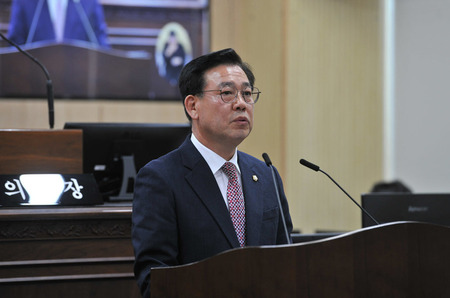
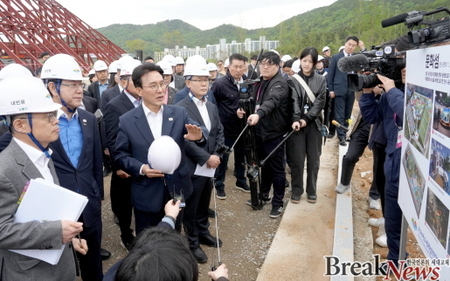
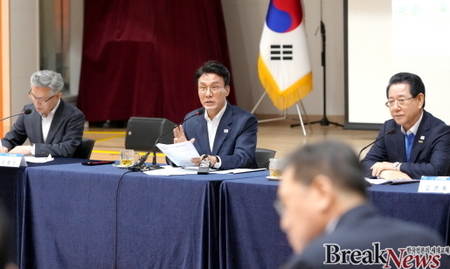
▲ 박형준 시장이 8일 시청에서 기자회견을 열고, 노후계획 도시 정비 기본계획안에 대해 브리핑하고 있다. (C) 배종태 기자 |
[브레이크뉴스=배종태 기자] 부산시가 오랜 준비 끝에 ‘노후 계획도시 정비 기본계획(안)’을 확정하고 오는 9일부터 주민공람 절차에 착수한다.
이번 계획은 '노후 계획도시 정비 및 지원에 관한 특별법' 시행에 맞춰 마련된 것으로, 수도권 중심의 1기 신도시와는 달리 부산시가 자체적으로 수립한 전국 특·광역시 최초의 정비 기본계획이다.
부산시는 이번 계획을 통해 1990년대 대규모 택지개발사업으로 조성된 도시들의 구조적 노후화 문제를 해소하고, 시민의 삶의 질을 근본적으로 개선하는 데 주력할 방침이다.
“30년 지난 계획도시, 경쟁력 저하·생활불편 가중”
1990년대 초반 정부는 주택난 해소를 위해 전국적으로 계획도시를 개발했으며, 이는 당시 서민들의 주거 안정에 크게 기여했다. 하지만 이후 20~30년이 지나면서 기반시설 노후화, 도시 연계성 부족, 자족기능 미비 등의 문제가 심화되었고, 이는 도시 경쟁력 저하와 시민 불편으로 이어졌다.
부산시는 이러한 상황을 근본적으로 해결하기 위해 2024년 7월부터 정비 기본계획 수립에 착수했으며, 국토교통부와 긴밀히 협력하며 도시의 미래 경쟁력을 고려한 다각적 전략을 구상해왔다.
1단계 대상지 ‘화명·금곡’ 및 ‘해운대1·2’… 도시 비전과 구조 정비안 구체화
1단계 계획의 대상지는 ‘화명·금곡지구’와 ‘해운대1·2지구’ 두 곳이다. 시는 이를 통해 부산형 노후계획도시 정비사업의 성공 모델을 선도적으로 발굴하고, 향후 다른 지구로의 확산 기반을 마련한다는 방침이다.
화명·금곡 지구는 1995~2002년 준공된 택지개발지구로, 총면적 2.71㎢에 달한다. 시는 해당 지역을 ‘숲과 강을 품은 휴메인(Humane) 도시’로 재정비하겠다는 비전을 내걸고 ▲지역특화거점 육성 ▲15분 도시 실현 ▲그린블루 네트워크 구축 ▲미래형 녹색교통도시 구현 등을 핵심 목표로 설정했다. 기준용적률은 평균 350%(2종 340%, 3종 370%)로 조정하고, 주택단지 정비형 14곳을 포함한 총 21곳을 특별정비예정구역으로 제시했다.
해운대1·2 지구는 1997년 준공된 3.05㎢ 규모의 택지개발지구로, ‘해운대 그린시티, 주민과 함께 새로운 미래도시를 열다’를 비전으로 설정했다. ▲지속가능한 융복합 도시 ▲부산형 15분 도시 ▲리질리언스(Resilience) 도시 ▲스마트 모빌리티 도시 등을 목표로 내세우며, 아파트는 360%, 연립주택은 210%의 기준용적률을 적용한다. 정비 대상은 통합재건축이 가능한 13개 단지를 포함해 총 17곳이다.
기준용적률은 기반시설 수용능력과 정주환경을 종합적으로 고려해 조정됐다. 화명·금곡지구는 기존 235%에서 350%로, 해운대지구는 250%에서 360%로 상향 조정되었다. 이에 따라 화명·금곡지구 내 21개, 해운대1·2지구 내 17개 주택단지가 특별정비예정구역으로 지정되며, 그 중 각각 14개, 13개 단지가 통합재건축 대상지로 분류된다.
주민부담 최소화 위한 공공기여비율 조정
시는 지난 5월 '노후계획도시 정비 및 지원에 관한 조례'를 제정해 정비사업의 제도적 기반도 마련했다. 특히 주민부담을 줄이기 위해 공공기여 비율을 최소화했다. 정비계획용적률이 기준 이하인 경우 10%, 초과 시 41%로 설정해 법령이 허용한 범위 내 최저 수준을 적용했다.
선도지구 공모 병행… 연내 2,500세대 규모 정비 착수 가능
부산시는 1단계 기본계획 공람과 동시에 선도지구 공모 절차도 병행 추진한다. 화명·금곡 2,500세대, 해운대 3,200세대 규모가 선도지구로 선정될 예정이며, 선정 기준은 ▲주민 참여도 ▲정비 시급성 ▲파급효과 등이다.
선정된 지구는 우선적으로 특별정비계획 수립을 추진할 수 있으며, 시는 이를 통해 정비사업의 신속한 착수를 유도할 계획이다. 공모는 오는 9일 공고를 시작으로, 10월 중 접수, 12월 최종 선정을 목표로 하고 있다.
부산시는 “선도지구 공모를 계기로 본격적인 노후계획도시 정비사업이 착수될 것”이라며, 선정된 지역이 빠르게 사업에 돌입할 수 있도록 행정적 지원을 아끼지 않겠다고 밝혔다.
2단계 계획도 7월 중 착수… 다대·만덕·모라·개금·당감 포함
1단계에 이어 부산시는 7월 중 다대, 만덕, 모라, 개금·당감 등 4개 지구를 대상으로 2단계 기본계획 수립에 들어간다. 대상지는 모두 20년 이상 경과된 100만㎡ 이상 택지개발지구이며, 면적이 미달하는 경우 주변 지역을 포함해 종합적인 계획을 수립할 예정이다.
시는 1단계 추진 경험을 바탕으로 문제점을 보완하고, 분야별 전문가 자문단을 통해 계획의 전문성과 객관성을 확보할 방침이다. 아울러, ‘찾아가는 미래도시지원센터’를 통해 시민의 의견을 현장에서 직접 수렴하며, 지역 맞춤형 정비방향을 도출할 계획이다.
“노후 계획도시 정비, 미래도시 전환의 출발점”
박형준 시장은 “이번 정비 기본계획은 기존의 개별 재건축 사업이 가진 한계를 뛰어넘어 도시공간 구조를 재설계하는 근본적 접근”이라며, “부산을 시민이 다시 태어나도 살고 싶은 도시, 글로벌 허브도시로 재도약시키기 위한 기반이 될 것”이라고 강조했다.
시는 이번 계획을 통해 노후화된 도시환경을 혁신적으로 개선하고, 정주 여건을 획기적으로 향상시키는 한편, 미래도시로의 대전환을 위한 장기적 도시전략을 본격화할 방침이다.
아래는 위 기사를 '구글 번역'으로 번역한 영문 기사의 [전문].<*The following is [the full text] of the English article translated by 'Google Translate'.>
After much preparation, Busan City has finalized the ‘Basic Plan for the Development of Aged Planned Cities (Draft)’ and will begin the public inspection process on the 9th.
This plan was prepared in accordance with the enforcement of the ‘Special Act on the Development and Support of Aged Planned Cities’, and unlike the first new cities centered on the metropolitan area, it is the first basic plan for development established by Busan City itself among special and metropolitan cities nationwide.
Through this plan, Busan City plans to focus on resolving the structural aging problems of cities created through large-scale land development projects in the 1990s and fundamentally improving the quality of life of citizens.
“Planned cities that have passed 30 years, declining competitiveness and increasing inconvenience in living”
In the early 1990s, the government developed planned cities nationwide to resolve the housing shortage, which greatly contributed to the housing stability of ordinary citizens at the time. However, after 20 to 30 years, problems such as aging infrastructure, lack of urban connectivity, and lack of self-sufficiency worsened, leading to declining urban competitiveness and inconvenience for citizens.
In order to fundamentally resolve this situation, Busan City began establishing a basic development plan in July 2024, and has been working closely with the Ministry of Land, Infrastructure and Transport to devise a multifaceted strategy that takes into account the city’s future competitiveness.
Phase 1 target areas ‘Hwamyeong·Geumgok’ and ‘Haeundae 1·2’… City vision and structural development plan concretized
The target areas of the Phase 1 plan are ‘Hwamyeong·Geumgok District’ and ‘Haeundae 1·2 District’. Through this, the city aims to proactively discover a successful model for Busan-style aging planned city development projects and lay the foundation for expansion to other districts in the future.
The Hwamyeong·Geumgok District is a residential development area completed between 1995 and 2002, with a total area of 2.71㎢. The city has set a vision to redevelop the area into a ‘Humane city embracing forests and rivers’ and has set the following as its key goals: ▲ fostering regional specialized hubs ▲ realizing a 15-minute city ▲ establishing a green blue network ▲ implementing a future-oriented green transportation city. The standard floor area ratio has been adjusted to an average of 350% (340% for type 2, 370% for type 3), and a total of 21 areas, including 14 housing complexes, have been proposed as special development zones.
Haeundae 1 and 2 districts are 3.05㎢ residential development areas completed in 1997, and have set the vision as ‘Haeundae Green City, opening a new future city together with residents.’ ▲Sustainable convergence city ▲Busan-style 15-minute city ▲Resilience city ▲Smart mobility city, etc. are set as the goals, and apartments are subject to a standard floor area ratio of 360% and townhouses are subject to a standard floor area ratio of 210%. The redevelopment target is a total of 17 sites, including 13 complexes that can be integrated and redeveloped.
The standard floor area ratio was adjusted by comprehensively considering the infrastructure capacity and living environment. The Hwamyeong and Geumgok districts were adjusted upward from 235% to 350%, and the Haeundae district was adjusted upward from 250% to 360%. Accordingly, 21 housing complexes in the Hwamyeong and Geumgok districts and 17 housing complexes in the Haeundae 1 and 2 districts are designated as special redevelopment zones, and 14 and 13 complexes, respectively, are classified as integrated redevelopment target areas.
Adjusting the public contribution ratio to minimize the burden on residents
The city enacted the “Ordinance on the Development and Support of Aging Cities” in May, establishing the institutional foundation for development projects. In particular, the public contribution ratio was minimized to reduce the burden on residents. In cases where the development plan floor area ratio is below the standard, it was set at 10%, and in cases where it exceeds the standard, it was set at 41%, applying the lowest level within the range permitted by law.
Parallel competition for pilot districts… 2,500 households to begin development within the year
Busan City is simultaneously promoting the pilot district competition procedure along with the public announcement of the first stage basic plan. 2,500 households in Hwamyeong and Geumgok and 3,200 households in Haeundae are expected to be selected as pilot districts, and the selection criteria are ▲resident participation ▲urgency of development ▲ripple effect, etc.
The selected districts can prioritize the establishment of a special development plan, and the city plans to induce the rapid commencement of development projects through this. The public contest will begin with an announcement on the 9th, with applications accepted in October and the final selection targeted for December.
Busan City stated, “The full-scale aging city development project will begin with the pilot district public contest,” and announced that it will spare no administrative support so that the selected areas can quickly begin the project.
Phase 2 plan to begin in July… including Dadae, Mandeok, Mora, Gaegeum, and Danggam
Following Phase 1, Busan City will begin establishing Phase 2 basic plans for four districts, including Dadae, Mandeok, Mora, Gaegeum, and Danggam, in July. All target areas are residential development districts of over 1 million m2 that have been in place for over 20 years, and if the area falls short, a comprehensive plan will be established that includes surrounding areas.
Based on the experience gained from Phase 1, the city plans to supplement issues and secure the expertise and objectivity of the plan through a group of expert advisors in each field. In addition, through the ‘Mobile Future City Support Center’, we plan to directly collect opinions from citizens on site and derive customized development directions for each region.
“Redevelopment of aging planned cities, the starting point of transformation into a future city”
Busan Mayor Park Hyung-joon emphasized, “This basic development plan is a fundamental approach to redesigning the urban space structure by overcoming the limitations of existing individual reconstruction projects,” and “It will become the foundation for Busan to leap forward as a city where citizens would want to live even if they were reborn and a global hub city.”
Through this plan, the city plans to innovatively improve the aging urban environment, dramatically improve living conditions, and fully implement a long-term urban strategy for a grand transformation into a future city.
원본 기사 보기:부산브레이크뉴스