브레이크뉴스 김충열 정치전문기자 = 국회 기획재정위원회 소속 안도걸 더불어민주당 의원은 21일 열린 조달청·데이터처 국정감사에서 “AI 3대 강국 도약을 위해서는 구리와 알루미늄 등 핵심 원자재의 비축과 저장 인프라 확충이 절대적으로 필요하다”며 “현행 비축체계로는 폭증하는 산업 수요를 감당할 수 없다”고 지적했다.
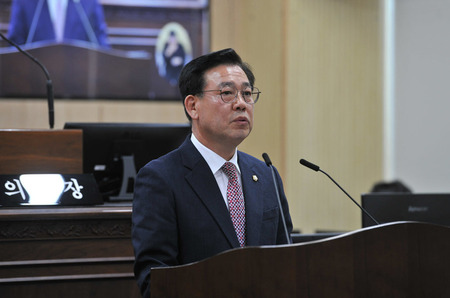
 ▲ 안도걸 의원은 “이재명 정부가 추진 중인 AI 인프라 구축, 재생에너지 확대, 에너지고 속도로 사업은 모두 대규모 구리·알루미늄 수요를 수반한다”며 “의원실에서 조달청 자료를 토대로 추산한 결과, 향후 5년간 구리는 현재 3.5만 톤에서 약 7.4만톤, 알루미늄은 19만톤에서 약 28만 톤으로 추가 비축이 필요하다”고 밝혔다. © 김충열 정치전문기자 |
AI 인프라 확충 따른 비철금속 수요 급증
안 의원은 “이재명 정부가 추진 중인 AI 인프라 구축, 재생에너지 확대, 에너지고 속도로 사업은 모두 대규모 구리·알루미늄 수요를 수반한다”며 “의원실에서 조달청 자료를 토대로 추산한 결과, 향후 5년간 구리는 현재 3.5만 톤에서 약 7.4만톤, 알루미늄은 19만톤에서 약 28만 톤으로 추가 비축이 필요하다”고 밝혔다.
이어 “AI 인프라 구축에 필요한 구리·알루미늄 비축 확대와 지축 기지 확충에는 총 6,652억 원의 예산이 소요될 것으로 추정된다”며, “이는 2026년 조달청 비축예산(800억 원)의 8.3배에 달해 정부만의 재정으로는 감당하기 어렵다”고 지적했다.
전국 비축기지는 사실상 포화상태
안 의원은 “현재도 비축물량을 보관할 전국 9개 비축기지는 평균 가동률이 약87.8%로 포화 상태”라며 “특히 인천과 대구는 각각 활용률 114%, 154%로 초과운영되고 있다”고 지적했다. 이에 “추가 비축 물량을 수용하려면 약 2,500억~5,000억 원 규모의 신축 예산이 필요해, 조달청이 중장기적인 인프라 확충계획을 마련해야 한다”고 강조했다.
민·관 공동비축제도 활성화해 민간 협력 및 참여 유도해야
그는 “정부 재정만으로는 대규모 비축 확대가 어렵기 때문에, 민간 협력을 통해 비축물량을 확보하는 민·관 공동비축제도 활성화가 현실적 대안이지만 활성화되고 있지 않다”고 지적했다. 백승보 조달청장도 “현재 제도 활성화를 위해 노력 중이나 인센티브 부족 등으로 활성화가 미진하다”고 공감했다.
안 의원은 ”민간의 비축물자 구매를 위한 정책자금 융자, 우선구매권 적용협약 시 금리우대 혜택 등 과감한 인센티브가 필요하다”며, “특히 조달청이 공급망 관리기금 등 기존 재원을 전략물자 확보 목적에 활용할 수 있도록 하고, 조달청 예산의 우선순위 조정이 필요하다”고 강조했다. 이에 조달청장은 “조달청 예산의 우선순위 조정을 통해 비축 확대와 제도 활성화에 노력하겠다”고 답했다.
데이터처, 국가 데이터 전략 총괄기구 역할 강화
안 의원은 데이터처장에게 “데이터처는 더 이상 단순한 통계기관이 아니라 국가데이터 전략을 총괄하는 기관으로, ▲데이터 거버넌스 총괄, ▲데이터·연계 표준화·메타데이터 구축 ▲공공·민간데이터 활용 확대 및 개방 ▲ AI 및 디지털전환지원 인프라 마련 ▲증거기반 정책·통계로의 전환의 다섯 가지 과업을 제시했다.
데이터 거버넌스 강화·‘국가데이터위원회’ 격상 및 데이터기본법 제정 필요
안 의원은 “행정안전부와 과학기술정보통신부가 각각 전자정부·정보산업을 담당하고 있는 만큼, 데이터 정책의 조정·통합 기능을 명확히 하는 거버넌스 구축이 선행돼야 한다”고 강조했다. 이를 위해 “국가통계위원회를 국가데이터위원회로 격상해 국무총리가 국가 데이터전략 수립과 관계부처 역할 조정을 직접 담당하도록 하고, 국가적인 데이터 생산·활용 시스템 구축을 뒷받침할 ‘데이터기본법’ 제정이 필요하다”고 주장했다. hpf21@naver.com
* 아래는 위 기사를 '구글 번역'으로 번역한 영문 기사의 [전문]입니다. '구글번역'은 이해도 높이기를 위해 노력하고 있습니다. 영문 번역에 오류가 있을 수 있음을 전제로 합니다.
*The following is [the full text] of the English article translated by 'Google Translate'. 'Google Translate' is working hard to improve understanding. It is assumed that there may be errors in the English translation.
Rep. Ahn Do-geol: Expanding Stockpiles of Strategic Materials is Necessary for Korea to Become One of the Top 3 AI Powerhouses
Demand for Copper and Aluminum Surges Due to Expanded AI Infrastructure; Urgent Need to Recalibrate Stockpiling Strategy
Break News political reporter Kim Choong-lyoul = Rep. Ahn Do-geol (Gwangju Southeast B), a member of the National Assembly's Strategy and Finance Committee, stated during the audit of the Public Procurement Service and the Data Agency held on the 21st, "To become one of the top 3 AI powerhouses, stockpiling and expanding storage infrastructure for key raw materials like copper and aluminum are absolutely essential." He added, "The current stockpiling system cannot handle the surging industrial demand."
Demand for Non-Ferrous Metals Surges Due to Expansion of AI Infrastructure
Representative Ahn stated, "The Lee Jae-myung administration's AI infrastructure development, renewable energy expansion, and energy highway projects all entail massive demand for copper and aluminum." He added, "Based on data from the Public Procurement Service, my office estimates that additional copper stockpiles will be needed over the next five years, increasing from the current 35,000 tons to approximately 74,000 tons, and aluminum stockpiles will increase from 190,000 tons to approximately 280,000 tons."
He continued, "Expanding the copper and aluminum stockpiles and the expansion of the bases necessary for AI infrastructure development is estimated to cost a total of 665.2 billion won. This is 8.3 times the Public Procurement Service's 2026 stockpile budget of 80 billion won, making it difficult for the government alone to handle."
National Stockpile Bases Are Virtually Saturated
Representative Ahn stated, "Currently, the nine stockpile bases nationwide, where stockpiles are stored, are at an average utilization rate of approximately 87.8%, reaching saturation levels. Incheon and Daegu, in particular, are operating at overcapacity, with utilization rates of 114% and 154%, respectively." He emphasized, "Accommodating additional stockpiles would require a new construction budget of approximately 250 to 500 billion won, and the Public Procurement Service (PPS) must develop a mid- to long-term infrastructure expansion plan."
The Public-Private Joint Stockpile System Should Be Revitalized to Encourage Private Sector Cooperation and Participation
He pointed out, "Since large-scale stockpiling is difficult to achieve with government funding alone, revitalizing the public-private joint stockpile system, which secures stockpiles through private cooperation, is a realistic alternative, but it is not actively being implemented." Baek Seung-bo, Commissioner of the Public Procurement Service, agreed, stating, "We are currently working to revitalize the system, but its effectiveness is limited due to insufficient incentives."
Rep. Ahn emphasized, "Bold incentives are needed, such as policy financing for private sector stockpile purchases and preferential interest rates for preferential purchase agreements." He added, "In particular, the Public Procurement Service (PPS) should be able to utilize existing resources, such as the Supply Chain Management Fund, for securing strategic materials, and the PPS budget needs to be prioritized." The PPS Commissioner responded, "We will strive to expand stockpiling and revitalize the system by prioritizing the PPS budget." The Data Ministry Strengthens its Role as the Overseeing Organization for National Data Strategy
Representative Ahn stated to the Director of the Data Ministry, "The Data Ministry is no longer a simple statistical agency, but an organization that oversees national data strategy. He presented five tasks: overseeing data governance, standardizing data and linkages, and establishing metadata; expanding and opening up public and private data; establishing infrastructure to support AI and digital transformation; and transitioning to evidence-based policies and statistics."
Strengthening Data Governance, Elevating the National Data Committee, and Enacting a Framework Act on Data
Representative Ahn emphasized, "Since the Ministry of the Interior and Safety and the Ministry of Science and ICT are each responsible for e-government and the information industry, establishing a governance structure that clearly articulates the coordination and integration of data policies is essential." To this end, he argued, "The National Statistics Committee should be elevated to the National Data Committee, placing the Prime Minister directly in charge of establishing the national data strategy and coordinating the roles of relevant ministries. Furthermore, the enactment of a Framework Act on Data is necessary to support the establishment of a national data production and utilization system." hpf21@naver.com