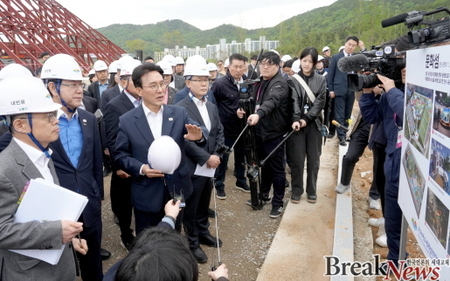
▲ 충남 부여군, 농촌리브투게더 현장 전경 © 충청남도 제공 |
충남도가 농촌 주거의 질을 끌어올리고 인구 유입의 마중물로 삼아 온 ‘충남형 농촌리브투게더’가 첫 입주를 앞두며 사업 효과를 가시화했다. 부여 은산과 공주 신풍 두 지구는 공사와 입주자 선정을 마무리하고, 다음 달부터 실제 거주가 시작된다.
이 사업은 농촌 주거환경을 구조적으로 개선하고, 청년·서민의 주거 안정을 통해 지역 활력을 회복하겠다는 취지의 분양전환 공공임대주택 공급 모델이다. 실거주를 전제로 청년 농업인, 귀농 희망자, 농촌형 교육을 선택한 자녀 동반 가구, 지역 이주 희망 주민, 노후·불량 주택 거주자 등을 대상으로 한다.
은산지구(부여 은산면 은산리)는 20세대, 신풍지구(공주 신풍면 산정리)는 19세대 규모로 조성됐다. 모든 주택은 전용면적 85㎡의 단독형이며, 세대당 별도 창고를 갖췄다. 시스템에어컨과 붙박이장을 기본 제공해 초기 부담을 낮췄고, 태양광 등 신재생에너지 설비와 고효율 자재를 적용해 에너지 자급형 주택으로 설계했다. 탄소중립 기조에 부합하는 동시에 장기적인 관리비 절감 효과를 노린 구성이다.
입주 조건도 지역 여건을 반영했다. 은산은 보증금 500만 원에 월 임대료 30만 원, 신풍은 보증금 3000만 원에 월 25만 원으로 책정됐다. 10년 임대 후에는 희망 시 인근 농촌 주택 시세 수준으로 분양 전환이 가능하다. 은산에는 군내·군외 청년농과 근로소득자가, 신풍에는 미성년 자녀 동반 가구와 신혼·한부모 가구, 청년농 등이 각각 선정됐다.
도는 이번 두 지구를 시범 성과로 삼아 금산 남일, 태안 남면, 공주 우성, 보령 웅천, 청양 남양·정산, 홍성 은하, 서천 마서 등 8개 지구로 확대를 추진 중이다.
단순한 주택 공급을 넘어, 주거 안정–교육 선택권–에너지 자립을 묶은 패키지 접근이 농촌 정주 여건을 실질적으로 바꿀 수 있는지에 대한 검증 단계에 들어섰다는 평가다. 정착 이후의 공동체 형성과 지역 서비스 연계가 뒤따를 경우, 농촌 주거 정책의 전환점으로 자리 잡을 가능성도 제기된다.
*아래는 위 기사를 '구글 번역'으로 번역한 영문 기사의 [전문]입니다. '구글번역'은 이해도를 높이기를 위해 노력하고 있습니다. 영문 번역에 오류가 있을 수 있음을 전제로 합니다.<*The following is [the full text] of the English article translated by 'Google Translate'. 'Google Translate' is working hard to improve understanding. It is assumed that there may be errors in the English translation.>
South Chungcheong Province's "Chungnam-style Rural Live Together" project, which aims to improve the quality of rural housing and stimulate population influx, is nearing its first occupancy, demonstrating the project's tangible results. Construction and occupancy selection for the two districts, Eunsan in Buyeo and Sinpung in Gongju, have completed, with actual occupancy beginning next month.
This project, a model for supplying public rental housing through conversion to pre-sale, aims to structurally improve rural living conditions and revitalize local communities by ensuring housing stability for young people and working-class families. The project targets young farmers, those hoping to return to the countryside, families with children who have chosen rural education, residents seeking to relocate, and residents of older or substandard housing, all of whom are expected to live there.
The Eunsan district (Eunsan-ri, Eunsan-myeon, Buyeo) will accommodate 20 units, while the Sinpung district (Sanjeong-ri, Sinpung-myeon, Gongju) will accommodate 19 units. All units are detached units with a floor area of 85 square meters, and each unit has a separate storage area. The units are designed to be energy self-sufficient, utilizing renewable energy facilities like solar panels and high-efficiency materials, while also complying with the carbon-neutral policy and aiming for long-term maintenance cost savings.
The occupancy requirements also reflect local conditions. Eunsan units have a deposit of 5 million won and a monthly rent of 300,000 won, while Shinpung units have a deposit of 30 million won and a monthly rent of 250,000 won. After a 10-year lease, the units can be converted to a sale price comparable to the market price of nearby rural housing. Eunsan units are targeted at young farmers and wage earners within and outside the county, while Shinpung units are targeted at households with minor children, newlyweds and single-parent families, and young farmers.
The province is using these two districts as pilot projects and is expanding the program to eight additional districts: Geumsan Namil, Taean Nammyeon, Gongju Woosung, Boryeong Ungcheon, Cheongyang Namyang/Jeongsan, Hongseong Eunha, and Seocheon Maseo.
Beyond simple housing supply, the assessment is that a package approach that combines housing stability, educational options, and energy independence has entered a phase of verification to determine whether it can substantially transform rural settlement conditions. If community formation and local service integration follow after settlement, it could potentially become a turning point in rural housing policy.
원본 기사 보기:브레이크뉴스대전세종충청