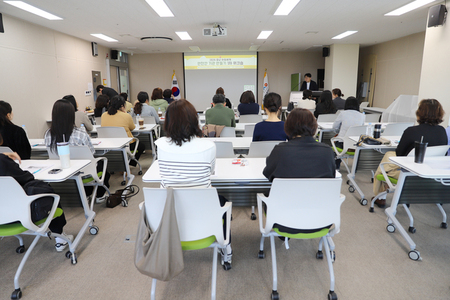
▲ 충남 농촌교육농장 교사 양성과정 교육 진행 장면=충청남도 제공 © 정지완 기자 |
충청남도 농업기술원이 교과과정과 접목한 농촌체험교육의 내실화를 위해 ‘2026년 농촌교육농장 교사양성과정 교육’을 본격 추진한다. 학교 현장과 농업·농촌 자원을 유기적으로 연결해 현장체험학습의 교육적 효과를 높이겠다는 구상이다.
이번 과정은 농촌교육농장을 단순 체험 공간이 아닌 교육 인프라로 정립하는 데 초점을 맞췄다. 농업·농촌의 공익적 가치와 학습 요소를 교육과정에 체계적으로 반영함으로써 미래세대의 인성 함양과 창의적 사고력 증진을 도모하고, 이를 지도하는 교사의 실무 역량을 끌어올리는 데 목적을 두고 있다.
기초과정은 19일부터 20일까지 이틀간 도 농업기술원 치유농업센터에서 진행됐으며, 도내 농촌교육농장 관계자 28명이 참여했다. 교육 내용은 농업·농촌에 대한 이해를 토대로 교육농장의 개념을 정립하고, 체험프로그램 설계 원리를 익히는 등 운영의 기본 토대를 다지는 데 집중됐다.
이어 26~27일에는 캠코 인재개발원에서 63명을 대상으로 심화과정이 운영된다. 이 과정에서는 학교 교육과정과 연계한 농촌체험 프로그램 기획, 교안 작성 실습, 현장체험학습 운영 전략 등 현장 적용성을 강화한 실습 중심 교육이 이뤄질 예정이다. 단순 이론 전달을 넘어 수업 설계와 평가까지 아우르는 실천적 역량 배양에 방점이 찍혀 있다.
도 농업기술원은 모든 과정을 농촌교육농장 품질인증 제도와 연동해 운영하고 있다. 인증 기준에 부합하는 프로그램 기획 능력과 교육 품질 관리 체계를 동시에 확보함으로써 농촌교육농장의 신뢰도를 높이겠다는 취지다. 이는 학교가 안심하고 체험학습을 의뢰할 수 있는 제도적 기반을 강화하는 조치로 해석된다.
농촌교육농장은 생태·식량·환경 교육을 통합적으로 구현할 수 있는 현장형 학습 공간으로 주목받고 있다. 교과와 연계된 체험 활동은 학생의 정서 안정과 사회성 발달에 긍정적 영향을 미친다는 점에서, 농업 현장의 교육적 활용 가능성은 더욱 확대되는 추세다. 체계적인 지도교사 양성은 이러한 흐름을 지속가능한 교육모델로 정착시키는 핵심 조건이라 할 수 있다.
도 농업기술원은 농촌교육농장이 학생들의 인성 및 정서 발달에 기여하는 중요한 교육 자원이라는 인식 아래, 학교와 농장이 긴밀히 협력하는 구조를 확산해 나갈 계획이다. 지도교사 역량 강화 교육을 지속적으로 추진함으로써 교과 연계형 농촌체험 프로그램의 질적 수준을 높이고, 현장체험학습의 교육적 효과를 안정적으로 뒷받침하겠다는 방침이다.
*아래는 위 기사를 '구글 번역'으로 번역한 영문 기사의 [전문]입니다. '구글번역'은 이해도를 높이기를 위해 노력하고 있습니다. 영문 번역에 오류가 있을 수 있음을 전제로 합니다.<*The following is [the full text] of the English article translated by 'Google Translate'. 'Google Translate' is working hard to improve understanding. It is assumed that there may be errors in the English translation.>
Chungnam Rural Education Farm Strengthens Curriculum Links… Improving Teacher Expertise
Chungnam Agricultural Research and Extension Services Operates Teacher Training Program for 28 Basic and 63 Advanced Students… Linked to Quality Certification System
The Chungcheongnam-do Agricultural Research and Extension Services (Chungcheongnam-do Agricultural Research and Extension Services) is launching the "2026 Rural Education Farm Teacher Training Program" to enhance the effectiveness of rural experiential education integrated with the curriculum. The program aims to organically connect school sites with agricultural and rural resources to enhance the educational effectiveness of field experiential learning.
This program focuses on establishing rural education farms as educational infrastructure, not simply experiential spaces. By systematically incorporating the public values and learning elements of agriculture and rural communities into the curriculum, it aims to foster character development and creative thinking in future generations and enhance the practical skills of teachers who lead these programs.
The basic course was held for two days, from the 19th to the 20th, at the Chungnam Agricultural Research and Extension Services Healing Agriculture Center. Twenty-eight participants from rural education farms in the province participated. The training focused on establishing the concept of an educational farm based on an understanding of agriculture and rural areas, and on learning the principles of experiential program design, thereby laying the foundation for its operation.
Following this, an advanced course will be held for 63 participants on the 26th and 27th at the KAMCO Human Resources Development Center. This course will focus on practical training with enhanced practical application, including planning rural experience programs aligned with the school curriculum, developing lesson plans, and implementing strategies for field experience learning. Beyond simple theoretical instruction, the focus is on developing practical skills, encompassing lesson design and evaluation.
The Provincial Agricultural Research and Extension Services (PRRS) is operating all courses in conjunction with the Rural Education Farm Quality Certification System. This program aims to enhance the credibility of rural education farms by simultaneously securing program planning capabilities that meet certification standards and an educational quality management system. This measure is interpreted as a strengthening of the institutional foundation that allows schools to confidently request experiential learning programs.
Rural education farms are attracting attention as field-based learning spaces that can integrate ecological, food, and environmental education. The educational potential of agricultural fields is expanding, as experiential activities linked to curriculum have a positive impact on students' emotional stability and social development. Systematic teacher training is a key prerequisite for establishing this trend as a sustainable educational model.
The Provincial Agricultural Research and Extension Services (PRRS) recognizes that rural educational farms are a vital educational resource that contributes to students' character and emotional development, and plans to expand the structure of close collaboration between schools and farms. By continuously promoting capacity-building training for instructors, the Rural Educational Farms aims to elevate the quality of curriculum-linked rural experience programs and steadily support the educational effectiveness of field experience learning.
원본 기사 보기:브레이크뉴스대전세종충청