|
【충북 브레이크뉴스】임창용 기자=대한민국을 대표하는 ‘물의 도시’ 충주시의 화려한 이면에 여전히 식수난으로 고통받는 농촌 주민들이 있어 대책 마련이 시급하다는 지적이 제기됐다.
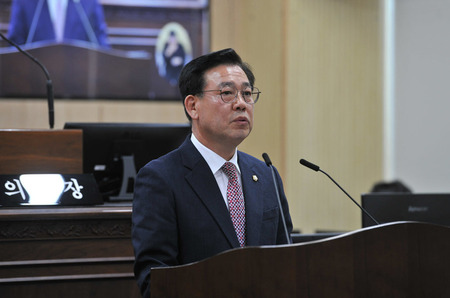
충주시의회 홍성억 의원은 12일 열린 제301회 임시회 제2차 본회의에서 5분 자유발언을 통해 “충주호와 탄금호를 품은 물의 도시임에도 불구하고, 읍·면 지역 일부 주민들은 여전히 노후된 지하수에 의존하며 불안정한 생활을 이어가고 있다”며 상수도 보급 확대를 강력히 촉구했다.
홍 의원은 이날 발언에서 현장에서 만난 어르신들의 목소리를 전하며 농촌 지역의 열악한 현실을 고발했다. 그는 “가뭄에는 물이 끊길까 겁나고, 겨울에는 관로가 얼어 물 한 모금 마시는 것이 전쟁이라는 주민들의 이야기는 단순한 불편이 아닌 생존의 문제”라고 강조했다.
실제로 홍 의원이 제시한 자료에 따르면, 2024년 기준 전국 상수도 보급률은 99.5%, 농어촌 지역도 96.5%에 달하지만 충주시 읍·면 지역의 보급률은 83.58% 수준에 머물러 있다. 이는 충주 시내권(동 지역) 보급률인 99.66%와 비교해 현격한 차이를 보이는 수치다. 현재 충주시 내 5,558가구, 약 1만 700여 명의 주민이 여전히 개인 관정이나 노후된 간이 상수도에 의존하고 있는 실정이다.
홍 의원은 시의 예산 집행 방향에 대해서도 쓴소리를 냈다. 그는 “지방 정원과 시민의 숲 조성 등 도시의 외형을 가꾸는 사업도 중요하지만, 정작 주민의 집에는 깨끗한 수돗물이 흐르지 않는다면 그 시설들이 무슨 의미가 있겠느냐”고 반문했다.
특히 고령 인구가 밀집된 농촌 마을에서 어르신들이 직접 관정을 파고 수천만 원의 비용을 들여 수질 관리를 감당하는 현실을 지적하며, 이를 개인의 책임으로 돌려서는 안 된다고 역설했다. 또한, 기본적인 인프라인 상수도조차 갖춰지지 않은 곳에 젊은 세대의 정착을 기대하기는 어렵다며 ‘지방 소멸’ 대응 차원에서의 접근을 주문했다.
홍성억 의원은 실질적인 해결을 위해 집행부에 세 가지 방안을 제안했다.
▲상수도 미보급 마을에 대한 정밀 실태조사 및 수질 위험도 평가 실시 ▲지형적 특성을 고려한 스마트 정수 시스템 등 다각적 보급 방식 검토 ▲‘2030년 읍·면 지역 상수도 확충 로드맵’ 수립 및 투명한 공개 등이다.
홍 의원은 “깨끗한 물은 선택이 아닌 기본적인 권리이며, 물 한 모금에도 차별이 있어서는 안 된다”며 “읍·면 지역 주민들이 하루빨리 깨끗한 수돗물을 누릴 수 있도록 충주시의 전향적인 행정 결단을 강력히 촉구한다”고 발언을 마쳤다.
아래는 위 기사를 '구글 번역'으로 번역한 영문 기사의 [전문]입니다. '구글번역'은 이해도 높이기를 위해 노력하고 있습니다. 영문 번역에 오류가 있을 수 있음을 전제로 합니다.
The following is [the full text] of the English article translated by 'Google Translate'. 'Google Translate' is working hard to improve understanding. It is assumed that there may be errors in the English translation.)
Chungju City Council Member Hong Seong-eok: "Chungju, the City of Water, Must Have No Discrimination in Water Supply in Townships and Counties"
Chungju's townships and ward areas only have a water supply rate of 83.58%... "Administrative decisions are needed to guarantee basic rights to livelihood"
Despite the glamorous facade of Chungju City, Korea's representative "city of water," there are still rural residents suffering from drinking water shortages, raising concerns that urgent measures are needed.
At the second plenary session of the 301st extraordinary session held on the 12th, Chungju City Council Member Hong Seong-eok delivered a five-minute free speech, strongly urging the expansion of water supply. He stated, "Despite being a city of water, nestled between Chungju Lake and Tangeum Lake, some residents in townships and ward areas still rely on aged groundwater, leading to unstable livelihoods."
In his remarks, Council Member Hong shared the voices of seniors he met in the field and exposed the harsh realities of rural areas. He emphasized, "The stories of residents who fear water shortages during droughts and who say even a sip of water is a battle in winter when pipes freeze are not simply inconveniences, but a matter of survival."
According to data presented by Representative Hong, as of 2024, the national water supply rate will reach 99.5%, with rural areas reaching 96.5%. However, the rate in Chungju's towns and townships remains at 83.58%. This represents a significant difference from the 99.66% rate in the Chungju metropolitan area (dong area). Currently, 5,558 households, or approximately 10,700 residents, in Chungju still rely on private wells or outdated, temporary water systems.
Representative Hong also criticized the city's budget execution. He asked, "While projects that enhance the appearance of cities, such as creating local gardens and citizen forests, are important, what good are these facilities if clean tap water doesn't flow into residents' homes?"
He pointed out that in rural villages with a high elderly population, seniors are personally responsible for digging wells and spending tens of millions of won to manage water quality, emphasizing that this should not be attributed to individuals. Furthermore, he urged an approach that addresses the "death of rural areas," stating that it's difficult to expect the younger generation to settle in places without even basic infrastructure, such as water supply.
Representative Hong Seong-eok proposed three practical solutions to the executive branch:
▲ Conducting a detailed survey and water quality risk assessment of villages without water supply; ▲ Examining multifaceted distribution methods, such as smart water purification systems that take topographical characteristics into account; and ▲ Developing and transparently disclosing a "2030 Roadmap for Expansion of Water Supply in Townships and Townships."
Rep. Hong concluded his remarks by saying, “Clean water is not a choice, but a fundamental right, and there should be no discrimination even in receiving a sip of water.” He added, “I strongly urge the city of Chungju to make a forward-looking administrative decision so that residents of townships and counties can enjoy clean tap water as soon as possible.”
원본 기사 보기:충북 브레이크뉴스