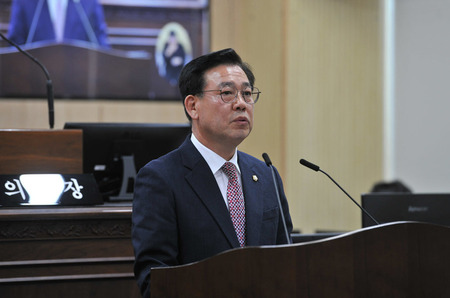
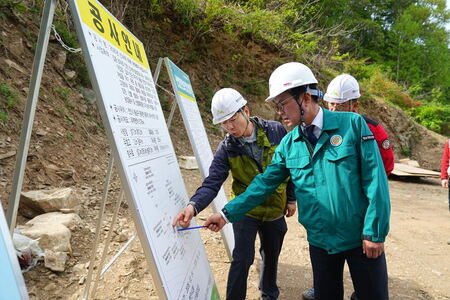
▲ 윤석열 대통령이 20일 오후 경기도 성남 분당구 목련1 영구임대주택단지 리모델링 현장을 둘러보고 있다. (사진=대통령실 제공) 2022.07.20. © 브레이크뉴스 |
브레이크뉴스 정명훈 기자= 공공 임대주택의 장기 미임대 비율이 매년 증가하는 것으로 나타났다.
이에 따라 너무 면적이 작은 세대는 통합해 전용면적을 넓히는 한편 지역별로 수요에 맞는 공급 계획을 세워야 한다는 지적이 나온다.
30일 홍기원 의원이 한국토지주택공사(LH)로부터 받은 자료에 따르면 6개월 이상 장기 미임대 상태인 공공임대주택은 올해 6월 말 기준 3.5%로 집계됐다.
미임대율은 2018년 1.2%에서 2019년 1.6%, 2020년 2.3%, 2021년 3.1%로 매년 증가하고 있다.
미임대율이 증가하는 원인으로는 좁은 면적과 수요와 공급의 불일치가 꼽힌다.
국회 예산정책처가 ‘2021년 결산 보고서’에서 관리호수 100호 이상의 건설형 공공임대주택 단지 중 장기 미임대율 상위 5개 단지를 분석한 결과 전용면적이 작은 호수에서 장기 미임대율이 높았다.
특히 행복주택은 대부분 40㎡ 미만(12평)의 소형 평수 위주로 공급돼 미임대 비율이 높았다.
전남 영암용앙3(행복주택)을 예로 들면, 전용면적 10평(36.27㎡)에서 미임대율은 1.5%에 불과했지만 이보다 작은 6.4평(21.28㎡)에선 미임대율이 40.5%, 7.9평(26.39㎡)에선 75.0%에 달했다.
전북 군산 신역세권A-2BL(국민임대)의 경우에도 전용면적 14평(46.28㎡)의 장기 미임대율은 19.2%인데 반해, 10평(33.60㎡)에서는 46.6%로 미임대율이 2배 이상 높았다.
수요가 많지 않은 곳에 공급이 넘쳐 미임대율이 높은 지역도 있다.
충북은 수급자 대부분이 장기공공임대주택에 거주하고 있어, 기존 거주자가 퇴거하더라도 새로 입주할 대기 수요가 거의 없는 실정으로 전해졌다. 경남과 충남 역시 공급이 넘쳐 미임대 비율이 매년 상위권에 속해 있다.
미임대율이 높아지면서 공실로 인한 임대료 손실과 관리비 부담은 모두 LH가 떠안아야 한다.
실제로 LH의 지난해 공공주택관리사업 재무 상황을 보면, 매년 매출 총이익 1조7792억원, 영업이익 1조9596억원, 당기순이익 1조8289억원이 적자를 기록하고 있다.
관리호수가 연평균 7.3% 증가하는 데 비해 임대수익은 연평균 6.2% 증가하는 데 그쳐 운영 적자는 연평균 17.1%에 달하는 상황이다.
이에 홍기원 의원은 "주택 수요자가 원하는 건 무작정 물량을 늘리는 기계적 공급이 아니다"라며 "공가 원인을 정확히 분석해 실질적으로 필요한 곳에 공급하는 ‘수요맞춤형’ 주택이 필요하다”고 강조했다.
*아래는 위 기사를 '구글 번역'으로 번역한 영문 기사의 [전문]입니다. '구글번역'은 이해도 높이기를 위해 노력하고 있습니다. 영문 번역에 오류가 있을 수 있음을 전제로 합니다.<*The following is [the full text] of the English article translated by 'Google Translate'. 'Google Translate' is working hard to improve understanding. It is assumed that there may be errors in the English translation.>
"I don't like small houses." Small flats in rental houses continue to increase
Rep. Hong Ki-won pointed out, "We need to reduce the number of pyeongs in Sopyeong and establish a supply plan that meets demand."
-Reporter Jung Myunghoon
It was found that the long-term non-rental ratio of public rental housing increased every year.
As a result, it is pointed out that households with too small area should be integrated to expand their dedicated area while establishing supply plans that meet demand for each region.
According to data received by Hong Ki-won from the Korea Land and Housing Corporation (LH) on the 30th, 3.5% of public rental housing, which has not been leased for more than six months, was counted as of the end of June this year.
The non-rental rate is increasing every year from 1.2% in 2018 to 1.6% in 2019, 2.3% in 2020, and 3.1% in 2021.
The reason for the increase in the non-rental rate is the narrow area and mismatch between supply and demand.
According to the National Assembly Budget Office's analysis of the top five long-term non-rental rates among construction-type public rental housing complexes with more than 100 managed lakes in the "2021 Settlement Report," the long-term non-rental rate was high in lakes with small dedicated areas.
In particular, most of the happy houses were supplied mainly with small flats of less than 40 square meters (12 pyeong), so the ratio of non-rental was high.
For example, Yeongam Yongang 3 (Happiness House) in Jeollanam-do Province, the non-rental rate was only 1.5 percent in the exclusive area of 10 pyeong (36.27㎡), but the non-rental rate reached 40.5 percent in 6.4 pyeong (21.28㎡) and 75.0 percent in 7.9 pyeong (26.39㎡).
In the case of A-2BL (national lease) in Gunsan, Jeollabuk-do, the long-term non-rental rate of 14 pyeong (46.28㎡) was 19.2%, while the non-rental rate was more than twice as high as 46.6% in 10 pyeong (33.60㎡).
Some areas have high non-rental rates due to overflowing supply where there is not much demand.
In Chungbuk, most of the recipients live in long-term public rental housing, so even if the existing residents leave, there is little waiting demand for new residents. Gyeongnam and Chungnam are also in the top ranks every year due to overflowing supply.
As the non-rental rate rises, LH has to bear both the loss of rent and the burden of management costs due to vacancy.
In fact, looking at LH's financial situation of last year's public housing management project, it recorded a deficit of 1.7792 trillion won in sales, 1.9596 trillion won in operating profit, and 1.8289 trillion won in net profit every year.
While the number of managed lakes has increased by 7.3% annually, rental income has increased by only 6.2% annually, with the operating deficit reaching 17.1% annually.
In response, lawmaker Hong Ki-won said, "What housing consumers want is not a mechanical supply that increases the volume recklessly," adding, "We need a 'demand-tailored' housing that accurately analyzes the cause of public housing and supplies it where it is actually needed."