▲ 이태양(Lee Tae Yang) 作 사유의 미학(반가사유상), 61cmx60cm, 복합재료 Mother of pearl on mixed materials, 2023 © 이일영 칼럼니스트 |
올해로 12회를 맞는 미술 축제 2023 서울아트쇼는 서울 삼성동 코엑스 A홀에서 22일 개막되어 26일까지 열린다. 갤러리아트눈 부스(No 87)에 참가한 이태양 아티스트의 사유의 미학을 품은 나전칠기 회화 작품이 주목된다.
작가는 우리나라 국보 제83호로 지정된 반가사유상 나전칠기 작품을 선보인다. 또한, 일본의 국보 제1호인 고류지(廣隆寺) 목조반가사유상 나전칠기 작품과 함께 근대 조각의 창시자인 오귀스트 로댕의 대표작품 ‘생각하는 사람’(The Thinker)을 소재로 한 나전칠기 작품까지 5점이 전시된다.
오랜 역사를 관통한 사유의 미학을 헤아린 작가의 작품은 많은 이야기를 품고 있다. 나전칠기(螺鈿漆器)는 전복과 야광패(夜光貝)와 같은 재료로 무늬를 담아 옻칠로 마무리하는 오랜 역사의 전통 공예로 고도의 기법과 집중력을 요구한다. 특히 기원전(BC) 3,000년으로 거슬러 오르는 인류 최초의 수메르 문명 시대 우르 왕릉에서 출토된 나전 작품이 존재하는 유구한 역사를 안고 있다.
기록에 의하면 중국 고대 왕조 상나라 시대에 나전칠기가 제작되었으며 우리나라는 백제 무령왕릉에서 청동거울 표면에 얇은 금, 은판을 칠로 붙여 장식하는 평탈(平脫) 기법 유물이 발굴되었다. 나아가 삼성리움미술관이 소장하고 있는 국보 제140호로 지정된 나전칠기 꽃문양 청동거울인 나전화문동경(螺鈿花紋銅鏡)은 신라 시대의 유물로 나전칠기의 오랜 역사와 더불어 뛰어난 예술성을 자랑한다.
이를 바탕으로 고려 시대 나전칠기는 화면 뒷면에서 반복적으로 채색하는 고려 불화기법인 복채법(伏彩法)을 응용하였을 만큼 독창적인 공예기법으로 발전시켰다.
 ▲ (좌).(우) 이태양(Lee Tae Yang) 作 사유의 미학(반가사유상), 61cmx60cm, 복합재료 Mother of pearl on mixed materials, 2023 |
오늘날 많은 작가가 전통과 현대적 기법으로 다양한 나전칠기 작품들을 선보이고 있다. 이 중에서 이태양 작가의 작품을 주목하는 이유는 찬연한 우리 문화의 정수인 반가사유상의 정신성을 격조 높은 회화예술 작품으로 승화시킨 까닭이다.
왼쪽 무릎 위에 오른쪽 다리를 얹은 반가부좌(半跏)를 하고 오른쪽 손가락을 살짝 뺨에 댄 채 깊은 명상에 잠긴 반가사유상은 6세기 중후반 백제 시대 유물로 추정하는 국보 제78호와 7세기 전반 신라 시대 유물로 추정하는 제83호 반가사유상으로 대표된다. 국립박물관은 지난 2021년 11월 독립적인 ‘사유의 방’ 전시실을 마련하여 국보 제78호와 제83호 반가사유상을 함께 공개하고 있다.
반가사유상의 대표적 특성은 말로 통하지 않고 마음에서 마음으로 전하는 이심전심의 염화미소와 함께 깊은 사유의 명상을 담고 있다. 이와 같은 관점에서 이태양 작가의 작품은 우리의 것에 담긴 미학으로 세계를 겨냥한 의식을 담고 있다.
작가는 국보 83호 반가사유상과 이를 꼭 빼닮은 일본 국보 제1호 고류지 목조반가사유상에 이은 로댕의 대표작 ‘생각하는 사람’을 주제로 국경이 없는 사유의 소중함을 일깨웠다. 이는 동양과 서양을 막론하고 예술 작품이나 미적 경험의 철학적 탐구를 통해 이루어지는 사유의 미학을 동과 서를 대표하는 실체적 존재로 작업한 점에서 소중한 의미가 있다.
미술사적 맥락에서 미적 경험과 감각의 역할이 중시되는 사유의 미학은 시대와 문화적 맥락에서 예술의 역사적 흐름을 살피게 되는 바탕이다. 이는 미술을 통해 예술적 경험과 그 깊이에 대한 철학적 사고를 제공하며 예술이 인간의 감정과 사유를 통하여 문화와 어떻게 상호작용하는지를 살피게 되는 역사적 흐름의 척도이다. 이러한 맥락에서 이태양 작가의 사유의 미학 시리즈 작품이 품고 있는 깊은 의식은 연구되어야 할 내용이 많다.
이태양 작가의 사유의 미학 시리즈는 신비의 사유를 품고 있는 우리의 국보 ‘반가사유상’을 바탕으로 삼았다. 이어 이를 빼닮은 이웃 나라 일본의 국보 제1호 고류지 ‘목조반가사유상’을 제시한다. 이와 함께 근대 조각의 창시자 로댕의 대표작 ‘생각하는 사람’을 통하여 국경이 없는 사유의 미학을 제시한 것이다.
이와 같은 실체적 사유를 바탕으로 나전칠기라는 전통 공예로 작업한 작품을 헤아리면 한층 놀라운 사실을 살피게 된다. 작가는 작품을 바라보는 각도와 빛의 조명에 따라 저마다의 또 다른 이미지가 연출되는 렌티큘러(Lenticular) 기법을 바탕으로 삼고 있기 때문이다.
렌티큘러 기법의 역사는 기원전(BC) 5,000년 무렵 인도네시아 자바섬 원주민의 그림자 인형극에서 시작되었다. 이후 영국의 물리학자 데이비드 브루스터(1781~1868)가 발명한 원통 거울의 반사를 통한 매번 다른 문양을 바라보게 되는 만화경을 거쳐 프랑스의 사진학자 니세포르 니에프스(1765~1833)가 인류 최초의 태양으로 그리는 그림이라는 뜻인 헬리오그래피 사진술을 발명한 이후 헝가리 출신의 영국 물리학자 데니스 가보르(1900~1970)가 사물 등을 평면상에 입체로 기록하는 홀로그래피를 발명한 바탕에서 탄생한 것이다.
이와 같은 렌티큘러 기법을 차용하여 작업한 이태양 작가의 나전칠기 작품은 작품의 주제인 ‘반가사유상’이거나 ‘생각하는 사람’에 담긴 깊은 사유의 미학이 빛과 시각적 방향에 따라 새로운 형태를 드러낸다.
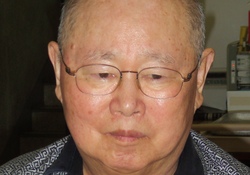
 ▲ (좌) 이태양(Lee Tae Yang) 作 사유의 미학(생각하는 사람), 61cmx60cm, 복합재료 Mother of pearl on mixed materials, 2023 (우) 작가 이태양 |
필자는 어느 그룹전에서 작가의 작품을 처음 접한 후 작가를 탐문하였다. 나름 많은 나전칠기 작품을 접한 경험에서 여태껏 살피지 못한 새로운 작업의 주인공을 처음 만나 건네받은 명함에서 공학박사라는 직함을 바라보며 작가를 향한 많은 질문에 작가의 답이 있을 때마다 신비의 껍질이 양파처럼 벗겨지고 있었다.
이태양 작가는 강원도 삼척군 장성읍에서 3남 1녀의 막내로 태어나 경북 경주로 이주하여 입실 초등학교를 졸업하고 너무나 가난한 가정 형편으로 중학교 2학년에 중퇴하고 서울로 상경하여 청계천 전자상가에서 산업용 히터와 온도 센서를 제작하는 중소기업에 취업하였다.
이후 주경야독으로 수도학원에서 검정고시 수업을 통하여 1987년 중학교와 1989년 고등학교 과정을 마치고 2006년 미국 플로리다주 템파에 소재한 훼이스 신학대학교(USA) 한국분교에서 신학을 전공하였다. 이어 산업통상자원부가 우수 산업기술 인재를 양성하기 위해 설립한 한국공학대학교에서 2010년 경영학 석사과정을 마친 후 2018년 ‘마이크로급 입자 제거를 위한 반도체 세정기 개발에 관한 연구’ 논문으로 박사학위를 취득한 입지전적인 인물이었다.
어려서부터 미술에 뛰어난 재능이 있었던 작가는 가난의 무게에 짓눌러 마음속에 그림을 그리는 일 이외에는 엄두를 낼 수 없었다. 그러나 치열한 삶을 살아오면서도 산업현장의 공간이거나 주경야독의 낡은 학습지 여백에 그리고 또 그리며 마음속 화가를 놓지 않았다.
우리나라 기술 산업의 메카 청계천에서 헤진 기름칠 작업복을 입고 치열한 산업현장에 뛰어든 열다섯 살 이태양 소년은 1996년 범용전열이라는 기술 제조업을 창업하였다. 2010년 중소기업 ㈜범용테크놀러지로 발전하여 반도체용 히터와 온도 센서 제작 분야에 주요 기업을 일군 후 나전칠기 매력에 빠져들어 독학을 시작하였다.
모든 꿈을 독학으로 이루어낸 그였지만, 오랜 역사를 품은 나전칠기의 섬세한 비법의 전수는 쉽지 않았다. 이에 전통 기법에 뛰어난 나전칠기 임충휴 명장을 찾아가 스승으로 모시게 되면서 비범한 공학도의 손과 머리에 날개를 달게 되면서 새로운 예술 세계를 탄생시키는 바탕이 되었다.
 ▲ 이태양(Lee Tae Yang) 作 사유의 미학(목조반가사유상), 61cmx60cm, 복합재료 Mother of pearl on mixed materials, 2023 |
이와 같은 바탕에서 이태양 작가의 작품은 한 치의 오차가 허용되지 않는 공학의 설계처럼 치밀한 계산으로 이루어진 것임을 살피게 된다. 나아가 작가의 전문 분야인 기술적 문제를 대상으로 하는 학문인 공학에서 가장 중요한 창의성이 고스란히 담겨있다. 예술의 생명인 창의적 감성이 가득한 사유의 미학에 거는 기대이기도 하다.
작가는 입지전적인 공학도이다. 반도체 매거진 자동세척장치 특허등록. 반도체용 히팅블럭 특허 등록. 공기 순환로가 있는 단면·양면 손난로 특허 등록. 히팅배관 특허등록. 히팅배관제조방법 특허등록. 라미네이팅 히팅롤러 특허등록. 건조장치를 이용한 세척장치 특허등록. 진공 세정기반 외부 전극 형성 시스템 특허등록. 솔더링장치 특허등록 외에도 셀 수 없는 특허를 보유하고 있다.
나아가 작가는 성공한 기업인이다. 2008년 중소기업중앙회장상 수상. 2009년 에너지관리공단 상 수상. 2009년 경기도지사상 수상. 2011년 지식경제부 장관상 수상. 2012특허청장 상 수상. 2013년 산업통상자원부 장관상 수상에 이르는 탄탄한 기술 기업을 일구었다.
작가는 어려서부터 뛰어난 미술에 대한 재능의 꿈을 포기하지 않고 지난 10여 년간 전통예술 나전칠기에 천착하였다. 국내외 개인전 2회와 한국 프랑스 국제교류전. 두바이 아트쇼. 프랑스 파리 그룹 전시에 참여하면서 세계를 향한 깊은 의식을 매만져 왔다.
필자는 작가의 화실에서 전통방짜 유기로 만들어진 국악기 징에 나전칠기로 작업한 많은 작품을 살피게 되면서 전율을 느꼈다. 우리나라의 모든 전통 음악에서 중심적인 악기인 전통 방짜기법으로 제작된 징을 틈틈이 수집하여 사유의 울림을 담아낸 것이다. 소용돌이치는 자개의 빛깔이 환상적으로 펼쳐진 아름다움 속에 우리의 정신을 숨결로 추구한 심오한 의식에 가슴을 쓸어내렸다.
가난의 무게를 짊어지고 열다섯 나이에 기름칠 작업복을 입었던 소년은 허리띠를 졸라맨 치열한 주경야독으로 공학박사가 되었으며 탄탄한 중소기업을 일구었다. 이러한 작가의 세계를 겨냥한 사유의 미학이 국경이 없는 공감의 예술로 평가받을 날을 기대한다. artwww@naver.com
필자: 이일영
한국미술센터 관장. 칼럼니스트. 시인
*아래는 위 기사를 '구글 번역'으로 번역한 영문 기사의 [전문]입니다. '구글번역'은 이해도 높이기를 위해 노력하고 있습니다. 영문 번역에 오류가 있을 수 있음을 전제로 합니다.<*The following is [the full text] of the English article translated by 'Google Translate'. 'Google Translate' is working hard to improve understanding. It is assumed that there may be errors in the English translation.>
Marking its 12th anniversary this year, the 2023 Seoul Art Show will open at the COEX A-Hall in Samseong-dong, Seoul on Tuesday and run until Wednesday. Attention is focusing on the lacquerware of thought by Lee Tae-yang, who participated in the gallery art booth (No. 87).
The artist will showcase the lacquerware of the Bangasayusang, designated as Korea's National Treasure No. 83. In addition, five pieces will be displayed, including the lacquerware of the Wooden Bangasayusang in Goryuji Temple, Japan's National Treasure No. 1, and the lacquerware of the lacquerware, which is based on the representative work The Thinker by Auguste Rodin, the founder of modern sculpture.
The artist's works, which have understood the aesthetics of thinking through a long history, contain many stories. Najeon lacquerware (螺鈿漆器) is a traditional craft with a long history, which requires high-level techniques and concentration, with patterns made with materials such as abalone and 貝 夜. In particular, it has a long history of Najeon works excavated from the royal tombs of Ur during the first Sumerian civilization, dating back 3,000 BC.
According to records, lacquerware was produced during the Shang Dynasty of China's ancient dynasty, and relics of the flat 脫 technique were discovered in Korea by attaching thin gold and silver plates to the surface of the bronze mirror. Furthermore, the 螺鈿 紋銅鏡, a bronze mirror of the lacquerware flower pattern designated as National Treasure No. 140, is a relic of the Silla Dynasty and boasts outstanding artistry along with the long history of the lacquerware.
Based on this, lacquerware in the Goryeo Dynasty was developed into a unique craft technique that applied the 伏彩 method, a Goryeo Buddhist painting technique that repeatedly paints on the back of the screen.
Today, many artists are presenting a variety of lacquerware in lacquerware with traditional and modern techniques. Among them, the reason why we pay attention to Lee Tae-yang's work is that the spirit of the Bansasang, the essence of our culture, has been sublimated into a high-level painting art.
The Bangasayusang statue, which is deeply meditated with its right leg on its left knee, is represented by National Treasure No. 78, which is presumed to be a relic of the Baekje period in the mid to late 6th century, and the 83rd Bangasayusang, which is presumed to be a relic of the Silla period in the first half of the 7th century. In November 2021, the National Museum of Korea prepared an independent "Room of Reason" exhibition room and unveiled the National Treasure No. 78 and No. 83 Bangasayusang together.
The representative characteristic of the Bangasayusang is that it does not communicate in words, but contains a deep meditation of thought along with a smile of a heart-to-heart. From this point of view, the work of artist Lee Tae-yang contains a consciousness aimed at the world with the aesthetics contained in ours.
The artist awakened the importance of thinking without borders under the theme of Rodin's representative work, "Thinker," following the National Treasure No. 83 Banasayusang and the Japanese National Treasure No. 1 Wooden Banasayusang that resembles it. This is of great significance in that it has worked as a real being representing the East and the West, the aesthetics of thinking through philosophical exploration of art works or aesthetic experiences, regardless of the East and the West.
The aesthetics of thinking, in which the role of aesthetic experience and senses is important in the context of art history, is the basis for examining the historical flow of art in the context of the times and culture. This is a measure of historical flow that provides philosophical thinking about artistic experience and its depth through art and examines how art interacts with culture through human emotions and thoughts. In this context, the deep consciousness contained in the work of Lee Tae-yang's Aesthetics of Thought series has a lot to be studied.
Lee Tae-yang's series of aesthetics of thought is based on our national treasure, "Bangasayusang", which harbors mysterious thoughts. He then presents the "Mokjo-Bangasayusang", the first national treasure of Japan, a neighboring country that resembles this. At the same time, the aesthetics of thinking without borders was presented through Rodin's representative work, "The Thinker", the founder of modern sculpture.
Based on such substantive thinking, you will find out what is even more surprising if you consider works done with traditional crafts called lacquerware. This is because the artist is based on a lenticular technique in which another image is produced according to the angle of view and the lighting of light.
The history of lenticular techniques began around 5,000 BC in a shadow puppet show of indigenous peoples of Java, Indonesia. Later, after French photographer Nisefort Niefs (1765-1833), who invented Heliography, which means the first painting of the sun for mankind, invented by Hungarian physicist Denis Gabor (1900-1970) after he invented holography, which records objects in three dimensions on a plane, through a kaleidoscope that looks at different patterns each time through reflection of a cylindrical mirror invented by British physicist David Brewster (1781-1868).
Artist Lee Tae-yang's lacquerware work, which borrows and works using such lenticular techniques, reveals a new form depending on the light and visual direction of the aesthetics of deep thinking contained in the work's subject, "Anti-Thinking Award" or "Thinking Person."
After I first encountered the artist's work in a group exhibition, I searched for the artist. Looking at the title of Doctor of Engineering from the business card I was handed to for the first time when I met the protagonist of a new work that had not been examined in my own experience of encountering many lacquerware works, the mysterious skin was peeling off like an onion whenever the artist answered many questions toward the artist.
Born in Jangseong-eup, Samcheok-gun, Gangwon-do, the youngest of three sons and one daughter, Lee Tae-yang moved to Gyeongju, Gyeongsangbuk-do, graduated from Ypsil Elementary School, dropped out in the second year of middle school due to his poor family, and moved to Seoul to work for a small and medium-sized company that manufactured industrial heaters and temperature sensors in Cheonggyecheon Electronic Shopping Center.
Afterwards, he completed middle school and high school courses in 1987 and 1989 through a qualification examination class at the Capital Academy in Tokyo, and majored in theology at the Huys Theological University (USA) Korean branch in Tempa, Florida, in 2006. He then completed his master's degree in business administration at the Korea University of Engineering, which was established by the Ministry of Trade, Industry and Energy to cultivate outstanding industrial technology talents, in 2018, he obtained a doctorate with a thesis titled "Study on the Development of Semiconductor Cleaners for Micro-class Particle Removal" in 2018.
The artist, who had a great talent for art from an early age, was overwhelmed by the weight of poverty and could not dare to do anything other than paint in his mind. However, he did not let go of the painter in his heart, drawing and drawing in the space of an industrial site or an old workbook in the evening.
A 15-year-old boy named Lee Tae-yang, who entered the fierce industrial field wearing a worn oil-painted work suit at Cheonggyecheon, the mecca of Korea's technology industry, founded a technology manufacturing business called general-purpose heating in 1996. It developed into a small and medium-sized company, Universal Technology Co., Ltd. in 2010, and after forming a major company in the field of making heaters and temperature sensors for semiconductors, he fell in love with lacquerware and began teaching himself.
He achieved all his dreams by himself, but it was not easy to pass on the delicate secrets of Najeon lacquerware with a long history. As a result, he visited Master Lim Chung-hue, who was excellent in traditional techniques, and served as a teacher, and it became the basis for the creation of a new art world by attaching wings to the hands and heads of extraordinary engineers.
On this basis, it is examined that Lee Tae-yang's works are made of detailed calculations, like the design of engineering that does not allow an error. Furthermore, it contains the most important creativity in engineering, a discipline targeting technical problems, which is the artist's specialty. It is also an expectation for the aesthetics of thinking full of creative sensibility, the life of art.
The artist is a positional engineer. Patent registration of automatic cleaning device for semiconductor magazines. Patent registration of heating blocks for semiconductors. Patent registration of single-sided and double-sided hand warmers with air circulation paths. Patent registration of heating pipe. Patent registration of heating pipe manufacturing method. Patent registration of lamination heating roller. Patent registration of cleaning device using drying device. Patent registration of vacuum cleaning-based external electrode forming system. In addition to patent registration of soldering device, it holds countless patents.
Furthermore, the writer is a successful entrepreneur. He won the Korea Federation of Small and Medium Business Award in 2008. He won the Korea Energy Management Corporation Award in 2009. He won the Gyeonggi Governor's Award in 2009. He won the Knowledge Economy Minister's Award in 2011. He won the 2012 Patent Office Award. He built a solid technology company that won the 2013 Trade, Industry and Energy Minister's Award.
The artist has devoted himself to lacquerware in traditional art for the past 10 years without giving up his dream of becoming talented in fine art. Two solo exhibitions at home and abroad, and an international exchange exhibition in Korea and France, Dubai Art Show. He has been deeply conscious of the world while participating in the Paris Group exhibition.
I was thrilled to look at the many works I worked on with lacquerware on traditional Korean musical instrument gong made with traditional spinning in the artist's studio. It is to capture the resonance of thought by collecting gong made with the traditional spinning technique, which is a central instrument in all traditional music in Korea. The color of the swirling mother-of-pearl swept my heart away by the profound consciousness that pursued our spirit with breath in the beauty that unfolds fantastically.
The boy, who carried the weight of poverty and wore oiled work clothes at the age of 15, became a doctor of engineering through the fierce day and night reading that tightened his belt, and built a solid small and medium-sized enterprise. We look forward to the day when the aesthetics of thinking aimed at the artist's world will be evaluated as an art of empathy without borders. artwww@naver.com
Author: Lee Il Young
Director, Korean Art Center. Columnist. Poet