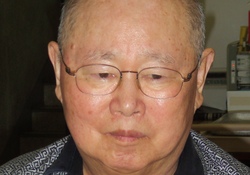
▲필자/ 정길선 박사 ©브레이크뉴스 |
요즘 차가타이와 그의 나라, 차가타이 칸국, 그리고 티무르 제국까지 이어지는 중앙아시아의 시대상 변천을 함께 보면서 느낀 바 있다. 칭기즈칸, 바투나 수부타이, 재배, 카이두 및 아리크부카나 쿠빌라이 칸 등의 영웅들은 충분히 알려져 있지만 칭기즈칸의 차남인 차가타이는 그다지 잘 알려져 있지 않다. 사실 나는 다른 영웅들보다 차가타이를 매우 좋아한다. 그에게 있어 원리원칙과 공명정대라고 하는 두 가지의 기본 철칙이 있었고 그런 기본 철칙은 원리원칙과 공명정대라는 것이 부족한 우리 대한민국에서도 가장 필요한 부분이기 때문이다.
차가타이는 성격이 불같고 타협을 모르는 성격이었다. 자기 자신에게조차 엄격하고 원리원칙을 철저히 지키는 인물이었기 때문에 칭기즈칸은 차가타이에게 몽골의 법전인 <에케 야사>를 창안하고 관리하는 역할을 맡기기도 했다. 그에 대한 일례로 차가타이의 동생인 오고타이가 대칸이 된 이후, 차가타이와 오고타이 칸이 술자리를 했는데, 차가타이가 취중에 오고타이 칸에게 실수를 했다. 다음 날 자신의 실수를 깨달은 차가타이는 아우에게 찾아가서 자신의 실수를 벌해달라고 청했다. 오고타이 칸은 이를 "뭘 그런거 가지고..." 하면서 그대로 넘어갔지만 차가타이는 끝내 <에케 야사>의 법률을 스스로에게 적용하여 자신을 벌했다고 전해진다.
차가타이는 매우 엄격한 성격이었기 때문에 오고타이 칸이 술에 취해서 마찬가지의 행동을 하면 법의 수호자이자 무서운 형님이 되어 동생을 혼냈는데 취중에도 오고타이 칸은 형이 오면 무서워하였다는 설화도 존재하고 있다. 차가타이의 동생이자, 칭기즈칸의 막내 아들, 툴루이의 장남이자 후일 몽골의 대칸이 되는 몽케가 차가타이의 성격을 가장 많이 닮았다고 하며 차가타이는 몽케의 즉위를 적극적으로 밀어줬다고도 전한다. 차가타이는 중앙아시아에 차가타이 칸국을 건국했다고 알려져 있다. 그는 카자흐스탄 남부, 우즈베키스탄, 투르크메니스탄, 키르기스스탄, 타지키스탄, 아프가니스탄, 이란 북부, 파키스탄 펀자브 지역까지 지배했으며 그의 영토가 상당히 넓었음에도 원리원칙에 따라 주군은 늘 몽골 카라코룸의 대칸이었다.
그런 이유로 인해 차가타이는 죽을 때까지 결코 칸을 자칭하지 않았다. 차가타이 칸국의 지배자들 중 처음으로 칸을 칭한 것은 손자인 카라 훌라구였다. 차가타이를 시조로 간주하는 차가타이 칸국은 동유럽을 정복한 킵차크 칸국이나 중국을 정복한 원나라, 그리고 이집트의 맘루크 왕조와 전쟁을 벌이고 페르시아 문화에 영향을 받은 일 칸국에 비하면 세계사적인 입장에서 그다지 크게 두드러지지 않았다. 다른 칸국들은 각각 러시아, 명나라, 맘루크 및 오스만투르크 같은 중세 후기에서 근세 시대 대제국들이 성장하면서 반드시 이겨할 적으로서, 또는 동시와 많은 문화와 기술, 제도를 서로 교환한 외교적인 국가로서 세계사의 거대 세력들 역사와 같이 존재감이 컸던 것에 비하면 차가타이 칸국이 있었던 지방은 그다지 주목받지 못한 곳이라서 세계사의 중심으로 도약하기 어려웠던 것은 아니다.
일찌감치 주목받지 못했던 것이 아니라 주목받길 원하지 않고 오로지 <에케 야사> 법전에 나와 있는 대칸에 대한 충성심이라는 원칙을 고수했기 때문이었다. 스스로 주목 받길 원하지 않았기 때문에 일찍부터 명성을 떨친 킵차크 칸국이나 일 칸국과 같이 독립 국가적인 주체로써 몽골 제국을 확장시켰던 것이 아니라 몽골 울루스의 일원으로써 중앙정부와 함께 해야 한다는 차가타이의 원리원칙론이 작용했기에 일찍부터 중앙아시아 이외 지역에 세력 확장을 하지 못한 이유일 것으로 보여 진다. 그래서 그랬을까? 킵차크 칸국과 일 칸국은 오래가지 못했고 차가타이 칸국은 아미르 티무르라고 하는 칭기즈칸과 맞먹는 걸출한 대영웅을 배출해내면서 티무르 제국을 만들어냈으며 차가타이와 티무르의 후예는 인도로 들어가 아시아 3대 강국을 칭하는 무굴제국을 건국해 아시아 중근세 제국 중 가장 강력한 국가로 19세기까지 존립하게 되었다.
내가 차가타이를 관심있게 보았고 그를 소환해 낸 것은 현 대한민국의 정세와 맞닿아 있다. 대한민국의 정치판을 보면 차가타이의 원리원칙과 공명정대를 갖추고 있는 정치인이 전혀 보이지 않는다. 군주인 오고타이 칸에게 실수해 자기 자신에게 법률 <에케 야사>를 작용해 벌을 내렸던 그런 사법계의 용자도 전혀 보이지 않는다. 사실 그런 용기가 있는 자, 자체가 없다는 생각이 든다. 자신이 잘못했으면 은폐하기 바쁘지 자기 자신에게 형벌을 내릴 원리원칙주의자가 누가 있을까 싶다. 차가타이는 자신의 군주에게 충성했지만 군주가 법을 어기면 엄하게 꾸짖었다. 그러나 이 나라는 대통령이 법을 어기면 엄하게 꾸짖는 원칙주의자와 공명정대한 인물을 찾기 대단히 어렵다. 원래 이 나라 공직자들은 자신에게 들어오는 달콤한 소리에 귀를 기울이고 자신에게 들리는 쓴소리는 차단하기에 바쁘다. 윗물이 그러니 아랫물인 일반 시민들도 마찬가지가 아니겠는가? 차가타이는 법전에 나와 있는 원리 원칙대로 정당한 비판을 하였지만 이 나라의 인물들은 비판과 비난을 구분하지 못한다. 그러니 유치한 비난과 어린 애들이나 할법한 반박이 이 시대에 난무하는 것이 아니겠는가?
대한민국은 차가타이와 같은 원리원칙적이고 공명정대한 인물이 필요하다. 내가 차가타이를 현 시대 대한민국에 소환한 것은 정부 정책의 미흡함, 그리고 한국 정치에서 원리원칙적이지 않고 공명정대하지 않는 모습들, 서로에게 마이너스가 되는 유치한 네거티브 현상들을 보며 해외에 나와 가장 객관적인 입장에서 볼 때 가장 한심해 보여서다. 이 나라는 정말 차가타이 같은 인물이 없는걸까? lukybaby7@gmail.com
*필자/ 정길선.
노바토포스 회원, 역사학자, 고고인류학자, 칼럼니스트, 러시아 과학아카데미 유라시아 고고인류학연구소 연구교수.
*아래는 위 기사를 '구글 번역'으로 번역한 영문 기사의 [전문]입니다. '구글번역'은 이해도 높이기를 위해 노력하고 있습니다. 영문 번역에 오류가 있을 수 있음을 전제로 합니다.<*The following is [the full text] of the English article translated by 'Google Translate'. 'Google Translate' is working hard to improve understanding. It is assumed that there may be errors in the English translation.>
Contemporary Republic of Korea that summoned Chagatai (Чагатай)
-Jeong Gil-seon, columnist
These days, I have felt the change of times in Central Asia, which includes Chagatai and his country, the Chagatai Khanate, and the Timurid Empire. Heroes such as Genghis Khan, Batuna Subutai, Gyeonghwa, Kaidu, Arikbuka, and Kublai Khan are well known, but Genghis Khan's second son, Chagatai, is not so well known. Actually, I like Chagatai a lot more than other heroes. For him, there were two basic iron rules, principles and fairness, and these basic iron rules are the most necessary even in our country, which lacks principles and fairness.
Chagatai had a fiery and uncompromising personality. Because he was a person who was strict even with himself and strictly observed principles, Genghis Khan even entrusted Chagatai with the role of creating and managing <Ekeyasa>, the Mongol law code. For example, after Chagatai's younger brother, Ogotai, became the Great Khan, Chagatai and Ogotai Khan had a drinking party, and while Chagatai was drunk, he made a mistake with Ogotai Khan. The next day, Chagatai, realizing his mistake, went to his brother and asked him to punish his mistake. It is said that Ogotai Khan ignored this and said, "What are you doing...", but Chagatai ended up punishing himself by applying the law of <Eke Yasa> to himself.
Chagatai had a very strict personality, so when Ogotai Khan behaved the same way while drunk, he became a guardian of the law and a scary older brother and scolded his younger brother. There is also a story that even when Ogotai Khan was drunk, he was scared when his older brother came. It is said that Mongke, Chagatai's younger brother, the youngest son of Genghis Khan, the eldest son of Tului, and later the Great Khan of Mongolia, resembles Chagatai's personality the most, and it is also said that Chagatai actively supported Mongke's ascension to the throne. Chagatai is known to have founded the Chagatai Khanate in Central Asia. He ruled southern Kazakhstan, Uzbekistan, Turkmenistan, Kyrgyzstan, Tajikistan, Afghanistan, northern Iran, and the Punjab region of Pakistan. Although his territory was quite large, his main army was always the Great Khan of Karakorum in Mongolia, according to principle.
For that reason Chagatai never declared himself Khan until his death. Among the rulers of the Chagatai Khanate, the first to take the title khan was his grandson Karakhulagu. The Chagatai Khanate, which regards Chagatai as its progenitor, is not very significant in terms of world history compared to the Kipchak Khanate that conquered Eastern Europe, the Yuan Dynasty that conquered China, and the Il Khanate that went to war with the Mamluk dynasty in Egypt and was influenced by Persian culture. It wasn't noticeable. The other khanates were either enemies that must be defeated as the great empires of the late medieval and early modern eras such as Russia, Ming, Mamluk, and Ottoman Turks grew, or as diplomatic states that exchanged many cultures, technologies, and institutions with the great powers of world history. Compared to its great presence in history, the region where the Chagatai Khanate was located did not receive much attention, so it was not difficult for it to become the center of world history.
It is not that he did not attract attention early on, but because he did not want to be noticed and only adhered to the principle of loyalty to the Great Khan as stated in the <Eke Yasa> code. Because they did not want to attract attention, they did not expand the Mongol Empire as an independent national entity like the Kipchak Khanate or the Il Khanate, which gained fame early on, but Chagatai's theory of principle that it should work with the central government as a member of the Mongol Ulus came into play. This appears to be the reason why it was unable to expand its influence outside of Central Asia early on. So was it like that? The Kipchak Khanate and Il Khanate did not last long, and the Chagatai Khanate produced an outstanding hero comparable to Genghis Khan called Amir Timur, creating the Timurid Empire. Chagatai and Timur's descendants entered India and formed the Mughal Empire, one of the three greatest powers in Asia. It was founded as the most powerful state among Asian medieval and modern empires and survived until the 19th century.
The fact that I watched Chagatai with interest and summoned him is in line with the current situation in the Republic of Korea. If you look at the political scene in Korea, you will not see any politicians who have Chagatai principles and fairness. There is no such brave person in the judicial world who made a mistake against the monarch, Ogotai Khan, and punished himself by applying the law <Eke Yasa>. Actually, I don't think there is anyone who has that kind of courage. If he does something wrong, he is busy covering it up. I wonder who would punish himself. Chagatai was loyal to his monarch, but severely reprimanded him if he broke the law. However, in this country, it is very difficult to find a principled and fair person who severely reprimands the president if he breaks the law. Originally, public officials in this country are busy listening to the sweet sounds that come to them and blocking out the bitter sounds that come to them. Since it's the upper class, wouldn't the same be true for the ordinary citizens of the lower class? Chagatai made a legitimate criticism according to the principles stated in the law, but people in this country cannot distinguish between criticism and criticism. So aren't childish criticisms and rebuttals that only children would make rampant in this day and age?
The Republic of Korea needs a principled and fair person like Chagatai. The reason why I summoned Chagatai to the present-day Republic of Korea is because I saw the insufficiency of government policy, the lack of principle and fairness in Korean politics, and the childish negative phenomena that are negative to both sides, and when I came abroad and looked at it from the most objective perspective. Because it looks the most pathetic. Is there really no person like Chagatai in this country? lukybaby7@gmail.com
*Writer/ Jeong Gil-seon.
Novatopos member, historian, archaeological anthropologist, columnist, research professor at the Institute of Eurasian Archeology and Anthropology of the Russian Academy of Sciences.