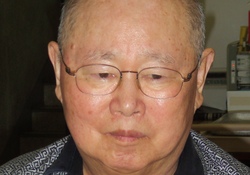
▲ 정길선 박사 ©브레이크뉴스 |
동유럽의 몰도바 남부에 위치한 자치 지역이 하나 있다. 이 지역을 흔히 가가우지아(Gagauzia)라고 하는 곳이다. 이 지역은 1,832km²의 면적을 갖고 있으며 크기는 제주도(1,846km²)보다 약간 작다. 이들 인구의 83% 정도가 투르크계 출신인 가가우즈 인이며 다른 투르크계 민족들이 무슬림들인 반면에 이들은 정교도인들이다. 가가우즈 인들이 사용하는 가가우즈어 또한 터키어와 거의 비슷해서 터키어만 하는 사람이라도 이해하는데 어려움이 없다.
그렇기 때문에 터키의 공영방송인 TRT가 가가우지아에서도 공식적으로 송출되고 있다. 따라서 나의 경우, 터키어와 러시아어 모두 되기 때문에 어떤 언어를 선택해도 어려움은 없다. 그리고 가가우즈어 또한 우랄-알타이어 특성을 갖고 있어 한국어와는 어순이 같다는 장점 또한 존재한다. 현재 트란스니스트리아와 달리 가가우지아는 독립을 선언하지는 않았고 몰도바 정부로부터 자치를 인정받았기 때문에 명목상이나 실질적으로나 몰도바 내의 자치 국가로 자리하고 있다.
가가우지아의 인구의 80% 이상이 가가우즈인이지만, 도시에 사는 가가우즈인들은 일상 생활에서 러시아어를 더 많이 사용하고 있다. 가가우지아 공화국의 수도인 콤라트(Komrat)에서도 러시아어가 더 많이 쓰이고 있다. 이에 따라 일상에서 가가우즈어를 사용하는 인구는 가가우지아 전체 인구의 54.2% 정도로 나타난다. 러시아어는 전체 인구의 40.3%가 사용하고, 불가리아어는 1.6%, 루마니아어는 1% 정도가 사용하고 있다. 원래 가가우즈 지역에는 몰다비아인으로 알려진 루마니아계 민족들과 루테니아인들이 거주하고 있었다.
하지만 몽골-타타르계의 크림 칸국이 침공하여 약탈을 당했고 이어 러시아 로마노프 제국과 오스만투르크 제국과의 전쟁으로 인해 이 지역이 오스만투르크의 지배를 받게 되었으나 대거 황폐화되었다. 18세기 말 러시아 로마노프 제국은 이 지역을 합병하면서 인구를 보충했다. 로마노프 제국은 오스만투르크 제국과의 전쟁에서 가가우즈 지역을 전초 기지로 삼는다는 명목 하에 노가이 칸국의 노가이족 12만여 명을 정착시켰다. 그리고 이들이 다시 고향으로 돌아가지 못하게 유르트를 전부 불살러버렸다.
러시아 로마노프 제국에 의해 강제로 이주된 노가이족들은 투르크계 민족으로, 4세기 훈족과 더불어 유라시아를 왕래하며 거주하던 다양한 유목 종족들이 혼합되어 형성된 민족이다. 4~8세기 동안에는 불가르족, 하자르 족과 같은 종족들이 노가이인과 합류했고 9~11세기에는 페체네그족, 11~13세기에는 킵차크-쿠만족이라 불리는 폴로베츠 종족이 노가이 민족을 형성하는 데 큰 영향을 미쳤다. 이와 같은 노가이인의 출현에는 투르크계 민족들의 이합집산의 영향이 컸지만, 13세기 중엽 킵차크 칸국이 세워진 이후 몽골-타타르 족과 그로 인한 몽골 문화도 중요한 역할을 했다.
이는 노가이인들이 16세기에 서쪽 우랄 강 하류로 이주하기 전까지 자신들을 ‘만기트(Mangit)’라고도 불렀던 것을 보면 알 수 있다. 본래 만기트는 몽골계 부족으로 킵차크 칸국의 동쪽에 주로 거주했다가 그곳의 투크르계 종족과 혼합되었다. 노가이(Nogai)라는 명칭은 사실 민족 이름보다는 킵차크 칸국의 분열 이후 세워진 노가이 칸국으로 더 잘 알려져 있다. 노가이는 킵차크 칸국의 사령관이자 모든 행정을 관리하는 직위에 있었던 인물로 킵차크 칸국의 칸(Khan)을 승인하거나 퇴위시킬 정도의 막강한 권력을 가지고 있었다.
이러한 노가이는 유럽 국가들로 원정을 나갔으며 비잔틴 제국, 세르비아, 불가리아 등을 정복하면서 약탈했다. 노가이는 킵차크 칸국과는 별개로 도나우 강에서 돈 강까지의 영토를 직접적으로 관할했다. 이 중에서 우랄 강과 카자흐스탄 서북부에 위치한 엠바 강 사이의 영토들이 15세기 킵차크 칸국에서 분리된 노가이 칸국의 토대가 되었다. 노가이라는 민족명칭은 노가이라는 인물과 더불어 노가이 칸국으로부터 기원한 것으로 알려져 있다. 이로써 투르크-몽골(Turco-Mongol) 혼합체가 나타났는데 14세기의 차가타이 칸국과 킵차크 칸국이 투르크화 되었다.
이것이 노가이 칸국과 연결되어 있는 것을 말하고 있다. 이들 노가이 칸국의 지배 계급은 투르크어를 사용하고 이슬람교를 믿으며 대부분 투르크화 되었다. 이들이 러시아에 정복을 당했고 정착한지 수십년 후 19세기 초 노가이인들이 대거 오스만투르크 제국으로 탈주하자 러시아 로마노프 제국은 이 지역에 불가리아인 난민들과 조지아인들을 비롯한 각종 민족들을 다시 가가우즈 지역으로 이주시켰다.
원래 노가이족이 살던 비옥한 평야 지역들은 우크라이나의 선조로 알려진 코사크인들과 독일계 러시아인들이 정착해 농사를 지으며 옥토로 탈바꿈 되었으며, 해당 지역의 노가이인들은 오늘날 몰도바 남부의 가가우지아인이 되었다. 불가리아인 난민들은 자국의 영토인 트라키아 지방이 오스만투르크 제국의 치하에 있었는데 많은 불가리아인들이 오스만투르크에 독립하기 위해 봉기를 했던적이 있었다. 따라서 이를 진압하기 위해 오스만투르크 제국 내 비정규군들이 불가리아를 약탈하면서 많은 불가리아인들이 러시아 로마노프 제국의 영내로 피신했으며 인도적인 차원으로 러시아는 이를 받아들여 가가우지아로 이동시켰다.
이들은 가가우지아에 살면서 노가이와 함께 같은 종족으로 동화되어 갔고 불가리아계 가가우지아인이 되었다. 이들 불가리아계 가가우지아인들은 본래 불가리아 제국의 옛 수도인 벨리코 토르노브 일대에 거주하던 사람들이 많았다. 그리고 그들에 대한 학설이 21개가 있을 만큼 불가리아계 민족들의 출처에 대해 논란에 쌓여 있다. 오늘날 가가우지아인들 중 불가리아계, 루마니아계는 자신들이 13세기 발칸 반도에 정착한 셀주크투르크의 이젯딘 케이카부스 2세(Izzeddin Keykavus II 1236~1276)가 이끄는 오우즈 투르크인들과 그리스인의 혼혈 투르코폴레스의 후손으로 여기고 있다.
다만 이들 중 일부는 1307년 케이카부스 2세의 아들인 에세 할릴이 케이카부스가 이끌고 온 투르크인들을 이끌고 다시 아니톨리아의 다른 무슬림 투르크인들에게 귀순했다는 기록이 남아 있다. 다만 이들을 두고 페체네그인이나 쿠만족 후손으로 보는 학설도 있다. 제2 불가리아 제국 시절에는 쿠만족의 상당수가 불가리아 군에 합류했던 적도 있었기에 그와 같은 추론이 가능하다.
불가리아에서 오늘날의 가가우지아 일대와 부자크로 이주해오기 전 불가리아계 가가우지아인들은 자신들을 히리스티얀(Hiristiyan, Christian) 불가르, 하슬리(Hasli) 불가르 (True Bulgars), 에스키(Eski) 불가르 (Old Bulgars)로 칭했다 하며 당시 가가우지아라는 말은 일종의 비하적인 의미가 담긴 별칭이었다고 전해진다. 이 지역은 제1차 세계 대전이 끝나고 러시아에서 루마니아로 넘어갔다가 제2차 세계 대전 이후 소련에 속하게 되었다. 1980년대 후반 이후 트란스니스트리아와 유사하게 몰도바 인구의 대부분을 차지하는 루마니아계 몰도바인들 사이에서 몰도바를 루마니아에 병합하자거나 루마니아어를 공용어로 사용하자는 주장이 나오기 시작했다.
그러나 가가우지아 인들은 이와 같은 루마니아와의 통일을 심각하게 생각했다. 1990년 콤라트에서 가가우지아인들은 자치 공화국을 선언했으나 몰도바 정부는 인정하지 않았고, 이어서 1991년 가가우지아는 독립을 선언한다. 몰도바가 독립한 이후, 1994년 몰도바에서 민족주의자들이 물러나고 정권이 바뀌게 되자 몰도바 정부는 가가우지아인들의 자치권을 부여하기로 약속했으며 가가우지아는 몰도바에서 자치 지역이 되었다. 2014년에 2월 한 주민투표에서 관세 동맹과의 결속 강화에 98.4%가 지지했고 EU와의 더 밀접한 결속에 대해서는 97.2%가 반대했다.
EU와 결속에 대해 반대가 압도적이었던 이유는 루마니아가 EU에 속해 있고 몰도바 정부가 루마니아와의 통일을 시도하기 있기 때문에 이러한 통일 과정이 EU의 중재 하에서 이루어진다는 것이다. 게다가 루마니아는 소수민족의 자치권을 인정하지 않는 국가다. 그렇다보니 루마니아와 몰도바가 통일되었을 때, 가가우즈의 미래가 보장되어 있지 않기 때문에 결사적으로 반대하고 있는 것이다. 더구나 몰도바가 가가우지아인들의 처우까지 봐달라고 할 이유 또한 없기 때문에 이와 같은 루마니아-몰도바의 통일에 대해 러시아가 개입하여 통일을 무산시켜 주기를 원하고 있다.
이러한 반대에도 불구하고 몰도바-루마니아가 통합될 시 가가우지아가 독립할 권리에 대해서 98.9%가 찬성했다. 즉, 두 나라가 통일되면 가가우즈는 독립 국가를 세우고 독립하겠다는 것이다. 실제 선거에서도 친러 성향이 강하게 나타나는 지역으로 가가우즈는 트란스니스트리아와 함께 러시아에 속해지기를 원하는 사람들 또한 98%로 절대적이다. 그리고 2014년 총선에서는 친러파인 사회당과 공산당이 합쳐서 70% 가까이 득표하기도 하면서 가가우즈는 트란스니스트리아와 더불어 몰도바 배후에서 친서방주의를 위협하는 큰 존재로 부각되고 있다.
하지만 가가우즈가 독립할 경우 몰도바, 혹은 통일된 루마니아와 우크라이나 사이의 내륙국이나 비연속국가가 될 가능성이 높다. 그럴 경우, 경제적으로 지금보다 더욱 낙후해질 가능성이 높다. 그것을 대비하기 위해 2022년 현재 러시아-우크라이나 전쟁에서 남부와 동부를 장악하고 있는 러시아가 남부 몰도바 지역의 영토를 교환 내지는 몰도바로부터 매입하여 단절된 국토를 붙이려고 할 가능성도 열려 있는 편이다. 어쩌면 몰도바나 우크라이나 입장에서 트란스니스트리아보다 더 다급한 지역은 가자우즈 자치공화국일 가능성도 매우 커지고 있으며 오데사가 아주 중요한 지정학적, 전략적 요충지가 될 가능성이 크다.
러시아가 우크라이나 남부를 장악하고 오데사를 점령하게 된다면 트란스니스트리아와 몰도바 남부의 가가우즈, 도나우 습지 일대까지 영역화하게 될 가능성이 높아진다. 특히 몰도바 남부의 가가우즈와 도나우 습지 지역은 러시아가 흑해 북안을 완전히 장악하고 서안으로 진출해 친 EU 및 나토 성향의 루마니아와 불가리아에 대한 견제가 가능한 곳이다. 오데사의 운명이 어떻게 되느냐에 따라 우크라이나와 몰도바, 트란스니스트리아와 가가우즈 공화국의 판세가 결정될 가능성이 아주 높다.
*필자/ 정길선.
노바토포스 회원, 역사학자, 고고인류학자, 칼럼니스트, 러시아 과학아카데미 유라시아 고고인류학연구소 연구교수.
*아래는 위 기사를 '구글 번역'으로 번역한 영문 기사의 [전문]입니다. '구글번역'은 이해도 높이기를 위해 노력하고 있습니다. 영문 번역에 오류가 있을 수 있음을 전제로 합니다.<*The following is [the full text] of the English article translated by 'Google Translate'. 'Google Translate' is working hard to improve understanding. It is assumed that there may be errors in the English translation.>
Moldova's hidden ambush "Republic of Gagauzia"
Gil-seon Jeong, columnist
There is an autonomous region located in southern Moldova in Eastern Europe. This area is commonly called Gagauzia. This area has an area of 1,832 km² and is slightly smaller than Jeju Island (1,846 km²). About 83% of their population is the Gagauz, who are of Turkic origin. They are Orthodox Christians, while other Turkic ethnic groups are Muslims. The Gagauz language used by the Gagauz people is also almost similar to Turkish, so even people who only speak Turkish have no difficulty understanding it.
That is why TRT, Turkey's public broadcaster, is officially broadcast in Gagauzia. Therefore, in my case, it is both Turkish and Russian, so there is no difficulty in choosing which language to use. And Gagauz language also has Ural-Altaic characteristics, so it also has the advantage of having the same word order as Korean. Currently, unlike Transnistria, Gagauzia has not declared independence and has been recognized as autonomous by the Moldovan government, so it is an autonomous state within Moldova, both nominally and practically.
More than 80% of Gagauzia's population is Gagauz, but Gagauz living in cities are more likely to use Russian in their daily lives. Russian is also more widely spoken in Komrat, the capital of the Republic of Gagauzia. Accordingly, the population that uses Gagauz in daily life is approximately 54.2% of the total population of Gagauzia. Russian is spoken by 40.3% of the total population, Bulgarian is spoken by 1.6%, and Romanian is spoken by about 1%. Originally, the Gagauz region was inhabited by Romanian peoples known as Moldavians and Ruthenians.
However, the Mongol-Tatar Crimean Khanate invaded and plundered the area, and the subsequent war between the Russian Romanov Empire and the Ottoman Turk Empire led to the area being ruled by the Ottoman Turks, but was largely devastated. At the end of the 18th century, the Russian Romanov Empire annexed the region and replenished its population. The Romanov Empire settled about 120,000 Nogai people of the Nogai Khanate under the pretext of using the Gagauz region as an outpost in the war against the Ottoman Turk Empire. And to prevent them from returning to their hometown, they burned down all the yurts.
The Nogai people, who were forcibly relocated by the Russian Romanov Empire, are a Turkic people, formed by a mixture of various nomadic tribes who lived and traveled across Eurasia along with the Huns in the 4th century. During the 4th to 8th centuries, tribes such as Bulgars and Khazars joined the Nogai people, in the 9th to 11th centuries the Pechenegs, and in the 11th to 13th centuries, the Polovts tribes called Kipchak-Cumans joined to form the Nogai people. It had a big impact. The emergence of the Nogai people was largely influenced by the merger and dispersal of Turkic peoples, but after the establishment of the Kipchak Khanate in the mid-13th century, the Mongol-Tatar people and the resulting Mongol culture also played an important role.
This can be seen from the fact that the Nogai also called themselves ‘Mangit’ before they migrated to the lower western Ural River in the 16th century. Originally, the Mangit were a Mongoloid tribe that lived mainly in the eastern part of the Kipchak Khanate and then mixed with the Tukr people there. The name Nogai is actually better known as the Nogai Khanate, which was established after the division of the Kipchak Khanate, rather than as an ethnic name. Nogai was the commander of the Kipchak Khanate and a person in charge of all administrative affairs, and had enormous power to the extent of approving or dethroning the Khan of the Kipchak Khanate.
These Nogai went on expeditions to European countries and conquered and plundered the Byzantine Empire, Serbia, and Bulgaria. Nogai had direct jurisdiction over the territory from the Danube to the Don River, independently of the Kipchak Khanate. Among these, the territory between the Ural River and the Emba River in northwestern Kazakhstan became the foundation of the Nogai Khanate, which separated from the Kipchak Khanate in the 15th century. It is known that the ethnic name Nogai, along with the person Nogai, originated from the Nogai Khanate. This led to the emergence of a Turko-Mongol mixture, with the Chagatai Khanate and Kipchak Khanate becoming Turkic in the 14th century.
This indicates that it is connected to the Nogai Khanate. The ruling class of these Nogai Khanates spoke the Turkic language, believed in Islam, and were largely Turkicized. Decades after they were conquered by Russia and settled there, in the early 19th century, when a large number of Nogais escaped to the Ottoman Turk Empire, the Russian Romanov Empire moved Bulgarian refugees, Georgians, and other ethnic groups back to the Gagauz region. .
The fertile plains where the Nogai people originally lived were transformed into fertile soil as the Cossacks and German-Russians, known as the ancestors of Ukraine, settled and farmed, and the Nogai people in that area became the Gagauzians of today's southern Moldova. Bulgarian refugees were part of their country's territory, Thrace, under the rule of the Ottoman Turks, and many Bulgarians rose up to seek independence from the Ottoman Turks. Therefore, in order to suppress this, irregular troops within the Ottoman Empire plundered Bulgaria, and many Bulgarians took refuge in the territory of the Russian Romanov Empire. For humanitarian reasons, Russia accepted them and moved them to Gagauzia.
While living in Gagauzia, they assimilated into the same tribe as the Nogai and became Bulgarian Gagauzians. Many of these Bulgarian Gagauzians originally lived in the area of Veliko Tornov, the former capital of the Bulgarian Empire. And the origin of the Bulgarian people is so controversial that there are 21 theories about them. Among today's Gagauzians, the Bulgarians and Romanians are a mixture of Greeks and Ouz Turks led by Izzeddin Keykavus II (1236-1276) of the Seljuk Turks who settled in the Balkan Peninsula in the 13th century. They are considered descendants of Turkopoles.
However, there is a record that some of them defected to other Muslim Turks in Anitolia in 1307, when Ese Halil, the son of Kaykabus II, led the Turks led by Kaykabus. However, there is also a theory that they are descendants of the Pechenegs or Cumans. Such an inference is possible because during the Second Bulgarian Empire, a significant number of Cumans joined the Bulgarian army.
Before migrating from Bulgaria to present-day Gagauzia and Buzak, the Bulgarian Gagauzians called themselves Hiristiyan (Christian) Bulgars, Hasli (True Bulgars), and Eski. They were called Old Bulgars, and it is said that at the time, the word Gagauzia was a nickname with a kind of derogatory meaning. This region was transferred from Russia to Romania after World War I, and then became part of the Soviet Union after World War II. Since the late 1980s, similar to Transnistria, calls for annexing Moldova to Romania or using Romanian as the official language have begun to emerge among Romanian Moldovans, who make up the majority of Moldova's population.
However, the Gagauzians seriously considered unification with Romania. In 1990, the Gagauzians declared an autonomous republic in Komrat, but the Moldovan government did not recognize it, and in 1991, Gagauzia declared independence. After Moldova gained independence, in 1994, when the nationalists withdrew from Moldova and the regime changed, the Moldovan government promised to grant autonomy to the Gagauzians, and Gagauzia became an autonomous region in Moldova. In a February 2014 referendum, 98.4% supported strengthening ties with the customs union, while 97.2% opposed closer ties with the EU.
The reason why there was overwhelming opposition to joining with the EU is that Romania belongs to the EU and the Moldovan government is attempting to unify with Romania, so this unification process takes place under the mediation of the EU. Moreover, Romania is a country that does not recognize the autonomy of ethnic minorities. Therefore, when Romania and Moldova are unified, Gagauz's future is not guaranteed, so they desperately oppose it. Moreover, since there is no reason for Moldova to even look at the treatment of the Gagauzians, they want Russia to intervene in the unification of Romania and Moldova and prevent the unification.
Despite this opposition, 98.9% supported Gagauzia's right to independence when Moldova and Romania are unified. In other words, if the two countries are unified, Gagauz will establish an independent country and become independent. Gagauz is a region where pro-Russian tendencies are strongly shown even in actual elections, and the number of people in Gagauz who want to belong to Russia along with Transnistria is also at 98%. And in the 2014 general election, the pro-Russian Socialist Party and the Communist Party together won close to 70% of the votes, and Gagauz, along with Transnistria, is emerging as a major threat to pro-Westernism behind Moldova.
However, if Gagauz becomes independent, it is likely to become a landlocked or non-contiguous country between Moldova or unified Romania and Ukraine. In that case, there is a high possibility that we will become even more economically backward than we are now. To prepare for that, it is also open to the possibility that Russia, which currently controls the south and east in the Russia-Ukraine war in 2022, will try to attach the disconnected territory by exchanging or purchasing the territory of the southern Moldova region from Moldova. There is a growing possibility that the Gazauz Autonomous Republic may be a more urgent region than Transnistria for Moldova or Ukraine, and there is a high possibility that Odessa will become a very important geopolitical and strategic point.
If Russia takes control of southern Ukraine and occupies Odessa, there is a high possibility that it will territoryize Transnistria and the Gagauz and Danube wetlands in southern Moldova. In particular, the Gagauz and Danube wetlands in southern Moldova are places where Russia can completely dominate the northern Black Sea and advance into the West Bank to keep pro-EU and NATO-friendly Romania and Bulgaria in check. Depending on the fate of Odessa, Ukraine, Moldova, Transnistria and There is a very high possibility that the situation in the Gauz Republic will be decided.