경실련은 15일 경실련 강당에서 '22대 국회의원의 부동산 보유 및 종부세 납부 실태발표' 기자회견을 가졌다.
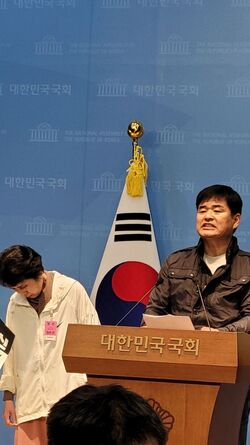
 ▲ 경실련은 ”정치권은 서민감세라고 하지만, 종부세 완화의 혜택은 소수의 정치권력자와 고위공무원들이 누리고 있다. 과세표준을 기재부에서 자의적으로 인하할 수 있는 공정시장가액비율제를 폐지할 것, 종부세 기본 공제액을 2023년 이전인 6억 원(1세대 1주택 9억 원)으로 원상 복구할 것, 공시가격과 공시지가의 시세반영률을 80% 이상으로 제고할 것을 제안한다.“며, 정치권이 형해화된 종부세를 정상화할 것을 강력 촉구했다. (사진, 경실련 제공) © 김충열 정치전문기자 |
‘23년 이전 종부세 과세 기준(1세대 1주택 단독명의 11억원, 1세대 1주택 공동명의 6억씩 12억원, 다주택자 인별 6억원)을 적용하면, 종부세 납부자는 82명(27.42%)으로, 윤석열 정부 시기 종부세 납부자가 82명에서 60명으로 감소한 것이 확인됐다. 그 결과 종부세 완화의 혜택은 우리 국민이 아니라, 일부 정치인 등 상위 1%가 크게 누리고 있다는 사실에 국민들은 어떻게 생각할까?
윤석열 정부는 임기 내내 법인세 인하, 종부세 완화 등 이른바 ‘부자 감세’를 지속적으로 추진해 왔다. 상속세·증여세 인하와 금융투자소득세 폐지도 시도한 바 있다. 그러나 이를 견제해야 할 22대 국회, 역시 추가적인 종부세 완화 및 상속세 완화의 필요성을 거론하고 있어, 공정 과세 원칙이 무너질 수 있다는 점에서 심각한 우려가 제기되고 있다. 특히 일부 정치인들은 실거주 1주택자에 대한 종부세가 과도하다고 주장하고 있다.
경실련은 “22대 국회의원 당선인들의 평균 재산이 33.3억 원에 달한다”고 발표한 바 있다. 이번에는 2025년 3월 공직자 재산신고 자료를 바탕으로, 22대 국회의원의 정당별 재산 현황, 부동산 상위 10위 의원 명단과 함께, 종부세 납부 대상 의원 수, 최근 종부세 완화로 인해 의원들이 받은 세금 감면 혜택 규모 등을 분석해 발표했다.
이번 조사는 22대 국회의원을 대상으로 하였으며, 자료는 ‘25년 3월에 공개된 재산 내역을 활용하였다. 조사내용은 전체 재산 현황, 부동산 재산 현황, 본인 배우자 명의 주택 현황, 종부세 납부 현황 등이다. 주택 현황과 종부세 납부 현황은 대상자들의 재산 중 본인․배우자 명의로 보유하고 있는 주택을 중심으로 진행하였으며(오피스텔과 복합건물은 제외됨), 종부세 예상 세액은 국세청 홈택스의 ‘종합부동산세 간이세액계산’ 도구를 이용해 추정했다.
조사 결과, 22대 국회의원은 ‘25년 3월 기준 인당 전체 재산 42억 8,547만원 신고했고, 이 중 부동산 재산은 인당 약 19억 5,289만원(전체 재산의 45.57%)으로 나타났다. 부동산 재산 상위 10명에는 박정 더불어민주당 의원, 박덕흠 국민의힘 의원, 김은혜 국민의힘 의원, 서명옥 국민의힘 의원, 백종헌 국민의힘 의원, 김기표 더불어민주당 의원, 정점식 국민의힘 의원, 이언주 더불어민주당 의원, 김기현 국민의힘 의원, 고동진 국민의힘 의원이 포함되었다.
본인·배우자 명의의 주택만 놓고 볼 경우 299명 중 65명이 무주택자, 173명이 1주택자, 61명이 2주택 이상 다주택자로 나타났다. 다만, 여기에는 오피스텔과 복합건물(상가+주택)이 빠져 있다. 이 중 종부세 납부 대상이 되는 본인․배우자 명의의 3억 이상 주택을 신고한 국회의원은 193명이었고, 이들의 인당 주택 신고가액은 12억 3,941만 원이다.
 ▲ 정치권은 종부세 완화가 서민 감세라고 주장하지만 우리 국민 종부세 납부자는 약 1.8%에 불과하다(우리 국민 일반가구 2,177만호 중 주택 소유 가구는 1,223만호이고, 이 중 12억 초과 유주택은 39.7만호이다). 즉, 종부세 완화의 혜택은 우리 국민이 아니라, 일부 정치인 등 상위 1%가 크게 누리고 있다고 볼 수 있다. © 김충열 정치전문기자 |
현행 종부세 과세 기준(1세대 1주택 단독명의 12억원, 1세대 1주택 공동명의 9억씩 18억까지, 다주택 9억원)에 기초하여 집계한 결과, 종부세 납부자는 60명(299명 중 20%)으로 나타났다. 그러나 ‘23년 이전 종부세 과세 기준(1세대 1주택 단독명의 11억원, 1세대 1주택 공동명의 6억씩 12억원, 다주택자 인별 6억원)을 적용하면, 종부세 납부자는 82명(27.42%)으로, 윤석열 정부 시기 종부세 납부자가 82명에서 60명으로 감소한 것이 확인됐다.
정치권은 종부세 완화가 서민 감세라고 주장하지만 우리 국민 종부세 납부자는 약 1.8%에 불과하다(우리 국민 일반가구 2,177만호 중 주택 소유 가구는 1,223만호이고, 이 중 12억 초과 유주택은 39.7만호이다). 즉, 종부세 완화의 혜택은 우리 국민이 아니라, 일부 정치인 등 상위 1%가 크게 누리고 있다고 볼 수 있다.
경실련은 “종부세는 2006년 도입된 이후 정치인과 고위공무원 등 정책 입안자 혹은 그 추진자들에 의해 형해화되어 왔다.”며, “이들은 세대별 합산 방식을 인별 방식으로 전환하여 종부세 도입 취지를 훼손하였을 뿐만 아니라(특히, 1세대 1주택자의 경우 공동명의자와 단독명의자간 차별을 낳고 있다), 공제액과 공제비율의 완화와 공정시장가액비율의 인하를 통해 과세표준을 낮추었으며, 1세대 1주택자 단독명의자에 대한 인적공제 혜택을 공동명의자에게도 적용 가능하도록 하는 등 종부세 완화 정책을 끊임없이 시도해왔다. 이러한 정책들은 모두 정치권력자들의 이해관계와 맞물려 있다”고 주장했다.
이어 “이번 조사 결과, 고위공직자들은 막대한 부동산을 보유하고 있음에도 이에 대한 종부세 납부 대상자와 그 납부액은 크지 않은 것으로 나타났다“며, ”이는 고위공직자들이 계속해서 종부세 기준을 완화시켜온 것과 무관하지 않다.“고 밝혔다.
아울러 ”정치권은 서민감세라고 하지만, 종부세 완화의 혜택은 소수의 정치권력자와 고위공무원들이 누리고 있다. 과세표준을 기재부에서 자의적으로 인하할 수 있는 공정시장가액비율제를 폐지할 것, 종부세 기본 공제액을 2023년 이전인 6억 원(1세대 1주택 9억 원)으로 원상 복구할 것, 공시가격과 공시지가의 시세반영률을 80% 이상으로 제고할 것을 제안한다.“며, 정치권이 형해화된 종부세를 정상화할 것을 강력 촉구했다. hpf21@naver.com
* 아래는 위 기사를 '구글 번역'으로 번역한 영문 기사의 [전문]입니다. '구글번역'은 이해도 높이기를 위해 노력하고 있습니다. 영문 번역에 오류가 있을 수 있음을 전제로 합니다.
*The following is [the full text] of the English article translated by 'Google Translate'. 'Google Translate' is working hard to improve understanding. It is assumed that there may be errors in the English translation.
The Korea Federation of Banks: “20% of the 22nd National Assembly members enjoy the benefits of the comprehensive real estate tax vs. 1.8% of the public, a small number of political power holders and high-ranking public officials”
Ministry of Finance, abolish the fair market value ratio system!
On Tuesday, April 15, 2025, the Korea Federation of Banks held a press conference titled “Announcement of the 22nd National Assembly members’ real estate holdings and comprehensive real estate tax payment status” at the Korea Federation of Banks auditorium.
If the comprehensive real estate tax taxation standards before 2023 (1.1 billion won for a single-person household with one house, 1.2 billion won for a joint household with one house with 600 million won each, 600 million won for each household with multiple houses) are applied, the number of comprehensive real estate tax payers is 82 (27.42%), confirming that the number of comprehensive real estate tax payers decreased from 82 to 60 during the Yoon Seok-yeol administration. As a result, what do the people think about the fact that the benefits of the comprehensive real estate tax relief are largely enjoyed by the top 1%, including some politicians, rather than by our citizens?
The Yoon Seok-yeol government has continuously pursued so-called ‘tax cuts for the rich’, such as corporate tax cuts and comprehensive real estate tax relief, throughout its term. It has also attempted to lower inheritance tax and gift tax and abolish financial investment income tax. However, the 22nd National Assembly, which should be restraining this, is also discussing the need for additional comprehensive real estate tax relief and inheritance tax relief, raising serious concerns that the principle of fair taxation may collapse. In particular, some politicians are claiming that the comprehensive real estate tax on those who actually live in one house is excessive.
The Korea Center for International Finance announced that “the average assets of elected members of the 22nd National Assembly amount to 3.33 billion won.” This time, based on the public official property declaration data for March 2025, it analyzed and announced the status of the assets of members of the 22nd National Assembly by party, a list of the top 10 real estate lawmakers, the number of lawmakers subject to comprehensive real estate tax, and the scale of tax reduction benefits received by lawmakers due to the recent comprehensive real estate tax relief.
This survey targeted the 22nd National Assembly members, and the data used the property details disclosed in March 2025. The survey contents included overall property status, real estate property status, housing status under the subject’s spouse’s name, and comprehensive real estate tax payment status. The housing status and comprehensive real estate tax payment status were conducted based on the subjects’ properties and houses owned under the subject’s or spouse’s name (officetels and complex buildings were excluded), and the expected comprehensive real estate tax amount was estimated using the ‘Comprehensive Real Estate Tax Simplified Tax Amount Calculation’ tool on the National Tax Service’s Hometax.
As a result of the survey, the 22nd National Assembly members reported a total property of 4.28547 billion won per person as of March 2025, of which real estate assets amounted to approximately 1.95289 billion won per person (45.57% of total assets). The top 10 real estate property owners include Rep. Park Jeong of the Democratic Party of Korea, Rep. Park Deok-heum of the People Power Party, Rep. Kim Eun-hye of the People Power Party, Rep. Seo Myung-ok of the People Power Party, Rep. Baek Jong-heon of the People Power Party, Rep. Kim Ki-pyo of the Democratic Party of Korea, Rep. Jeong Jeom-sik of the People Power Party, Rep. Lee Un-ju of the Democratic Party of Korea, Rep. Kim Ki-hyun of the People Power Party, and Rep. Koh Dong-jin of the People Power Party.
Looking only at the houses in the names of the members themselves and their spouses, 65 out of the 299 members were non-homeowners, 173 owned one house, and 61 owned two or more houses. However, officetels and complex buildings (commercial + residential) are excluded. Of these, 193 members of the National Assembly reported houses worth 300 million won or more in the names of the members themselves and their spouses, which are subject to comprehensive real estate tax, and the reported housing value per person was 1.23941 billion won.
Based on the current comprehensive real estate tax assessment criteria (1.2 billion won for a single-person household, 1.8 billion won for joint ownership of 1 house per household, 900 million won for multiple homes), the number of comprehensive real estate tax payers was 60 (20% of 299 people). However, if the comprehensive real estate tax assessment criteria before 2023 (1.1 billion won for a single-person household, 1.2 billion won for joint ownership of 1 house per household, 600 million won for multiple homes), the number of comprehensive real estate tax payers was 82 (27.42%), confirming that the number of comprehensive real estate tax payers decreased from 82 to 60 during the Yoon Seok-yeol administration.
The current political circles claim that the comprehensive real estate tax relief is a tax cut for the common people, but only about 1.8% of our citizens pay the comprehensive real estate tax (out of 21.77 million households in our country, 12.23 million households own homes, and of these, 397,000 own homes worth over 1.2 billion won). In other words, the benefits of the comprehensive real estate tax relief are not being enjoyed by our citizens, but by the top 1%, including some politicians. The Korea Center for International Finance argued that “since its introduction in 2006, the comprehensive real estate tax has been formalized by politicians, high-ranking public officials, and other policymakers or promoters.” They added, “Not only have they undermined the purpose of introducing the comprehensive real estate tax by changing the generation-based aggregation method to the individual method (in particular, in the case of single-home owners in the first generation, this has led to discrimination between joint owners and single-owners), but they have also continuously attempted to ease the comprehensive real estate tax by lowering the deduction amount and deduction rate and reducing the fair market value ratio, and by making the personal deduction benefits for single-home owners in the first generation applicable to joint owners. These policies are all intertwined with the interests of those in power.”
They continued, “The results of this investigation show that although high-ranking public officials own a huge amount of real estate, the number of people subject to the comprehensive real estate tax and the amount paid are not large,” and “This is not unrelated to the fact that high-ranking public officials have continued to ease the comprehensive real estate tax standards.”
In addition, “The political world calls it a tax cut for the common people, but the benefits of the comprehensive real estate tax relief are being enjoyed by a small number of politicians and high-ranking public officials. We propose that the fair market value ratio system, which allows the Ministry of Strategy and Finance to arbitrarily lower the tax base, be abolished, the basic comprehensive real estate tax deduction be restored to its original level of 600 million won (900 million won per household, 1 house) before 2023, and the market price reflection rate of the public notice price and public notice land price be raised to over 80%,” he strongly urged the political world to normalize the formalized comprehensive real estate tax. hpf21@naver.com