더불어민주당 미래경제성장전략위원회(위원장 이언주 더불어민주당 최고위원‧이재명 대선 후보 공동선대위원장, 이하 경제성장위)가 9일 오전 부산 한국거래소에서 더불어민주당 민주연구원(원장 이한주, 이하 민주연구원)과 공동으로 <디지털금융 초강국을 위한 국가전략> 세미나를 열고 디지털 금융 산업의 발전 방향을 논의했다.
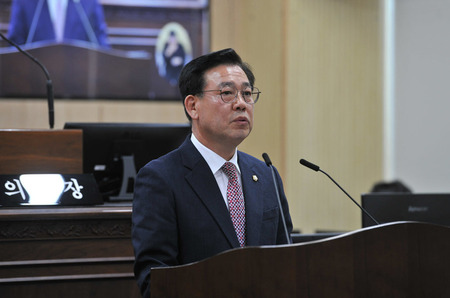
 ▲ 이언주 최고위원은 “미래경제성장전략위에서는 작년부터 디지털자산시장 활성화 방안에 대해 많은 고민을 해왔다”며, “그러나 오히려 규제를 열심히 해서 시장은 위축되고 투자자들은 해외 시장으로 옮겨가 일종의 국부유출 현상이 일어났다”고 진단했다. (사진, 이언주 의운실 제공) *김충열 정치전문기자 |
이날 세미나는 전날 이재명 더불어민주당 대통령 후보가 “원화기반 스테이블코인 시장 만들어야 국부유출을 막을 수 있다”고 발언한 다음날 열린 것이어서 특히 금융계의 뜨거운 관심을 끌었다.
이언주 최고위원은 이날 개회사에서 “미래경제성장전략위에서는 작년부터 디지털자산시장 활성화 방안에 대해 많은 고민을 해왔다”며, “그러나 오히려 규제를 열심히 해서 시장은 위축되고 투자자들은 해외 시장으로 옮겨가 일종의 국부유출 현상이 일어났다”고 진단했다.
이 최고위원은 “아직 늦지 않았다. 디지털자산시장은 성장기에 있고 수 많은 기회가 열려있다. 더 늦기 전에 제도를 완비하고 시장을 활성화해야 한다”며 “STO(토큰증권), 원화스테이블코인, ETF 등 제도화를 신속히 완결해야 한다”고 강조했다.
김병욱 분과장이 좌장을 맡은 이날 세미나는 △국내시장 현황과 글로벌 경쟁력 강화(김재진 DAXA 상임부회장) △STO와 스테이블코인(김용진 서강대학교 경영대학 교수) △디지털금융G2를 향한 전략과 정책과제: 디지털자산과 실물경제 밸류업(강형구 한양대학교 경영대학/공과대학 교수) 등의 발제에 이어 김갑래 자본시장연구원 선임연구위원, 김외현 비인크립토 한국일본 리드, 이한진 김앤장 법률사무소 변호사, 최승필 한국외국어대학교 법학전문대학원 교수, 김성진 금융위원회 과장의 종합토론으로 진행됐다.
김재진 상임부회장은 발제에서 2024년 상반기 기준 국내 가상자산 거래규모가 일평균 6조원, 시가총액 55.3조원, 이용자수는 778만명에 달하는 실태를 소개하고 국내 가상자산 사업의 글로벌 경쟁력 강화를 위해서는 △외국인 시장참여 불가 △블록체인인프라 미비 등의 제도를 보완해야 한다고 설명했다.
김용진 교수는 발제에서 2030년에는 토큰증권(ST) 자산이 글로벌 GDP의 10%에 달할 것이고 국내 조각투자 토큰증권 시가총액 역시 2030년에는 367조원으로 성장할 것이며, 세상의 모든 실물자산과 지식재산권(IP)을 토큰증권 형태의 조각투자 상품으로 만들 수 있을 것으로 전망했다. 김용진 교수는 원화 기반 스테이블코인 발행 필요성을 역설하고 △국가차원의 규제 주도권 확보와 원화의 사용성강화에 기여 △한국 자산시장과 글로벌 디지털자산 시장의 연결성 강화 △한국 암호화폐시장의 구조적 비효율성 해소에 기여 등을 기대효과로 꼽았다.
강형구 교수는 발제에서 디지털금융 G2 달성을 위한 금융‧투자 인프라 및 지역경제 활성화 방안으로 △지역 IP-펀드 및 펀딩 플랫폼 도입 △지역스테이블코인/연금 등을 제시했다. 강 교수는 또한 K-컬처의 글로벌 위상이 높아지고 있으나 창작자 중심의 포용적 보상 시스템 및 산업 생태계가 미흡해 국내 창작 역량이 하청 기지화될 위험이 있다고 지적하고, 소프트파워금융 G1 달성을 위한 크리에이터 수익 공유 모델 구축 방안을 제시했다.
김갑래 선임연구위원은 토론에서 미국의 중앙증권예탁기관인 DTCC(Depository Trust and Clearing Corporation)가 2025년 2월 4일 Composer X를 공식 출시한 사례를 제시하며 글로벌 디지털자산시장 패권을 유지하려는 미국의 전략에서 핵심적 기능을 할 것으로 예상했다. 김 선임연구위원은 이러한 상황에서 한국형 Composer X가 국내 디지털자산 사업자의 기술 인프라, 토큰화 효과 검증, 이해관계자 통합, 규제준수 등에 있어서의 역량 부족을 메워줄 수 있을 것으로 기대했다.
김외현 리드는 토론에서 암호화폐‧가상자산‧블록체인과 관련한 정치권 공약에 대한 개인투자자‧웹3기업‧기존 금융권 등 이해관계자들의 반응을 소개했다. 김 리드는 원화 스테이블코인 도입과 관련해 웹3기업들은 생태계 확장과 디파이 신사업 모델 개발에 필수 요소로 인식하는 반면 기존 금융권과 이해관계 충돌 측면이 있고 개인 투자자들은 거래 편의성에 기대와 개인정보 보호 및 정부 통제에 대한 우려가 병존하는 등 엇갈린 반응이 있다고 설명했다.
경제성장위 차원에서 열린 이 행사에는 이언주 최고위원, 김영춘 전 장관, 변성완 부산시강서구지역위원장 등 더불어민주당 관계자들이 참석해 기업들의 건의사항 및 제언을 경청했다. hpf21@naver.com
* 아래는 위 기사를 '구글 번역'으로 번역한 영문 기사의 [전문]입니다. '구글번역'은 이해도 높이기를 위해 노력하고 있습니다. 영문 번역에 오류가 있을 수 있음을 전제로 합니다.
*The following is [the full text] of the English article translated by 'Google Translate'. 'Google Translate' is working hard to improve understanding. It is assumed that there may be errors in the English translation.
Rep. Lee Un-ju: “STO‧KRW Stablecoin‧ETF Institutionalization Must Be Completed Quickly”
A KRW-based stablecoin market must be created to prevent wealth outflow
On the morning of the 9th, the Future Economic Growth Strategy Committee of the Democratic Party of Korea (Chairman Lee Un-ju, Supreme Council Member of the Democratic Party of Korea, Co-Chairman of the Election Campaign Committee for Presidential Candidate Lee Jae-myung, hereinafter referred to as the Economic Growth Committee) held a joint seminar on <National Strategy for a Digital Financial Superpower> with the Democratic Party of Korea’s Democratic Research Institute (Director Lee Han-joo, hereinafter referred to as the Democratic Research Institute) at the Korea Exchange in Busan to discuss the direction of development for the digital finance industry.
The seminar was held the day after Lee Jae-myung, the Democratic Party’s presidential candidate, said, “A KRW-based stablecoin market must be created to prevent wealth outflow,” and so it attracted particularly keen attention from the financial community.
In his opening speech that day, Supreme Council Member Lee Eun-ju said, “Since last year, the Future Economic Growth Strategy Committee has been thinking a lot about ways to revitalize the digital asset market,” and added, “However, due to excessive regulation, the market has shrunk and investors have moved to overseas markets, resulting in a kind of national wealth outflow.”
Supreme Council Member Lee emphasized, “It’s not too late. The digital asset market is in a growth phase and there are many opportunities. We need to complete the system and revitalize the market before it’s too late,” and “We need to quickly complete institutionalization such as STO (token securities), won stablecoins, and ETFs.”
The seminar, chaired by Division Chief Kim Byeong-wook, began with presentations on the following topics: △Current Status of the Domestic Market and Strengthening Global Competitiveness (Kim Jae-jin, Executive Vice President of DAXA), △STO and Stablecoins (Kim Yong-jin, Professor of Sogang University Business School), △Strategies and Policy Tasks Towards Digital Finance G2: Digital Assets and Real Economy Value-Up (Kang Hyung-goo, Professor of Hanyang University Business School/College of Engineering), followed by a comprehensive discussion by Kim Gap-rae, Senior Research Fellow at the Capital Market Research Institute, Kim Oe-hyeon, Korea-Japan Lead at BeinCrypto, Lee Han-jin, Attorney at Law at Kim & Chang, Choi Seung-pil, Professor at Hankuk University of Foreign Studies Law School, and Kim Seong-jin, Director of the Financial Services Commission. In his presentation, Executive Vice Chairman Kim Jae-jin introduced the current situation in which the domestic virtual asset transaction volume will reach an average of 6 trillion won per day, the market capitalization will reach 55.3 trillion won, and the number of users will reach 7.78 million as of the first half of 2024, and explained that in order to strengthen the global competitiveness of the domestic virtual asset business, it is necessary to supplement systems such as △prohibition of foreign market participation and △insufficient blockchain infrastructure.
Professor Kim Yong-jin predicted in his presentation that token securities (ST) assets will reach 10% of global GDP by 2030, and the domestic token securities market capitalization will also grow to 367 trillion won by 2030, and that all real assets and intellectual property rights (IP) in the world can be made into token securities as token investment products. Professor Kim Yong-jin emphasized the necessity of issuing a stable coin based on the won, and listed the following as expected effects: △Securing regulatory leadership at the national level and contributing to enhancing the usability of the won, △Strengthening the connectivity between the Korean asset market and the global digital asset market, and △Contributing to resolving structural inefficiencies in the Korean cryptocurrency market.
In his presentation, Professor Kang Hyung-goo suggested the following as measures to vitalize financial and investment infrastructure and regional economies to achieve the G2 digital finance: △Introducing regional IP funds and funding platforms, and △Regional stable coins/pensions. Professor Kang also pointed out that although the global status of K-culture is increasing, there is a risk that domestic creative capabilities will be subcontracted due to the lack of an inclusive compensation system and industrial ecosystem centered on creators, and proposed a plan to establish a creator revenue sharing model to achieve the G1 soft power finance.
In the discussion, Senior Researcher Kim Gap-rae presented the case of the Depository Trust and Clearing Corporation (DTCC), the central securities depository in the United States, officially launching Composer X on February 4, 2025, and predicted that it would play a key role in the US strategy to maintain hegemony in the global digital asset market. In this situation, Senior Researcher Kim expected that the Korean version of Composer X could fill the gap in the capabilities of domestic digital asset operators in terms of technological infrastructure, tokenization effect verification, stakeholder integration, and regulatory compliance.
In the discussion, Lead Kim Oe-hyun introduced the reactions of stakeholders such as individual investors, web3 companies, and existing financial institutions to political pledges related to cryptocurrency, virtual assets, and blockchain. Regarding the introduction of the won stablecoin, Lead Kim explained that while web3 companies recognize it as an essential element for expanding the ecosystem and developing new DeFi business models, there are conflicts of interest with existing financial institutions, and individual investors have mixed reactions such as expectations for transaction convenience and concerns about privacy protection and government control.
This event, held at the level of the Economic Growth Committee, was attended by Democratic Party members including Lee Eun-joo, former Minister Kim Young-chun, and Busan Gangseo-gu Regional Committee Chairman Byeon Seong-wan, who listened to suggestions and proposals from companies. hpf21@naver.com