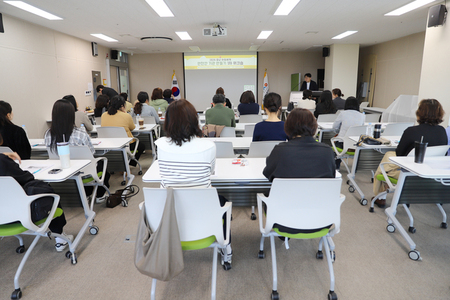
▲ 충남연구원이 지난 20일 서울국제청소년센터에서 '지역 오존 관리 정책 발굴 세미나'를 개최했다고 밝혔다. © 충남연구원 제공 |
충남연구원(원장 전희경)이 국내외 전문가들과 함께 충남지역의 오존 오염 문제에 대한 실질적 해법을 모색했다.
연구원은 지난 20일 서울국제청소년센터에서 ‘지역 오존 관리 정책 발굴 세미나’를 열고, 오존 농도 증가에 따른 건강 피해와 이에 대한 정책적 대응 방안을 집중 논의했다.
이번 세미나는 충남 시군별 오존 분포 특성을 분석하고, 지역 맞춤형 관리 전략을 수립하기 위한 2025년 충남연구원 전략과제의 일환으로 마련됐다.
이날 행사에는 충남연구원을 비롯해 한국과학기술연구원, 서울연구원, 강원대, 세종대, 대림대 등 학계와 연구기관 전문가들이 참여해 각 지역의 오존 관리 연구사례를 공유하고, 종합 토론을 통해 정책 대안을 제시했다.
오존(O₃)은 색깔도 냄새도 없지만, 인체에 심각한 영향을 끼치는 유해물질이다. 특히 노인이나 영유아처럼 면역력이 약한 계층에게는 호흡기 질환, 천식 악화, 폐 기능 저하 등을 유발할 수 있어 더욱 위험하다. 이런 오존은 자동차 배출가스나 산업활동에서 나오는 전구물질들이 햇빛과 반응하면서 형성되는 2차 생성 대기오염물질로, 관리의 어려움이 크다.
충남 지역의 경우, 오존 평균 농도는 1999년 25ppb에서 2023년 35ppb로 꾸준히 증가해 왔다. 이와 함께 PM2.5와 더불어 제3차 대기환경개선 종합계획의 주요 관리 대상 물질로 지정되어 있다.
김종범 충남연구원 책임연구원은 발표에서 “오존은 강한 산화력으로 사람을 비롯하여 동식물의 생육 억제와 재산적 피해를 야기하는 주요 2차 생성 대기오염물질이지만, 아직까지 이들 생성원인에 대한 지역별 특성 연구가 부족한 실정”이라며 “본 세미나에서 도출된 오존 관련 국내외 연구 동향과 토론 내용을 충남도의 오존 관리 정책 수립에 적극 반영하도록 하겠다”고 말했다.
연구원은 이번 논의 내용을 바탕으로 올해 12월까지 시군 단위 오존 농도 분석 결과를 종합해 최종 보고서를 발간할 계획이다. 보고서에는 지역별 오존 생성 특성에 따른 맞춤형 관리 방안이 담길 예정이다.
이번 세미나는 단순한 학술 교류를 넘어, 충남이 직면한 기후·환경 문제에 대한 현실적 해법을 찾는 실천적 기획으로 평가받는다.
*아래는 위 기사를 '구글 번역'으로 번역한 영문 기사의 [전문]입니다. '구글번역'은 이해도를 높이기를 위해 노력하고 있습니다. 영문 번역에 오류가 있을 수 있음을 전제로 합니다.<*The following is [the full text] of the English article translated by 'Google Translate'. 'Google Translate' is working hard to improve understanding. It is assumed that there may be errors in the English translation.>
The Chungnam Research Institute (Director Jeon Hee-kyung) sought practical solutions to the ozone pollution problem in the Chungnam region together with domestic and international experts.
On the 20th, the institute held a ‘Regional Ozone Management Policy Discovery Seminar’ at the Seoul International Youth Center and intensively discussed health damage caused by increased ozone concentration and policy response measures.
This seminar was prepared as part of the Chungnam Research Institute’s 2025 strategic task to analyze ozone distribution characteristics by city and county in Chungnam and establish a customized management strategy for the region.
Experts from academia and research institutes including the Chungnam Research Institute, Korea Institute of Science and Technology, Seoul Research Institute, Kangwon National University, Sejong University, and Daerim University participated in the event to share ozone management research cases in each region and suggest policy alternatives through comprehensive discussions.
Ozone (O₃) is a colorless and odorless, but it is a harmful substance that has a serious impact on the human body. It is especially dangerous for groups with weak immune systems such as the elderly and infants, as it can cause respiratory diseases, worsening asthma, and decreased lung function. This type of ozone is a secondary air pollutant formed when precursors from automobile exhaust fumes or industrial activities react with sunlight, and it is very difficult to manage.
In the case of the Chungnam region, the average ozone concentration has steadily increased from 25 ppb in 1999 to 35 ppb in 2023. In addition, it has been designated as a major management target substance in the 3rd Comprehensive Air Environment Improvement Plan along with PM2.5.
In his presentation, Kim Jong-beom, a senior researcher at the Chungnam Research Institute, said, “Ozone is a major secondary air pollutant that inhibits the growth of plants and animals, including humans, due to its strong oxidizing power, and causes property damage, but there is still a lack of regional research on the causes of its creation.” He added, “We will actively reflect the domestic and international research trends and discussions related to ozone derived from this seminar in establishing Chungnam Province’s ozone management policy.”
Based on the contents of this discussion, the institute plans to publish a final report by synthesizing the results of the analysis of ozone concentrations at the city and county level by December of this year. The report will include customized management plans based on regional ozone production characteristics.
This seminar is evaluated as a practical plan that goes beyond simple academic exchange and seeks realistic solutions to the climate and environmental problems facing Chungnam.
원본 기사 보기:브레이크뉴스대전세종충청