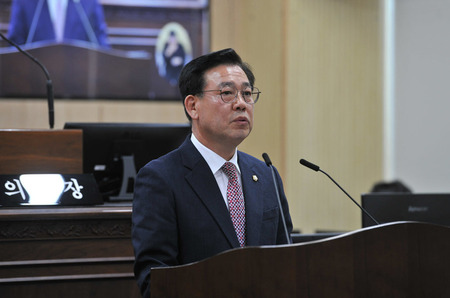
▲ 장철민 국회의원은 26일, 파업에 돌입한 대전세종충남·넥슨후원 공공어린이재활병원과 28일 파업을 예고한 건양대학교병원을 찾아 노사 양측에 대한 갈등 중재에 나섰다. © 장철민 국회의원실 제공 |
장철민 국회의원(더불어민주당·대전 동구)이 연이어 파업 사태를 겪고 있는 대전 지역 의료기관의 노사 갈등을 조정하기 위해 현장에 직접 나섰다.
장 의원은 26일, 파업에 돌입한 대전세종충남·넥슨후원 공공어린이재활병원(이하 ‘어린이병원’)과 28일 파업을 예고한 건양대학교병원을 각각 방문해 노조와 병원 측 관계자들과 면담을 진행하며 중재에 나섰다.
이번 방문에는 김도형 대전지방고용노동청장도 동행했다. 국회 환경노동위원회 활동 경력이 있는 장 의원은 이번 파업 사태를 단순한 노동 쟁점이 아닌, 시민 건강권과 공공의료 시스템의 지속가능성 문제로 인식하고, 정부 차원의 감독 강화 및 제도적 개입의 필요성을 강조했다.
대전은 현재 전국에서 유일하게 세 곳의 병원이 동시다발적으로 노사 갈등에 직면해 있다. 대부분의 보건의료기관이 중앙교섭 또는 자체교섭을 통해 무분규 타결을 이룬 것과는 대조적이다. 특히 어린이병원과 건양대병원, 그리고 갈등이 고조되고 있는 을지대병원까지 포함하면, 지역의 의료공백 우려가 현실화될 수 있다는 위기감이 고조되고 있다.
장 의원이 가장 먼저 찾은 어린이병원은 대전시가 예산을 투입해 설립하고, 충남대학교병원이 위탁 운영 중인 공공병원이다. 그러나 개원 초기부터 계약직 경력 산정 방식과 정근수당 지급 기준을 둘러싼 노사 간 갈등이 끊이지 않았다.
노동조합은 충남대병원 기준에 상응하는 공정한 경력 인정과 정근수당 지급 체계를 요구해왔으나, 병원 측은 자체 기준을 고수하며 조율에 난항을 겪어왔다. 조합 측은 연간 1억 원 이내의 비용으로 갈등이 해소될 수 있다고 주장하지만, 병원 측의 태도 변화가 없어 지난 25일부터 파업에 돌입했다.
이에 대해 장 의원은 “수십억 원의 세금이 투입되는 축제와 행사는 적극적으로 추진하면서도, 필수 공공의료기관의 안정적 운영을 위한 최소한의 인건비 조정에는 무관심한 대전시의 태도는 납득하기 어렵다”며 “시민의 세금으로 운영되는 기관에서 벌어진 이같은 사태에 대해 시가 책임을 회피해서는 안 된다”고 강하게 지적했다.
이어 방문한 건양대병원 역시 상황은 심각하다. 병원은 지난해 상급종합병원으로 승격되며 의료수익과 고유목적사업 적립금이 급증하는 등 재정적 여유를 확보한 것으로 알려졌지만, 여전히 직원들에게는 최하위 수준의 임금을 지급하고 있다는 것이 노조 측 주장이다.
아울러 사립대병원 평균 대비 현저히 낮은 인건비 비중과 병원 측의 불성실한 교섭 태도는 갈등을 더욱 심화시키고 있다. 이에 장 의원은 김도형 지청장에게 “특별근로감독 등 법적·행정적 조치를 조속히 시행해 문제 해결에 속도를 내야 한다”고 요청했다.
장 의원은 “연일 이어지는 폭염과 집중호우 속에 환자들이 의료 공백에 노출되는 상황을 결코 방관할 수 없다”며 “전국 다수 의료기관이 자율적으로 합의를 이룬 반면, 대전의 세 병원만이 극한 갈등을 겪는 현실은 병원 운영주체와 대전시의 책임이 크다는 것을 방증한다”고 말했다.
그는 더욱이 공공어린이병원의 경우, 그 설립 목적이 명확히 ‘아동의 건강권 보장’에 있는 만큼, 대전시가 주도적으로 나서 문제 해결에 앞장서야 한다고 강조했다. “시민의 생명과 건강을 지키는 데 있어 어떠한 책임도 외면해서는 안 된다”는 것이다.
끝으로 장 의원은 “이번 사태가 장기화되지 않도록 국회의원으로서 중재와 제도 개선에 적극적으로 나설 것”이라며, “지역 의료 현장의 목소리를 바탕으로 실효성 있는 결론이 도출될 수 있도록 최선을 다하겠다”고 밝혔다.
이번 장철민 의원의 의료파업 현장 개입을 계기로 대전 지역 의료기관의 고질적 노사 갈등이 해소될 수 있을지 주목된다. 동시에 공공병원의 운영 책임과 지자체의 역할에 대한 사회적 논의 역시 한층 무게감 있게 전개될 것으로 보인다.
*아래는 위 기사를 '구글 번역'으로 번역한 영문 기사의 [전문]입니다. '구글번역'은 이해도를 높이기를 위해 노력하고 있습니다. 영문 번역에 오류가 있을 수 있음을 전제로 합니다.<*The following is [the full text] of the English article translated by 'Google Translate'. 'Google Translate' is working hard to improve understanding. It is assumed that there may be errors in the English translation.>
Rep. Jang Cheol-min (Democratic Party of Korea, Daejeon Dong-gu) went to the scene to mediate labor-management conflicts at medical institutions in the Daejeon area that have been experiencing consecutive strikes.
On the 26th, Rep. Jang visited the Daejeon-Sejong-Chungnam-Nexon-sponsored Public Children’s Rehabilitation Hospital (hereinafter referred to as “Children’s Hospital”), which has entered into a strike, and the Konyang University Hospital, which announced a strike on the 28th, and met with union and hospital officials to mediate.
Rep. Kim Do-hyung, head of the Daejeon Regional Employment and Labor Office, also accompanied him on this visit. Rep. Jang, who has experience working on the National Assembly Environment and Labor Committee, recognized this strike as not simply a labor issue, but as a problem of citizens’ right to health and the sustainability of the public medical system, and emphasized the need for strengthened government supervision and institutional intervention.
Daejeon is currently the only city in the country where three hospitals are simultaneously facing labor-management conflicts. This is in contrast to most healthcare institutions that have reached a non-disputed settlement through central or internal negotiations. In particular, if we include the children's hospital, Konyang University Hospital, and Eulji University Hospital, where the conflict is intensifying, there is a growing sense of crisis that the regional medical vacuum may become a reality.
The children's hospital that Rep. Jang visited first is a public hospital established with a budget from Daejeon City and operated by Chungnam National University Hospital. However, there has been constant conflict between labor and management over the method of calculating contract workers' careers and the standards for paying regular attendance allowances since the opening.
The labor union has been demanding a fair career recognition and regular attendance allowance payment system that is in line with the standards of Chungnam National University Hospital, but the hospital has been sticking to its own standards, making coordination difficult. The union claims that the conflict can be resolved with an annual cost of less than 100 million won, but since the hospital's attitude has not changed, they went on strike on the 25th.
Regarding this, Rep. Jang strongly pointed out, “It is difficult to understand the attitude of Daejeon City, which actively promotes festivals and events that require tens of billions of won in taxes, but is indifferent to the minimum adjustment of personnel expenses for the stable operation of essential public medical institutions,” and “The city should not avoid responsibility for this situation that occurred at an institution operated with citizens’ taxes.”
The situation at Konyang University Hospital, which was visited next, is also serious. Although the hospital was known to have secured financial stability with a sharp increase in medical income and reserve funds for special purposes after being promoted to a general hospital last year, the union claims that it is still paying its employees the lowest wages.
In addition, the significantly lower personnel expenses compared to the average private university hospital and the hospital’s insincere negotiation attitude are further deepening the conflict. In response, Rep. Jang requested that Chief Kim Do-hyung “promptly implement legal and administrative measures such as special labor supervision to speed up the resolution of the problem.”
Rep. Jang said, “We can never stand by and watch patients being exposed to a medical vacuum amid the heat wave and torrential downpours that continue day after day,” and “While many medical institutions nationwide have reached agreements voluntarily, the fact that only three hospitals in Daejeon are experiencing extreme conflicts proves that the hospital operators and Daejeon City are largely responsible.”
He further emphasized that in the case of public children’s hospitals, the purpose of their establishment is clearly to “guarantee children’s right to health,” and that Daejeon City should take the lead in resolving the issue. “We must not turn away from any responsibility in protecting the lives and health of citizens.”
Finally, Rep. Jang said, “As a member of the National Assembly, I will actively engage in mediation and institutional improvement so that this situation does not become protracted,” and “I will do my best to ensure that effective conclusions can be reached based on the voices of the local medical field.”
Attention is focused on whether Rep. Jang Cheol-min’s intervention in the medical strike will be the catalyst for resolving the chronic labor-management conflicts at medical institutions in the Daejeon area. At the same time, social discussions on the responsibility for operating public hospitals and the role of local governments are expected to become more weighty.
원본 기사 보기:브레이크뉴스대전세종충청