더불어민주당 이개호 의원(전남 담양·함평·영광·장성)은 19일 보도자료를 통해 국내 석유화학산업의 지속 가능한 성장을 위한 정부의 ‘구조개편 추진과 무임승차에 대한 단호한 대응 방침’에 적극적인 환영 입장을 밝히고 기업들의 선제적이고 자발적인 동참을 촉구했다.
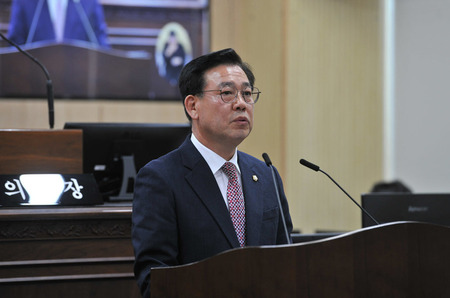
 ▲ 이개호 의원은 “국내 석유화학산업의 지속 가능성 확보를 위해 △ 인수합병(M&A)을 통한 기업 규모 축소 및 개수 감축 △구조개편에 따른 세제 혜택 확대와 생산라인 변경에 대한 자금지원 △기술 집약적이고 마진율이 높은 특수 화학 제품, 친환경 소재 등 고부가가치 제품으로의 포트폴리오 전환 △숙련된 인력의 고부가가치 사업으로 전환배치 △연구 개발(R&D) 투자를 늘려 미래 성장동력 확보와 생산 공정의 효율성 극대화 △기업경영 전략에 대한 지원을 해야 한다“고 강조했다. (사진, 뉴시스) © 김충열 정치전문기자 |
이개호 의원은 이날, 여수·울산·대산 등 한국의 석유화학산업이 중국의 설비량 증대와 신흥 중동 국가들의 참여로 위기 상황이 지속되고 있어 마치‘끓는 가마솥 안의 개구리와 같은 상황’으로 비유했다.
이 의원은 “정부의 단호한 대응과 더불어 △구조개편 참여 기업에게 실질적인 인센티브를 제공하고 필요한 지원을 아끼지 않음으로써 자발적 변화를 유도하는 한편, △‘무임승차’의 기준과 그에 대한 대응 방안을 명확히 제시하고 일관성 있게 정책을 추진해야 한다”고 주문 했다.
그는 "정부 대응이 긍정적인 효과로 극대화되기 위해서는 △기업의 자발적 참여와 책임 의식이 중요한 만큼, 기업들도 위기 극복을 위한 공동의 노력이 필수적임을 인식하고, 선제적으로 사업 재편에 나서야 한다"고 요구했다.
아울러 “국내 석유화학산업의 지속 가능성 확보를 위해 △ 인수합병(M&A)을 통한 기업 규모 축소 및 개수 감축 △구조개편에 따른 세제 혜택 확대와 생산라인 변경에 대한 자금지원 △기술 집약적이고 마진율이 높은 특수 화학 제품, 친환경 소재 등 고부가가치 제품으로의 포트폴리오 전환 △숙련된 인력의 고부가가치 사업으로 전환배치 △연구 개발(R&D) 투자를 늘려 미래 성장동력 확보와 생산 공정의 효율성 극대화 △기업경영 전략에 대한 지원을 해야 한다“고 강조했다.
여수·울산·대산 등 한국의 석유화학산업이 중국의 설비량 증대와 신흥 중동 국가들의 참여로 위기 상황에 처한 것은 어제 오늘의 일이 아니다. 공장 가동율이 급격히 줄어들고 일자리는 소멸되고 지방경제는 죽어가고 있다. 기후위기를 맞아 근본적인 패러다임 전환하는 획기적인 방안은 없는가? 10년 후를 내다보는 장기적인 대응책이 당장 나와야 한다. 언 발에 오줌 누는 격의 임시방편으로는 AI와 기후위기 대응 앞에 산업재편의 근본적인 변화없이는 이 난국을 해쳐나가기 어렵다. hpf21@aner.com
* 아래는 위 기사를 '구글 번역'으로 번역한 영문 기사의 [전문]입니다. '구글번역'은 이해도 높이기를 위해 노력하고 있습니다. 영문 번역에 오류가 있을 수 있음을 전제로 합니다.
*The following is [the full text] of the English article translated by 'Google Translate'. 'Google Translate' is working hard to improve understanding. It is assumed that there may be errors in the English translation.
Lee Gae-ho: "Petrochemical Complexes Require a Firm Government Response and a Fundamental Paradigm Shift"
Voluntary Participation and a Sense of Responsibility by Companies Must Maximize Effectiveness
Democratic Party of Korea Representative Lee Gae-ho (Damyang, Hampyeong, Yeonggwang, Jangseong, South Jeolla Province) issued a press release on the 19th, expressing his enthusiastic welcome for the government's "Structural Reform and Resolute Response to Free Riders" policy, aimed at sustainable growth in the domestic petrochemical industry. He urged companies to proactively and voluntarily participate.
Representative Lee likened the Korean petrochemical industry, including Yeosu, Ulsan, and Daesan, to a "frog in a boiling cauldron," as it continues to face a crisis due to China's increased capacity and the participation of emerging Middle Eastern countries.
Rep. Lee urged, "In addition to a resolute government response, the government must provide practical incentives and generous support to companies participating in the restructuring to encourage voluntary change. Furthermore, the government must clearly define the criteria for 'free riders' and countermeasures, and consistently implement policies."
He emphasized that for the government's response to be maximally effective, voluntary participation and a sense of responsibility from companies are crucial. He urged companies to recognize the essential importance of joint efforts to overcome the crisis and proactively engage in business restructuring.
He also emphasized, "To ensure the sustainability of the domestic petrochemical industry, we must: 1) downsize and reduce the number of companies through mergers and acquisitions (M&A); 2) expand tax benefits and financial support for production line changes in line with restructuring; 3) shift the portfolio to high-value-added products such as technology-intensive, high-margin specialty chemicals and eco-friendly materials; 4) reassign skilled personnel to high-value-added businesses; 5) increase R&D investment to secure future growth engines and maximize production process efficiency; and 6) provide support for corporate management strategies."
It's not just recent that Korea's petrochemical industry, including those in Yeosu, Ulsan, and Daesan, has been facing a crisis due to China's increased capacity and the participation of emerging Middle Eastern countries. Plant utilization rates are rapidly declining, jobs are disappearing, and local economies are languishing. Are there any groundbreaking solutions to fundamentally shift the paradigm in the face of the climate crisis? A long-term response that anticipates the next decade is urgently needed. Without fundamental changes in industrial restructuring to address AI and the climate crisis, it will be difficult to overcome this crisis with stopgap measures that are like peeing on your feet. hpf21@aner.com