중국의 이번 전승절의 정식 명칭은 ‘중국 인민 항일전쟁 및 전 세계 반파시스트 전쟁 승리 기념일’이다. 올해는 중국이 중-일 전쟁, 제2차 세계대전에서 승리한 80주년이 되는 해이기 때문에, 표면상 이번 행사는 ‘중국몽’을 세계에 과시하고, 미국의 일방적 패권주의에 맞서면서도 반서방 연대를 돈독히 하는 자리라고 하겠다. 10년마다 열리는 전승절로 비추어 보면 이번 행사는 규모로 봐도 2015년에 비해 거의 2배 정도의 차이가 난다.
이번 전승절 행사에서 관전 포인트는 두 개인데, 하나는 톈안먼 망루 맨 앞에 시진핑과 함께 설 정상급 지도자들이 누구인지와 군대 열병식에 등장할 중국의 최근 최첨단 무기들이 어떤 것들인지다. 첫 번째 문제에서 당연히 눈에 띄는 정상급 인사들은 시진핑의 오른쪽에 푸틴 러시아 대통령과 왼쪽에 김정은 북한 국무 위원장이다. 북한-러시아 관계는 혈맹관계로 발전되고 있는 반면 그동안 북한-중국 관계는 냉랭했는데, 그 까닭은 북한이 중국으로부터 원하는 바를 얻어내지 못하자, 북한이 중국보다 러시아에 더 밀착해 버렸기 때문이다. 그리고 중국이 미국과의 관계를 의식하면서 사실상 북한에 대한 경제적 제재에 일부 동참하다 보니, 북한은 중국에 대한 신뢰가 낮아질 수밖에 없었다.
중국이 북한에 필요할 때 중국은 북한에 별로 도움을 주지 않고 수수방관하거나 소극적인 태도로 일관했다. 사실 이러한 중국의 태도는 자국의 이익에만 몰두하는 것으로 과거 북한과 혈맹이라고 말만 하지 실질적으로 아무런 소득도 없는 공허한 것에 지나지 않는다는 사실을 북한도 인지했을 것이다. 결국 중국이 북한과의 관계를 복원하기 위해서는 이른바 판을 깔아주고 북안을 다자외교에 데뷔하게 만드는 그림이 최선이라고 판단했을 것이다. 그러다 보니 중국은 김정은의 방중에 상당히 공을 들이면서도 김정은을 푸틴과 같은 급으로 최고 대우를 했다. 놀라운 일이다! 시진핑과 인사를 할 때 맨 마지막 정상이 가장 중요한 정상급 인사인데, 푸틴이 마지막이고 그 바로 직전이 김정은이었으니, 이것은 사실 김정은이 시진핑과 푸틴과 나란히 톈안먼 망루에 설 자리가 정해진 것이나 다름이 없다.
이러한 역사적 장면은 66년 만에 일어난 것이라고 하니까 김일성의 손자인 김정은은 상당히 남다른 감회가 있을 것이다. 66년 전에 김일성 주석이 마오쩌뚱과 나란히 섰지만, 마오쩌뚱 우측 바로 옆에 서지 못하고 호치민 베트남 주석, 저우언라이 중국 총리 다음에 섰던 것에 비하면 – 그 당시 우측에는 흐루쇼프 소련 공산당 서기장이 섰다 - 이번 전승절에서 김정은이 시진핑 바로 좌측에 선 것은 그야말로 북한의 존재감을 분명히 보여준 것이다.
 ▲ 베이징=AP/뉴시스] 시진핑(가운데) 중국 국가주석이 블라디미르 푸틴(왼쪽) 러시아 대통령, 김정은 북한 국무위원장과 함께 3일(현지 시간) '중국 인민 항일 전쟁 및 세계 반파시스트 전쟁 승리(전승절)' 80주년 기념 열병식이 열리는 베이징 톈안먼 광장으로 걸어오고 있다. ©뉴시스 |
중국은 왜 이번 전승절에 김정은을 초청한 것일까? 그리고 김정은은 왜 이 초청에 응했을까? 일부에서는 이번 김정은의 방북이 성사되지 않을 수도 있다는 말도 나왔다. 지금까지 북한-중국의 관계로 보면 북한이 실제로 얻을 것이 없다는 점에서도 그렇다. 그런데 여기에서 한 가지 간과한 것이 있다. 중국도 러시아-우크라이나 전쟁을 통해 북한의 파병에 따른 성과를 주시하면서 북한의 노림수를 어느 정도 읽었을 가능성이 있다. 마침 이재명 대통령이 한일 정상 회담, 한미 정상 회담도 하고 한미일 삼각동맹을 강조하던 시기에, 북한과 중국은 아마도 반미라는 연대의 틀을 강화할 필요가 있었고 서로의 이익이 일치되는 시점을 인지했을 것이다.
그 때문에 중국은 북한을 이번 전승절에 끌어들일 명분이 있었다. 거기에 북한과 러시아가 밀착하는 상황에 균형을 맞추면서 반서방 연대라는 틀을 중국이 주도적으로 만들고자 할 명분도 쌓았고, 이를 통해 한미일이라는 삼각동맹에 대응해서 북중러라는 삼각 연대의 필요성도 제기되었을 것이다. 트럼프 미국 대통령은 처음에는 시진핑, 푸틴, 김정은과 친하기 때문에, 이번 중국의 전승절에서 보여준 북중러의 삼각동맹에 별문제가 없다고 말했지만, 막상 전승절 행사가 시작되니까 곧바로 이를 ‘반미 모의’라고 표명하기도 했다. 트럼프는 미국도 2차 세계대전에 도움을 주었다고 거론했지만, 정작 시진핑의 연설에서는 미국이라는 말이 한마디도 나오지 않았다는 사실에 불쾌했을 것이다. 이것은 트럼프가 현재 관세협정 및 주 방위군 LA 투입 등이 불법이라는 미국 법원의 판결이 나오면서 궁지에 몰렸다는 사실과 함께 자신이 워싱턴에서 벌인 열병식이 상대적으로 초라해 보였다는 사실 때문일 것이다.
중국이 이번 열병식에서 선보인 첨단 무기들은 크게 두 가지 측면에서 주의 깊게 살펴볼 필요가 있다. 하나는 탄도 미사일과 극초음속 미사일인데, 둘 다 미국을 겨냥하는 것이다. 다양한 탄도 미사일 중에서 이른바 ICBM으로 전 지구를 사정권으로 두고 사정거리가 20,000km 이상인 DF-5C, ICBM(대륙간 탄도 미사일)으로 신형 고체 연료 추진 시스템을 사용하면서 최대 사정거리가 약 14,000km인 DF-61, IRBM(중거리 탄도 미사일) 개량형으로 추정되는 대함미사일로 최대 사거리가 5,000km인 ‘괌 킬러’로 불리는 DF-26D, MRBM(단거리 탄도미사일)으로 사정거리가 2,500km로 주한미군의 사드 및 일본의 SM-3 요격시스템을 무력화할 수 있는 DF-17이 위협적이다. 둥펑 시리즈 외에도 미국 항모를 원거리에서 타격할 수 있는 YJ-21 극초음속 미사일은 최고 마하 10의 속도로 이른바 상대방의 타격지점에서 자동 회피를 할 수 있어서 요격할 수 없다는 점에서 눈길을 끌기에는 충분하다. 잠수함 탄도 미사일(SLBM)인 JL-3은 사정거리가 10,000km로 미국 본토를 타격할 수 있다.
다른 하나는 드론 및 AI를 이용한 각 군의 장비들이 공개되기도 했는데, 무인 전차, 로봇 개, 무인잠수정, 다종의 무인기도 보여주었다. 스텔스 전투기인 J–35A는 중국의 5세대 전투기로 미국의 F-35·22에 대응해서 공개되었고, J-20S는 마찬가지로 전자전과 적 방공망 제압((SEAD), 무인 항공 시스템(UAS) 통제 등의 임무를 수행하고 복좌식으로 조종사도 다양한 작전을 수행할 수 있는 것이 특징이다. 이번 열병식에서 공개된 중국의 최신예 무기들은 중국이 미국보다 앞선 분야를 군사용으로 활용하고 있다는 점에서 가공할 만하다. 물론 열병식에 등장한 무기들만으로 중국이 아직 미국에 동긍한 수준이라고 말하기는 어렵다. 특히 양적 측면보다 질적인 측면에서 중국이 아직 미국에 열세인 점은 분명하다. 그러나 장기적으로 보면 분명히 중국이 질적인 측면에서도 미국과 대등한 수준에 도달하지 못한다고 할 수 없다.
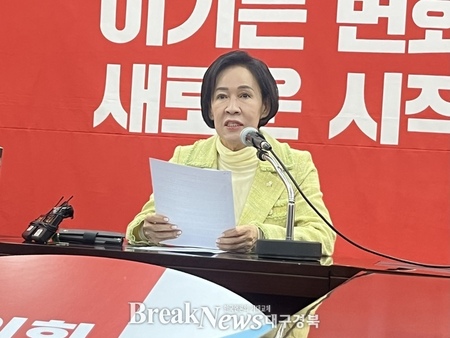
중국은 상하이 협력 기구 정상회의와 전승절 행사를 통해 이른바 ‘슈퍼 위크’를 보내면서 중국의 민심을 수습하고, 시진핑의 지도력이 아직 건재함을 보여주었다. 김정은은 첫 다자외교 무대에 데뷔하면서 푸틴과 정상 회담을 했고, 시진핑과도 정상 회담을 할 것이다. 우원식 한국 국회 의장은 김정은과 짧은 인사를 나누었다고 전해지는데 다소 냉랭할 수밖에 없었지만, 시진핑과 만나서 APEC에 시진핑을 초청했으며, 푸틴과 대화도 나누었는데, 푸틴이 한국에 관심을 보였다는 말도 나왔다. 어쩌면 우원식 국회 의장의 이번 방중은 국제관계에서 실용적으로 나아갈 필요가 있음을 느꼈을 것이다.
시진핑은 이번 전승절 연설에서 “오늘날 인류는 평화냐, 전쟁이냐, 대화냐 대결이냐를 선택해야 하는 상황에 직면해 있다”라고 말하면서 “모든 국가와 민족이 서로 평등하게 화합하여 서로 도울 때만 공동의 안보를 유지하고, 전쟁의 근본 원인을 제거하며, 역사적 비극의 반복을 막을 수 있다”라고 강조했다. 이것은 시진핑이 미국을 겨냥한 발언이라고 하겠지만, 미국을 직접 거론하지 않은 것은 미국과의 관계를 의식했기 때문이다. 중국이 “역사와 인류 문명의 진보라는 올바른 길”을 위해 선두에 서서 “평화 발전의 길을 견지하고” 인류의 공동체를 구축하기 위해 주도적으로 역할을 하겠다는 뜻은 어쩌면 중국이야말로 미국에 대항할 수 있는 유일한 국가임을 내세운 것이다.
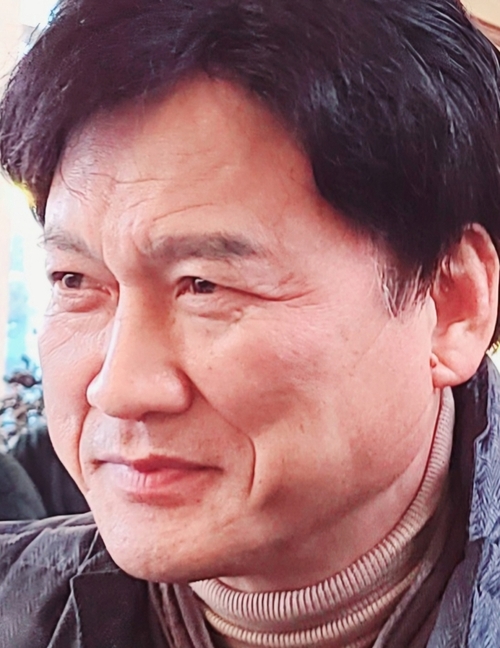
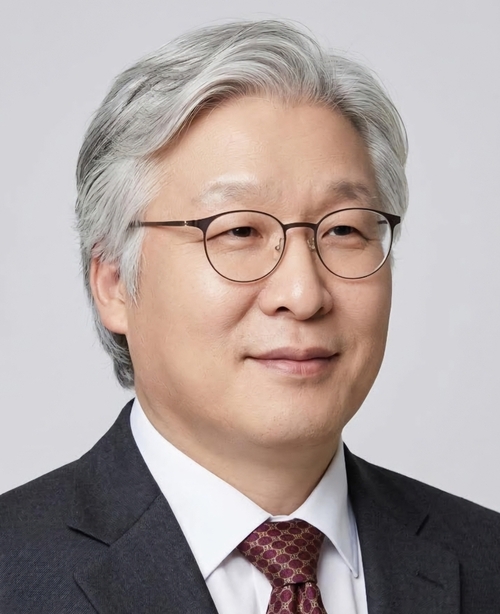
 ▲ 필자/권기환 박사. ©브레이크뉴스 |
이번 전승절에서 중국이 북중러의 삼각 연대를 상징적으로 드러내기는 했지만, 3자 공동성명을 내놓지 않은 것은 북중러의 삼각 연대가 이른바 ‘신냉전으로 고착화되는 듯한 인상을 세계에 심어주는 것에 대해 경계심을 드러낸 것이다. 이제 전승절이 끝났으니까 향후 국제정세는 중대한 변화를 맞이할 것인데, 그 변곡점은 바로 한반도일 것이다.
*필자/권기환 박사.
*아래는 위 기사를 '구글 번역'으로 번역한 영문 기사의 [전문]입니다. '구글번역'은 이해도 높이기를 위해 노력하고 있습니다. 영문 번역에 오류가 있을 수 있음을 전제로 합니다.<*The following is [the full text] of the English article translated by 'Google Translate'. 'Google Translate' is working hard to improve understanding. It is assumed that there may be errors in the English translation.>
China's Victory Day, a Grand Finale, What Does the Restoration of North Korea-China Relations Mean?
- Kwon Ki-hwan, Columnist
The official name for China's Victory Day celebration is "Victory Day of the Chinese People's War of Resistance Against Japanese Aggression and the World Anti-Fascist War." This year marks the 80th anniversary of China's victory in the Sino-Japanese War and World War II. Therefore, the event is ostensibly intended to showcase the "Chinese Dream" to the world, counter US unilateral hegemony, and solidify anti-Western solidarity. Considering that Victory Day celebrations are held every ten years, this year's event is nearly twice as large in scale as the 2015 event.
There are two key points to watch for in this year's Victory Day celebration: which top leaders will stand alongside Xi Jinping at the head of the Tiananmen Square, and what cutting-edge Chinese weapons will be displayed in the military parade. On the first issue, the most obvious leaders are Russian President Vladimir Putin to Xi Jinping's right and North Korean Chairman Kim Jong-un to his left. While North Korea-Russia relations have developed into a blood alliance, North Korea-China relations have remained chilly. This is because, unable to obtain what it wants from China, North Korea has become more entrenched with Russia than with China. Furthermore, China, conscious of its ties to the United States, has effectively joined in imposing economic sanctions on North Korea, inevitably eroding North Korea's trust in China.
When North Korea needed China, it offered little assistance, remaining passive or passive. North Korea likely recognized that China's stance was solely focused on its own interests, rendering the former blood alliance with North Korea an empty promise, yielding no real gains. Ultimately, China likely concluded that the best way to restore relations with North Korea was to lay the groundwork and allow North Korea to make its debut in multilateral diplomacy. As a result, China, despite putting considerable effort into Kim Jong-un's visit, treated him with the same level of respect as Putin. This is astonishing! The last leader to greet Xi Jinping is the most important, and Putin was the last, followed immediately by Kim Jong-un. This effectively guarantees Kim Jong-un a spot on the Tiananmen Square alongside Xi Jinping and Putin.
This historic moment, the first in 66 years, must have been quite a special experience for Kim Jong-un, Kim Il-sung's grandson. Compared to 66 years ago, when Kim Il-sung stood alongside Mao Zedong, but not directly to his right, standing behind Vietnamese President Ho Chi Minh and Chinese Premier Zhou Enlai—back then, Soviet General Secretary Khrushchev stood to his right—Kim Jong-un's standing immediately to Xi Jinping's left on this Victory Day truly underscores North Korea's growing presence.
▲ Beijing = AP/Newsis] Chinese President Xi Jinping (center), Russian President Vladimir Putin (left), and North Korean Chairman Kim Jong-un walk toward Tiananmen Square in Beijing on the 3rd (local time) for a military parade commemorating the 80th anniversary of the victory of the Chinese People's War of Resistance Against Japanese Aggression and the World Anti-Fascist War (Victory Day). © Newsis
Why did China invite Kim Jong-un to this Victory Day? And why did Kim Jong-un accept the invitation? Some have even suggested that Kim Jong-un's visit to North Korea might not materialize. This is because, given the current state of North Korea-China relations, North Korea has little to gain. However, one point has been overlooked. China, observing the effects of North Korea's troop deployment during the Russo-Ukrainian War, may have also anticipated North Korea's intentions to some extent. At a time when President Lee Jae-myung was holding summits with Japan and the US, and emphasizing the trilateral alliance between the US, Japan, and South Korea, North Korea and China likely needed to strengthen their anti-American solidarity framework and recognized the point where their interests aligned.
Therefore, China had a justification for drawing North Korea into this Victory Day event. Furthermore, by balancing the growing ties between North Korea and Russia, it also provided a justification for China to proactively build an anti-Western framework. This likely raised the need for a trilateral alliance between North Korea, China, and Russia to counter the trilateral alliance between the US, Japan, and South Korea. US President Trump initially dismissed the trilateral alliance between North Korea, China, and Russia, citing his close relationships with Xi Jinping, Putin, and Kim Jong-un, as problematic. However, once the celebrations began, he immediately labeled it an "anti-American plot." While Trump acknowledged that the US had aided China during World War II, he was likely displeased by the fact that Xi Jinping's speech did not mention the US at all. This likely stems from the fact that Trump is currently cornered by a US court ruling that the current tariff agreement and the deployment of the National Guard to Los Angeles are illegal, as well as the relatively underwhelming appearance of his own military parade in Washington.
The advanced weapons China displayed at this parade deserve careful consideration for two main reasons. First, they are ballistic missiles and hypersonic missiles, both of which are aimed at the United States. Among the various ballistic missiles, the DF-5C, a so-called ICBM with a range of over 20,000 km and a global strike range, the DF-61, an ICBM (intercontinental ballistic missile) with a maximum range of approximately 14,000 km using a new solid-fuel propulsion system, the DF-26D, dubbed the “Guam killer” and an anti-ship missile believed to be an improved version of the IRBM (intermediate-range ballistic missile) with a maximum range of 5,000 km, and the DF-17, a MRBM (short-range ballistic missile) with a range of 2,500 km that can neutralize the THAAD of the US Forces in Korea and Japan’s SM-3 interceptor system, are threatening. In addition to the Dongfeng series, the YJ-21 hypersonic missile, which can strike US aircraft carriers from a long distance, is noteworthy because it can automatically evade the so-called enemy’s strike point at a speed of up to Mach 10, making it impossible to intercept. The JL-3 submarine-launched ballistic missile (SLBM) has a range of 10,000 km, capable of striking the US mainland.
Another display included drones and AI-powered equipment from various military units, including unmanned tanks, robot dogs, unmanned submarines, and various types of drones. The J-35A stealth fighter, a fifth-generation fighter jet from China, was unveiled as a response to the US F-35 and F-22. The J-20S, similarly, performs missions such as electronic warfare, suppression of enemy air defenses (SEAD), and control of unmanned aerial systems (UAS). Its dual-seat configuration allows the pilot to perform a variety of operations. The cutting-edge Chinese weapons unveiled at this military parade are formidable, demonstrating China's military capabilities in areas where it is ahead of the US. Of course, the weapons displayed at the parade alone cannot be said to indicate that China is still on par with the US. It is clear that China is still inferior to the US in terms of quality, rather than quantity. However, in the long term, it cannot be said that China cannot reach a qualitative level equal to the US.
China held the Shanghai Cooperation Organization Summit and the Victory Day celebrations, a so-called "Super Week," to reconcile the Chinese people and demonstrate the continued strength of Xi Jinping's leadership. Kim Jong-un made his debut on the multilateral diplomatic stage with a summit with Putin. He will also hold a summit with Xi Jinping. South Korean National Assembly Speaker Woo Won-shik reportedly exchanged brief greetings with Kim Jong-un, which was inevitably somewhat chilly. However, he met with Xi Jinping, invited him to APEC, and also spoke with Putin, leading to speculation that Putin had shown interest in South Korea. Perhaps National Assembly Speaker Woo Won-shik's visit to China reflects the need for a pragmatic approach to international relations.
In his Victory Day speech, Xi Jinping stated, "Today, humanity faces a situation where it must choose between peace and war, dialogue and confrontation." He emphasized, "Only when all countries and ethnicities unite and assist each other on equal footing can we maintain common security, eliminate the root causes of war, and prevent the repetition of historical tragedies." While this statement could be seen as aimed at the United States, Xi Jinping did not directly mention the United States, conscious of his relationship with the United States. He emphasized that China will take the lead in advancing "the right path of history and the advancement of human civilization," "uphold the path of peaceful development," and play a leading role in building a community for humanity. The implication is perhaps that China is the only country capable of standing up to the United States.
▲ Author/Dr. Kwon Ki-hwan. ©Break News
While China symbolically demonstrated its trilateral solidarity with North Korea, China, and Russia on this Victory Day, its failure to issue a joint statement demonstrates its wariness of giving the world the impression that this trilateral alliance is entrenched in a so-called "new Cold War." Now that Victory Day is over, the international situation will face significant changes, and the Korean Peninsula will be the turning point.
*Author/Dr. Kwon Ki-hwan.