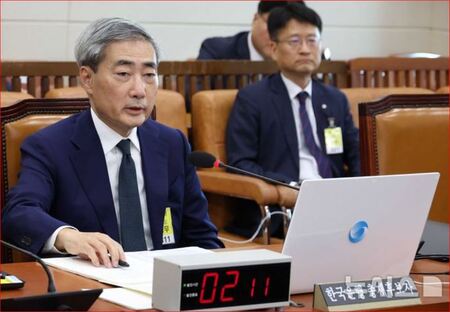
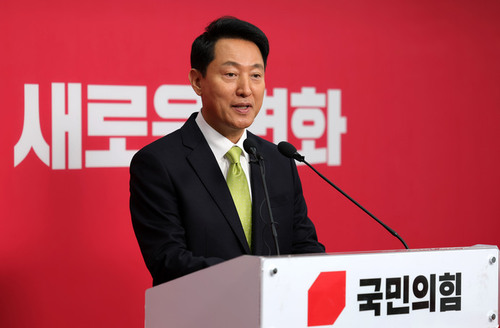
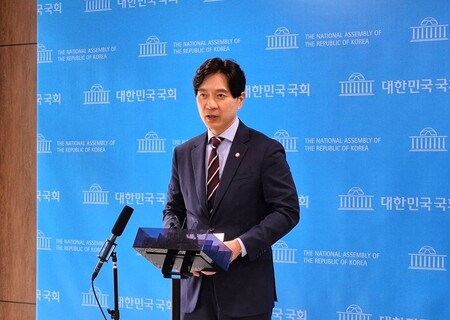
▲ 국민의힘 지방선거 서울시장 후보에 선출된 오세훈 서울시장이 지난 4월18일 오전 서울 여의도 국민의힘 당사에서 서울시장 후보 선출 관련 기자회견을 하고 있다. 2026.04.18. ©뉴시스 |
보수정당이 서울을 잃는 순간, 그것은 한 도시의 패배로 끝나지 않는다. 입법과 행정에 이어 사법까지 한 방향으로 기울어진 권력 구조 속에서, 지방권력마저 넘어가는 순간 대한민국의 균형은 사실상 붕괴된다. 그때부터 정치는 경쟁이 아니라 지속이 되고, 권력은 교체가 아니라 축적의 대상이 된다. 장기집권의 구조가 형성되는 것이다.
이 점에서 이번 지방선거의 성격은 분명하다. 오세훈은 4월18일 국민의힘 서울시장 후보로 확정된 직후 “서울을 내어주면 정권의 폭주를 막을 마지막 제동장치가 사라진다”고 말했다. 이 발언은 과장이 아니라 현실에 대한 정확한 진단이다. 지금의 권력 구조에서 서울은 하나의 지방자치단체가 아니라, 권력의 집중을 견제하는 마지막 균형 축이다.
지금의 선거 지형은 냉정하다. 수도권은 이미 불리한 흐름 속에 있고, 충청권도 영향을 받아 승리를 확신할 수 없다. 전통적 기반으로 여겨졌던 부울경 낙동강 전선은 무너졌고, 대구는 흔들리고 있으며, 경북만 고립될 가능성이 커졌다. 섬처럼 남은 정치 세력으로는 국가의 방향을 바꿀 수 없다.
이 현실 속에서 결론은 단 하나다. 서울을 지켜야 한다. 서울은 단순한 행정 단위가 아니다. 그것은 무너진 균형을 다시 세울 수 있는 마지막 축이며, 보수가 다시 일어설 수 있는 유일한 전략적 거점이다. 이번 선거는 통상의 지방선거가 아니다. 법치와 균형을 지키기 위한 정치적 분수령이다.
선거는 감정이 아니라 숫자로 결정된다. 서울시장 선거의 역사는 이미 하나의 기준을 보여준다. 2006년 약 240만 표, 2010년 약 208만 표의 박빙 승리, 2021년 약 280만 표, 2022년 약 293만 표. 이 수치가 말하는 것은 단순하다. 서6울에서 승리하려면 최소 250만 표가 필요하다는 사실이다.
문제는 지금이다. 지방선거는 본질적으로 투표율이 낮다. 정치적 열기가 높은 대선이나 총선과는 달리, 지방선거는 조직표와 실제 참여가 결과를 좌우한다. 특히 이재명 정부 출범 이후 형성된 흐름 속에서는 산토끼를 쫓기보다 집토끼를 투표장으로 끌어내는 것이 훨씬 중요하다. 이번 선거는 확장의 문제가 아니라 지지층의 투표 참여율이 승패를 가른다.
서울 유권자는 약 850만 명이다. 투표율이 50%에 머문다면 실제 투표자는 400만 명 초반에 불과하다. 이 구조에서 250만 표를 확보하는 쪽이 승리한다. 단순하지만 냉정한 계산이다. 중도층의 선택도 중요하지만, 그보다 더 중요한 것은 이미 지지하는 유권자가 반드시 투표장에 나오도록 만드는 일이다. 나오면 이기고, 나오지 않으면 진다.
이 지점에서 오세훈이라는 인물의 의미는 분명해진다. 그는 네 번이나 서울 시민의 선택을 받은 검증된 정치인이다. 실패와 복귀를 모두 경험한 권력은 가볍지 않다. 책임을 경험한 권력은 신중해지고, 신중한 권력은 예측 가능해진다. 지금 필요한 것은 바로 그런 안정된 리더십이다.
그는 스스로 보수 정치의 책임을 인정하면서도, 무너진 조직 속에서도 일할 수 있는 사람 한 명은 남겨야 한다고 말했다. 이 표현은 현재 보수 진영의 상태를 냉정하게 드러낸다. 완전히 무너진 자리에서는 아무것도 다시 세울 수 없다. 기반이 있어야 재건이 가능하고, 축이 있어야 방향을 바꿀 수 있다.
오세훈을 지킨다는 것은 한 자리를 지키는 일이 아니다. 그것은 보수 재건의 최소 조건을 지키는 일이며, 동시에 미래 권력 교체의 가능성을 유지하는 일이다. 서울을 잃으면 모든 것이 끊어진다.
국민의힘 당원과 시민 여러분께 말씀드립니다. 지금은 감정이 아니라 판단이 필요한 순간입니다. 서울을 지키는 것은 균형을 지키는 일이며, 균형을 지키는 것은 곧 대한민국을 지키는 일입니다. 투표는 형식이 아닙니다. 서울의 운명을 결정하는 선택입니다. 반드시 투표에 참여해 주시기 바랍니다. 그 한 표가 서울을 지키고, 대한민국의 균형을 지키게 될 것입니다. Jeongkeekim@naver.com
*필자/김정기
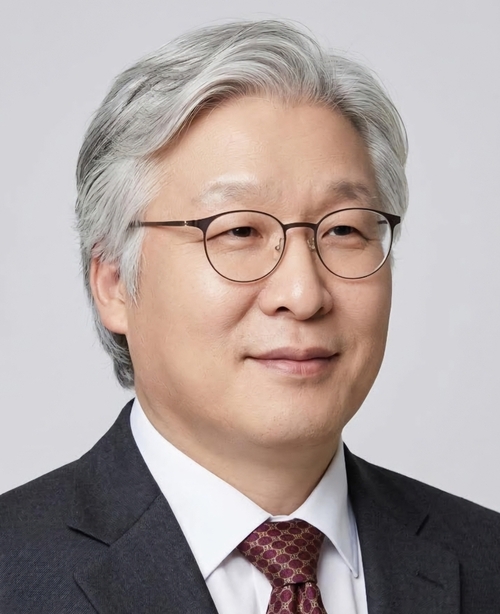
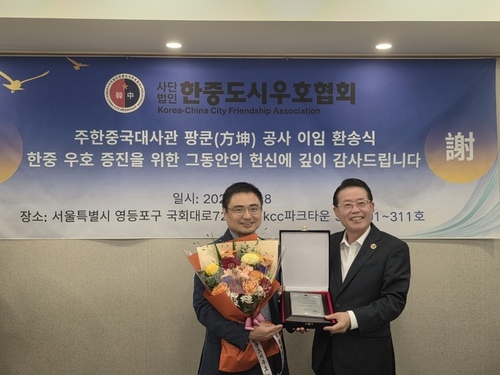
 ▲필자/ 김정기 칼럼니스트. ©브레이크뉴스 |
● 학력- 뉴욕주립대학교(Stony Brook) 정치학과 수석 졸업- 마케트대학교(Marquette) 로스쿨 법학박사- 하버드대학교(Harvard) 케네디스쿨 최고위 과정- 베이징대학교(Peking) 북한학 연구학자
● 경력
세계스마트시티기구(WeGO) 사무총장 (현) -유엔 국제전기통신연합 (UN ITU) 가상세계 및 AI 글로벌 이니셔티브 집행위원(현) -제8대 주상하이 대한민국 총영사 -2010 상하이 세계 엑스표 대한민국관 정부대표 -법무법인 대륙아주 중국 총괄 미국변호사 -동국대학교 경영전문대학원 석좌교수 –숭실사이버대학교 총장 –칼럼니스트.
● 저서
1. 대학생을 위한 거로영어연구[전 10권](거로출판사) 2. 나는 1%의 가능성에 도전한다(조선일보사) 3. 한국형 협상의 법칙(청년정신사) 4. 대한민국과 세계 이야기 (도서출판 책미듬) 5. Korea and the World (Advance Reader Copy). Jeongkeekim@naver.com
[영문 칼럼]● The Miracle of 2.5 Million Votes — Why Oh Se-hoon: Saving Seoul, Saving Korea
-By Jeong-kee Kim, Political Columnist and Secretary General of the World Smart Sustainable Cities Organization(WEGO)
The moment Seoul is lost, it does not end as the defeat of a single city. In a power structure already tilted across the legislative, executive, and judicial branches, the loss of local government would effectively collapse the balance of the Republic of Korea. From that point on, politics ceases to be about competition and becomes about continuity; power is no longer rotated but accumulated. That is how the structure of long-term dominance is formed.
In this sense, the nature of this local election is clear. Immediately after being confirmed as the ruling party’s candidate for Seoul mayor, Oh Se-hoon stated, “If Seoul is handed over, the last braking mechanism against the government’s overreach will disappear.” This is not an exaggeration—it is an accurate diagnosis of reality. In the current configuration of power, Seoul is not merely a municipal entity; it is the final axis capable of checking concentration of authority.
The electoral landscape is unforgiving. The Seoul metropolitan area is already trending unfavorably, and even the Chungcheong region cannot guarantee victory. The traditional strongholds in Busan, Ulsan, and Gyeongnam have weakened, Daegu is wavering, and Gyeongbuk risks becoming isolated. A political force reduced to scattered islands cannot alter the direction of the nation.
In this reality, the conclusion is singular: Seoul must be defended. Seoul is not just an administrative unit. It is the last strategic axis capable of restoring balance—a critical foothold for the conservative bloc to recover. This election is not a routine local contest; it is a political watershed for preserving rule of law and equilibrium.
Elections are not decided by emotion, but by numbers. The history of Seoul mayoral elections provides a clear benchmark: approximately 2.4 million votes in 2006, about 2.08 million in the razor-thin 2010 race, roughly 2.8 million in 2021, and about 2.93 million in 2022. The message is simple: to win Seoul, one must secure at least 2.5 million votes.
The challenge lies in turnout. Local elections inherently draw lower participation than presidential or parliamentary races. In such elections, organizational strength and actual voter mobilization determine the outcome. In the current political climate following the rise of the Lee Jae-myung administration, expanding the base matters less than ensuring that existing supporters turn out to vote. This election is not about expansion—it will be decided by the turnout of the base.
Seoul has approximately 8.5 million eligible voters. If turnout hovers around 50%, the actual number of voters barely exceeds 4 million. Within this structure, the side that secures 2.5 million votes wins. It is a simple but unforgiving equation. Swing voters matter, but more critical is ensuring that those who already support a candidate actually show up. If they turn out, victory follows. If they do not, defeat is inevitable.
At this point, the significance of Oh Se-hoon becomes clear. He is a proven leader who has been chosen by the citizens of Seoul four times. Power that has experienced both failure and return is not shallow. Leadership that has borne responsibility becomes cautious, and cautious leadership becomes predictable. That is precisely the kind of stable leadership required now.
He has acknowledged the failures of the conservative camp while emphasizing that even within a collapsed structure, at least one capable figure must remain to govern. This statement reflects a sober recognition of the current state of conservatism. From total collapse, nothing can be rebuilt. There must be a foundation; there must be an axis to redirect the course.
To defend Oh Se-hoon is not merely to protect a political office. It is to preserve the minimum condition for conservative reconstruction, and at the same time, to maintain the possibility of future transfer of power. If Seoul is lost, everything is severed.
To the members of the People Power Party and to all citizens: this is a moment that demands judgment, not emotion. To defend Seoul is to defend balance—and to defend balance is to safeguard the Republic of Korea. Voting is not a formality; it is a decision that determines the fate of Seoul.
*Author / Jeong-kee Kim
● Education
-B.A. in Political Science (Summa Cum Laude), State University of New York at Stony Brook -Doctor of Jurisprudence, Marquette University Law School -Senior Executive Program, Harvard Kennedy School -Research Scholar in North Korean Studies, Peking University
● Professional Experience
-Secretary-General, World Smart Sustainable Cities Organization (Current) -Executive Committee Member, Virtual World & AI Global Initiative, International Telecommunication Union (Current) -8th Consul General of the Republic of Korea in Shanghai -Commissioner General, Korea Pavilion, Expo 2010 Shanghai China -Senior Attorney-at-Law, DR& Aju LLC -Distinguished Chair Professor, Graduate School of Business, Dongguk University -President, Soongsil Cyber University -Columnist
● Publications
-Georo English Studies Series for College Students (Georo Publishing) -I Challenge the Possibility of One Percent (Chosun Ilbo) -The Art of K-Negotiation (Cheongnyeonjeongsin Publishing) -Korea and the World (Chaekmideum Publishing)
*Email: Jeongkeekim@naver.com