박철성 기자 〈리서치센터 국장·칼럼니스트〉
■ "행정 몰랐다" 신현송… 장남은 칼같이, 장녀는 27년 방치
■ 장녀 국적 미신고→여권 재발급→출국 사용→전입신고까지… 27년 공백의 연쇄
■ 27년 공백, 우연이 아니라 선택이었다

|
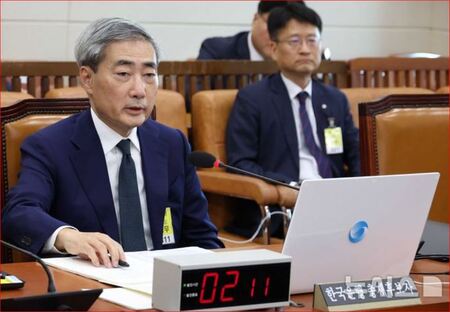
▲신현송 한국은행 총재 후보자가 15일 국회 재정경제기획위원회 인사청문회에서 의원 질의에 답변하고 있다. 장녀 국적 미신고·여권 부정 발급 논란·위장전입 등 잇단 의혹에 "행정 절차를 몰랐다"고 해명했지만, 같은 가정 안에서 장남 국적 처리는 기한 내 정확히 이뤄진 사실이 드러나 설득력을 잃었다는 지적이 나온다.
같은 집 안에서 두 가지 다른 선택이 있었다. 하나는 기한 내 칼같이 처리됐다. 하나는 27년간 방치됐다.
신현송 한국은행 총재 후보자가 인사청문회 내내 반복한 해명이 있다. "오래 해외에 살다 보니 행정 처리를 잘 몰랐다." 이 해명을 정면으로 반박하는 기록이 있다. 바로 그의 가정 안에 있다.
장남은 1996년생이다. 미국·영국 복수 국적자다. 2012년, 만 16세 때 한국 국적 상실 신고를 마쳤다. 시점이 중요하다. 국적법상 만 18세 이전에 신고를 완료하면 병역 부담이 발생하지 않는다. 장남의 신고는 그 기한에 맞춰 정확히 이뤄졌다. "행정을 몰랐다"는 사람의 집에서, 병역 관련 기한만큼은 한 치의 오차도 없이 지켜졌다.
장녀는 1991년생이다. 1999년 영국 국적을 취득했다. 그 순간 한국 국적이 자동 상실됐다. 그로부터 27년이 흘렀다. 국적 상실 신고는 한 번도 이뤄지지 않았다. 배우자는 2011년에 같은 절차를 밟았다. 장남은 2012년에 밟았다. 장녀만 달랐다. 왜 장녀만 27년간 "몰랐"는가. 문제는 '몰랐느냐'가 아니다. 왜 이 선택만 27년 동안 유지됐느냐다.
이 질문에 신 후보자는 답하지 못했다.
장녀의 이력은 구체적이다. 신 후보자가 미국 프린스턴대 경제학과 교수로 재직하던 시절, 장녀도 프린스턴대 학부를 다녔다. 2021년 9월 미국 캘리포니아에서 결혼했다. 현재 뉴욕의 한 공익 법인에서 근무 중이다. "해외에서 독립된 가정을 이뤘다"는 신 후보자의 청문회 답변과 맞닿아 있다. 그런데 그 장녀의 국적 신고는 27년간 방치됐다.
■ "행정 몰랐다" 해명에도 남는 질문… 왜 이 선택만 반복됐나
결과는 연쇄적으로 이어졌다. 2022년 11월, 장녀는 외교부로부터 한국 여권을 재발급받았다. 국적 상실 신고가 없었기 때문이다. 외교부는 장녀를 여전히 한국인으로 인식했다. 유효기간 2027년 11월까지의 여권이 발급됐다. 현행 여권법은 부정한 방법으로 여권을 재발급받으면 3년 이하 징역 또는 3천만 원 이하 벌금에 처하도록 규정하고 있다. 부정 발급 논란이 제기되는 이유다.
개혁신당 천하람 의원은 이를 두고 "행정 사기"라고 규정했다. "영국 국적자가 우리 정부를 기만해 여권을 재발급받은 것"이라는 지적이다.
더 나아갔다. 2025년 1월, 장녀는 미국으로 출국했다. 이 여권을 출입국 심사대에 직접 제시했다. 영국 국적자가 한국 여권으로 법무부 심사를 통과했다. 출입국관리법 위반 소지가 있다는 지적이 나온다.
2023년 12월에는 전입 신고가 있었다. 신 후보자가 자신의 서울 강남구 동현아파트에 장녀를 직접 자필로 내국인 전입 신고했다. 사용한 것은 장녀의 과거 주민등록번호였다. 주민등록법 위반으로 3년 이하 징역 또는 3천만 원 이하 벌금 대상이 될 수 있다는 지적이다.
진술 모순도 드러났다. 신 후보자는 국회 인사청문회 서면 답변에서 밝혔다. "장녀는 5년 전 결혼해 해외에서 독립된 가정을 이뤘다." 그런데 2023년 12월 전입신고서의 전입 사유란에는 달리 적혀 있었다. "가족과 함께 거주." 자필이었다. 두 설명은 정면으로 충돌한다. 동시에 그대로 받아들이기 어렵다.
이 모든 일이 같은 가정에서 벌어졌다. 같은 시기에 벌어졌다. 배우자와 장남은 국적 절차를 정확히 밟았다. 장녀만 27년간 방치됐다. 그 공백 속에서 여권 부정 발급 논란이 불거졌다. 실제 출국 과정에서 사용됐다. 강남 아파트 위장전입 논란까지 이어졌다. "행정 처리를 몰랐다"는 단 한 줄로 정리될 사안인지, 국민이 판단할 문제다.
"몰랐다"가 아니라 "필요할 때만 알았다." 기록이 가리키는 방향은 그쪽이다.
천하람 의원은 단호하게 말했다. "가족 모두 한국 국적을 버리고, 이후에도 위장전입과 국적 쇼핑으로 국가 시스템을 우롱해온 후보자에게 대한민국 중앙은행의 열쇠를 맡길 수 없다."
신 후보자의 운명은 오늘 결정된다. 4월 20일, 이창용 한국은행 총재 임기 만료일이다. 청문보고서 채택 여부가 재논의된다. 국회 동의 없이도 대통령 임명이 법적으로 가능한 자리다. 그러나 취임 이후에도 이 질문은 사라지지 않는다.
한국 경제의 환율과 금리를 결정하는 자리. 그 총재의 자격 논란이 임기 내내 따라붙는다.
국적 서류 하나, 여권 한 장, 전입신고서 한 통. 그 기록이 말하고 있다. 이 기록은 사라지지 않는다. 결정이 어떻게 나든, 질문은 남는다.
아래는 위 기사를 구글 번역을 통해 영문으로 옮긴 전문입니다. 이해를 돕기 위한 참고용 번역으로, 일부 표현에는 원문의 뉘앙스와 차이가 있을 수 있습니다.
The following is a reference translation generated for reader convenience. Some nuances may differ from the original Korean text.
■ Shin Hyun-song Said He "Didn't Know" — But His Son's Case Was Handled to the Day
■ Daughter's Nationality Unreported→Passport Reissued→Used at Border→Registered as Resident… A 27-Year Chain
■ 27 Years of Silence: Not an Oversight, but a Choice
By Park Cheol-seong, Veteran Journalist / 〈Director of the Research Center · Columnist〉
|
▲ ©호주브레이크뉴스 |
▲Shin Hyun-song, nominee for Governor of the Bank of Korea, responds to lawmakers' questions at a confirmation hearing held by the National Assembly's Strategy and Finance Committee on April 15. Despite mounting allegations — including his daughter's unreported nationality, a controversial passport reissuance, and an illegal resident registration — he maintained that he "was not familiar with administrative procedures." Critics say that claim lost credibility when it emerged that his son's nationality paperwork was handled precisely within the legal deadline.
Two different choices were made under the same roof. One was handled to the letter of the law. The other was left unattended for 27 years.
Shin Hyun-song, nominee for Governor of the Bank of Korea, repeated the same explanation throughout his confirmation hearing. "Having lived abroad for so long, I was not well-versed in administrative procedures." But the records that directly contradict that explanation are found within his own household.
His son was born in 1996. A dual national of the United States and the United Kingdom, he completed the process of renouncing his Korean nationality in 2012, at the age of 16. The timing matters. Under Korea's Nationality Act, completing the renunciation before the age of 18 exempts a person from military service obligations. The son's filing was made precisely within that window. In a household where the father claimed ignorance of administrative procedures, the military-related deadline was met without a single day's error.
His daughter was born in 1991. She acquired British citizenship in 1999. At that moment, her Korean nationality was automatically void. Twenty-seven years passed. The required notification of nationality loss was never filed. His wife had completed the same procedure in 2011. His son had done so in 2012. Only the daughter was different. Why was she the only one who "didn't know" for 27 years? The question is not whether he knew. The question is why this one choice alone was sustained for 27 years.
Shin did not answer that question.
The daughter's background is specific. When Shin was a professor of economics at Princeton University in the United States, his daughter attended Princeton as an undergraduate. She married in California in September 2021. She currently works at a public interest organization in New York. This aligns with Shin's written response to the National Assembly, in which he stated that his daughter had "established an independent household abroad after marrying five years ago." And yet her Korean nationality notification went unfiled for 27 years.
■ A Question That Outlasts the Hearing — Why Was This the One Choice That Was Repeated?
The consequences followed in sequence. In November 2022, the daughter received a reissued Korean passport from the Ministry of Foreign Affairs. This was possible because the nationality loss had never been reported. The ministry still recognized her as a Korean national and issued a passport valid through November 2027. Under current passport law, obtaining a passport through improper means carries a penalty of up to three years in prison or a fine of up to 30 million won. That is the basis of the fraudulent issuance controversy.
Representative Cheon Ha-ram of the Reform Party called it "administrative fraud" — "a case of a British national deceiving the Korean government to obtain a reissued passport."
It did not stop there. In January 2025, the daughter departed for the United States and presented that passport at the immigration checkpoint. A British national passed through a Ministry of Justice screening on a Korean passport. Experts say this raises potential violations of the Immigration Control Act.
In December 2023, a resident registration was filed. Shin personally submitted, in his own handwriting, a registration form listing his daughter as a domestic resident at his apartment in Donghyeon, Gangnam-gu, Seoul. He used her old Korean resident registration number to have her recorded as a Korean national. This is subject to penalties under the Resident Registration Act of up to three years in prison or a fine of up to 30 million won.
Contradictions in Shin's own statements also came to light. In written responses submitted to the National Assembly ahead of the confirmation hearing, Shin stated that his daughter had "established an independent household abroad after marrying five years ago." But the reason listed on the December 2023 registration form, in his own handwriting, read: "residing together as a family." The two accounts are in direct conflict. Both cannot be accepted at face value.
All of this took place within the same household, during the same period. His wife and son followed the nationality procedures correctly. Only his daughter was left unattended for 27 years. Within that gap, a passport controversy erupted. The passport was used at the border. A questionable resident registration followed. Whether all of this can be resolved with a single line — "I didn't know the administrative procedures" — is for the public to judge.
Not "didn't know." "Only knew when it mattered." That is the direction the record points.
Representative Cheon was unequivocal. "This is a nominee whose entire family renounced Korean citizenship, then continued to exploit the national system through fraudulent registrations and nationality shopping. The keys to the central bank of the Republic of Korea cannot be handed to this person."
The nominee's fate will be decided today. April 20 is the final day of incumbent Bank of Korea Governor Lee Chang-yong's term. The question of whether to adopt the confirmation report is being reconsidered. The president has the legal authority to make the appointment without National Assembly approval. But even after taking office, this question will not disappear.
This is the position that sets Korea's exchange rates and interest rates. The controversy over this nominee's fitness for the role will follow him throughout his term.
One nationality document. One passport. One registration form. The record speaks. This record does not disappear. Whatever is decided today, the question remains.
원본 기사 보기:호주브레이크뉴스