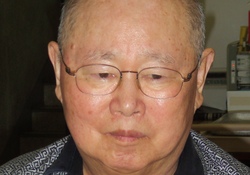
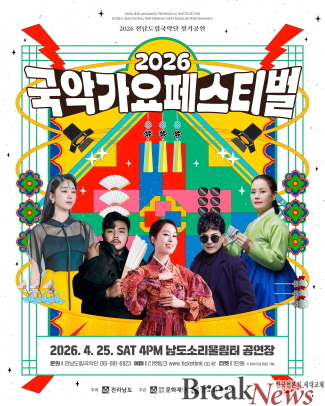
▲ 위로부터 (좌) 채수정 명창 (우) 가수 목비 아래 (좌) Shoko Nagai 음악가 (우) 심은용 거문고 연주가 |
일본에 체류 중인 실험 음악의 귀재 나가이 쇼코 음악가가 뉴욕으로 돌아가는 일정인 오는 12월 4일 한국에서 국악 퓨전 그룹 멤버인 거문고 연주자 심은용 음악가와 작은 공연을 갖고 싶다는 뜻을 전해왔다. 가슴에 상상 속의 공연을 펼쳐본다.
실험 음악의 거장 쇼코 나가이는 일본 Yamaha Music Foundation에서 유년기에 음악교육을 받았다, 스무 살 무렵부터 야마하가 제작한 전자 오르간·키보드 악기인 일렉톤(Electone) 강사와 연주자로 활동했다. 이후 미국으로 건너가 버클리 음대를 졸업한 뒤 뉴욕에 정착하여 전통과 실험을 넘나드는 독창적인 음악 세계를 펼치고 있다.
쇼코 음악가는 장르의 경계를 허물고 혼돈 속에서 새로운 질서를 빚어낸 뉴욕 다운타운 아방가르드의 기수 존 존(John Zorn), 날것의 서정적 기타 톤으로 재즈와 록의 실험을 가로지르는 카멜레온 같은 연주자 마크 리봇(Marc Ribot), 그리고 첼로의 고전적 울림에 즉흥과 실험의 언어를 덧입힌 현대 현악의 탐험가 에릭 프리어드랜더(E. Friedlander)와 함께 무대를 공유하며, 피아노와 아코디언, 전자음을 넘나들어 새로운 음악의 길을 열어왔다. 나아가 유대 음악과 발칸의 전통, 즉흥 연주까지 아우르는 그의 소리는 세상의 심장처럼 강렬하고도 깊은 생명력을 품고 있다.
 ▲ shoko nagai 음악가 |
그녀의 반대편, 거문고를 무릎에 얹은 심은용이 손끝을 세운다. 그녀가 몸담은 국악 퓨전 그룹 잠비나이는 포스트 록의 숨결을 실어 2013년 한국대중음악상 최우수 크로스오버 음반을 거머쥐었다. 2018 평창 동계올림픽 폐막식에서는 거문고 오케스트라와 함께 세계를 놀라게 했다. 이미 그들의 이름은 현대 음악사의 한 장에 새겨졌다. 심은용은 밴드 밖에서도 독집 앨범 '잔영(Afterglow)'으로 협업의 감각을 증명했다. 그녀의 거문고 소리는 공기를 가르는 칼날처럼 날카로우면서도 동시에 깊은 강물처럼 울려 퍼져 마침내 물빛과 같은 심연에 잠기게 한다.
 ▲ 심은용 거문고 연주가 |
무대의 정중앙, 판소리 명창 채수정(한국예술종합학교 교수)이 선다. 그는 학계와 무대를 잇는 소리꾼이다. 세계판소리협회를 세워 판소리를 보편의 언어로 확장하며 학문과 교육, 공연을 삼중주처럼 엮어 전통을 새롭게 빚어간다. 그의 목소리는 한(恨)을 그려내는 붓과 같아 길게 이어지는 장단의 호흡이 먹빛처럼 청중의 가슴속으로 번져간다.
 ▲ 채수정 명창 |
환한 조명이 켜지며 대중 가수 목비가 무대에 선다. 한때 ‘서울패밀리’의 보컬로 활동했던 그는 수술을 견뎌내고 다시 돌아와 최근 다큐멘터리 인간극장 '내 사랑 목비'를 통해 치열한 삶과 노래를 증언했다. 그의 신곡과 밴드 ‘와일드플라워’의 흐름은 복고적 감성과 록의 힘찬 비상을 타고 유년의 순정과 성년의 강인함이 겹친 음색으로 객석을 두드린다.
이 상상의 협연은 피아노의 맑은 숨결과 거문고의 깊은 울림이 조심스레 맞닿는 순간으로 시작된다. 도심의 소음과 산의 심연이 부딪히며 판소리의 숨결이 그 틈을 꿰매며 채수정의 깊은 성음은 선율 위로 길게 뻗어간다. 무대는 언어 이전의 언어로 차오르고 명창의 소리는 국경을 넘어 흐른다. 이어 목비의 목소리가 스며들어 세대와 장르, 서사가 불꽃처럼 교차한다.
 ▲ 가수 목비 |
이 만남은 단순한 융합이 아니다. 전통과 현재, 그리고 삶의 회복이 모여 흐르는 이 소리는 국경을 넘어선다. 이 작은 무대는 세계로 향하는 디딤돌이 되어, 머지않아 인류의 심장을 두드리는 하나의 울림으로 더욱 크게 번져갈 것이다. artwww@naver.com
필자: 이일영
한국미술센터 관장. 칼럼니스트. 시인
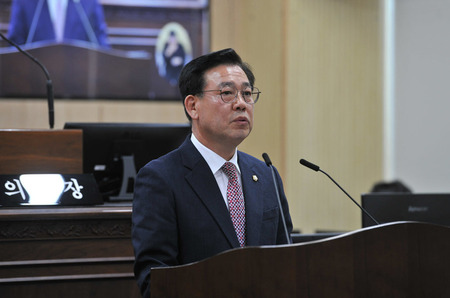
 ▲ 필자: 이일영 ©이일영 칼럼니스트 |
*아래는 위 기사를 '구글 번역'으로 번역한 영문 기사의 [전문]입니다. '구글번역'은 이해도 높이기를 위해 노력하고 있습니다. 영문 번역에 오류가 있을 수 있음을 전제로 합니다.<*The following is [the full text] of the English article translated by 'Google Translate'. 'Google Translate' is working hard to improve understanding. It is assumed that there may be errors in the English translation.>
Shoko Nagai, a prodigy of experimental music currently residing in Japan, has expressed his desire to hold a small concert in Korea with geomungo player Shim Eun-yong, a member of a Korean traditional music fusion group, on December 4th, the day he returns to New York. Let's bring this imaginary performance to life.
Shoko Nagai, a master of experimental music, received her musical education at the Yamaha Music Foundation in Japan during her childhood. Beginning around the age of twenty, she worked as an instructor and performer of the electone, an electronic organ and keyboard instrument manufactured by Yamaha. She later moved to the United States, graduated from Berklee College of Music, and settled in New York, where she continues to create a unique musical world that straddles tradition and experimentation.
Shoko has shared the stage with John Zorn, a pioneer of the New York downtown avant-garde who has broken down genre boundaries and created a new order amidst chaos; Marc Ribot, a chameleon whose raw, lyrical guitar tones traverse jazz and rock experiments; and E. Friedlander, an explorer of modern strings who blends the classical resonance of the cello with the language of improvisation and experimentation. She has pioneered new musical paths by crossing piano, accordion, and electronic sounds. Furthermore, her sound, encompassing Jewish music, Balkan traditions, and improvisation, possesses a vibrant and profound vitality, like the heart of the world.
Facing her, Shim Eun-yong, with her geomungo (Korean traditional instrument) resting on her lap, is poised to deliver. Her Korean traditional music fusion group, Jambinai, imbued with the spirit of post-rock, won the Best Crossover Album award at the 2013 Korean Music Awards. At the closing ceremony of the 2018 PyeongChang Winter Olympics, they stunned the world with the Geomungo Orchestra. Their names are already etched into the annals of modern music. Beyond the band, Shim Eun-yong demonstrated her collaborative flair with her solo album, "Afterglow." Her geomungo sound is sharp as a blade slicing through the air, yet simultaneously resonates like a deep river, ultimately immersing one in a watery abyss.
At center stage stands pansori master Chae Su-jeong (professor at the Korea National University of Arts). She is a pansori singer who connects academia and the stage. She founded the World Pansori Association to expand pansori as a universal language, weaving together scholarship, education, and performance like a trio to renew tradition. Her voice is like a brush painting resentment, the long, flowing rhythms spreading like ink through the hearts of the audience.
The lights turn on, and pop singer Mokbi takes the stage. Once the vocalist of "Seoul Family," he endured surgery and returned to share his testimony of his intense life and song in the recent documentary "Human Theater," "My Love Mokbi." His new song and the flow of his band, "Wildflower," combine retro sensibility with the powerful soar of rock, striking the audience with a timbre that blends childhood innocence with adult strength.
This imaginative collaboration begins with a moment when the clear breath of the piano and the deep resonance of the geomungo carefully intertwine. The noise of the city collides with the abyss of the mountains, and the breath of pansori fills the gap, allowing Chae Su-jeong's deep vocals to extend over the melody. The stage fills with a language that predates language, and the masterful singer's voice transcends borders. Mokbi's voice then permeates, sparking a fiery intersection of generations, genres, and narratives.
This encounter is not a simple fusion. This sound, a convergence of tradition, the present, and the renewal of life, transcends borders. This small stage will become a stepping stone to the world, and soon, it will spread even more powerfully, resonating deeply with the hearts of humanity. artwww@naver.com
Author: Lee Il-young
Director of the Korean Art Center. Columnist. Poet