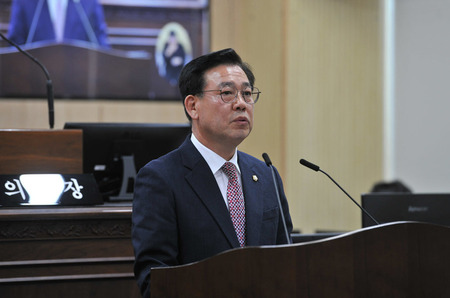
▲ 대전용산초 순직교사 1주기 추모제에 참석한 설동호 교육감 © 대전교육청 제공 |
학교에서 벌어지는 갈등은 교실에서 시작되는 경우가 많다. 그러나 그 갈등의 책임이 교실에 남는 것은 옳지 않다. 사안이 불거졌을 때 학교가 어떤 태도로 대응하는지, 누가 판단하고 누가 책임지는지는 단순한 처리 방식의 문제가 아니라 조직의 신뢰를 가르는 기준이 된다.
근래 몇 년 동안 대전과 충남 지역에서 잇따라 발생한 교사들의 사망과 극단적 선택 역시 개인의 감내력이나 직무 적합성만으로 설명될 수 없는 이유가 여기에 있다. 문제는 한 사람의 역량이 아니라, 그 사람을 끝내 혼자 서게 만든 구조다.
민원 국면에서 반복되는 장면은 낯설지 않다. 관리자가 학부모 앞에서 교사의 판단과 대응을 문제 삼는다. “대응이 미숙했다”, “경험이 부족했다”는 표현은 갈등을 빠르게 봉합하는 데는 효과적일지 모른다. 그러나 이 말들은 학교 내부의 책임 구조를 조용히 왜곡한다. 운영의 기준과 방향을 정한 주체는 흐릿해지고, 교사 개인의 능력 문제가 전면에 놓이기 때문이다. 중재처럼 들리는 말이 실제로는 책임을 아래로 흘려보내는 통로가 된다.
사실관계는 분명하다. 학교의 운영 원칙과 민원 대응의 틀, 사건 처리의 수위는 교사가 정하지 않는다. 생활지도 기준과 절차는 상급기관의 매뉴얼을 바탕으로 마련되며, 교사는 그 틀 안에서 실행을 담당한다. 그럼에도 문제가 발생하면 관리자는 한 발 물러서고, 교사는 판단의 주체이자 책임의 주체로 동시에 놓인다. 이는 역할 분담이 아니라 책임의 전도다.
이런 운영 방식이 반복될수록 교사의 전문성은 잠식된다. 교사는 보호받아야 할 교육 전문가가 아니라 갈등을 흡수하는 완충 장치로 취급된다. 학부모와의 관계에서는 신뢰가 무너지고, 조직 내부에서는 고립이 깊어진다. 갈등은 일시적으로 봉합될 수 있으나, 학교의 운영 기반은 점점 약해진다. 교사를 지키지 않는 관리 체계는 결국 스스로의 권위와 정당성마저 갉아먹는다.
대전과 충남에서 이어진 비극을 이 맥락에서 다시 바라봐야 한다. 업무 과중과 악성 민원만으로는 충분하지 않다. 문제의 신호가 누적되는 동안 관리 체계는 적시에 개입했는지, 책임을 나누고 교사를 보호했는지에 대한 질문이 빠져서는 안 된다. “조금 더 지켜보자”는 말로 판단을 미루고, 사태가 커진 뒤에는 “개인의 대응이 아쉬웠다”는 평가로 정리해 온 관행은 없었는지 돌아볼 필요가 있다.
관리자의 책무는 갈등을 피하는 데 있지 않다. 갈등을 감당하고, 판단의 근거를 분명히 하며, 조직 구성원을 보호하는 데 있다. 학부모 앞에서 교사를 비판하는 선택은 단기적 편의에 기댄 대응일 뿐이다. 이는 중재가 아니라 책임의 외주화이며, 관리의 편의성을 위해 조직의 가장 약한 고리를 희생시키는 방식이다.
정치사상가 한나 아렌트는 '예루살렘의 아이히만'에서 악이 거창한 증오에서만 비롯되는 것이 아니라, 생각하지 않는 태도와 책임을 성찰하지 않는 일상적 관행에서 증식한다고 지적했다. “현장에 있던 교사가 자의적으로 미숙한 판단을 했다”, “기간제라 또는 경력이 짧은 교사라 어쩔 수 없었다”는 말들은 판단을 유예한 채 책임을 지우는 언어다. 이런 언어가 반복될수록 조직은 무책임을 정상으로 받아들이게 된다.
학교 현장에서 학부모 앞에 선 관리자의 발언도 다르지 않다. 교사의 무능을 강조하며 갈등을 넘기는 말은 문제를 해결하는 선택이 아니라, 판단과 책임을 타인에게 전가하는 선택이다. 그 선택이 누적될 때 학교는 교육의 공간이 아니라 무책임이 관행화된 조직으로 변한다. 공손함으로 포장된 말로 책임은 희미해지고, 침묵은 중립이 아니라 방관이 된다.
관리자의 직위는 위기를 피해 가는 안전지대가 아니라, 위기의 한복판에서 판단과 책임을 감당해야 하는 자리다. 그 무게를 외면한 채 태도만 단정하게 유지하는 것은 전문성도, 지도력도 아니다.
학교는 사람을 키우는 공간이다. 그러나 그 공간이 지속되기 위해서는 먼저 내부의 사람부터 지켜야 한다. 책임을 지우는 언어와 판단을 미루는 침묵이 관행이 된 조직은 결국 사람을 소모하는 구조로 기울 수밖에 없다. 평온해 보이는 하루의 이면에서 누군가는 홀로 감당하고, 홀로 버티며, 홀로 무너진다.
학교는 위기의 순간마다 "누군가를 보호해 왔는가" 아니면 "조용히 뒤편으로 몰아내고 배제시켜 왔는가"
관리자들이 첫 발령지에서 초임 교사로 교단에 섰던 날을 떠올려 본다. 교실 문 앞에서 잠시 숨을 고르던 순간, 도움을 요청할 곳이 보이지 않아 판단을 혼자 떠안아야 했던 날들. 누군가의 말 한마디가 하루 전체를 무너뜨리던 시간들. 그 불안과 긴장감은 개인의 연약함이 아니라, 보호받지 못한 구조 속에서 만들어진 감각이었다.
지금의 후배 교사들 역시 다르지 않은 무게를 안고 교실로 들어서고 있다. 그들에게 학교는 신뢰로운 공동체인가, 아니면 책임을 홀로 감당해야 하는 공간인가. 그 차이는 개인의 의지로 극복할 수 있는 문제는 아닌 것으로 보인다. 조직이 어떤 선택을 해왔는지에 대한 결과이기 때문이다.
한강 작가의 소설 <소년이 온다>에 나오는 이 구절은, 현 시대의 상처받은 교육 공동체가 던지는 '절박한 외침'처럼 읽힌다.
“이제 당신이 나를 이끌고 가기를 바랍니다.
당신이 나를 밝은 쪽으로, 빛이 비치는 쪽으로, 꽃이 핀 쪽으로 끌고 가기를 바랍니다.”
이 문장은 누군가에 대한 의존의 고백이 아니다. 책임을 맡은 이들에게 더 이상 뒤로 물러서지 말라는 요청이다. 학교가 사람을 키우는 공간으로 남기 위해서는, 누군가를 방패로 세우는 언어가 아니라 함께 책임지는 판단이 필요하다. 그 선택을 미룰수록, 학교는 더 많은 사람을 홀로 남겨두게 될 것이다.
*아래는 위 기사를 '구글 번역'으로 번역한 영문 기사의 [전문]입니다. '구글번역'은 이해도를 높이기를 위해 노력하고 있습니다. 영문 번역에 오류가 있을 수 있음을 전제로 합니다.<*The following is [the full text] of the English article translated by 'Google Translate'. 'Google Translate' is working hard to improve understanding. It is assumed that there may be errors in the English translation.>
Conflicts in schools often begin in the classroom. However, responsibility for such conflicts should not always be confined to the classroom. When an issue arises, how a school responds, who makes the judgment, and who assumes responsibility are not simply a matter of how the issue is handled; they are the very foundation upon which organizational trust is built.
This is why the string of deaths and suicides among teachers in Daejeon and South Chungcheong Province in recent years cannot be explained solely by individual tolerance or job suitability. The problem is not a single individual's ability, but the structure that ultimately forces them to stand alone.
A recurring scene in civil complaint situations is not unfamiliar: administrators question a teacher's judgment and response in front of parents. Phrases like "the response was insufficient" and "they lacked experience" may be effective in quickly resolving the conflict. However, these words quietly distort the accountability structure within the school. The entity that sets the standards and direction for operation becomes blurred, and the individual teacher's competence becomes the forefront. What sounds like mediation actually serves as a conduit for passing responsibility down.
The facts are clear. Teachers do not determine the school's operating principles, the framework for responding to complaints, or the level of incident handling. Administrators establish guidance standards and procedures based on manuals from higher-level organizations, and teachers are responsible for implementing them within those frameworks. Nevertheless, when problems arise, administrators step aside, leaving teachers as both decision-makers and responsible. This is not a division of roles, but a reversal of responsibility.
The more this management style persists, the more teachers' professionalism is eroded. Teachers are treated not as educational professionals to be protected, but as buffers for conflict. Trust erodes in relationships with parents, and isolation deepens within the organization. While conflicts may be temporarily resolved, the foundation of the school's operations is increasingly weakened. A management system that fails to protect teachers ultimately erodes its own authority and legitimacy.
The tragedies that occurred in Daejeon and South Chungcheong Province must be reexamined in this context. Overwork and malicious complaints alone are not enough. As the signs of trouble accumulate, questions must be asked about whether the management system intervened promptly, shared responsibility, and protected teachers. We need to reflect on whether there have been practices that postpone judgment with the phrase, "Let's wait a little longer," and then, after the situation has escalated, simply conclude with an assessment that "the individual's response was disappointing."
A manager's responsibility is not to avoid conflict. It is to manage it, clarify the basis for judgment, and protect the members of the organization. Criticizing a teacher in front of parents is merely a short-term, expedient response. This is not mediation; it is an outsourcing of responsibility, a way of sacrificing the organization's weakest link for management convenience.
In "Eichmann in Jerusalem," political philosopher Hannah Arendt pointed out that evil stems not solely from grandiose hatred, but from unthinking attitudes and everyday practices that fail to reflect on responsibility. Statements like, "The teacher on the scene made an arbitrary, immature decision," or "He was a temporary or inexperienced teacher, so he had no choice," defer judgment and assign responsibility. The more this language is repeated, the more the organization accepts irresponsibility as normal.
The statements made by administrators before parents at school are no different. Emphasizing teachers' incompetence and deflecting conflict isn't a solution, but rather a shift in judgment and responsibility onto others. When these choices accumulate, schools transform from places of education into organizations where irresponsibility becomes the norm. Polite words obscure responsibility, and silence becomes not neutrality but indifference.
The position of administrator is not a safe haven, a place to avoid crisis, but a place where judgment and responsibility must be assumed in the midst of crisis. Maintaining a calm demeanor while ignoring this weight is neither professional nor leadership.
Schools are places for nurturing individuals. However, for this space to continue, the people within must first be protected. An organization where language that assigns responsibility and silence that defers judgment are the norm will inevitably degenerate into a system that consumes people. Behind the seemingly peaceful surface of a day, someone endures alone, perseveres alone, and collapses alone.
In every moment of crisis, schools ask, "Have we protected someone?" or "Have we quietly pushed them to the back and excluded them?"
Administrators recall the days they stood before the podium as new teachers in their first assignments. Those moments of catching their breath at the classroom door, days when they had to shoulder the burden of judgment alone, unable to find a place to turn for help. Times when a single word from someone could shatter their entire day. That anxiety and tension wasn't a reflection of individual vulnerability, but rather a feeling born from an unprotected structure.
Today's junior teachers are entering the classroom carrying a similar burden. Is school a trusting community for them, or a space where they must shoulder responsibility alone? This difference doesn't seem to be a matter of individual willpower. It's the result of organizational choices.
This passage from Han Kang's novel "The Boy Acts" reads like a desperate cry from the wounded educational community of our time.
"Now I want you to lead me.
I want you to lead me toward the light, toward the shining, toward the blooming flowers."
This sentence is not a confession of dependence on anyone. It's a call to those in charge to no longer retreat. For schools to remain spaces that nurture people, they need decisions that foster shared responsibility, not language that shields others. The longer schools delay that decision, the more people they will leave behind.
원본 기사 보기:브레이크뉴스대전세종충청