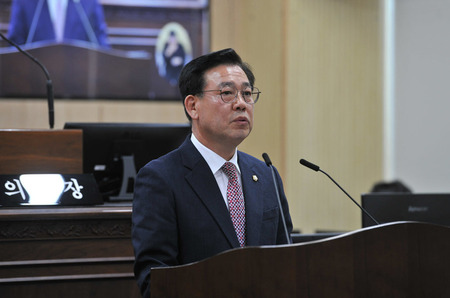
▲ 장철민 더불어민주당 의원은 22일 정청래 당대표의 조국혁신당과의 통합 제안 발표 직후, 사회관계망서비스(SNS)를 통해 당원 의견 수렴 없는 일방적 합당 추진에 반대한다는 입장을 밝혔다. © 장철민 국회의원 페이스북 갈무리 |
장철민 더불어민주당 국회의원(대전 동구)이 민주당과 조국혁신당의 합당을 제안한 정청래 대표의 행보에 공개적으로 제동을 걸었다. 범야권 결집이라는 정치적 명분보다, 정당 운영의 기본 원칙과 절차가 먼저 검토돼야 한다는 문제 제기다.
장 의원은 22일 정청래 당대표의 긴급 기자회견 직후 당내 논의 과정이 사실상 부재했다는 점을 지적하며, 이번 합당 제안이 당원 의사 수렴과 내부 숙의를 거치지 않은 채 추진됐다고 자신의 사회관계망서비스를 통해 비판했다. 당의 중대한 진로를 좌우할 사안을 지도부의 속도감 있는 결단으로 처리할 수는 없다는 것이다.
실제로 합당 제안은 상당수 당내 구성원들에게 사전 공유되지 않은 것으로 알려졌다.
최고위원들도 기자회견 20분 전이 되어서야 알게 됐고, 국회의원들조차 언론 보도를 통해 관련 내용을 인지했다는 점에서, 민주당이 강조해 온 집단적 의사결정 구조와 배치된다는 지적이 나왔다. 장 의원은 이 같은 방식이 반복될 경우 민주 세력의 연대 자체가 오히려 취약해질 수 있다고 경고했다.
장 의원의 문제 제기는 합당 그 자체보다는 ‘과정’에 방점이 찍혀 있다. 민주당과 조국혁신당이 각자의 노선을 걷게 된 데에는 정치적 선택과 역사적 맥락이 존재하는 만큼, 통합 논의에 앞서 이에 대한 평가와 정리가 선행돼야 한다는 주장이다. 선거 승리를 위한 전략적 판단이 정당의 정체성과 당원 주권을 압도해서는 안 된다는 인식이 깔려 있다.
민주 세력이 힘을 모아 지방선거에서 성과를 내야 한다는 방향성에는 공감대가 형성돼 있지만, 장 의원은 연대의 방식이 반드시 합당일 필요는 없다고 선을 그었다. 정당은 선거를 위한 결사체이기 이전에, 당원과 지지자들이 공유하는 정치적 공동체라는 점에서 통합 논의는 더욱 신중해야 한다는 것이다.
이 같은 문제의식은 당내 다른 의원들과 권리당원들 사이로도 확산되고 있다. 당원 주권을 핵심 가치로 내세워 온 민주당이 정작 중대 의사결정 과정에서 당원 참여를 배제했다는 비판이 나오면서, 지도부의 리더십과 의사결정 방식에 대한 근본적 질문으로 이어지는 양상이다.
정치권에서는 이번 논란이 야권 연대 자체에 대한 반대라기보다, 연대가 성립되기 위한 최소한의 민주적 조건을 요구하는 신호로 보고 있다. 특히 지방선거를 앞둔 시점일수록 내부 신뢰와 절차적 정당성이 뒷받침되지 않으면, 통합의 명분이 오히려 갈등의 불씨로 작용할 수 있다는 분석이 제기된다.
결국 민주당이 마주한 과제는 통합의 속도나 형식이 아니라, 당원 주권과 내부 민주주의를 어떻게 제도적으로 보장할 것인가라는 지점에 있다. 장철민 의원의 문제 제기는 이 질문을 당 지도부와 당 전체에 정면으로 던지고 있다.
*아래는 위 기사를 '구글 번역'으로 번역한 영문 기사의 [전문]입니다. '구글번역'은 이해도를 높이기를 위해 노력하고 있습니다. 영문 번역에 오류가 있을 수 있음을 전제로 합니다.<*The following is [the full text] of the English article translated by 'Google Translate'. 'Google Translate' is working hard to improve understanding. It is assumed that there may be errors in the English translation.>
Jang Cheol-min, a member of the Democratic Party of Korea (Daejeon Dong-gu District), publicly criticized party leader Chung Cheong-rae's proposed merger of the Democratic Party and the Fatherland Innovation Party. He argued that the fundamental principles and procedures of party operation should be considered first, rather than the political justification of uniting the opposition bloc.
Immediately after party leader Chung Cheong-rae's emergency press conference on the 22nd, Rep. Jang criticized the merger proposal on his social media account, pointing out the virtual absence of internal discussion within the party and claiming it was pushed forward without gathering party members' opinions or internal deliberation. He argued that a matter that would significantly impact the party's future cannot be resolved through a swift decision by the leadership.
Indeed, the merger proposal was reportedly not shared with a significant number of party members in advance. Even supreme council members learned of the merger only 20 minutes before the press conference, and even National Assembly members learned of the matter through media reports. This has led to criticism that it contradicts the Democratic Party's emphasis on collective decision-making. Rep. Jang warned that if this practice continues, the very solidarity of the democratic forces could become weaker.
Rep. Jang's concerns are focused on the "process" rather than the merger itself. He argues that the political choices and historical contexts that led the Democratic Party and the Fatherland Innovation Party to pursue separate paths must be evaluated and resolved before any discussion of unification. This is based on the understanding that strategic decisions aimed at electoral victory should not override the party's identity and the sovereignty of its members.
While there is a consensus that the democratic forces should join forces to achieve results in the local elections, Rep. Jang draws the line that a merger is not necessarily the only means of solidarity. He argues that a political party is a political community shared by its members and supporters, rather than an organization for elections, and therefore, discussions of unification should be conducted with even greater caution.
This critical awareness is spreading among other party members and party members. The Democratic Party, which has championed member sovereignty as a core value, is facing criticism for excluding member participation in key decision-making processes, raising fundamental questions about the leadership's leadership and decision-making methods.
In the political world, this controversy is viewed not as a rejection of the opposition alliance itself, but rather as a signal demanding the minimum democratic conditions for such an alliance to be established. Analysts argue that, especially with the local elections approaching, the very justification for unification could actually fuel conflict if internal trust and procedural legitimacy are not supported.
Ultimately, the challenge facing the Democratic Party lies not in the pace or form of unification, but in how to institutionally guarantee member sovereignty and internal democracy. Representative Jang Cheol-min's questioning directly confronts the party leadership and the entire party.
원본 기사 보기:브레이크뉴스대전세종충청