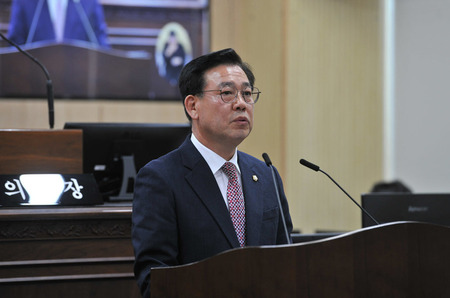
▲ 더불어민주당 황정아 의원(대전 유성구을) 발언 장면 © 황정아 국회의원실 제공 |
연구개발 현장의 경직된 예산 운용을 완화하는 법 개정이 국회를 통과했다. 더불어민주당 황정아 의원(대전 유성구을)은 29일 연구개발비 집행의 자율성과 예측 가능성을 높이기 위한 '국가연구개발혁신법 일부개정법률안'이 국회 본회의에서 의결됐다고 밝혔다.
이번 개정안은 황 의원이 지난해 3월 대표 발의한 법률로, 연구 수행 과정에서 불가피하게 발생하는 예산 불균형을 제도적으로 보완하는 데 초점을 맞췄다. 연구 환경 변화나 예상치 못한 비용 증가로 직접비가 부족해질 경우, 중앙행정기관의 장이 연구개발기관장의 요청에 따라 간접비를 활용해 조정할 수 있도록 법적 근거를 명확히 했다. 아울러 특별한 사유가 없는 한 해당 요청을 존중하도록 규정함으로써 행정 판단의 자의성을 줄였다.
그동안 연구 현장에서는 직접비와 간접비 간 조정이 엄격하게 제한돼, 연구 일정이 지연되거나 불필요한 행정 절차가 반복된다는 문제 제기가 이어져 왔다. 특히 중·장기 연구과제나 첨단기술 분야에서는 초기 단계에서 모든 비용 변수를 정확히 산정하기 어렵다는 점에서, 현행 제도가 연구의 현실을 충분히 반영하지 못한다는 지적이 적지 않았다.
법 개정으로 간접비 조정 기준이 법률에 명시되면서, 연구자들은 예산 운용의 불확실성을 줄이고 연구 본연의 활동에 집중할 수 있는 여건을 확보하게 될 것으로 보인다. 행정 부담 완화와 함께 연구개발의 연속성과 효율성을 높이는 제도적 토대가 마련됐다는 평가도 나온다.
황정아 의원은 이번 개정이 연구자 중심의 제도 전환이라는 점에서 의미가 크다고 설명하며, 앞으로도 연구개발 규제를 사전 통제 중심에서 사후 관리 중심의 네거티브 규제로 전환해 연구 현장의 자율성과 책임성을 확대하겠다는 입장을 밝혔다. 이는 단기적 편의 개선을 넘어, 국가 연구개발 시스템 전반의 구조적 신뢰를 회복하겠다는 문제의식과 맞닿아 있다.
연구개발 투자가 국가 경쟁력의 핵심 동력으로 작동하는 상황에서, 이번 법 개정은 예산 집행의 기술적 보완을 넘어 연구 생태계의 안정성과 지속 가능성을 높이는 계기가 될 것으로 전망된다. 향후 시행령 정비와 현장 적용 과정에서 제도의 실효성을 얼마나 담보할 수 있을지가 중요한 과제로 남는다.
*아래는 위 기사를 '구글 번역'으로 번역한 영문 기사의 [전문]입니다. '구글번역'은 이해도를 높이기를 위해 노력하고 있습니다. 영문 번역에 오류가 있을 수 있음을 전제로 합니다.<*The following is [the full text] of the English article translated by 'Google Translate'. 'Google Translate' is working hard to improve understanding. It is assumed that there may be errors in the English translation.>
A legal amendment aimed at easing rigid budget management in research and development (R&D) settings has passed the National Assembly. Democratic Party of Korea lawmaker Hwang Jeong-ah (Daejeon Yuseong District-eul) announced on the 29th that the "Partial Amendment to the National Research and Development Innovation Act," aimed at increasing the autonomy and predictability of R&D budget execution, was passed in the plenary session of the National Assembly.
This amendment, sponsored by Representative Hwang in March of last year, focuses on institutionally addressing budget imbalances that inevitably arise during research. The amendment clarifies the legal basis for allowing the heads of central administrative agencies to utilize indirect funds at the request of R&D institute heads when direct funds become insufficient due to changes in the research environment or unexpected cost increases. Furthermore, it stipulates that such requests must be respected unless there are compelling reasons, thereby reducing the arbitrariness of administrative decisions.
Concurrently, research sites have consistently raised concerns about the strict limitations on adjusting direct and indirect costs, leading to delays in research schedules and repetitive, unnecessary administrative procedures. There has been considerable criticism that the current system fails to adequately reflect the realities of research, particularly in mid- to long-term research projects and advanced technology fields, where it is difficult to accurately estimate all cost variables in the early stages.
With the revised law specifying the criteria for adjusting indirect costs, researchers are expected to reduce uncertainty in budget management and focus on their core research activities. Some believe that this revision also establishes an institutional foundation for easing administrative burdens and enhancing the continuity and efficiency of R&D.
Representative Hwang Jeong-ah explained that this revision is significant in that it represents a shift toward a researcher-centered system. She also stated that she intends to shift R&D regulations from prior control to post-management-focused negative regulation, thereby enhancing the autonomy and accountability of research sites. This approach goes beyond short-term convenience improvements and aligns with the critical need to restore structural trust in the overall national R&D system.
With R&D investment serving as a key driver of national competitiveness, this revision is expected to go beyond simply improving technical budget execution and enhance the stability and sustainability of the research ecosystem. An important task remains how much the effectiveness of the system can be guaranteed during the future revision of enforcement ordinances and field application.
원본 기사 보기:브레이크뉴스대전세종충청