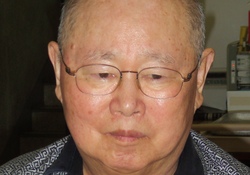
▲ (좌) 1978년 5월 20일 자 조선일보 기사 (중) 국가지정 중요무형문화재 제21호 승전무 최초 예능보유자 정순남 예인 (우) 제자 엄옥자 © 이일영 칼럼니스트 |
국립국악원 기획공연 ‘일이관지(一以貫之)-예술로 꿰뚫다’의 ‘조선춤방’ 예인 정순남 춤방 편이 지난 17일 공연되었다.
수려한 경관의 바닷길 한려수도의 기점인 바다의 도시 통영은 나라의 숨결이 출렁이는 곳이다. 1592년 임진왜란을 맞았을 때 이순신 장군은 오늘날 여수에 설치된 전라좌수영의 전라 좌수사였다. 장군은 군대의 진영인 행영을 전략 요충지인 오늘날 통영과 거제도 사이 한산도에 설치하고 왜군을 참패시킨 한산대첩의 역사를 썼다.
다음 해 1593년 충청·전라·경상의 삼도 수군을 통할하는 삼도수군통제영을 설치하였으나 1597년 또다시 침략한 정유재란으로 한산도 진영이 폐허가 되었다. 전쟁이 끝난 후 1603년 오늘날 통영에 삼도수군통제영이 설치되어 이를 줄여 통영으로 기록되면서 1895년까지 약 300년 동안 바다를 수호하는 요충지가 되었다.
예인 정순남(1907~1984)은 중요무형문화재 제21호 승전무의 최초 북춤 예능 보유자이다. 통영에서 태어나 13세에 통영 예기조합에 들어가 교방청(敎坊廳) 출신 선생 김해근(金海根)에게 3년간 북춤·검무·입춤을 사사하였다. 김해근의 제자 이국화(李菊花)에게서도 춤을 배운 것으로 알려진 예인 정순남은 16세 때부터 주요 향연에서 춤을 추기 시작하였다.
민족의 북소리와 몸짓을 품은 승전무의 역사는 많은 이야기가 있다. 1682년 숙종 8년에 병조판서 김석주의 건의로 왕의 호위와 도성 방위를 위한 군대 군영인 금위영(禁衛營)이 설치되었다. 이때 나발 ·나각 ·태평소와 같은 관악기와 북과 징과 같은 타악기를 다루는 취고수(吹鼓手)와 피리·젓대·해금 같은 선율악기를 연주하던 세악수(細樂手)가 소속되었다는 기록은 군악대의 창설을 말한다. 또한, 이전에는 병조에서 이러한 인력을 관리하였다.
이를 이어 64대 삼도수군통제사 유중기(柳重起:1629-1720)가 1687년 오늘날 군악대와 같은 취고수(吹鼓手)를 양성하는 취고수청(吹鼓手廳)을 세워 악사들을 양성하였다. 이후 1697년 73대 통제사 정홍좌(鄭弘佐)가 통제영에 기녀들을 양성하고 관리하는 교방청(敎坊廳)을 세웠다.
조선조 교방(敎坊)의 역사는 1393년 태조 2년 음악을 관장한 관청 관습도감(慣習都監)이 설치되면서 교방공인(敎坊工人)을 관할하였다. 이후 1457년 세조 3년에 악학과 통합된 악학도감(樂學都監)으로 변모하여 1470년 성종 원년에 설립된 장악원(掌樂院)으로 바뀌었다.
그러나 연산군 시대 폭정의 격동을 상징하듯 연방원·함방원·뇌양원·진향원이라는 다양한 이름으로 바뀌기를 반복하다가 중종 초에 장악원으로 돌아왔다. 이후 1897년 교방사로 개칭될 때까지 427년 동안 조선왕조 왕립 음악 기관으로 존속하였다.
당시 통제영은 교방청 관기(官妓) 연희에 춤의 반주 음악을 취고수청(吹鼓手廳)의 악사들이 연주하였다. 국가 지정 중요무형문화재 제21호 승전무는 오랜 역사가 있는 궁중무용 무고(舞鼓)에서 오늘날 통영의 근원인 삼도 수군 본부인 통제영에서 전승 발전되어 민속 무용으로 발전된 춤이다. 삼도수군통제영의 관내인 영문(營門)의 여러 의식과 하례에서 추어지다가 노량해전에서 전사한 충무공 이순신(1545~1598) 장군을 기리는 사당 의식에서 1896년 갑오개혁 이후 교방청이 해체되었던 시기까지 헌무하였다.
 ▲ 승전무 북춤 변지연, 이봉주, 신정화, 김현애 / 사진: 국립국악원 © 이일영 칼럼니스트 |
이후 민간 통영 예기조합(藝妓組合)이 설립되면서 전승된 춤은 13세 때 조합에 들어가 이를 배운 통영의 정순남(1906~1984) 예인에 의하여 16세부터 충무공 이순신의 업적을 기리는 여러 향연에서 승전무가 추어졌다. 그러나 일제 강점기에 성웅 이순신에 대한 의례가 말살되면서 단절된 춤은 1945년 조국 광복과 한국전쟁의 격동기를 맞아 예인이 평범한 삶을 추구하면서 침묵하는 역사의 춤으로 남았다.
구국의 혼이 담긴 승전무가 사라진 역사를 일깨워 복원과 계승의 불을 지핀 인물들이 있었다. 통영 태생의 청마 유치환 시인이 경남여고 교장으로 재직하던 1965년이었다. 통영 태생으로 경희대 무용과 졸업생 엄옥자는 교생 실습 중에 유치환 교장이 고향 통영에 할 일이 있다면서 모교인 통영여고 이민기 교감을 소개하였다.
이러한 만남에서 승전무의 복원과 전승이라는 소중한 소명을 일깨워 1965년 통영여고 무용 교사가 되었다. 이후 통영에 무용강습소를 운영하던 한정자 춤꾼과 승전무의 역사를 품은 정순남 예인의 제자를 자청하였다. 오랫동안 놓아버린 스승의 춤을 일으켜 승전무 복원과 전승에 전념한 것이다.
이러한 노력으로 1968년 승전무가 국가 중요무형문화재 제21호로 지정되었다. 당시 정순남 예인과 함께 승전무 북춤 예능 보유자로 지정된 엄옥자 명인은 26세로 최연소 보유자 지정을 받았다. 그러나 3년 후인 1971년 국가 중요무형문화재 연령 제한 제도가 도입되면서 보유자 지정이 해제되는 상황을 맞았다.
엄옥자 명인은 더욱더 실기와 이론에 정진하여 1974년 경희대에서 ‘영남 검무의 춤사위 연구’로 석사학위를 받았다. 이를 바탕으로 1977년 부산대학교 사범대학 체육교육학과 교수가 되어 2008년까지 후학을 가르치면서 승전무 전승과 보급에 진력하였다.
참고로 1968년 승전무가 국가 중요무형문화재 제21호로 지정되면서 진주검무가 지정된 사유를 들어 칼춤(검무)은 제외되고 북춤만 지정되었다. 이후 정순남 예인은 북춤과 칼춤의 합연에서 완전한 통영 승전무가 이루어지는 사실을 몸소 증명해 보이는 열정을 보였다. 그러나 그가 세상을 떠나고 3년 후인 1987년에서야 칼춤이 중요무형문화재로 지정되었다.
이후 1987년 승전무 칼춤(검무)의 특성적이며 독립적인 예술성이 인정되면서 보유자 후보가 되어 1996년 엄옥자 명인은 승전무 칼춤(검무) 예능 보유자로 한정자 명인은 승전무 북춤 예능 보유자로 지정되었다.
엄옥자 명인은 대학교수 정년 후 2009년부터 국립부산국악원 초대 예술감독을 맡아 4년 동안 영남지역의 전통적인 춤을 전수하고 새롭게 창작하는 활동에 전념하였다. 원향살풀이춤, 수건춤, 진춤, 외손부채춤, 산조춤, 유희삼매무, 긴살풀이춤, 통영기방입춤 등을 발굴하여 전승과 개발에 주력하였다.
‘조선춤방’ 예인 정순남 춤방 편 공연에서는 통영기방입춤과 통영 승전무 칼춤과 북춤을 선보였다.
통영기방입춤은 승전무를 시작하기 전 몸을 풀고 다듬는 춤이다. 정순남 예인의 가르침을 기본으로 굿거리장단과 구음에 맞추어 승전무의 기본 동작을 춤으로 구성하였다. 엄옥자 명인의 구음을 얹은 장단에 맞추어 명인의 춤을 보전 계승하는 원향춤보존회 회장 변지연 춤꾼과 서울지부장 이봉주 춤꾼 대구지부장 김현애 춤꾼이 공연하였다.
이들은 신정화 춤꾼을 보강하여 마지막 공연 통영 승전무 북춤도 시연하였다. 국가무형문화재 승전무 보존회 서울지부 사무국장 박정화 승전무 이수자와 원향춤보존회 통영지부장 이경림 춤꾼이 추었다.
 ▲승전무 칼춤 박정화 . 이경림 춤꾼 / 사진: 국립국악원 © 이일영 칼럼니스트 |
1978년 5월 20일 자 조선일보 기사에는 다음과 같은 기사가 보도되었다. 역사의 춤 승전무를 남긴 예인 정순남(1907~1984)이 당시 71세 노환으로 홀로 셋방살이하는 생계마저 어려운 처지임을 알렸다. 정부가 인간문화재에게 주는 월 5만 원으로 생활하는 예인 할머니를 위하여 통영여고 학생 800여 명이 손녀가 되어 성금을 모아 전달했다는 보도이다.
예인이 전한 승전무를 바탕으로 바다의 도시 통영은 예향 통영을 자랑스럽게 내걸었다. 깊은 밤 처연한 노후를 보냈던 역사를 품은 예인의 춤사위가 가슴을 걸어온다. artwww@naver.com
필자: 이일영
한국미술센터 관장. 칼럼니스트. 시인
*아래는 위 기사를 '구글 번역'으로 번역한 영문 기사의 [전문]입니다. '구글번역'은 이해도 높이기를 위해 노력하고 있습니다. 영문 번역에 오류가 있을 수 있음을 전제로 합니다.<*The following is [the full text] of the English article translated by 'Google Translate'. 'Google Translate' is working hard to improve understanding. It is assumed that there may be errors in the English translation.>
Jeong Sun-nam (1906-1984), an entertainer who conveyed the victory dance of history, dance room edition
-Columnist Lee Il-young
The ‘Chosun Dance Room’ entertainer Jeong Soon-nam’s dance part of the National Gugak Center’s special performance ‘Il I Gwan Ji (一以貫之) – Perceiving Through Art’ was performed on the 17th.
Tongyeong, the city of the sea, the starting point of Hallyeo Waterway, a sea road with beautiful scenery, is a place where the breath of the country flutters. When the Japanese invasions of Korea took place in 1592, Admiral Yi Sun-sin was the Jeolla Jwasuyeong of the Jeolla Jwasuyeong, established in today's Yeosu. The general established Haengyeong, an army camp, on Hansan Island, a strategic location between present-day Tongyeong and Geoje Island, and wrote the history of the Great Battle of Hansan, which resulted in a crushing defeat for the Japanese army.
The following year, in 1593, the Samdo Naval Forces Control Yeong was established to oversee the naval forces of the three provinces of Chungcheong, Jeolla, and Gyeongsang, but the Hansando camp was left in ruins due to the Jeongyu Rebellion, which invaded again in 1597. After the war ended, in 1603, the Samdo Naval Control Center was established in what is today Tongyeong, and it was shortened to Tongyeong. It became a strategic point protecting the sea for about 300 years until 1895.
Artist Jeong Sun-nam (1907-1984) is the first drum dance performer of Seungjeonmu, Important Intangible Cultural Asset No. 21. Born in Tongyeong, he entered the Tongyeong Artistic Association at the age of 13 and studied drum dance, sword dance, and lip dance for three years under Kim Hae-geun, a teacher from Gyobangcheong (敎坊廳). Jeong Sun-nam, an artist known to have learned dancing from Kim Hae-geun's disciple Lee Guk-hwa, began dancing at major banquets at the age of 16.
There are many stories about the history of Victory Dance, which embraces the drum sounds and gestures of the nation. In 1682, the 8th year of King Sukjong's reign, Geumwiyeong (禁衛營), a military camp for the king's protection and capital defense, was established at the suggestion of Kim Seok-ju, Minister of Military Affairs. At this time, records show that the chwigosu (吹鼓手), who played wind instruments such as the nabal, nagak, and taepyeongso, and percussion instruments such as the drum and gong, and the seaksu (細樂手), who played melodic instruments such as the flute, jeotdae, and haegeum, were included, indicating the creation of a military band. says Additionally, previously, these personnel were managed by the military unit.
Following this, Yu Jung-gi (柳重起: 1629-1720), the 64th commander of the Samdo naval forces, established the Chwigosucheong (吹鼓手廳), which trains chigosu (吹鼓手), similar to today's military band, in 1687 and trained musicians. Afterwards, in 1697, Jeong Hong-jwa, the 73rd Controller, established Gyobangcheong (敎坊廳) in Tongjeyeong, which trained and managed gisaeng.
The history of Gyobang (敎坊) in the Joseon Dynasty began in 1393, in the second year of King Taejo's reign, when the government office in charge of music, Customs Dogam (慣習都監), was established and took charge of Gyobang Officials (敎坊工人). Afterwards, in 1457, the third year of King Sejo's reign, it was transformed into the Music Studies Department integrated with music studies, and in 1470, it was renamed to Jangakwon (掌樂院), established in the first year of King Seongjong's reign.
However, symbolizing the turbulence of tyranny during the reign of Yeonsangun, it repeatedly changed to various names such as Yeonbangwon, Hambangwon, Noeyangwon, and Jinhyangwon, before returning to Jangjagwon in the early years of King Jungjong. Afterwards, it existed as the royal music institution of the Joseon Dynasty for 427 years until it was renamed Gyobangsa in 1897.
At that time, Tongjeyeong had musicians from Chwigosucheong (吹鼓手廳) playing accompaniment music for dances at Gyobangcheong government officials’ performances. Seungjeonmu, Nationally Designated Important Intangible Cultural Heritage No. 21, is a dance that was passed down and developed from Mugo, a court dance with a long history, to Tongjeyeong, the headquarters of the Samdo naval forces, the origin of today's Tongyeong, and developed into a folk dance. It was performed at various ceremonies and Harye at Yeongmun (營門), the jurisdiction of the Three Provinces Naval Control Center, and was performed at a shrine ceremony in honor of Admiral Yi Sun-sin (1545-1598), who died at the Battle of Noryang, until the time when the Gyobangcheong Office was disbanded after the Gabo Reform in 1896. did.
▲ Seungjeonmu drum dance Byeon Ji-yeon, Lee Bong-ju, Shin Jeong-hwa, Kim Hyeon-ae / Photo: National Gugak Center © Columnist Lee Il-young
Afterwards, with the establishment of the private Tongyeong Artistic Association, the dance was passed down to Tongyeong's entertainer Jeong Sun-nam (1906-1984), who joined the association at the age of 13 and learned it. From the age of 16, he performed the victory dance at various banquets commemorating the achievements of Chungmugong Yi Sun-sin. It was danced. However, the dance, which was discontinued during the Japanese colonial period as the rituals for the saintly hero Yi Sun-sin were obliterated, remained as a silent historical dance as artists pursued an ordinary life during the turbulent times of the liberation of the country and the Korean War in 1945.
There were people who awakened the lost history of the victory dance containing the soul of the nation and ignited the fire of restoration and succession. It was 1965, when Tongyeong-born poet Cheongma Yoo Chi-hwan was serving as the principal of Gyeongnam Girls’ High School. Okja Eom, who was born in Tongyeong and graduated from the Department of Dance at Kyung Hee University, said during her student training that Principal Yoo Chi-hwan had work to do in her hometown of Tongyeong and introduced Vice Principal Lee Min-ki of her alma mater, Tongyeong Girls' High School.
Through these encounters, she realized her precious calling of restoring and transmitting victory dances, and in 1965, she became a dance teacher at Tongyeong Girls' High School. Afterwards, he volunteered to become a disciple of Jeong Jeong-ja, a dancer who ran a dance school in Tongyeong, and Jeong Sun-nam, an artist with a history of victory dance. He revived his teacher's dance, which he had abandoned for a long time, and devoted himself to the restoration and transmission of the victory dance.
Thanks to these efforts, Seungjeonmu was designated as National Important Intangible Cultural Heritage No. 21 in 1968. At the time, master Eom Ok-ja, who was designated as the holder of the Seungjeonmu drum dance performance along with entertainer Jeong Soon-nam, was the youngest person to be designated as the holder at 26 years old. However, three years later, in 1971, when the age limit system for nationally important intangible cultural properties was introduced, the designation as the holder was lifted.
Master Eom Ok-ja devoted herself even more to her practice and theory and received a master's degree in 1974 from Kyung Hee University for ‘Study of Dance Movements in Yeongnam Geommu’. Based on this, she became a professor in the Department of Physical Education at Pusan National University's College of Education in 1977, and taught younger students until 2008, devoting herself to the transmission and dissemination of Seungjeonmu.
For reference, when Seungjeonmu was designated as National Important Intangible Cultural Heritage No. 21 in 1968, the sword dance (geommu) was excluded and only the drum dance was designated, citing the reason why Jinju Geommu was designated. Afterwards, entertainer Jeong Soon-nam showed passion to personally prove that a complete Tongyeong victory dance was achieved through the combination of drum dance and sword dance. However, it was not until 1987, three years after his death, that sword dance was designated as an important intangible cultural asset.
Afterwards, in 1987, as the characteristic and independent artistry of Seungjeonmu sword dance (geommu) was recognized, it became a candidate for holder, and in 1996, Master Okja Eom was designated as the holder of the Seungjeonmu sword dance (geommu) art and Master Jeong Ja was designated as the holder of the Seungjeonmu sword dance (geommu) art.
Master Okja Eom served as the first artistic director of the Busan National Gugak Center in 2009 after retiring as a university professor, and for four years devoted herself to transmitting traditional dances from the Yeongnam region and creating new ones. She discovered Wonhyang Salpuri dance, Sugun dance, Jinchum, one-handed fan dance, Sanjo dance, Yuhui Sammae dance, Gin Salpuri dance, and Tongyeong Gibang Ipchum and focused on their transmission and development.
In the performance of ‘Chosun Dance Room’ entertainer Jeong Sun-nam’s dance room, Tongyeong Gibangipchum and Tongyeong Seungjeonmu sword dance and drum dance were performed.
Tongyeong Gibang-ipchum is a dance to warm up and prepare the body before starting the victory dance. Based on the teachings of entertainer Jeong Sun-nam, the basic movements of Seungjeonmu were composed into a dance in accordance with the Gutgeori rhythm and oral sounds. Dancers Byun Ji-yeon, president of the Wonhyang Dance Preservation Society, which preserves and inherits the master's dance, and Lee Bong-ju, head of the Seoul branch, and Kim Hyeon-ae, head of the Daegu branch, performed to the rhythm of master Ok-ja Eom's oral notes.
They reinforced dancer Shin Jeong-hwa and demonstrated the Tongyeong Seungjeonmu drum dance for the final performance. The dance was performed by Park Jeong-hwa, secretary general of the Seoul branch of the National Intangible Cultural Heritage Seungjeon Dance Preservation Society, and Lee Gyeong-rim, head of the Tongyeong branch of the Native Dance Preservation Society.
The Chosun Ilbo article dated May 20, 1978 reported the following article. Jeong Sun-nam (1907-1984), an artist who left behind a history of winning dances, announced that he was 71 years old at the time and was having a hard time making a living living alone in a rented room. It is reported that about 800 students from Tongyeong Girls' High School became her granddaughters and collected donations for her grandmother, who lives on the 50,000 won per month that the government gives to living cultural assets.
Based on the victory dance delivered by the entertainer, Tongyeong, the city of the sea, proudly declared Tongyeong a rite. Deep into the night, the dance moves of an entertainer with a history of miserable old age touch his heart. artwww@naver.com
Writer: Lee Il-young
Director of the Korea Art Center. Columnist. poet