▲ 수질오염 방지와 농번기에 집중되는 노동력을 완화하는 효과가 있는 '벼 마른논 써레질 재배 기술 현장 연시회'가 29일 부안읍 모산리 뜰에서 열리고 있다. / 사진제공 = 부안군청 기획감사실 최광배 © 김현종 기자 |
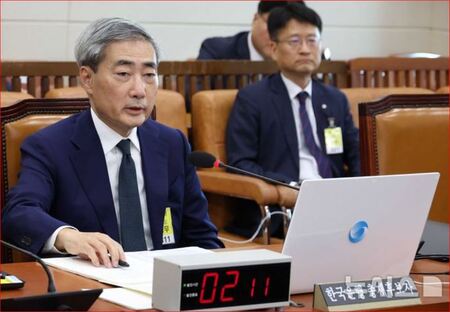
 ▲ 권익현 부안군수가 "인구감소와 고령화ㆍ인건비ㆍ농자재값 상승 등 농가 부담이 날이 갈수록 커지는 만큼, 마른논 써레질 이앙 재배 기술이 확대 보급돼 저탄소 농업 실현 및 벼 재배농법 안정화를 통한 농업의 새로운 미래를 열 수 있도록 최선을 다하겠다"는 약속을 하고 있다. / 사진제공 = 부안군청 기획감사실 최광배 © 김현종 기자 |
 ▲ 권재한 농촌진흥청장이 "과거에는 모내기하기 전 써레질을 필수적으로 했지만, 최근에는 농기계와 방제 기술이 발달해 선택사항이 됐다"며 "마른논 써레질 기술이 현장에 확대돼 농가의 노동력 부담을 덜고 환경보존 효과까지 거둘 수 있기를 기대한다"고 강조하고 있다. / 사진제공 = 부안군청 기획감사실 최광배 © 김현종 기자 |
수질오염 방지와 농번기에 집중되는 노동력을 완화하는 효과가 있는 '벼 마른논 써레질 재배 기술 현장 연시회'가 부안에서 열렸다.
전북자치도 부안군은 29일 농촌진흥청과 공동으로 도내 시군농업기술센터 담당자ㆍ농업인 단체 관계자 등 100여 명이 참석한 가운데 부안읍 모산리 뜰에서 연시회를 개최했다.
이번 연시회는 노동력 절감과 저탄소 벼 재배 중요성을 알리고 현장에 적용 가능한 혁신적인 재배 기술을 공유하기 위해 마련됐다.
특히 농업기술에 필요한 자동물꼬ㆍ균평기ㆍ동시 경운 및 로터리기ㆍ드론 등을 한눈에 볼 수 있는 농기계도 전시됐다.
'마른논 써레질'기술은 농촌진흥청 국립식량과학원이 개발한 기술로 논이 마른 상태에서 흙을 부수고 고르기 작업을 실시한 뒤 물을 대고 바로 이앙하는 방식이다.
이 방식은 관행 재배에서 필수적으로 시행되던 써레질 공정을 생략, 노동력과 작업시간을 절감할 수 있으며 탁수 발생을 억제해 수질오염을 감소시키는 효과가 있다.
또, 뿌리 산소 공급이 원활해져 메탄가스 발생이 줄고 수량과 품질은 관행 대비 큰 차이가 없는 것으로 나타났다.
이 기술은 작업 시기에 따라 '표준형'과 '분산형'으로 구분된다.
'표준형'은 이앙 5~6일 전 마른 흙갈이와 균평 작업을 하고 이앙 4~5일 전 논에 물을 채운 뒤 집중적으로 논 준비를 마치는 방식이다.
기존 방식 대비 작업 기간이 짧고 전체 노동시간을 줄일 수 있다.
'분산형'은 농한기(3~4월)에 비가 오지 않는 시기를 활용, 흙갈이와 균평 작업을 미리 끝내고 농번기(5~6월)에 이앙을 실시해 노동력을 분산시키고 농가의 부담을 완화할 수 있다.
현재 부안지역에서는 신덕농업회사 김용화씨 농가가 시범사업을 추진하고 있다.
김씨는 "마른논 써레질 이앙 재배 기술로 논 준비 작업을 시기별로 분산하면 농번기에 부족한 인력 문제를 완화하는 데 도움이 될 것으로 기대한다"며 "재배단지 면적을 5.5ha에서 50ha 이상 확대할 계획"이라고 말했다.
권재한 농촌진흥청장은 "과거에는 모내기하기 전 써레질을 필수적으로 했지만, 최근에는 농기계와 방제 기술이 발달해 선택사항이 됐다"며 "마른논 써레질 기술이 현장에 확대돼 농가의 노동력 부담을 덜고 환경보존 효과까지 거둘 수 있기를 기대한다"고 강조했다.
권익현 부안군수는 "인구감소와 고령화ㆍ인건비ㆍ농자재값 상승 등 농가 부담이 날이 갈수록 커지는 만큼, 마른논 써레질 이앙 재배 기술이 확대 보급돼 저탄소 농업 실현 및 벼 재배농법 안정화를 통한 농업의 새로운 미래를 열 수 있도록 최선을 다하겠다"고 밝혔다.
☞ 아래는 위 기사를 구글 번역이 번역한 영문 기사의 '전문' 입니다.
구글 번역은 이해도를 높이기 위해 노력하고 있으며 영문 번역에 오류가 있음을 전제로 합니다.
【Below is the 'full text' of the English article translated by Google Translate.
Google Translate is working hard to improve understanding, and assumes that there are errors in the English translation.】
Buan-gun holds 'Rice cultivation technology field demonstration'
Development of Rural Development Administration, dry paddy field slashing… Labor distribution, etc
Reporter Lee Han-shin
The 'Rice Dry Paddy Field Harrowing Cultivation Technology Field Exhibition', which has the effect of preventing water pollution and easing the labor force concentrated during the busy farming season, was held in Buan.
On the 29th, Buan-gun, Jeollabuk-do, held the exhibition in the garden of Mosan-ri, Buan-eup, with the Rural Development Administration and about 100 people, including officials from city and county agricultural technology centers and agricultural groups, in attendance.
This exhibition was prepared to inform people of the importance of labor reduction and low-carbon rice cultivation and to share innovative cultivation technologies that can be applied in the field.
In particular, agricultural machinery such as automatic water gates, levelers, simultaneous tilling, rotary machines, and drones necessary for agricultural technology were also exhibited, allowing a quick look.
The 'dry paddy field slashing' technology is a technology developed by the National Institute of Crop Science, Rural Development Administration, which involves breaking and leveling the soil while the paddy is dry, then watering and transplanting right away.
This method omits the slashing process that was essential in conventional cultivation, saving labor and work time, and has the effect of reducing water pollution by suppressing the occurrence of turbid water.
Also, it was found that the supply of oxygen to the roots was smooth, methane gas generation was reduced, and there was no significant difference in quantity and quality compared to conventional methods.
This technology is divided into 'standard' and 'distributed' depending on the work period.
The 'standard' method is to perform dry soil plowing and leveling 5-6 days before transplanting, and then fill the paddy field with water 4-5 days before transplanting, and then intensively prepare the paddy field.
The work period is shorter than the existing method, and the total labor time can be reduced.
'Distributed' can disperse labor and ease the burden on farmers by completing plowing and leveling work in advance during the off-season (March to April) when it does not rain, and then transplanting rice during the busy season (May to June).
Currently, in the Buan area, Mr. Yong-hwa Kim of Shindeok Agricultural Company is promoting a pilot project.
Mr. Kim said, "If we disperse the rice paddy preparation work by season using the dry paddy hulling transplanting cultivation technology, we expect it will help alleviate the labor shortage problem during the busy season," and "We plan to expand the cultivation area from 5.5 ha to over 50 ha."
Kwon Jae-han, the head of the Rural Development Administration, emphasized, "In the past, weeding before planting rice was essential, but recently, with the development of agricultural machinery and pest control technology, it has become optional." He added, "We hope that the technology for weeding dry fields will be expanded to the field, reducing the burden of labor on farmers and achieving environmental conservation effects."
Buan County Governor Kwon Ik-hyeon said, "As the burden on farmers increases day by day due to population decline, aging, labor costs, and rising agricultural material prices, we will do our best to expand and disseminate the technology for transplanting rice into dry fields to realize low-carbon agriculture and open a new future for agriculture by stabilizing rice cultivation methods."
원본 기사 보기:브레이크뉴스 전북 서남