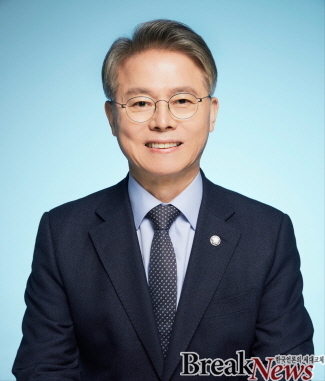
▲ 필자/이양승 군산대 교수 ©브레이크뉴스 |
한국 농업을 키우려면 국산 농축산물들이 쉽고 거래될 수 있도록 공인된 대형 거래 장터를 만들 필요가 있다. 물적 공간뿐이 아니라 법적 제도적 환경도 갖춰야 한다. 행정 부처를 따로 두어 전국적인 농축산물 공급망을 구축, ‘신뢰 100%’ 먹거리를 공급해야 한다. 지금 각 지자체 별로 만들어진 전통시장 또는 ‘로컬 푸드’ 장터는 한계가 분명하다. 소규모이기 때문이다. 전국을 망라해 대규모로 키워야 의미가 있다.
문제는 국산 농축산물 생산 방식에도 있지만 유통 방식에도 있다. 생각해보라. 한우 농가가 자신이 기른 한우를 직접 잡아 구워먹는 게 아니다. 일반 균형 시각에서, 한우를 넘기고 대금을 받은 다음 소고기가 먹고 싶을 때 자신도 마트에 가 소고기를 사서 구워먹는다. 생산자가 소비자가 된다.
수입보호 조치로 한우 값이 올라 한우 농가가 돈을 더 벌면 좋겠지만 그 시장보호 조치로 인해 사료 값이 오르면 한우 팔아 번 돈이 말짱 헛것이다. 실질소득에 변화가 없기 때문이다. 실질소득이란 명목소득을 물가수준으로 나눈 것이다. 명목소득이 올랐어도 물가수준이 덩달아오르면 실질소득엔 변함이 없다. 오히려 실질소득이 감소할 수도 있다. 지금의 시장보호 조치는 부분균형만 생각한다. 명목소득 변화만 보는 것이다.
관세협상을 앞두고 한국 농축산물 시장 개방이 쟁점이 되는 듯하다. 관건은 소고기와 쌀이다. 다시 지적하지만, 시장이 개방된다 해도 소고기 쌀 가격이 폭락할 가능성은 낮다. ‘독점적 경쟁’ 상황에선 각 제품의 수요가 일정하게 주어지기 때문이다. 그리고 국민소득 수준이 높아질수록 소비자들은 ‘럭셔리’ 재화 그리고 ‘친환경’ 식료품을 갈구한다. 한국의 명품 수요를 보라.
지금까지 한국의 농축산물 시장보호 조치로 농민들이 정말 부자가 됐나? 문제를 제대로 짚을 필요가 있다. 농가소득 감소 배경엔 겉도는 농축산 행정이 있을 수도 있다. 한국의 농축산 행정은 짜고치기 판에 불과하다. 관료들 대부분 밑바닥 농민들과 직접적인 이해관계를 갖지 않는다. 뜬구름 잡기식 탁상행정이 나올 수밖에 없다. 내려지는 결론은 뻔하다. 시장보호, 세제혜택 또는 보조금. 정책이 아니라 정치다.
농축산물 시장보호 조치로 이득을 보는 이들은 따로 있다. 유통망 또는 판로 독점자들이다. 그들은 직접 농축산업에 종사하지 않는다. 미국산 소고기 수입해서 한우 가격이 내려갔나? 여전히 비싸다. 그런데 왜 농가는 늘 불만일까? 정말 농가소득을 위한다면 방법이 달라질 필요가 있다. 문제는 거래비용이다. 대안은 농축산물이 최종 수요되기까지 그 단계를 줄이는 것이다. 거래비용은 각 단계마다 발생한다. 그 거래비용이 모두 더해지면 최종 수요 단계에서 국산 농축산물 가격이 높을 수밖에 없다.
농가소득은 그대로고 최종소비자는 비싼 값을 치르게 된다. 국산 농축산물 가격 상승은 전반적인 물가상승 요인이 된다. 지금 당장 장에 나가 보라. 국산 식재료 과일 등의 값이 매우 비싸다. 그 비싼 값이 농가소득으로 이어지지 않는다. 폐쇄적인 시장구조가 이유다.
예를 들어, 우유값도 보라. 미국에선 저지방 우유의 값이 훨씬 저렴하다. 그 지방을 이용해 다른 걸 생산할 수 있기 때문이다. 하지만 한국은 저지방 우유의 값이 더 비싼 경우도 있다. 당장 시정이 필요하다. 그런 시장 내 부조리가 물가상승으로 이어지는 것이다. 물가상승이 다시 영세농들을 더 옥죈다. 농민들도 우유를 소비하기 때문이다. 기억하라. 모든 생산자는 소비자다. 그렇기에 시장보호가 농가소득 증가로 쉽게 이어지지 않는다.
방법은 국산 쌀과 수입쌀이 동시에 판매되도록 하는 거다. 일반 가정에선 수입 쌀 수요가 많지 않을 것이다. 식료품 수요 패턴은 쉽게 변하지 않는다. 그에 따라, 수입쌀은 국산보다 훨씬 낮은 가격에 팔릴 것이다. 평소 쌀값마저 아껴야 했던 극빈층은 수입쌀을 통해 민생고를 해결할 수 있다. 그리고 빵 과자 등을 만드는데 비싼 밀가루 대신 저렴한 쌀가루를 써보는 거다. 새로운 식문화를 만드는 게 진짜 혁신일 수도 있다. 쌀가루가 식료품의 중간재로 활용되면 식료품 가격이 내려가고 인플레이션도 진정될 수 있다.
우왕좌왕할 때가 아니다. 과거 한국의 문화시장 개방 때에도 큰 논란이 있었다. 시장 개방으로 한국 가요 드라마 영화 등 한국의 문화콘텐츠 산업이 망했나? 모두 우려했지만 오히려 한국의 문화콘텐츠가 수출되고 ‘한류’가 등장하는 계기가 됐다. 한국의 농축산물도 마찬가지다. 시장보호만을 외치는 이들은 한국의 농축산물에 경쟁력이 없다고 단정하는 격이다. 지혜를 잘 발휘하면, 오히려 한국의 농축산업이 더 경쟁력을 갖출 수도 있다. 아프리카에 히터를 팔고, 북극에 에어콘을 팔아야 진짜 비즈니스다. 한국의 농축산물을 중국 동남아에 수출할 수 있다.
한국 농업의 딜레마는 없다. 정확한 분석과 전략이 없을 뿐이다. yslee1992@kunsan.ac.kr
*필자/이양승
군산대 교수. 국제경제, 게임이론 그리고 지역 발전전략에 대해 연구하는 학자이다. 현재 국립 군산대 무역학과 교수로 재직 중이다. 이전엔 캐나다 앨버타 대학교(University of Alberta) 경제학과에서 ‘게이임(gaming)’에 대해 연구와 강의를 했으며, 한국건설산업연구원에서 연구위원으로 근무했다.
전북 남원에서 출생해 전주한일고와 전북대 상과대학을 졸업했다. 이후 미국으로 건너가 노스 캐롤라이나 주립대학교 (North Carolina State University)에서 통계학과 경제학을 공부해 석사를 받았으며, 캔자스 대학교(The University of Kansas)에서 산업조직과 게임이론에 대한 연구로 경제학 박사를 받았다.
저서로는 '메트로 이코노미 (타임라인)'과 ‘와일드 게임이론 (박영사)’, ‘무역학개론(공저, 두남)’, ‘문화지체에 빠진 건설산업 (공저, 한국건설산업연구원)’ '자유무역론(박영사)' 등이 있고, 36편의 단독연구 학술논문이 있다.
*아래는 위 기사를 '구글 번역'으로 번역한 영문 기사의 [전문]입니다. '구글번역'은 이해도 높이기를 위해 노력하고 있습니다. 영문 번역에 오류가 있을 수 있음을 전제로 합니다.<*The following is [the full text] of the English article translated by 'Google Translate'. 'Google Translate' is working hard to improve understanding. It is assumed that there may be errors in the English translation.>
The Dilemma of Korean Agriculture... "Korea-US Tariff Negotiations Open the Agricultural and Livestock Market"
"There is no dilemma for Korean agriculture. There is simply a lack of accurate analysis and strategy!"
- Professor Lee Yang-seung, Kunsan National University
To grow Korean agriculture, we need to create a large, authorized marketplace where domestic agricultural and livestock products can be easily traded. This requires not only physical space but also a legal and institutional framework. A separate administrative agency should be established to establish a nationwide agricultural and livestock product supply chain, ensuring a "100% reliable" food supply. The traditional markets or "local food" markets currently established by each local government have clear limitations due to their small size. To be truly effective, they must be expanded nationwide on a large scale.
The problem lies not only in the production of domestic agricultural and livestock products, but also in their distribution. Consider this: Hanwoo (Korean beef) farmers don't just slaughter and grill their own beef. From a general equilibrium perspective, after handing over the beef, receiving payment, and then, when they crave beef, they go to the market and buy it themselves. The producers become consumers.
While it would be nice if import protection measures raised the price of Korean beef, making Korean beef farmers more profitable, if feed prices rise due to these market protection measures, the money earned from selling Korean beef would be wasted. This is because real income remains unchanged. Real income is calculated by dividing nominal income by the price level. Even if nominal income rises, if the price level also rises, real income remains unchanged. In fact, it could even decrease. Current market protection measures only consider partial equilibrium, focusing solely on changes in nominal income.
Ahead of tariff negotiations, the opening of the Korean agricultural and livestock product market appears to be a key issue. The key issues are beef and rice. Again, even if the market opens, the price of beef and rice is unlikely to plummet. This is because in a "monopolistic competition" environment, demand for each product remains constant. Furthermore, as national income levels rise, consumers crave "luxury" goods and "eco-friendly" food products. Consider the demand for luxury goods in Korea.
Have Korean agricultural and livestock product market protection measures truly enriched farmers? We need to address this issue. The decline in farm income may be due to superficial agricultural and livestock administration. Korea's agricultural and livestock administration is nothing more than a rigged system. Most bureaucrats have no direct stake in the lives of farmers. This inevitably leads to haphazard, desk-bound administration. The conclusion is obvious: market protection, tax benefits, or subsidies. It's not about policy, it's about politics.
Those who benefit from market protection measures for agricultural and livestock products are different: those who monopolize distribution networks or sales channels. They aren't directly involved in the agricultural and livestock industry. Did importing American beef lower the price of Korean beef? It's still expensive. So why are farmers constantly dissatisfied? If farm income is truly improved, a different approach is needed. The problem lies in transaction costs. The alternative is to reduce the number of steps required until agricultural and livestock products reach final consumption. Transaction costs are incurred at each stage. When all these transaction costs are added up, the price of domestic agricultural and livestock products at the final consumption stage is bound to be higher.
Farm income remains the same, but end consumers pay higher prices. Rising prices for domestic agricultural and livestock products contribute to overall inflation. Go to the market right now. The prices of domestically produced ingredients, such as fruit, are extremely high. These high prices don't translate into increased farm income. The closed market structure is the reason.
For example, consider the price of milk. In the US, low-fat milk is much cheaper because the fat can be used to produce other products. However, in Korea, low-fat milk is sometimes even more expensive. This needs immediate rectification. Such market injustices are driving up prices. Rising prices further squeeze small farmers, as farmers also consume milk. Remember, all producers are consumers. Therefore, market protection doesn't easily lead to increased farm income.
The solution is to allow domestic and imported rice to be sold simultaneously. There won't be much demand for imported rice among ordinary households. Food demand patterns don't change easily. Consequently, imported rice will be sold at a much lower price than domestic rice. The extremely poor, who have previously had to save money on rice, can solve their livelihood difficulties through imported rice. Furthermore, they can use cheaper rice flour instead of expensive wheat flour for baking and pastries. Creating a new food culture could be a true innovation. If rice flour is used as an intermediate food product, food prices could fall and inflation could be controlled.
This is no time for panic. There was significant controversy when Korea opened its cultural market in the past. Everyone worried that the market opening would ruin Korea's cultural content industry, including pop music, dramas, and movies. However, it actually fueled the export of Korean cultural content and the rise of the Korean Wave. The same holds true for Korean agricultural and livestock products. Those who advocate market protection are essentially assuming that Korean agricultural and livestock products lack competitiveness. With wisdom, Korea's agricultural and livestock industries could actually become more competitive. Selling heaters to Africa and air conditioners to the Arctic is a real business. Korean agricultural and livestock products could be exported to China and Southeast Asia.
There is no dilemma for Korean agriculture. It's just a lack of accurate analysis and strategy. yslee1992@kunsan.ac.kr
*Author/Yangseung Lee
Professor at Kunsan National University. He is a scholar specializing in international economics, game theory, and regional development strategies. He is currently a professor in the Department of International Trade at Kunsan National University. Previously, he researched and lectured on "gaming" at the Department of Economics at the University of Alberta, Canada, and served as a research fellow at the Korea Construction and Economy Research Institute.
Born in Namwon, North Jeolla Province, he graduated from Jeonju Hanil High School and the College of Commerce at Chonbuk National University. He later moved to the United States, where he earned a master's degree in statistics and economics from North Carolina State University and a doctorate in economics from the University of Kansas for his research on industrial organization and game theory.
His publications include "Metro Economy" (Timeline), "Wild Game Theory" (Parkyoungsa), "Introduction to International Trade" (co-authored, Doonam), "The Construction Industry in Cultural Lag" (co-authored, Construction and Economy Research Institute of Korea), and "Free Trade" (Parkyoungsa). He has also published 36 independent academic papers.