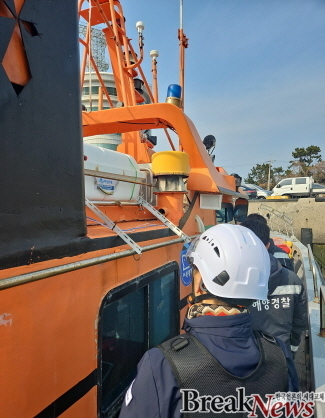
▲ 여수·광양항 인화성 액체류 운송선박 '선상 첨가제 투입' 관련 사진 |
여수지방해양수산청은 17일 인화성 액체류를 적재한 유탱커 화물창 내 '첨가제 투입(도핑·도징) 작업'에 대한 안전지침을 마련하고 이날부터 본격 시행한다고 밝혔다.
이번 지침은 지난 8월 16일 여수항 정박지에서 발생한 위험물 운반선 폭발사고에 대한 재발을 막기 위한 조치이다.
해수청은 현행 규정상 위험물을 적재한 화물창(탱크)에 다른 위험물(산화안정제 등)을 추가로 투입하는 것은 원칙적으로 금지돼 있지만 이를 위한 준비작업 과정에서 사고가 발생했다.
이에 따라 해수청은 관행적으로 이루어지던 첨가제 투입 작업을 제도권 내에서 안전하게 이루어질 수 있도록 관계기관과 전문가 협의를 거쳐 '여수·광양항 인화성 액체류 운송선박 선상 첨가제 투입 지침'을 마련했다.
지침에 따르면 첨가제 투입은 원칙적으로 항내 이동 중이나 정박 중에는 금지되며 염색이나 화물 안정화 등 불가피한 경우에는 부두에 접안한 상태에서 폐쇄식 설비를 이용해 육상 전문 인력이 투입하도록 명확히 규정했다.
이번 지침은 항만 내 대형 화재·폭발사고 발생위험을 줄이기 위한 현장 실행기준을 국내 항 최초로 명문화했다는 점에서 의미가 크다.
특히 △작업 장소(부두 접안 한정) △작업 방식(폐쇄식) △작업 주체(육상전문인력) △사전 통제(공동 위험성 평가) △점화원·정전기 관리 등 위험요소별 통제 기준을 체계적으로 제시했다.
정태성 청장은 "지침은 첨가제 투입 과정에서 발생할 수 있는 위험을 사전에 차단하고 항만 현장의 안전 수준을 한층 높이기 위한 것"이라며 "지침이 현장에 잘 정착될 수 있도록 관계기관과 지속적으로 협력하겠다"고 말했다.
[아래는 구글로 번역한 영문기사 전문입니다. 영문번역에 오류가 있을 수 있음을 전제로 합니다. Below is the full English article translated by Google. It is assumed that there may be errors in the English translation.]
The Yeosu Regional Office of Oceans and Fisheries announced on the 17th that it had developed safety guidelines for "additive dosing (doping/dosing)" in the cargo holds of oil tankers carrying flammable liquids, which will be fully implemented starting today.
These guidelines are a measure to prevent a recurrence of the explosion of a hazardous cargo carrier that occurred at the Yeosu Port anchorage on August 16th.
Current regulations prohibit the addition of additional hazardous substances (such as oxidation stabilizers) to cargo holds (tanks) carrying hazardous materials. However, the accident occurred during preparatory work for this procedure.
Accordingly, the Office of Oceans and Fisheries consulted with relevant organizations and experts to develop the "Guidelines for Additive Dosing onboard Flammable Liquid Transport Vessels at Yeosu and Gwangyang Ports" to ensure that the conventional practice of additive dosing can be safely implemented within established regulations.
According to the guidelines, additive injection is prohibited in principle during port transit or while at anchor. In unavoidable cases, such as dyeing or cargo stabilization, it is explicitly stipulated that onshore personnel must use closed facilities while at the pier.
These guidelines are significant in that they are the first domestic ports to codify on-site implementation standards to reduce the risk of large-scale fires and explosions within ports.
In particular, they systematically present control standards for each risk factor, including: △Work location (only at the pier); △Work method (closed); △Worker (on-shore personnel); △Preemptive control (joint risk assessment); and △Ignition source and static electricity management.
Director Jeong Tae-seong stated, "These guidelines aim to proactively prevent risks that may arise during the additive injection process and further enhance safety at ports." He added, "We will continue to cooperate with relevant organizations to ensure that these guidelines are well-established on-site."
원본 기사 보기:브레이크뉴스전남동부