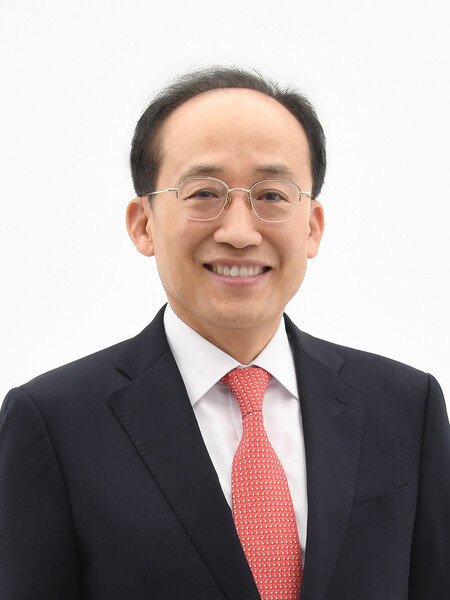
▲필자/ 이양승 군산대 교수. ©브레이크뉴스 |
최근 김 모 비서관이 비서실장을 ‘형’, 부속실장을 ‘누나’라고 한 ‘인사청탁 문자’ 논란은 단순한 개인의 일탈이 아니라 한국 정치가 왜 구조적으로 ‘연속성(contiuity)’을 잃고, 반복적 혼란과 비효율을 겪는지 보여주는 상징적 사건이다. 공적 권력이 친소 기반의 폐쇄적 ‘신뢰반경’ 위에 있기 때문이다.
게임이론 시각에서 신뢰반경은 “누구를 신뢰하고 누구를 배제하는가”를 결정하는 ‘경계(boundary)’가 분명하다. 가장 뚜렷한 경계는 주로 학연과 혈연이다. 신뢰반경은 단순한 인간관계를 표현하지 않는다. 오히려 위상수학적 구조, 즉 사회라는 공간이 어떻게 분할되고 단절되는지 보여주는 강력한 은유가 된다.
정치 공동체 전체를 하나의 위상공간이라고 해보자. 그 안에 존재하는 여러 집단 즉, 정파, 네트워크 등은 각기 자신의 신뢰반경을 통해 하나의 부분집합을 형성한다. 문제는 그 부분집합들 간에 교집합이 거의 없고, 스스로가 ‘닫힌 집합(closed set)’처럼 굳어져 외부와의 상호작용을 차단한다는 점이다. 위상수학에서 그런 구조는 공간 전체가 연결되지 않는(disconnected) 부분들로 쪼개져 있음을 의미한다.
그렇게 ‘단절된 위상’에서는 연속적 함수가 정의되기 어렵다. 정치 영역에서 그 함수는 곧 ‘정책’이다. 서로 다른 폐쇄집합들이 자기 내부에서만 의사결정을 하고 외부를 배제하면, 정책은 마치 ‘계단 함수(step function)’처럼 정권이 바뀔 때마다 불연속적으로 ‘뚝’ 꺽이게 된다. 한국에서 실제로 벌어지는 일이다. 정권 교체 순간마다 정책이 급변하고, 장기 계획이 무너지며, 연속성이 사라지는 이유다. 폐쇄적 신뢰반경은 제도의 ‘연결성(connectedness)’까지 파괴하는 것이다. 그 경우, 당연히 ‘진보’도 불가능해진다.
이 단절은 현실 정치에서도 그대로 나타난다. 신뢰반경 안의 사람들에겐 무조건적 포용이 주어지지만, 신뢰반경 밖의 사람들에겐 무조건적 배제가 돌아간다. 정보 기회 자원 등이 닿지 않는다. ‘경계’가 분명하기 때문이다. 행정은 사적 관계를 통해 작동하고, 최적선택은 뒷전으로 밀린다. 그렇게 폐쇄적 집단들로만 구성된 사회엔 ‘타협, 중재, 공론’이 존재할 수 없다. 따라서 그 사회는 협력보다 갈등으로 움직이게 된다. 결국 국정 운영은 예측 가능성을 잃고, 정책 노하우는 축적되지 못하며, 권력투쟁만 남게 된다. 국가는 고비용 저효율 구조를 벗어날 수 없다.
선진국들은 ‘돈’이 많아서 선진국이 아니라 ‘제도의 신뢰성’ 덕분에 선진국이다. 그 제도적 신뢰는 그 사회가 개방적 신뢰반경 즉, ‘열린 집합’들로 구성되도록 돕는다. 공적 시스템은 ‘재량’보다 ‘규칙’ 기반으로 돌아간다. 명확한 인사 기준과 투명성이 확보될 때에만 그 열린 집단들 간에 연속적 상호작용이 기대될 수 있기 때문이다. 한국처럼 ‘닫힌 집합’들로 쪼개진 공간에서는 연속적 상호작용을 기대하기 어렵다.
이번 청탁 논란은 한국 정치가 여전히 ‘닫힌 집합’을 중심으로 움직이고 있으며, 그 결과 국가 전체가 언제든지 위상적 단절 위험에 놓일 수 있음을 시사한다. 문제는 특정 인물의 도덕성이 아니라, 공적 영역이 폐쇄적 신뢰반경에 종속돼 제도적 연속성을 확보하지 못한다는 구조적 현실일 수도 있다.
‘형’ ‘누나’라고 부를 만큼 친밀한 사이는 좋다. 하지만 폐쇄성은 친밀함과 다르다. 공적 사회가 폐쇄적 신뢰반경 속에 머물러선 안 된다. 사회 전체의 위상을 다시 연결 가능한 공간으로 재구성해야 한다. 그것이야말로 성숙한 민주주의, 지속 가능한 정책, 그리고 신뢰 기반의 국가 경쟁력으로 나아가는 출발점이다. yslee1992@hotmail.com
*필자/이양승
군산대 교수. 국제경제, 게임이론 그리고 지역 발전전략에 대해 연구하는 학자이다. 현재 국립 군산대 무역학과 교수로 재직 중이다. 이전엔 캐나다 앨버타 대학교(University of Alberta) 경제학과에서 ‘게이임(gaming)’에 대해 연구와 강의를 했으며, 한국건설산업연구원에서 연구위원으로 근무했다.
전북 남원에서 출생해 전주한일고와 전북대 상과대학을 졸업했다. 이후 미국으로 건너가 노스 캐롤라이나 주립대학교 (North Carolina State University)에서 통계학과 경제학을 공부해 석사를 받았으며, 캔자스 대학교(The University of Kansas)에서 산업조직과 게임이론에 대한 연구로 경제학 박사를 받았다.
저서로는 '메트로 이코노미 (타임라인)'과 ‘와일드 게임이론 (박영사)’, ‘무역학개론(공저, 두남)’, ‘문화지체에 빠진 건설산업 (공저, 한국건설산업연구원)’ '자유무역론(박영사)' 등이 있고, 36편의 단독연구 학술논문이 있다.
*아래는 위 기사를 '구글 번역'으로 번역한 영문 기사의 [전문]입니다. '구글번역'은 이해도 높이기를 위해 노력하고 있습니다. 영문 번역에 오류가 있을 수 있음을 전제로 합니다.<*The following is [the full text] of the English article translated by 'Google Translate'. 'Google Translate' is working hard to improve understanding. It is assumed that there may be errors in the English translation.>
The Power of "Hyung" and "Noona": A Closed Trust Radius
"Public society must not remain within a closed trust radius!"
- Professor Lee Yang-seung, Kunsan National University
The recent controversy over a "personnel request text" in which Secretary Kim referred to the Chief of Staff as "Hyung" and the Deputy Chief of Staff as "Noona" is not simply an individual's aberration. It is a symbolic incident that demonstrates why Korean politics structurally lacks "continuity" and suffers from recurring confusion and inefficiency. This is because public power rests on a closed "trust radius" based on close ties to the ruling party.
From a game theory perspective, a trust radius clearly defines the "boundary" that determines "who is trusted and who is excluded." The most obvious boundaries are typically school ties and blood ties. A trust radius does not simply represent human relationships. Rather, it serves as a powerful metaphor for a topological structure—how the space of society is divided and fragmented.
Let's consider the entire political community as a single topological space. Within it, the various groups—parties, networks, etc.—form a subset through their respective trust radii. The problem is that these subsets have little intersection, solidifying themselves into "closed sets," blocking interaction with the outside world. In topology, such a structure implies that the entire space is fragmented into disconnected parts.
In such a "disconnected topology," it is difficult to define a continuous function. In the political realm, that function is "policy." When different closed sets make decisions within themselves and exclude the outside world, policies become discontinuous and "abrupt" with each change in government, like a "step function." This is precisely what happens in Korea. This is why policies change abruptly with each change in government, long-term plans crumble, and continuity disappears. A closed trust radii destroys the "connectedness" of the system. Naturally, in such cases, "progress" becomes impossible.
This disconnection is also evident in real-world politics. Those within the circle of trust are unconditionally embraced, while those outside are unconditionally excluded. Information, opportunities, and resources are out of reach. This is because "boundaries" are clear. Administration operates through personal relationships, and optimal choices are relegated to the background. In a society comprised solely of such closed groups, "compromise, mediation, and public opinion" cannot exist. Consequently, the society operates on conflict rather than cooperation. Ultimately, government operations lose predictability, policy know-how fails to accumulate, and power struggles remain. The nation cannot escape its high-cost, low-efficiency structure.
Developed countries are not developed because of their wealth, but because of the "trustworthiness of their institutions." This institutional trust fosters an open circle of trust, or "open groups." Public systems operate on a "rule" basis rather than a "discretionary" basis. Only when clear personnel standards and transparency are ensured can continuous interaction between these open groups be expected. In a space fragmented into "closed groups" like Korea, continuous interaction is difficult to expect.
This recent bribery controversy suggests that Korean politics still operates around "closed groups," and as a result, the entire nation is at risk of topological discontinuity at any time. The problem may not be the morality of a particular individual, but rather the structural reality that the public sphere is subject to a closed circle of trust, failing to secure institutional continuity.
It's good to be close enough to call someone "hyung" or "noona." However, closedness is different from intimacy. Public society cannot remain confined to a closed circle of trust. We must restructure the entire societal structure into a space where connection can flourish. This is the starting point for a mature democracy, sustainable policies, and trust-based national competitiveness. yslee1992@hotmail.com
*Author/Yangseung Lee
Professor at Kunsan National University. He researches international economics, game theory, and regional development strategies. He currently serves as a professor in the Department of International Trade at Kunsan National University. Previously, he researched and lectured on gaming at the Department of Economics at the University of Alberta, Canada, and served as a research fellow at the Korea Construction and Economy Research Institute.
Born in Namwon, North Jeolla Province, he graduated from Jeonju Hanil High School and Chonbuk National University's College of Commerce. He later moved to the United States, where he earned a master's degree in statistics and economics from North Carolina State University and a doctorate in economics from the University of Kansas for his research on industrial organization and game theory.
His publications include "Metro Economy" (Timeline), "Wild Game Theory" (Parkyoungsa), "Introduction to Trade" (co-authored, Doonam), "The Construction Industry in Cultural Lag" (co-authored, Construction and Economy Research Institute of Korea), and "Free Trade" (Parkyoungsa). He has also published 36 independent academic papers.