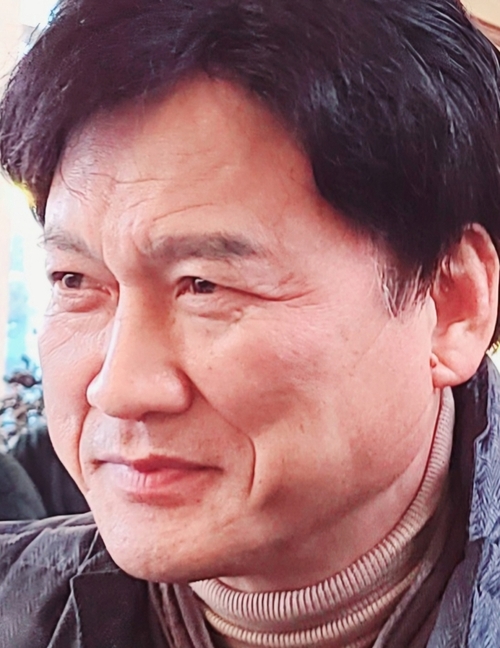
▲ 필자/이양승 군산대 교수. ©브레이크뉴스 |
한일 해저터널은 기술의 문제가 아니라 교통표준의 문제이다. 한일 해저터널 논의가 고개를 들 때마다 등장하는 단어는 늘 비슷하다. “동북아 물류 허브”, “미래 인프라”, “유라시아 연결”. 그러나 이 사업을 냉정하게 들여다보면, 문제의 핵심은 공학도 외교도 아니다. 조정(coordination)의 경제학이며, 더 정확히 말하면 조정이 실패할 가능성이 구조적으로 내재된 사업이다.
한·일 해저터널은 전형적인 조정 게임이다. 터널이 기능하려면 양국이 동일한 규칙과 표준을 선택해야 한다. 문제는 그 표준이 결코 중립적이지 않다는 점이다. 한국은 우측통행·좌측 핸들, 일본은 좌측통행·우측 핸들이다. 이 차이는 단순한 운전 습관의 문제가 아니라, 도로 설계, 안전 규정, 차량 규격, 보험·책임 법제까지 연결된 국가 시스템 전체의 표준이다.
조정 게임의 핵심은 “같은 선택을 해야 한다”는 데 있다. 그러나 어느 쪽의 표준을 채택하느냐에 따라 비용은 한쪽에 집중되고 편익은 양국에 분산된다. 이는 정치적으로 가장 합의가 어려운 구조다. 한국이 일본 표준을 수용하면 국내 운송체계 일부를 일본식에 맞춰야 하고, 일본이 한국 표준을 수용하면 그 반대의 문제가 발생한다. 절충안을 선택하면 어떨까. 환승, 차량 교체, 이중 규제라는 새로운 비용이 발생하며, 이는 해저터널의 존재 이유 자체를 약화시킨다.
여기에 감정의 정치경제학이 개입한다. 한국 사회에 뿌리 깊게 남아 있는 반일감정은 단순한 외교적 태도가 아니라, 조정 게임에서의 선택을 제약하는 현실적 변수다. 교통 표준을 일본에 맞춘다는 결정은 경제적 합리성과 무관하게 “주권 양보”, “굴욕 외교”라는 프레임에 쉽게 포획된다. 이 순간 조정 비용은 재정적 비용을 넘어 정치적·사회적 비용으로 폭증한다.
문제는 이 감정이 비합리적이라서가 아니라, 정치적으로 너무나 합리적이라는 데 있다. 어느 정부도 “일본 표준에 맞추기 위해 한국의 교통 규칙을 일부 바꾸겠다”고 공개적으로 말하기 어렵다. 설령 장기적으로 효율적이라 하더라도, 단기 정치 비용은 감당하기 어렵다. 게임이론적으로 보자면, 이는 ‘조정 실패가 균형이 되는 게임’이다. 합의하지 않는 것이 오히려 각자의 정치적 손실을 최소화하는 선택이 된다.
일각에서는 “기술로 해결할 수 있다”고 말한다. 그러나 이는 경제성의 자기부정이다. 환승과 중간 조정이 필요하다면, 해저터널은 항공이나 해운보다 우월하지 않다. 오히려 고정비는 크고 유연성은 떨어지는, 가장 비싼 선택지가 된다.
한·일 협력이 필요 없다는 말이 아니다. 다만 협력의 방식이 문제다. 표준의 강제적 통합을 전제로 한 초대형 토건 사업은, 역사·감정·제도가 얽힌 한·일 관계에서 가장 실패 확률이 높은 방식이다. 반면 항만 자동화, 해운 물류 효율화, 디지털 통관과 같은 영역은 표준 양보 없이도 실질적 협력이 가능하다.
한·일 해저터널은 두 나라를 연결하는 다리가 아니라, 조정 실패와 정치적 부담을 고정화하는 터널이 될 가능성이 크다. 경제학은 늘 묻는다. “가능한가”가 아니라 “지속 가능한가” 그리고“효율적인가”이다. 이 질문 앞에서, 해저터널을 주장하는 이들은 여전히 설득력 있는 답을 내놓지 못하고 있다. yslee1992@hotmail.com
*필자/이양승
군산대 교수. 국제경제, 게임이론 그리고 지역 발전전략에 대해 연구하는 학자이다. 현재 국립 군산대 무역학과 교수로 재직 중이다. 이전엔 캐나다 앨버타 대학교(University of Alberta) 경제학과에서 ‘게이임(gaming)’에 대해 연구와 강의를 했으며, 한국건설산업연구원에서 연구위원으로 근무했다.
전북 남원에서 출생해 전주한일고와 전북대 상과대학을 졸업했다. 이후 미국으로 건너가 노스 캐롤라이나 주립대학교 (North Carolina State University)에서 통계학과 경제학을 공부해 석사를 받았으며, 캔자스 대학교(The University of Kansas)에서 산업조직과 게임이론에 대한 연구로 경제학 박사를 받았다.
저서로는 '메트로 이코노미 (타임라인)'과 ‘와일드 게임이론 (박영사)’, ‘무역학개론(공저, 두남)’, ‘문화지체에 빠진 건설산업 (공저, 한국건설산업연구원)’ '자유무역론(박영사)' 등이 있고, 36편의 단독연구 학술논문이 있다.
*아래는 위 기사를 '구글 번역'으로 번역한 영문 기사의 [전문]입니다. '구글번역'은 이해도 높이기를 위해 노력하고 있습니다. 영문 번역에 오류가 있을 수 있음을 전제로 합니다.<*The following is [the full text] of the English article translated by 'Google Translate'. 'Google Translate' is working hard to improve understanding. It is assumed that there may be errors in the English translation.>
A Korea-Japan undersea tunnel that's bigger than its size?
- Professor Lee Yang-seung, Kunsan National University
The Korea-Japan undersea tunnel isn't a matter of technology, but of transportation standards. Whenever discussions about the project arise, the same words always emerge: "Northeast Asian logistics hub," "future infrastructure," "Eurasian connection." However, a sober look at this project reveals that the core of the problem isn't engineering or diplomacy. It's the economics of coordination. More precisely, it's a project with a structurally inherent risk of coordination failure.
The Korea-Japan undersea tunnel is a classic coordination game. For the tunnel to function, both countries must adopt the same rules and standards. The problem is that these standards are far from neutral. Korea drives on the right and drives on the left, while Japan drives on the left and drives on the right. This difference isn't simply a matter of driving habits; it's a standard that encompasses the entire national system, encompassing road design, safety regulations, vehicle specifications, and even insurance and liability laws.
The core of the coordination game lies in the need to make the same choice. However, depending on which standard is adopted, costs are concentrated on one side, while benefits are divided between the two countries. This structure is politically the most difficult to reach agreement on. If Korea adopts Japanese standards, parts of its domestic transportation system must be adapted to Japanese standards, and if Japan adopts Korean standards, the opposite problem arises. What if a compromise is chosen? New costs arise in the form of transfers, vehicle replacement, and double regulation, which undermine the very reason for the undersea tunnel's existence.
Here, the political economy of emotion intervenes. Deep-rooted anti-Japanese sentiment in Korean society is not simply a diplomatic stance; it is a real variable that constrains choices in the coordination game. The decision to align transportation standards with Japan's is easily framed as "sovereignty concession" and "humiliation diplomacy," regardless of economic rationality. At this point, the coordination costs explode beyond financial to political and social costs.
The problem is not that these sentiments are irrational, but that they are politically rational. No government can openly say, "We will partially change Korean traffic regulations to conform to Japanese standards." Even if it were efficient in the long run, the short-term political costs are unbearable. From a game theory perspective, this is a game where coordination failures are the equilibrium. Refusing to reach an agreement is the option that minimizes political losses for both sides.
Some argue that "technology can solve this." However, this is a self-negation of economic feasibility. If transfers and intermediate adjustments are required, an undersea tunnel is not superior to air or shipping. Rather, it becomes the most expensive option, with high fixed costs and inflexibility.
This is not to say that Korea-Japan cooperation is unnecessary. However, the method of cooperation is the issue. Large-scale construction projects predicated on mandatory standard integration are the most likely to fail in a Korea-Japan relationship entangled with history, sentiment, and institutions. On the other hand, areas such as port automation, maritime logistics efficiency, and digital customs clearance can achieve practical cooperation without compromising standards.
The Korea-Japan undersea tunnel is not a bridge connecting the two countries, but is likely to become a tunnel that solidifies coordination failures and political burdens. Economics always asks, not "Is it possible?" but "Is it sustainable?" and "Is it efficient?" Those advocating for an undersea tunnel still lack convincing answers. yslee1992@hotmail.com
*Author/Yangseung Lee
Professor at Kunsan National University. He researches international economics, game theory, and regional development strategies. He currently serves as a professor in the Department of International Trade at Kunsan National University. Previously, he researched and lectured on "gaming" in the Department of Economics at the University of Alberta, Canada, and served as a research fellow at the Construction and Economy Research Institute of Korea.
Born in Namwon, North Jeolla Province, he graduated from Jeonju Hanil High School and the College of Commerce at Chonbuk National University. He later moved to the United States, where he studied statistics and economics at North Carolina State University, earning a master's degree. He also received a doctorate in economics from the University of Kansas, focusing on industrial organization and game theory.
His publications include "Metro Economy (Timeline)," "Wild Game Theory (Parkyoungsa)," "Introduction to Trade Studies (co-authored, Doonam), "The Construction Industry in Cultural Lag (co-authored, Korea Construction Economy Research Institute)," and "Free Trade Theory (Parkyoungsa)," and he has published 36 independent academic papers.