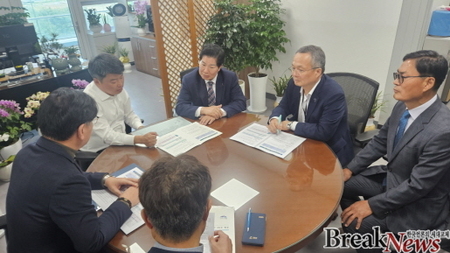
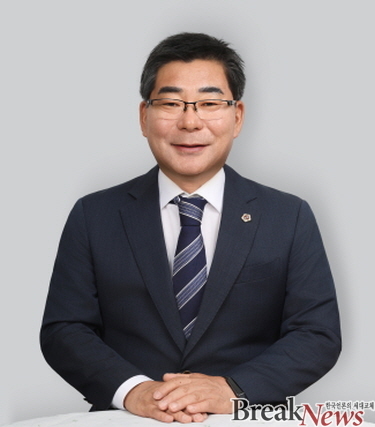
▲ 국민의힘 김종양 의원이 17일 주최한 ‘K-철도 해외진출 활성화’를 위한 전략 토론회를 개최했다. |
[브레이크뉴스=이성용 기자] 대한민국 철도 기술은 이미 세계 최고 수준에 도달했다. 하지만 화려한 기술력의 이면에는 '글로벌 시장 점유율 저조'라는 뼈아픈 성적표가 놓여 있다. 지난 17일 국회 의원회관에서 열린 「K-철도 해외진출 활성화를 위한 전략 토론회」는 이러한 현실을 직시하고, 판을 바꾸기 위한 국가적 전략을 모색하는 자리였다.
▲ "여야가 따로 없다"… K-철도 향한 국회의 뜨거운 시선
국민의힘 김종양 의원이 주최한 이번 토론회는 여야 지도부와 국토교통위원회 핵심 인사들이 총집결했다. 맹성규 국토교통위원장(더불어민주당)과 권영진 간사(국민의힘)를 비롯해 추경호 전 원내대표, 성일종 국방위원장 등 여야 의원 10여 명이 대거 참석했다.
이는 철도 산업이 국가의 새로운 미래 먹거리이자 전략적 수출 자산이라는 점에 정치권이 공감대를 형성했다.
▲ 3대 핵심 기관이 제시한 '수주 공식'의 변화
발제자로 나선 국내 철도 핵심 기관들은 기존의 '건설 중심'에서 '운영 및 금융 중심'으로의 패러다임 전환을 주문했다.
한국철도공사(KORAIL) 권기동 국제협력처장은 열차 운영과 유지보수(O&M)를 아우르는 '토털 솔루션' 제공의 필요성을 강조했다. 한 번 수주하면 수십 년간 안정적 수익을 창출하는 운영권 확보가 핵심이라는 분석이다.
국가철도공단(KR) 차두표 글로벌사업처장은 '2030 글로벌 전략'을 통해 한국형 철도 시스템의 표준화와 패키지형 진출의 중요성을 역설했다.
KIND(한국해외인프라도시개발지원공사) 이승환 인프라사업실장은 'PPP(민관협력사업)' 동향을 소개하며, 정부의 정책 자금과 민간의 기술력을 결합한 금융 경쟁력이 수주 성패를 가를 것이라고 제언했다.
 ▲ 김종양 의원이 "K-철도의 해외진출 성과로 이어질 수 있도록 국회 차원의 정책적·제도적 뒷받침을 아끼지 않겠다”고 밝혔다. |
▲ "현장의 목소리는 절박했다"… 정책적 뒷받침 시급
이어진 토론에서는 현대로템, 성신알에스티 등 현장을 누비는 기업들의 생생한 목소리가 터져 나왔다. 업계 관계자들은 기술력 차이보다 국가 차원의 파격적인 금융 지원과 외교적 뒷받침이 글로벌 경쟁사들과의 경쟁에서 가장 큰 변수라고 입을 모았다.
국토교통부 우정훈 철도정책과장은 "이러한 현장의 애로사항을 청취하며, 제도 개선과 정부 차원의 수주 지원 체계 강화 방안을 검토하겠다"고 밝혔다.
▲ 총평: 'K-철도' 신화, 이제는 실전이다
이번 토론회는 K-철도가 '기술 강국'이라는 자부심을 넘어 '수주 강국'으로 도약하기 위한 구체적인 로드맵을 그려냈다는 점에서 의미가 깊다.
김종양 의원은 “지역구인 창원특례시에는 방산·원자력뿐만 아니라 철도차량 분야에서도 글로벌 경쟁력을 갖춘 기업들이 다수 포진해 있다”며 “이러한 산업 기반이 K-철도의 해외진출 성과로 이어질 수 있도록 국회 차원의 정책적·제도적 뒷받침을 아끼지 않겠다”고 밝혔다.
이어 “국회의원이자 전 인터폴 총재로서 축적한 글로벌 네트워크와 경험을 적극 활용해 K-철도가 세계 시장을 선도할 수 있도록 앞장서겠다”고 강조했다.
이번 토론회는 국회와 정부, 공공기관, 민간 기업이 ‘원팀’이 되어 해외 경제 영토 확장을 위한 실질적 해법을 논의했다는 점에서 의미를 남겼다. 참석자들은 K-철도의 성공적인 해외 진출을 위해 초당적인 협력과 지속적인 정책 지원이 필요하다는 데 공감했다.
*아래는 위 기사를 '구글 번역'으로 번역한 영문 기사의 [전문]입니다. '구글번역'은 이해도 높이기를 위해 노력하고 있습니다. 영문 번역에 오류가 있을 수 있음을 전제로 합니다.
*Below is the [full text] of the English article translated using ‘Google Translate’.‘Google Translate’ is working to increase understanding.It is assumed that there may be errors in the English translation.
"Technology is world-leading, but orders remain stagnant"… Representative Kim Jong-yang's painful self-reflection on the "K-rail" project
Large numbers of ruling and opposition party lawmakers attended, promising bipartisan support
South Korea's railway technology has already reached world-class levels. However, behind this impressive technological prowess lies the painful fact that it has a low global market share. The "Strategy Discussion for Vitalizing K-rail Overseas Expansion" held at the National Assembly Members' Hall on the 17th was an opportunity to confront this reality and explore a national strategy to change the game.
▲ "There is no difference between the ruling and opposition parties"… The National Assembly's fervent focus on the K-rail project
This discussion, hosted by People Power Party Representative Kim Jong-yang, brought together leaders from both the ruling and opposition parties and key figures from the Land, Infrastructure, and Transport Committee. Around ten lawmakers from both the ruling and opposition parties attended, including Maeng Seong-gyu, Chairman of the Land, Infrastructure and Transport Committee (Democratic Party of Korea), Kwon Young-jin, Floor Leader (People Power Party), former floor leader Choo Kyung-ho, and Sung Il-jong, Chairman of the National Defense Committee.
This demonstrates a growing political consensus that the railway industry is a new future growth engine for the nation and a strategic export asset.
▲ Changes in the "Procurement Formula" Proposed by Three Key Agencies
Key domestic railway organizations, who presented, called for a paradigm shift from the existing "construction-centered" approach to an "operation and finance-centered" approach.
Kwon Ki-dong, Director of the International Cooperation Division at Korea Railroad Corporation (KORAIL), emphasized the need to provide a "total solution" encompassing train operation and maintenance (O&M). He analyzed that securing operating rights, which generate stable profits for decades after winning a contract, is crucial.
Cha Du-pyo, Director of the Global Business Division at Korea Railroad Corporation (KR), emphasized the importance of standardizing the Korean railway system and entering the market as a package through the "2030 Global Strategy."
Lee Seung-hwan, Director of the Infrastructure Business Division at KIND (Korea Overseas Infrastructure and Urban Development Corporation), introduced trends in public-private partnerships (PPPs) and suggested that financial competitiveness, combining government policy funding with private sector technological prowess, will determine the success or failure of contracts.
▲ "The voices from the field were desperate"… Urgent policy support is needed
The following discussion featured the vivid voices of companies actively engaged in the field, including Hyundai Rotem and Sungshin RST. Industry insiders unanimously agreed that, rather than technological prowess, unprecedented financial support and diplomatic backing from the government were the most crucial variables in competing with global competitors.
Woo Jeong-hoon, Director of the Railway Policy Division at the Ministry of Land, Infrastructure and Transport, stated, "We will listen to these challenges from the field and consider ways to improve the system and strengthen the government's support system for contracts."
▲ Summary: The 'K-Rail' Myth: Now in Practice
This discussion was significant in that it outlined a concrete roadmap for K-Rail to move beyond its pride as a "technological powerhouse" and leap forward to become a "contract powerhouse."
Representative Kim Jong-yang stated, "My constituency, Changwon Special City, is home to numerous globally competitive companies not only in the defense and nuclear power industries, but also in the railway vehicle sector." He added, "I will spare no effort in providing policy and institutional support at the National Assembly level to ensure that this industrial foundation translates into successful overseas expansion for K-Rail."
He continued, "As a member of the National Assembly and former President of Interpol, I will actively leverage my global network and experience to lead K-Rail in the global market."
This discussion was significant in that it brought together the National Assembly, the government, public institutions, and private companies as a "one team" to discuss practical solutions for expanding our economic territory overseas. Participants agreed that bipartisan cooperation and continued policy support are necessary for K-rail's successful overseas expansion.
원본 기사 보기:브레이크뉴스경남