▲필자/ 이양승 군산대 교수. ©브레이크뉴스 |
정치는 감정의 세계처럼 보이지만, 실제로는 냉철한 수학의 세계다. 선거는 신념의 옳고 그름을 가리는 테스트가 아니라, 유권자 분포 위에서 중위점(median)을 선점하는 전략적 행위다. 이 관점에서 볼 때, 한국 보수의 반복적 패배는 우연이 아니라 수학적 정리(theorem)를 따른 결과라고 말할 수 있다. 바로 ‘한국 보수의 집권 불가능성 정리’다.
먼저 중위투표자 정리부터 보자. 이 정리는 단순하지만 강력하다. 단일 차원 이슈 공간에서 다수결 선거는 결국 중위 유권자의 선호에 가장 가까운 정당이 승리한다는 명제다. 중요한 것은 유권자의 평균치가 아니라 중위점이다. 정당이 아무리 열성 지지층을 확보해도, 중위를 잃는 순간 선거는 패배할 수밖에 없다.
문제는 한국 보수가 이 정리를 사실상 거부해 왔다는 점이다. 보수는 점점 중위 유권자가 아닌 당원 분포의 중앙값을 향해 이동했다. 그 결과 메시지는 선명해졌지만, 지지율은 더 줄어들고 있다. 더 중요한 건 전략적 실책이 아니라 목적 함수의 변경이다. 보수는 더 이상 ‘선거에서 이기는 정당’이 아니라 ‘당권 경쟁에서 이기는 정당’이 되고 있다.
여기서 두 번째 이론, ‘불가능성 정리’가 등장한다. 사회선택이론에서 불가능성 정리는 여러 합리적 조건을 동시에 만족하는 집단적 의사결정 규칙은 존재하지 않는다는 명제다. 이를 한국 보수에 대입하면 이렇게 된다.
① 강성 지지층의 선호를 완벽히 반영하면서
② 중도 유권자를 동시에 포섭하고
③ 내부 갈등 없이 단일 리더십을 유지하는 정당은 존재하지 않는다.
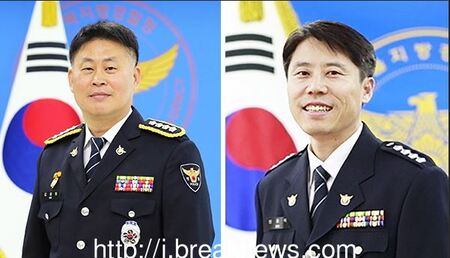
한국 보수는 이 세 가지를 동시에 달성하려 하고 있다. 그 결과는 예측 가능하다. 강성 당원에 포획되고, 중도는 이탈하며, 리더십은 분열됐다. 장동혁은 ‘당원’을, 한동훈은 ‘확장성’을, 이준석은 ‘시스템 변화’를 각각 대표하지만, 그 3가지 가치는 동시에 추구될 수 없다. 불가능성 정리가 말해주는 것은 단순하다. 모든 것을 가지려는 정당은 결국 아무것도 갖지 못한다는 점이다.
반면 진보는 이 두 정리를 훨씬 냉정하게 받아들인다. 진보는 중위투표자 정리를 부정하지 않는다. 선거 국면에서는 메시지의 초점을 중위점에 맞추고, 내부 불만은 사후에 관리하기로 묵시적 협력을 맺는다. 또한 불가능성 정리를 인정한다. 강성 지지층의 반발을 감수하면서까지 후보 단일화와 전략적 타협을 선택한다. 진보의 집권은 도덕적 우월성 덕분이 아니라 이론에 바탕한 현실주의의 산물이다. 노무현 문재인 이재명 당선은 당권에 확장성이 더해진 결과다.
이 지점에서 한국 보수의 문제가 명확해진다. 보수는 패배할 때마다 인물을 바꾸지만, 목적 함수 자체는 바뀌지 않는다. 계산이 틀린 게 아니라, 방정식이 잘못된 격이다. 당원 만족도를 극대화하는 것과 전국 선거 득표율을 극대화하는 건 서로 전혀 다르다. 이를 구분하지 못하는 한, 보수의 패배는 반복될 수밖에 없다.
결론적으로 말해, 한국 보수의 집권 불가능성은 우연이 아니다. 중위투표자 정리를 거부하고, 불가능성 정리를 무시한 정당은 이길 수 없도록 설계된 조직인 것이다. 정치를 신념의 연속체로 오해하는 순간, 선거 결과는 조용히 수학적 정리를 따른다. 정치는 신념 경쟁이 아니다. 정치는 중위점을 둘러싼 냉혹한 선택의 게임이다. 이 게임의 규칙을 받아들이지 않는 한, 보수의 집권은 이론적으로 불가능하다. yslee1992@hotmail.com
*필자/이양승
군산대 교수. 국제경제, 게임이론 그리고 지역 발전전략에 대해 연구하는 학자이다. 현재 국립 군산대 무역학과 교수로 재직 중이다. 이전엔 캐나다 앨버타 대학교(University of Alberta) 경제학과에서 ‘게이임(gaming)’에 대해 연구와 강의를 했으며, 한국건설산업연구원에서 연구위원으로 근무했다.
전북 남원에서 출생해 전주한일고와 전북대 상과대학을 졸업했다. 이후 미국으로 건너가 노스 캐롤라이나 주립대학교 (North Carolina State University)에서 통계학과 경제학을 공부해 석사를 받았으며, 캔자스 대학교(The University of Kansas)에서 산업조직과 게임이론에 대한 연구로 경제학 박사를 받았다.
저서로는 '메트로 이코노미 (타임라인)'과 ‘와일드 게임이론 (박영사)’, ‘무역학개론(공저, 두남)’, ‘문화지체에 빠진 건설산업 (공저, 한국건설산업연구원)’ '자유무역론(박영사)' 등이 있고, 36편의 단독연구 학술논문이 있다.
*아래는 위 기사를 '구글 번역'으로 번역한 영문 기사의 [전문]입니다. '구글번역'은 이해도 높이기를 위해 노력하고 있습니다. 영문 번역에 오류가 있을 수 있음을 전제로 합니다.<*The following is [the full text] of the English article translated by 'Google Translate'. 'Google Translate' is working hard to improve understanding. It is assumed that there may be errors in the English translation.>
The Impossibility of Korean Conservatives Governing: The 'Defeat Mechanism' Seen from the Median Voter
- Professor Lee Yang-seung, Kunsan National University
Politics may seem like a world of emotions, but it's actually a world of cold, hard mathematics. Elections aren't a test of conviction, but a strategic act of seizing the median point in the voter distribution. From this perspective, the repeated defeats of Korean conservatives are not a coincidence, but the result of a mathematical theorem: the "Korean Conservatives' Impossibility of Governing."
Let's first consider the median voter theorem. This theorem is simple yet powerful. It states that in a single-dimensional issue space, a majority-rule election ultimately wins for the party closest to the median voter's preferences. What matters is not the average voter, but the median point. No matter how enthusiastic a party's support base, the moment it loses the median, it inevitably loses the election.
The problem is that Korean conservatives have effectively rejected this theorem. They have increasingly shifted toward the median of the party membership distribution, not the median voter. As a result, the message has become clearer, but support is declining further. What's more important is not a strategic error, but a shift in the objective function. Conservatives are no longer a party that wins elections, but a party that wins the party leadership race.
This is where the second theory, the "impossibility theorem," comes into play. In social choice theory, the impossibility theorem states that there is no collective decision-making rule that simultaneously satisfies multiple rational conditions. Applying this to the Korean conservatives, the following emerges:
There is no party that can perfectly reflect the preferences of its hard-core supporters,
Also, simultaneously capture moderate voters, and
Maintain a unified leadership without internal conflict.
Korean conservatives are attempting to achieve all three simultaneously. The result is predictable: they are captured by hard-core members, moderates are defecting, and the leadership is fragmented. Jang Dong-hyuk represents "membership," Han Dong-hoon represents "scalability," and Lee Jun-seok represents "systemic change," but these three values cannot be pursued simultaneously. What the impossibility theorem tells us is simple. A political party that seeks to have everything ultimately ends up with nothing.
In contrast, progressives accept these two theorems much more soberly. They don't deny the median voter theorem. They implicitly cooperate to focus their messages on the median voter during elections and manage internal discontent after the fact. They also acknowledge the impossibility theorem. They choose to unify their candidates and pursue strategic compromises, even at the risk of backlash from their most loyal supporters. The progressives' rise to power is not due to moral superiority, but to a product of theoretical realism. The elections of Roh Moo-hyun, Moon Jae-in, and Lee Jae-myung were the result of expanding party power.
This is where the problem with Korean conservatives becomes clear. They change candidates every time they lose, but the objective function itself remains unchanged. It's not a matter of incorrect calculations; it's a matter of flawed equations. Maximizing party member satisfaction and maximizing national election votes are completely different things. Unless they can distinguish between the two, conservative defeats are bound to repeat.
In conclusion, the inability of Korean conservatives to hold power is not a coincidence. A political party that rejects the median voter theorem and ignores the impossibility theorem is an organization designed to be unwinnable. The moment politics is mistaken for a continuum of beliefs, election results quietly follow mathematical theorem. Politics is not a contest of beliefs. It is a ruthless game of choices surrounding the median. Unless the rules of this game are accepted, conservative rule is theoretically impossible. yslee1992@hotmail.com
*Author/Yangseung Lee
Professor at Kunsan National University. He researches international economics, game theory, and regional development strategies. He currently serves as a professor in the Department of International Trade at Kunsan National University. Previously, he researched and lectured on "gaming" in the Department of Economics at the University of Alberta, Canada, and served as a research fellow at the Construction and Economy Research Institute of Korea.
Born in Namwon, North Jeolla Province, he graduated from Jeonju Hanil High School and the College of Commerce at Chonbuk National University. He later moved to the United States, where he studied statistics and economics at North Carolina State University, earning a master's degree. He also received a doctorate in economics from the University of Kansas, focusing on industrial organization and game theory.
His publications include "Metro Economy (Timeline)," "Wild Game Theory (Parkyoungsa)," "Introduction to Trade Studies (co-authored, Doonam), "The Construction Industry in Cultural Lag (co-authored, Korea Construction Economy Research Institute)," and "Free Trade Theory (Parkyoungsa)," and he has published 36 independent academic papers.