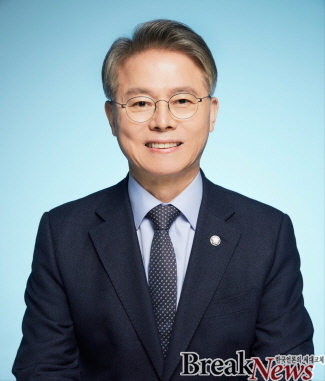
▲필자/ 이양승 군산대 교수. ©브레이크뉴스 |
한국의 자유민주주의는 기로에 섰다. 선거가 치러질 때마다 국회 의석수 비대칭은 심화된다. 그럴수록 견제와 균형의 원리는 더 무력해진다. 이 문제의 중심엔 좌파 이념의 극단성도 있겠지만 보수 진영 스스로 빠져든 ‘컬트화(cultification)’ 함정도 있다.
보수정당(保守政黨)의 패배를 흔히 “의석이 적어서”라고 설명한다. 의석 열세는 결과이지 원인이 아니다. 본질적 문제는 이길 수 없는 전략을 반복 선택한다는 것이다. 국민의힘은 최근 몇 년간 특정 인물 중심의 ‘어게인’ 정서나 음모론적 세계관에 기대어 내부 결속을 다지는 길만을 택해왔다. 이 선택은 단기적으로는 지지층의 갈채와 환호를 받겠지만, 장기적으로는 전략적 패착이 될 수밖에 없다. 영구적으로 고립되고 '소수'가 되기 때문이다.
정치는 본래 후련한 게 아니다. 거대한 조정 게임이기 때문이다. 정상적인 경우라면 여야는 중위투표자, 즉 다수의 유권자를 향해 메시지를 다듬고 정책 경쟁을 한다. ‘컬트화’는 설득 대상을 중도층이 아니라, 내부의 강성 지지층을 바꾼다. 정당의 목적함수는 ‘선거 승리’에서 ‘당권 장악’으로 바뀐다.
극단적 언어와 적대 프레임이 유일무이한 전략이 된다. 정책 정합성이나 실현 가능성은 중요치 않다. 중요한 건 분노를 자극하고, 패배 책임을 외부 또는 내부 특정 정파에 전가하는 서사다. 정책은 사라지고 상징만 남는다. 여당의 실정과 정책 실패가 드러나도 국민의힘 지지율 상승으로 이어지지 못하는 이유다. 대안이 제시되지 않아서다.
당내 인재 풀도 변질된다. 정책 설계에 능하고 객관적 수치를 강조하는 정치인은 ‘컬트화’ 속에서 살아남기 어렵다. 대신 강한 말, 자극적인 주장, 충성 경쟁에 능한 인물들이 보상을 누린다. 전형적인 역 선택이다. 시간이 흐를수록 정당은 정책 생산 능력을 잃고, 선동 능력만 강화된다. 그 과정에서 누군가에게 정치이윤 또는 상업적 이윤이 돌아간다.
컬트화의 가장 큰 아이러니는 이것이다. 내부 결속을 통해 지지율의 바닥을 다지는 데는 성공하지만, 그 바닥이 곧 천장이 된다. 중도확장으로 나아갈 다리를 불살라버리기 때문이다. 수학적으로 이는 국소 최적(local optimum)에 갇힌 상태라고 말할 수 있다.
자유민주주의는 도덕적 우월성으로 유지되지 않는다. 경쟁 가능한 대안 세력이 존재할 때만 제대로 작동한다. 지금 한국의 체제 위기는 이념적 선명성이 부족해서가 아니라, 스스로 경쟁을 포기한 전략을 선택했기 때문이다. 컬트화(cultification)는 위로처럼 보이지만, 실은 패배를 합리화하는 장치일 뿐이다. 심각한 자기 열등화 전략인 것이다.
보수가 경쟁력을 갖추려면 감정을 버리고 정책과 민생, 제도 개혁에 초점을 맞추어야 한다. 이대로 가면 보수의 미래는 ‘결집된 소수’의 독과점식 정당운영 그리고 영원한 패배에 머물 것이다. 그렇게 한국의 자유민주주의 체제도 종말을 맞게 된다. yslee1992@hotmail.com
*필자/이양승
군산대 교수. 국제경제, 게임이론 그리고 지역 발전전략에 대해 연구하는 학자이다. 현재 국립 군산대 무역학과 교수로 재직 중이다. 이전엔 캐나다 앨버타 대학교(University of Alberta) 경제학과에서 ‘게이임(gaming)’에 대해 연구와 강의를 했으며, 한국건설산업연구원에서 연구위원으로 근무했다.
전북 남원에서 출생해 전주한일고와 전북대 상과대학을 졸업했다. 이후 미국으로 건너가 노스 캐롤라이나 주립대학교 (North Carolina State University)에서 통계학과 경제학을 공부해 석사를 받았으며, 캔자스 대학교(The University of Kansas)에서 산업조직과 게임이론에 대한 연구로 경제학 박사를 받았다.
저서로는 '메트로 이코노미 (타임라인)'과 ‘와일드 게임이론 (박영사)’, ‘무역학개론(공저, 두남)’, ‘문화지체에 빠진 건설산업 (공저, 한국건설산업연구원)’ '자유무역론(박영사)' 등이 있고, 36편의 단독연구 학술논문이 있다.
*아래는 위 기사를 '구글 번역'으로 번역한 영문 기사의 [전문]입니다. '구글번역'은 이해도 높이기를 위해 노력하고 있습니다. 영문 번역에 오류가 있을 수 있음을 전제로 합니다.<*The following is [the full text] of the English article translated by 'Google Translate'. 'Google Translate' is working hard to improve understanding. It is assumed that there may be errors in the English translation.>.
Conservative Party Repeats Unwinnable Strategies...Conservatism's "Cultization"
- Lee Yang-seung, Professor, Kunsan National University
South Korea's liberal democracy is at a crossroads. With each election, the asymmetry in the number of National Assembly seats deepens. As this situation worsens, the principle of checks and balances becomes increasingly ineffective. While the extremism of leftist ideology is at the heart of this problem, the conservative camp itself is also caught in the trap of "cultification."
The conservative party's defeat is often explained as "a lack of seats." A lack of seats is a consequence, not a cause. The fundamental problem lies in its repeated adoption of unwinnable strategies. In recent years, the People Power Party has relied solely on "again" sentiments centered around certain individuals and a conspiracy-theorized worldview to solidify internal unity. While this approach may garner supporters' applause and cheers in the short term, it will inevitably lead to a strategic failure in the long term. This is because they become permanently isolated and a "minority."
Politics is not inherently refreshing. It's a massive game of coordination. Normally, the ruling and opposition parties refine their messages and compete on policies aimed at the median voter, or the majority. "Cultization" shifts the target of persuasion from the moderates to their internal, hard-core supporters. The party's objective function shifts from "election victory" to "capturing party power."
Extreme language and hostile framing become the sole strategy. Policy coherence or feasibility are irrelevant. What matters is the narrative that incites anger and shifts responsibility for defeat to external or internal factions. Policies disappear, leaving only symbols. This is why even when the ruling party's incompetence and policy failures are exposed, the People Power Party's approval ratings fail to rise. This is because no alternatives are presented.
The party's talent pool also deteriorates. Politicians skilled in policy design and emphasizing objective figures find it difficult to survive in "cultization." Instead, those skilled in strong language, provocative arguments, and competition for loyalty reap the rewards. This is a classic example of adverse selection. Over time, political parties lose their ability to produce policies, while their ability to agitate strengthens. In the process, political or commercial gains flow to some.
This is the greatest irony of cultization. While it succeeds in solidifying a rock bottom in support through internal cohesion, that rock bottom soon becomes a ceiling. This is because it destroys the bridges to moderate expansion. Mathematically, this can be described as being trapped in a local optimum.
Liberal democracy is not sustained by moral superiority. It only functions properly when there are competing alternatives. The current systemic crisis in Korea is not due to a lack of ideological clarity, but rather to a strategy that voluntarily abandons competition. Cultization may seem comforting, but in reality, it is merely a mechanism to rationalize defeat. It is a serious strategy of self-deprecation.
For conservatives to become competitive, they must cast aside their emotions and focus on policies, people's livelihoods, and institutional reform. If this continues, the future of conservatives will remain a monopolistic operation by a "cohesive minority" and perpetual defeat. Thus, Korea's liberal democratic system also came to an end. yslee1992@hotmail.com
*Author/Yangseung Lee
Professor at Kunsan National University. He specializes in international economics, game theory, and regional development strategies. He currently serves as a professor in the Department of International Trade at Kunsan National University. Previously, he researched and lectured on "gaming" at the Department of Economics at the University of Alberta in Canada and served as a research fellow at the Korea Construction and Economy Research Institute.
Born in Namwon, North Jeolla Province, he graduated from Jeonju Hanil High School and Chonbuk National University's College of Commerce. He later moved to the United States, where he earned a master's degree in statistics and economics from North Carolina State University and a doctorate in economics from the University of Kansas for his research on industrial organization and game theory.
His books include 'Metro Economy (Timeline),' 'Wild Game Theory (Parkyoungsa),' 'Introduction to Trade Studies (co-authored, Doonam),' 'The Construction Industry in Cultural Lag (co-authored, Korea Construction Industry Research Institute),' and 'Free Trade Theory (Parkyoungsa),' and he has published 36 independent academic papers.