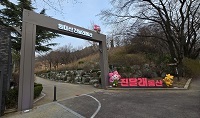
▲ 경남교육청 전경. |
[브레이크뉴스=박찬호 기자] 경남교육청이 10년 이상 꾸준히 추진해 온 서·논술형 중심 평가 정책이 전국 무대에서 주목받고 있다. 지난 12월 22일 방영된 EBS 「클래스 UP, 교실을 깨워라 시즌3」를 통해 경남형 서·논술형 평가가 교실 수업을 어떻게 바꾸고 있는지 구체적인 사례와 함께 소개됐다.
경남교육청은 전국 시·도교육청 가운데 서·논술형 평가 비중이 가장 높은 곳으로, 중학교는 지필평가 총점의 50% 이상, 고등학교는 40% 이상을 서·논술형 문항으로 출제하고 있다. ‘평가가 바뀌면 수업이 바뀐다’는 기조 아래 단기간 성과에 그치지 않고 장기간 정책으로 정착시켜 온 점이 특징이다. 최근 정부 차원에서 논의되는 서·논술형 평가 확대 흐름보다 한발 앞서 현장에 뿌리내린 사례로 평가된다.
이번 방송은 김해 수남중학교와 양산 증산고등학교 수업 현장을 중심으로 서·논술형 평가가 실제 수업에서 어떻게 구현되는지를 보여주는 데 초점을 맞췄다. 수남중에서는 역사와 국어 수업을 연계해 상황 설정형 글쓰기와 탐구 활동을 진행했고, 증산고에서는 교사가 직접 설계한 인공지능(AI) 챗봇을 설득하는 과제를 통해 학생들의 논리 전개 과정을 심화했다.
방송에 등장한 학생들은 정해진 답을 암기하기보다 자신의 생각을 근거와 사례로 풀어내는 과정에 익숙해진 모습이었다. 문제를 분석하고, 대안을 구성하며, 타인의 생각을 검토하는 과정 자체가 수업의 중심이 되면서 참여도와 몰입도가 자연스럽게 높아졌다는 평가다.
경남교육청은 서·논술형 평가를 단순한 시험 방식 변화가 아니라, 사고력·표현력·문제 해결력을 함께 키우는 수업 혁신의 축으로 보고 있다. 강인수 중등교육과장은 “서·논술형 평가는 논리적 사고와 창의적 사고를 동시에 기를 수 있는 평가 방식”이라며 “앞으로도 현장 교사가 안정적으로 수업과 평가를 운영할 수 있도록 지원을 이어가겠다”고 밝혔다.
경남형 서·논술형 평가는 이번 방송을 계기로 지역 단위의 정책을 넘어, 전국 교육 현장에서 참고할 수 있는 실천 모델로 다시 한 번 조명받고 있다.
*아래는 위 기사를 '구글 번역'으로 번역한 영문 기사의 [전문]입니다. '구글번역'은 이해도 높이기를 위해 노력하고 있습니다. 영문 번역에 오류가 있을 수 있음을 전제로 합니다.
*Below is the full text of the English article translated by Google Translate. 'Google Translate' strives to improve understanding. It assumes that there may be errors in the English translation.
The Gyeongnam Office of Education's policy of focusing on essay-based and essay-based assessments, which it has consistently pursued for over a decade, is attracting national attention. The December 22nd broadcast of EBS's "Class UP, Wake Up the Classroom Season 3" showcased how the Gyeongnam-style essay-based assessments are transforming classroom instruction, along with specific examples.
The Gyeongnam Office of Education has the highest proportion of essay-based assessments among metropolitan and provincial offices of education nationwide. Middle schools use essay-based assessments to account for over 50% of the total score on written and written tests, and high schools use essay-based assessments to account for over 40%. Under the motto, "Change in Assessment, Change in Class," the policy has not only achieved short-term results but has also become a long-term policy. This policy is considered a step ahead of the recent government-level discussion of expanding essay-based assessments, demonstrating its groundbreaking implementation in the classroom.
This broadcast focused on demonstrating how essay-based assessments are implemented in real-world classrooms, focusing on classrooms at Gimhae Sunam Middle School and Yangsan Jeungsan High School. Sunam Middle School integrated history and Korean language classes into situation-based writing and inquiry activities, while Jeungsan High School deepened students' logical reasoning skills through a task requiring them to persuade an AI chatbot designed by the teacher.
The students featured in the broadcast appeared to have become accustomed to developing their own ideas with evidence and examples, rather than memorizing pre-determined answers. The process of analyzing problems, formulating alternatives, and examining the ideas of others became central to the class, leading to a natural increase in participation and engagement.
The Gyeongnam Office of Education views essay-based assessments not simply as a change in testing method, but as a key element of classroom innovation that fosters critical thinking, expressive skills, and problem-solving abilities. Kang In-soo, Director of the Secondary Education Division, stated, "The essay-based assessments foster both logical and creative thinking. We will continue to support teachers to ensure they can operate classes and assessments in a stable manner."
The Gyeongnam-type essay-based evaluation system is once again being highlighted as a practical model that can be referenced in educational settings nationwide, beyond just a regional policy, thanks to this broadcast.
원본 기사 보기:브레이크뉴스경남