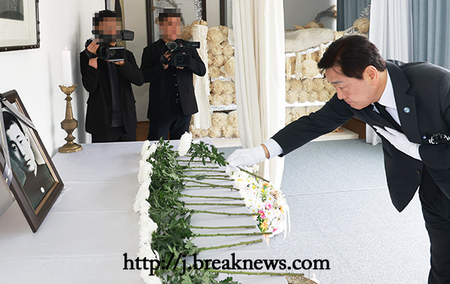
▲ 북한 김정은 국무위원장(앞 인물). ©브레이크뉴스 |
북한 체제를 설명할 때 우리는 종종 제도와 이념에 주목한다. 그러나 체제가 실제로 유지되는 장소는 문헌이 아니라 도시다. 특히 평양은 단순한 수도가 아니라, 생존 질서가 가장 농축된 공간이다.
도시는 중립적 배경이 아니다. 평양의 도시공간은 권력을 시각화하고, 이동을 관리하며, 생활을 분절하도록 설계되어 있다. 중심에는 광장과 기념비가 놓이고, 그 주변으로 행정·주거·시장 공간이 층위적으로 배치된다. 이 구조는 시민에게 ‘어디에 있어도 중심을 의식하게 만드는’ 감각을 훈련한다.
중요한 점은, 이 공간이 시장의 확산에도 불구하고 해체되지 않았다는 사실이다. 장마당은 도시 외곽이나 틈새에서 성장했지만, 도시의 중심 질서를 대체하지는 못했다. 오히려 시장은 도시 구조 안으로 흡수되었다. 공식 동선과 비공식 동선은 분리되었고, 시민들은 그 사이를 오가는 법을 배웠다.
이 과정에서 도시는 변화의 출구가 아니라 조정 장치가 된다. 불만은 광장으로 모이지 않고, 시장과 골목으로 흩어진다. 생존은 개인화되고, 요구는 조직되지 않는다. 도시는 저항의 무대가 아니라, 위험을 분산시키는 완충 공간으로 작동한다.
 ▲자료해설 : 평양 도심 위에 설계도를 중첩해, 도시가 통제와 생존경제가 함께 작동하는 구조임을 보여준다. 이는 평양이 계획과 시장, 국가와 주민의 질서가 겹쳐진 하이브리드 공간임을 시각적으로 드러낸다. ©브레이크뉴스 |
그래서 평양은 체제를 배반하지 않는다. 그것은 체제가 특별히 강해서가 아니라, 도시 자체가 사람들의 생존을 흡수하도록 설계되어 있기 때문이다. 이곳에서 사람들은 쉽게 도시를 떠나지 않는다. 떠날 이유가 없기 때문이다. 최소한, 이 안에서 살아갈 수 있기 때문이다.
평양에서 체제는 명령으로 유지되지 않는다. 공간 속에서 학습된 생활 감각으로 유지된다. 이것이 바로 도시가 생존경제를 고정하는 방식이다.
다음 질문은 자연스럽다. 이 도시 안에서, 사람들은 어떤 규칙을 따라 움직이는가. 그 답은 ‘하나의 도시, 두 개의 도시’라는 구조에서 드러난다. <이 칼럼은 필자의 『평양 하이브리드 생존경제』 연구의 일부이다.>
*필자/곽인옥 교수
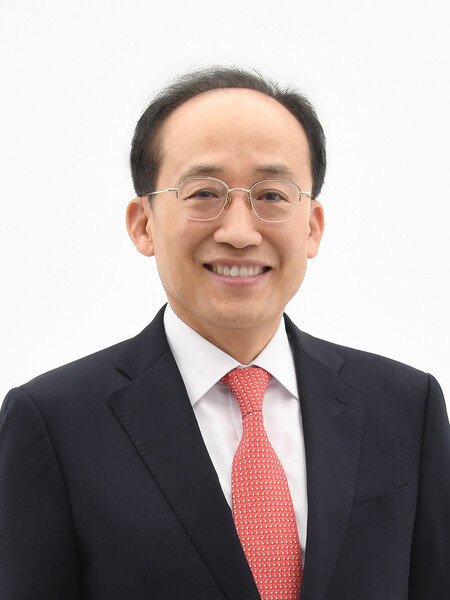
 ▲필자/ 곽인옥 교수. ©브레이크뉴스 |
*아래는 위 기사를 '구글 번역'으로 번역한 영문 기사의 [전문]입니다. '구글번역'은 이해도 높이기를 위해 노력하고 있습니다. 영문 번역에 오류가 있을 수 있음을 전제로 합니다.<*The following is [the full text] of the English article translated by 'Google Translate'. 'Google Translate' is working hard to improve understanding. It is assumed that there may be errors in the English translation.>
Why Don't North Korean Cities Betray the System?... "How Pyongyang Secures a Subsistence Economy"
- Professor Kwak In-ok
Data Commentary: By overlaying a blueprint over Pyongyang's downtown area, we demonstrate how the city's structure is one where control and a subsistence economy coexist. This visually reveals Pyongyang as a hybrid space where planning and markets, state and resident order, overlap.
When explaining the North Korean system, we often focus on institutions and ideology. However, the place where the system is actually maintained is not literature, but the city. Pyongyang, in particular, is not simply a capital city; it is a space where the subsistence order is most concentrated.
The city is not a neutral backdrop. Pyongyang's urban space is designed to visualize power, manage movement, and segment life. At the center are squares and monuments, with administrative, residential, and market spaces arranged in layers around them. This structure trains citizens to be conscious of the center, no matter where they are.
The crucial point is that this space has not been dismantled despite the expansion of the market. Markets grew on the outskirts and in the niches of the city, but they failed to replace the central order of the city. Instead, the market was absorbed into the urban fabric. Official and unofficial routes were separated, and citizens learned to navigate between them.
In this process, the city became not an outlet for change, but a mechanism for coordination. Discontent did not gather in squares, but dispersed into markets and alleys. Survival became individualized, and demands became unorganized. The city did not function as a stage for resistance, but as a buffer zone that dispersed risk.
Therefore, Pyongyang did not betray the system. This was not because the system was particularly strong, but because the city itself was designed to absorb people's survival. People here do not easily leave the city. They have no reason to leave. At the very least, they can survive within it.
In Pyongyang, the system is not maintained by command. It is sustained by a learned sense of living within the space. This is how the city solidifies its survival economy.
The next question is natural: What rules do people follow within this city? The answer is revealed in the structure of "one city, two cities." <This column is part of the author's research on "Pyongyang's Hybrid Subsistence Economy.">
*Author/Professor Kwak In-ok