▲ 자료해설 : 체제를 유지하는 사람들: 개인상점의 변화 국영상점은 제도적 외피로 남고 실제 유통과 판매는 개인 상인이 담당하면서 상점의 개인화가 진행되었다. 이는 국가 통제와 시장 활동이 공존하는 평양 상업 구조의 변화를 보여준다.©곽인옥 교수 |
 ▲자료해설 : 상점은 사라지지 않고 변했다 국영상점은 제도적 형식을 유지한 채 실제 상품 조달과 판매 기능이 개인 상인에게 이동하는 구조로 재편되었다. 이러한 기능 분업은 국가 형식과 시장 생활이 결합된 하이브리드 상업 구조를 형성한다. ©곽인옥 교수 |
 ▲ 자료해설 : 상점의 진화, 3단계 변화 북한 상점은 배급 전달 공간에서 국영·시장 이중 구조를 거쳐, 형식은 국영이지만 실제 운영은 시장 논리에 의존하는 구조로 변화하였다. 이는 계획경제 틀 속에서 시장 기능이 점진적으로 흡수된 과정을 보여준다. ©곽인옥 교수 |
북한, 평양의 상점은 사라지지 않았다. 대신 기능을 바꾸었다. 김정은 시대의 상점 변화는 소유의 전환이 아니라 기능의 이동으로 요약된다. 국영상점은 남아 있지만, 생활을 책임지는 역할은 개인상점으로 이동했다. 하나는 형식을, 다른 하나는 생존을 맡는 분업 구조가 정착된 것이다.
김일성 시대의 국영상점은 배급 체계의 연장이었다. 가격은 국정가격으로 고정되었고, 상점은 선택의 공간이 아니라 분배의 종착지였다. 장사는 행정의 일부였으며, 시장은 주변부에 머물렀다.
김정일 시기에 들어 이 구조는 처음으로 균열된다. 하나의 상점 안에 **국영상점반(국정가격)**과 **수매상점반(시장가격)**이 공존하는 이중 구조가 등장했다. 이는 통제를 유지하면서도 현실을 흡수하기 위한 절충이었다. 같은 공간에서 두 개의 가격이 동시에 존재했고, 국정가격은 상징으로, 시장가격은 생존의 언어로 작동했다.
김정은 시대에 들어서면서 이 절충은 한 단계 더 나아간다. 오늘날 평양에서 순수한 의미의 국영상점은 전체 상점의 약 10% 내외에 불과하다. 그마저도 실질적 판매 기능은 극히 제한적이다. 국정가격이 실제로 적용되는 품목은 된장·고추장·간장처럼 상징성이 강한 일부 생필품에 국한된다.
그 외 대부분의 상품에 붙은 국정가격은 거래를 위한 가격이 아니다. 판매용이 아니라 전시·선전용 가격에 가깝다. 실제로 물건을 구입하려면 국정가격이 아니라 시장가격보다 약간 낮은 수준의 실거래 가격을 별도로 지불해야 한다. 국정가격은 더 이상 교환 규칙이 아니라, 국가가 가격 결정권을 ‘가지고 있다는 기억’을 유지하는 장치다.
형식상 국영상점으로 남아 있는 다수의 상점도 실질적으로는 개인상점이다. 명의만 기업·기관·단체 소속일 뿐, 자본 투자·물건 조달·손익 책임은 개인이 부담한다. 국가는 간판과 소속만 제공하고, 운영은 시장에 맡긴다. 김정은 시대의 핵심 변화는 여기에 있다.
더 나아가 개인은 단순한 임차인이 아니라 직접 자본을 투자해 건물을 짓고 상점을 운영하는 주체가 되었다. 토지는 국가 소유로 남아 있지만, 건물 건설 비용과 내부 설비, 상품 조달은 개인 책임이다. 상점은 배정 대상이 아니라 투자 대상이 되었고, 개인상점화는 일시적 현상이 아니라 구조로 고착되었다.
이 개인상점화는 무작위적 확산이 아니라 특화와 분화의 경로를 밟았다. 무엇이든 파는 종합상점은 줄어들고, 한 품목에 집중하는 상점이 늘어났다. 가전, 의류, 신발, 잡화, 담배, 술, 연탄, 식료품 등 기능별 상점이 지역 단위로 고정된다. 위험을 줄이고, 신뢰를 축적하는 방식이다.
이 과정에서 평성은 결정적 역할을 한다. 평성은 중국에서 원자재를 들여와 북한 내부에서 가공하는 전국 최대의 가공제품 생산지이자 도매 거점으로 자리 잡았다. 의류, 신발, 과자·사탕, 담배, 술, 두부 등 다수의 생활필수품이 평성에서 만들어진다. 그 이유는 명확하다. 중국 완제품보다 50~60% 저렴하기 때문이다.
평양 주민 모두가 중산층 이상은 아니다. 오히려 경제적으로 빠듯한 서민층이 다수다. 이들은 품질보다 가격을 우선한다. 그 결과 지역별 소비 구조는 뚜렷하게 갈린다.
중구역·모란봉구역처럼 비교적 생활수준이 높은 지역에서는 중국산 제품 70%, 평성 가공품 30% 정도의 비율을 보인다. 반면 동대원구역·선교구역 같은 서민 지역에서는 **평성 가공품이 80~90%, 중국산은 10~20%**에 그친다. 평성은 평양의 계층 분화를 흡수하는 완충 지대다.
이 구조는 중국과 베트남의 국영–민영 전환과 중요한 차이를 보인다. 중국과 베트남에서는 국영 상업이 점진적으로 민영화되며 제도권 시장으로 흡수되었다. 반면 북한에서는 국영상점의 형식은 유지된 채, 기능만 개인에게 이전된다. 제도화 대신 관리 가능한 비공식화가 선택된 것이다.
그 결과 평양의 상점 체계는 붕괴도, 완전한 시장화도 아닌 중간 형태에 도달했다. 국영상점은 체제의 얼굴을 담당하고, 개인상점은 생활을 책임진다. 통제는 유지되고, 생존은 시장이 맡는다. 이것은 실패가 아니라 분업의 완성이다.
이 변화의 중심에는 체제를 바꾸려는 사람들이 없다. 다만 오늘을 넘기기 위해 가장 안전한 얼굴을 선택하는 사람들이 있을 뿐이다. 국영상점의 간판, 개인상점의 특화, 평성 가공품의 저가 공급은 그렇게 서로를 보완하며 평양의 하루를 유지한다.
이것이 김정은 시대 **평양 하이브리드 생존경제(PHSE)**의 상점 구조다. 국가는 물러났지만 사라지지 않았고, 시장은 확장되었지만 제도 밖에 머문다. 체제는 무너지지 않는다. 대신, 이렇게 조용히 재배치된다.
■ 제30회 핵심요약 (Analytical Summary)
Analytical Essays : The People Who Keep the System Running ㉒
개인상점의 변화 : 국영상점은 어떻게 개인화되었는가.
1. 핵심 질문 (Core Question)
북한에서 국영상점이 유지되는 상황에서, 개인상점은 어떻게 체제 내부로 흡수되어 평양의 일상 유통을 지탱하게 되었는가?
2. 주요 발견 (Key Findings)
김정은 시대에 국영상점은 약 10% 수준만 실질적으로 존속하며, 대부분은 명의만 국가·기관 소속인 사실상 개인상점으로 전환되었다.
국정가격은 판매 기준이 아니라 상징적·선전적 가격으로 기능하며, 실제 거래는 시장가격 논리로 이루어진다.
개인상점은 종합형에서 품목 특화형으로 분화되었고, 지역별로 기능 지도가 고정되었다.
평성은 중국산 원자재를 활용한 저가 가공제품의 전국적 생산·도매 거점으로, 평양의 계층별 소비 구조를 흡수한다.
3. 비교적 함의 (Comparative Implications)
중국과 베트남은 국영 상업이 민영화되어 제도권 시장으로 흡수되었지만,
북한은 국영상점의 형식은 유지한 채 기능만 개인에게 이전하는 독자적 경로를 선택했다.
이는 시장화가 아니라 관리 가능한 비공식화의 구조다.
4. 이론적 함의 (Theoretical Implications)
김정은 시대의 상점 구조는 국가 후퇴와 시장 확장의 결과가 아니라, **통치 비용을 개인에게 이전한 하이브리드 생존경제(PHSE)**의 핵심 장치다.
국가는 상점의 운영을 내려놓았지만, 체제의 얼굴은 유지한다.
생존은 시장이 담당하고, 통치는 형식으로 남는다.
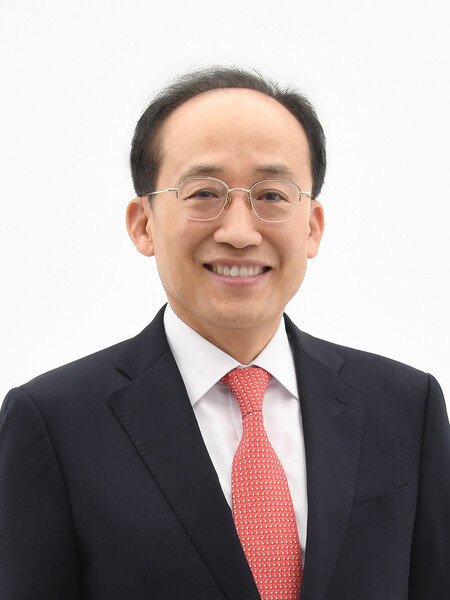
 ▲ 필자/곽인옥 교수. ©브레이크뉴스 |
5. 한 문장 요약 (One-Sentence Summary)
김정은 시대의 평양 상점은 국영상점의 형식을 유지한 채 기능을 개인에게 이전함으로써, 통치와 생존을 분업화한 하이브리드 유통 질서를 완성했다.
▶ 『Kwak’s Law of Hybrid Survival (PHSE) When the state cannot provide survival, society invents a hybrid economy to keep the system alive.』
<본 글은 필자의 【평양 하이브리드 생존경제 (PHSE)】 연구의 일부로, 장기간 현장 연구와 축적된 자료에 기반한 분석이다. 본문에 제시된 개념과 구조는 필자의 연구 성과임을 밝힌다.>
*필자/곽인옥 교수.
*아래는 위 기사를 '구글 번역'으로 번역한 영문 기사의 [전문]입니다. '구글번역'은 이해도 높이기를 위해 노력하고 있습니다. 영문 번역에 오류가 있을 수 있음을 전제로 합니다.<*The following is [the full text] of the English article translated by 'Google Translate'. 'Google Translate' is working hard to improve understanding. It is assumed that there may be errors in the English translation.>
North Korea, The People Maintaining the System - 22... “The Personalization of State-Owned Stores”
- Professor Kwak In-ok
Commentary: The People Maintaining the System: Changes in Private Stores
The personalization of stores has progressed as state-owned stores remain merely an institutional shell while actual distribution and sales are handled by private merchants. This demonstrates a change in Pyongyang’s commercial structure, where state control and market activities coexist.
Commentary: Stores Did Not Disappear, They Changed
State-owned stores have been reorganized into a structure where the functions of actual product procurement and sales have shifted to private merchants, while maintaining their institutional form. This division of labor forms a hybrid commercial structure that combines state forms with market life.
Commentary: The Evolution of Stores, Three Stages of Change
North Korean stores have evolved from a space for distribution delivery through a dual state-run and market structure to a structure where the form is state-run but actual operations rely on market logic. This illustrates the process of market functions being gradually absorbed within the framework of a planned economy.
Stores in Pyongyang have not disappeared. Instead, they have changed their functions. The changes in stores during the Kim Jong-un era can be summarized not as a shift in ownership, but as a shift in function. While state-run stores remain, the role of providing for the livelihood has shifted to private shops. A division of labor structure has taken root, where one handles the formalities and the other the survival.
During the Kim Il-sung era, state-run stores were an extension of the rationing system. Prices were fixed at state-controlled rates, and the shops were not spaces of choice but final destinations for distribution. Trading was part of the administration, and the market remained on the periphery.
Entering the Kim Jong-il era, this structure began to crack for the first time. A dual structure emerged where a **state-run store section (state-controlled prices)** and a **purchasing store section (market prices)** coexisted within a single store. This was a compromise designed to absorb reality while maintaining control. Two prices existed simultaneously in the same space, with state-controlled prices functioning as a symbol and market prices as the language of survival.
Entering the Kim Jong-un era, this compromise takes a step further. Today in Pyongyang, state-run stores in the truest sense account for only about 10% of all shops. Even then, their actual sales function is extremely limited. The items to which state-controlled prices are actually applied are limited to certain daily necessities with strong symbolic significance, such as soybean paste, red pepper paste, and soy sauce.
The state-controlled prices attached to most other goods are not prices intended for actual transactions. They are closer to prices for display or promotion than for sale. To actually purchase an item, one must pay a separate actual transaction price, which is slightly lower than the market price, rather than the state-controlled price. State-controlled prices are no longer rules of exchange, but rather a mechanism to maintain the ‘memory’ that the state holds the power to determine prices.
Many shops that remain as state-run stores in form are, in reality, private shops. Only their names belong to enterprises, institutions, or organizations; the individual bears the responsibility for capital investment, procurement of goods, and profit and loss. The state provides only the signboard and affiliation, leaving operations to the market. The core change of the Kim Jong Un era lies here.
Furthermore, individuals have become not merely tenants, but entities that invest capital directly to construct buildings and operate shops. While the land remains state-owned, the cost of building construction, interior facilities, and product procurement are the responsibility of the individual. Shops became targets of investment rather than allocation, and the privatization of shops became entrenched as a structural trend rather than a temporary phenomenon.
This privatization of shops followed a path of specialization and differentiation rather than random diffusion. General stores selling everything decreased, while shops focusing on a single product category increased. Functional shops—such as those selling home appliances, clothing, shoes, miscellaneous goods, cigarettes, alcohol, coal briquettes, and food—became fixed at the regional level. This is a method to reduce risk and build trust.
Pyongsong plays a decisive role in this process. Pyongsong has established itself as the nation's largest production site for processed goods and a wholesale hub, importing raw materials from China and processing them within North Korea. A wide range of daily necessities, including clothing, shoes, snacks and candy, cigarettes, alcohol, and tofu, are manufactured in Pyongsong. The reason is clear: they are 50 to 60 percent cheaper than finished products from China.
Not all residents of Pyongyang belong to the middle class or higher. Rather, the majority are working-class people facing economic hardship. They prioritize price over quality. As a result, consumption structures vary distinctly by region. In areas with relatively high living standards, such as Jung-gu and Moranbong-gu, Chinese products account for about 70%, while Pyongsong processed goods make up about 30%. Conversely, in working-class areas like Dongdaewon-gu and Seonkyo-gu, Pyongsong processed goods account for 80–90%, while Chinese products remain at only 10–20%. Pyongsong serves as a buffer zone that absorbs the social stratification of Pyongyang.
This structure shows a significant difference from the state-to-private transitions in China and Vietnam. In China and Vietnam, state-run commerce was gradually privatized and absorbed into the institutional market. In contrast, in North Korea, the form of state-run stores is maintained, while only their functions are transferred to individuals. Instead of institutionalization, manageable informalism has been chosen.
As a result, Pyongyang's store system has reached an intermediate form, neither a collapse nor complete marketization. State-run stores serve as the face of the system, while private stores are responsible for livelihood. Control is maintained, while survival is handled by the market. This is not a failure, but the completion of the division of labor.
At the center of this change are not people seeking to change the system. However, there are simply those who choose the safest face to get through the day. The signboards of state-run stores, the specialization of private shops, and the low-cost supply of Pyongsong processed goods complement each other in this way, sustaining Pyongyang's daily life.
This is the shop structure of the **Pyongyang Hybrid Survival Economy (PHSE)** in the Kim Jong-un era. The state has withdrawn but has not disappeared, and the market has expanded but remains outside the system. The system does not collapse. Instead, it is quietly reorganized in this way.
■ 30th Key Summary (Analytical Summary)
Analytical Essays: The People Who Keep the System Running 22
Changes in Private Shops: How Did State-Run Stores Become Personalized?
1. Core Question
In a situation where state-run stores are maintained in North Korea, how did private shops become absorbed into the system to sustain Pyongyang's daily distribution? 2. Key Findings
In the Kim Jong Un era, only about 10% of state-run stores actually remain in existence; most have been converted into de facto private shops, with their nominal affiliation with the state or institutions remaining.
State-controlled prices function as symbolic and propaganda prices rather than sales standards, while actual transactions are conducted based on market price logic.
Private shops have diversified from general-purpose to product-specialized models, and their functional maps have become fixed by region.
Pyongsong serves as a nationwide production and wholesale hub for low-cost processed goods utilizing Chinese raw materials, absorbing the class-based consumption structure of Pyongyang.
3. Comparative Implications
While state-run commerce in China and Vietnam was privatized and absorbed into the institutional market,
North Korea chose a unique path of transferring only the functions to individuals while maintaining the form of state-run stores.
This represents a structure of manageable informalization, rather than marketization. 4. Theoretical Implications
The store structure of the Kim Jong Un era is not the result of state retreat and market expansion, but rather a core mechanism of the **Hybrid Survival Economy (PHSE)** that transfers governance costs to individuals.
The state has relinquished control over store operations, yet maintains the face of the system.
Survival is handled by the market, while governance remains merely a formality.
5. One-Sentence Summary
Pyongyang stores in the Kim Jong Un era have completed a hybrid distribution order that divides governance and survival by transferring functions to individuals while maintaining the form of state-run stores.
▶ 『Kwak’s Law of Hybrid Survival (PHSE) When the state cannot provide survival, society invents a hybrid economy to keep the system alive.』
<This article is part of the author’s research on the 【Pyongyang Hybrid Survival Economy (PHSE)】 and is an analysis based on long-term field research and accumulated data. The concepts and structures presented in this text are the author's own research findings.>
*Author: Professor Kwak In-ok.