브레이크뉴스 김충열 정치전문기자 = 오는 4월 2일(목)부터 3일(금요일)까지 에마뉘엘 마크롱 프랑스 대통령이 서울을 방문해 이재명 대통령과 한불정상회담을 개최할 예정이다.
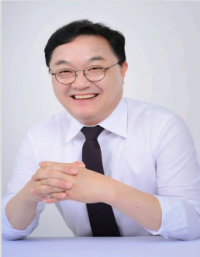
 ▲ 정성장 부소장은 “프랑스의 최신형 ‘쉬프랑급’ 잠수함 기술과 세계 최대 규모의 ‘라아그(La Hague)’ 재처리 시설 노하우를 결합한다면, 한국은 고질적인 사용후핵연료 포화 문제 해결과 동시에 독자적인 핵잠수함 함대를 건설할 수 있다”고 분석했다. © 사진출처, MBC뉴스/ 김충열 정치전문기자 |
이에 에마뉘엘 마크롱 프랑스 대통령의 방한과 한불 정상회담을 앞두고, 한국이 숙원 사업인 핵추진잠수함(SSN) 건조와 핵연료주기(농축·재처리) 자립화를 달성하기 위해 프랑스와 파격적인 ‘빅딜’을 추진해야 한다는 전략 보고서가 나왔다.
세종연구소 정성장 부소장은 최근 세종 포커스에 발표한 논문을 통해 미 트럼프 2기 행정부의 ‘부담 이전(Burden-shifting)’ 전략에 대응하여 한국이 전략적 자율성을 확보하기 위한 ‘한불 포괄적 전략 동반자 관계 구축 로드맵’을 공개했다.
https://www.youtube.com/watch?v=jNA7mZPQ20Y&t=15s
https://www.youtube.com/watch?v=WHV_n9Yz4TM&t=132s
https://www.youtube.com/watch?v=OvRcEqsj1Sg&t=96s
왜 프랑스인가? ‘미국 규제(ITAR) 없는 LEU 기술’
보고서는 프랑스를 한국의 최적 파트너로 꼽았다. 프랑스는 서방 국가 중 유일하게 저농축우라늄(LEU, 20% 미만)을 연료로 사용하는 핵추진잠수함 기술을 보유하고 있다. 이는 미국·영국이 사용하는 고농축우라늄(HEU)과 달리 국제적 비확산 기준에 부합하며, 무엇보다 미국의 국제무기거래규정(ITAR)으로부터 자유로워 기술 이전의 자율성이 높다는 강점이 있다.
정 부소장은 “프랑스의 최신형 ‘쉬프랑급’ 잠수함 기술과 세계 최대 규모의 ‘라아그(La Hague)’ 재처리 시설 노하우를 결합한다면, 한국은 고질적인 사용후핵연료 포화 문제 해결과 동시에 독자적인 핵잠수함 함대를 건설할 수 있다”고 분석했다.
한국은 현재 24기의 원전을 운영하면서 약 18,000톤 이상의 사용후핵연료를 보관하고 있으며, 이 양은 계속 증가하고 있다. 각 원전 부지의 저장 용량은 2030년대 초반 한계에 도달할 전망이다. 한빛(영광) 원전은 2030년, 한울(울진)과 고리 원전은 2031~2032년경 포화될 것으로 예상된다. 프랑스와의 협력은 이 시급한 문제를 해결하는 동시에, 한국의 핵연료주기 자립화라는 장기 목표를 달성하는 데 결정적인 기여를 할 수 있다.
‘기브 앤 테이크’ 전략 : 韓 방산 생산력과 佛 기술의 교환
프랑스의 핵심 기술을 끌어내기 위한 ‘상응 조치’로 보고서는 세 가지 카드를 제시했다.
첫째, 방산 공급망 강화 : 러-우 전쟁으로 포탄 부족에 시달리는 프랑스에 한국의 자동화된 탄약 생산 라인과 MCS(모듈형 장약) 기술을 제공.
둘째, 조선업 현대화 및 MR O: 프랑스 해군의 유지·보수·정비(MRO) 시장에 한국의 디지털 조선 기술을 투입, 프랑스를 유럽 내 함정 정비 허브로 육성.
셋째, 원전 건설 지원 : 프랑스 차세대 원자로(EPR2) 프로젝트에 한국의 숙련된 시공 인력과 기자재 공급망을 투입해 공기 단축 및 비용 절감 기여 등을 제시했다.
 ▲ 정성장 부소장은 “2026년 수교 140주년을 맞는 양국이 ‘자주 국방’의 가치를 공유하며 연대한다면, 한국은 아시아의 새로운 전략적 자율성 모델을 완성하여 ‘자주적 국방’의 가치를 실현하는 역사적 쾌거가 될 것이다.”고 전망했다. © 김충열 정치전문기자 |
2033년 핵잠 함대 운용... 4단계 추진 로드맵
정 부소장은 구체적인 단계별 추진안도 내놓았다.
1단계(2026) : 한불정상회담을 통한 ‘포괄적 전략 동반자 관계’ 선포 및 핵잠 협력 의향서(LOI) 체결.
2단계(2027~28) : 한불 원자력협정 개정 및 LEU 해군 원자로 공동 설계 착수.
3단계(2029~32) : 한국형 핵잠수함 1번함 건조 착수 및 탄약 합작공장 가동.
4단계(2033~) : 6~8척 규모의 핵잠 함대 운용 및 ‘준동맹’ 수준의 전략 대화 제도화 등을 제안했다.
미국과의 관계 설정이 관건...투명하게 소통해야
보고서는 이러한 한불 협력이 미국의 이익과 충돌하지 않는다는 점을 강조했다. 정 부소장은 “LEU 핵잠 기술은 미국이 보유하지 않은 분야이므로 미국과의 경쟁이 아닌 보완 관계”라며, “경주 한미 정상회담의 합의 정신을 실질적으로 구현하기 위해 프랑스라는 파트너가 반드시 필요함을 미국과 사전에 투명하게 소통해야 한다”고 조언했다.
정성장 부소장은 끝으로 “2026년 수교 140주년을 맞는 양국이 ‘자주 국방’의 가치를 공유하며 연대한다면, 한국은 아시아의 새로운 전략적 자율성 모델을 완성하여 ‘자주적 국방’의 가치를 실현하는 역사적 쾌거가 될 것이다.”고 전망했다. hpf21@naver.com
* 아래는 위 기사를 '구글 번역'으로 번역한 영문 기사의 [전문]입니다. '구글번역'은 이해도 높이기를 위해 노력하고 있습니다. 영문 번역에 오류가 있을 수 있음을 전제로 합니다.
*The following is [the full text] of the English article translated by 'Google Translate'. 'Google Translate' is working hard to improve understanding. It is assumed that there may be errors in the English translation.
Jeong Seong-jang, Deputy Director of the Sejong Institute: “Combining ‘French Technology + Korean Production Capabilities’... Must Secure Nuclear-Powered Submarine and Reprocessing Capabilities”
‘Korea-France Security Big Deal’ on the Occasion of Macron’s Visit... Roadmap Presented to Usher in the Era of Korean-Style Nuclear Submarines
Step-by-Step Roadmap for the Exchange of Korean Defense Production Capabilities and French Nuclear and Submarine Technologies
Break News, Political Specialist Reporter Kim Choong-lyoul = French President Emmanuel Macron is scheduled to visit Seoul from Thursday, April 2 to Friday, April 3 to hold a Korea-France Summit with President Lee Jae-myung.
In anticipation of President Macron’s visit and the Korea-France Summit, a strategic report has been released suggesting that Korea must pursue an unconventional ‘Big Deal’ with France to achieve its long-cherished goals of constructing nuclear-powered submarines (SSN) and achieving self-reliance in the nuclear fuel cycle (enrichment and reprocessing).
In a paper recently published in *Sejong Focus*, Deputy Director Jeong Seong-jang of the Sejong Institute unveiled a "Roadmap for Establishing a Comprehensive Strategic Partnership between Korea and France" aimed at securing strategic autonomy for Korea in response to the U.S. Trump administration's second term "Burden-shifting" strategy.
Why France? "LEU Technology Free from U.S. Regulations (ITAR)"
The report identified France as Korea's optimal partner. France is the only Western nation to possess the technology for nuclear-powered submarines that use low-enriched uranium (LEU, less than 20%) as fuel. Unlike the highly enriched uranium (HEU) used by the U.S. and the U.S., this technology complies with international non-proliferation standards. Above all, it holds the strength of high autonomy in technology transfer as it is free from the U.S. International Trade in Arms Regulations (ITAR).
Deputy Director Jeong analyzed, “If Korea combines the technology of France’s latest ‘Suffren-class’ submarines with the know-how of the world’s largest reprocessing facility, ‘La Hague,’ it can resolve the chronic problem of spent nuclear fuel saturation while simultaneously building an independent nuclear submarine fleet.”
Korea currently operates 24 nuclear power plants and stores over 18,000 tons of spent nuclear fuel, a volume that continues to increase. Storage capacity at each plant site is expected to reach its limit in the early 2030s. The Hanbit (Yeonggwang) plant is projected to reach saturation in 2030, while the Hanul (Uljin) and Gori plants are expected to reach saturation around 2031–2032. Cooperation with France can resolve this urgent issue while making a decisive contribution to achieving Korea’s long-term goal of self-reliance in the nuclear fuel cycle.
‘Give and Take’ Strategy: Exchange of Korean Defense Production Capabilities with French Technology
The report presented three strategies as ‘corresponding measures’ to extract core French technologies.
First, strengthening the defense supply chain: Providing Korea’s automated ammunition production lines and MCS (Modular Charge System) technology to France, which is suffering from a shortage of artillery shells due to the Russo-Royal War.
Second, shipbuilding modernization and MR-O: Introducing Korea’s digital shipbuilding technology into the French Navy’s Maintenance, Repair, and Overhaul (MRO) market to foster France as a ship maintenance hub within Europe.
Third, support for nuclear power plant construction: Proposing contributions to shortening construction time and reducing costs by deploying Korea’s skilled construction workforce and equipment supply chain to France’s next-generation reactor (EPR2) project.
Operation of a Nuclear Submarine Fleet by 2033... A 4-Stage Implementation Roadmap
Deputy Director Jeong also presented specific step-by-step implementation plans. Phase 1 (2026): Proclamation of a ‘Comprehensive Strategic Partnership’ through the Korea-France Summit and signing of a Letter of Intent (LOI) for nuclear submarine cooperation.
Phase 2 (2027–28): Revision of the Korea-France Nuclear Cooperation Agreement and commencement of joint design for the LEU naval reactor.
Phase 3 (2029–2032): Commencement of construction for the first Korean-type nuclear submarine and operation of a joint ammunition factory.
Phase 4 (2033–): Proposed the operation of a nuclear submarine fleet of 6 to 8 vessels and the institutionalization of strategic dialogue at the level of a ‘quasi-alliance.’
Establishing a Relationship with the United States is Key
The report emphasized that such Korea-France cooperation does not conflict with U.S. interests. Deputy Director Jeong advised, “Since LEU nuclear submarine technology is a field not possessed by the United States, the relationship with the U.S. is complementary rather than competitive,” adding, “We must communicate transparently with the United States in advance that a partner like France is absolutely necessary to practically realize the spirit of the agreement reached at the Korea-U.S. Summit in Gyeongju.”
Finally, Deputy Director Jung Sung-jang predicted, “If the two countries, marking the 140th anniversary of diplomatic relations in 2026, share the value of ‘self-reliant defense’ and stand in solidarity, it will be a historic triumph for Korea to complete a new model of strategic autonomy in Asia and realize the value of ‘self-reliant defense.’” hpf21@naver.com