지금 중동에서 벌어지고 있는 이란 전쟁은 명분 있는 전쟁이 아니다. 이 충돌은 이스라엘의 생존과 세계 패권국으로서의 미국의 전략적 필요가 결합해 촉발된 것이다. 더 본질적으로는 트럼프의 오판에서 출발했다. 단기간의 속전으로 끝낼 수 있다는 판단, 그리고 이란을 쉽게 굴복시킬 수 있다는 착각이었다. 그러나 이 판단은 이란의 체제 결속력, 비대칭 전력 운용 능력, 그리고 장기전에 대한 전략적 내성을 과소평가한 데서 비롯된 것이다. 이란은 중동의 이라크나 아프가니스탄, 또는 라틴아메리카의 베네수엘라나 쿠바와는 본질적으로 다르다. 국가 체제와 군사 구조, 지정학적 위상이 모두 상이할 뿐 아니라 중동 질서를 형성하는 세 축 가운데 하나를 이루는 지역 강국이다.
 ▲ 이재명 대통령(왼쪽)과 도널드 트럼프 미국 대통령이 2025.년 10월29일 경북 경주박물관에서 열린 공식 환영식에서 의장대를 사열하고 있다. 2025.10.29. ©뉴시스 |
그 결과 전쟁은 이미 방향이 바뀌었다. 단기 속전은 사라지고, 장기 비대칭 소모전이 시작됐다. 이란은 정면 충돌 대신 미사일과 드론으로 걸프 지역 미군 기지와 해상 교통로를 압박하고 있다. 전쟁은 승패를 가르는 단계가 아니라, 시간과 비용을 누적시키는 단계로 들어섰다. 이 구조에서 가장 먼저 무너지는 것은 전장이 아니라 경제다.
그리고 그 충격을 가장 먼저, 가장 깊게 받는 국가가 대한민국이다. 이 점부터 분명히 해야 한다. 한국은 이 전쟁의 당사자가 아니다. 그럼에도 최대 피해자가 된 것이다.
충격은 이미 세 방향에서 동시에 발생하고 있다.
첫째, 환율이 흔들린다.
원화 약세는 단순한 금융 문제가 아니다. 한국은 에너지를 달러로 수입한다. 환율 상승은 곧 국가 전체 비용 상승이다.
둘째, 유가가 오른다.
원유와 LNG의 상당 부분을 중동에 의존하는 구조에서 에너지 비용 상승은 전력, 운송, 제조로 즉각 확산된다.
셋째, 물류가 막힌다.
해상 항로가 불안정해지면 운임이 오르고 납기가 지연된다. 수출로 먹고사는 한국 경제에는 치명적이다.
한국은 단순한 유가 피해국이 아니다. 환율, 에너지, 물류가 동시에 무너지는 복합 충격 국가다. 그럼에도 지금 한국은 또 다른 압박을 받고 있다. 동맹의 압박이다. 트럼프의 기준은 명확하다. 군대 파견을 통해 기여하지 않으면 발언권도 주지 않겠다는 것이다. 그러나 이 기준을 한국에 그대로 적용하는 것은 과도하다.
한미상호방위조약은 1953년 체결된 한반도 방어를 위한 집단방위 조약이다. 이 조약은 대한민국의 영역 또는 태평양 지역에서의 무력 공격에 공동 대응하는 것을 핵심으로 하며, 적용 범위는 한반도와 그 주변 안보 환경에 한정된다. 미국이 수행하는 모든 군사 작전에 자동으로 참여하도록 규정한 조항은 없다. 또한 각 당사국은 헌법과 국내 절차에 따라 대응하도록 되어 있어, 군사 개입 여부는 주권적 판단에 속한다. 이는 한국이 중동과 같은 외부 분쟁에 대해 독자적이고 전략적인 결정을 내릴 수 있음을 의미한다.
이 구조는 북대서양조약기구(NATO)와 같은 자동 개입형 집단방위 체제와는 본질적으로 다르다. NATO는 북대서양조약 제5조에 따라 회원국 중 하나가 공격을 받을 경우 이를 전체에 대한 공격으로 간주하고 공동 대응하는 원칙을 가진다. 물론 실제 군사 개입의 방식과 수준은 각국의 정치적 판단에 따라 달라질 수 있지만, 제도적으로는 집단적 대응이 전제된 구조다.
일본도 다르다. 평화헌법 아래에서 군사적 직접 개입을 제한받는 일본은 후방 지원, 해상 보호, 정보 협력 등으로 기여 방식을 설계하며 동맹 내 입지를 유지해 왔다. 동시에 일본은 자국이 전장이 아닌 국가라는 구조적 조건 위에서 역할을 선택할 수 있었고, 이란과는 외교 채널을 통해 직접 접촉하며 협상 공간도 확보했다.
결국 동맹의 본질은 자동 참전이 아니라 선택적 기여다. 한국 역시 조약의 범위와 한반도의 안보 현실을 분명히 설명하고, 군사적 개입이 아닌 방식으로 동맹의 균형을 유지해야 한다.
더 중요한 것은 한국의 안보 현실이다. 대한민국은 전쟁이 끝난 나라가 아니다. 정전 상태일 뿐, 여전히 전시 구조 위에 있다. 북한은 핵과 생화학무기를 포함한 비대칭 전력을 기반으로, 미사일을 열세 보완 수단이 아닌 전장 설계의 핵심 수단으로 활용하는 군사 강국이다. 억지는 완결되지 않았고, 도발 가능성은 상시 존재한다. 이 조건에서 한국의 군사력은 해외로 분산될 수 있는 성격이 아니다. 한반도는 언제든 긴장이 현실로 전환될 수 있는 공간이다.
일본과 유럽은 다르다. 일본은 전쟁을 하지 않으면서도 후방 지원과 해상 보호로 동맹 내 입지를 유지한다. 유럽은 집단안보 구조 속에서 부담을 분산한다. 그러나 한국은 다르다. 자체가 전장인 국가다. 이 구조적 차이를 무시한 채 동일한 기준을 적용하는 것은 과도하다. 이 점을 이해하지 못한 채 동일한 기준을 적용한다면, 그것은 동맹이 아니라 단순한 비용 청구에 불과하다.
그리고 바로 이 지점에서 정책 공백이 드러난다. 구조는 분명한데, 대응은 보이지 않는다. 이 지점에서 이재명 정부의 책임은 무겁다. 지금 한국의 대응 방식은 침묵이다. 아무 입장도, 아무 전략도 보이지 않는다. 이대로 가면 결과는 하나다. 한국은 기여하지 않는 동맹으로 분류된다. 그 순간부터 모든 협상은 불리해진다. 방위비, 주한미군, 북핵 문제까지 연쇄적으로 영향을 받는다.
이재명 정부가 해야 할 일은 명확하다.
첫째, 트럼프를 직접 설득하라.
한국은 부담을 회피하는 동맹이 아니라, 이미 가장 위험한 전선 중 하나를 담당하고 있는 국가다. 이 현실을 정면으로 설명해야 한다.
둘째, 기여의 방식을 재정의하라.
군사적 참전이 아니라 해상 수송 안전, 에너지 공급망 보호, 정보 협력에서의 역할을 명확히 제시해야 한다. 한국은 전투국이 아니라 글로벌 공급망 안정의 핵심 이해당사국이다.
셋째, 워싱턴 권력 구조를 동시에 움직여라.
국가안보보좌관, 국무장관, 국방장관 등 핵심 라인을 총동원해 한국의 안보 현실을 체계적으로 주입해야 한다. 트럼프의 판단은 개인적이지만, 정책은 구조 속에서 굳어진다.
넷째, 이번 대응을 북핵 문제와 연결하라.
중동에서 한국이 어떤 방식으로 기여하느냐는 단순한 지역 문제가 아니다. 그것은 미국이 한국을 어떤 동맹으로 인식할 것인가를 결정한다. 기여의 방식과 수준은 곧 신뢰의 척도가 되고, 그 신뢰는 북핵 협상에서의 발언권으로 직결된다.
지금 이란 전쟁에서 전략적으로 역할을 담당하지 못하면, 한국은 ‘요청받을 때 움직이지 않는 동맹’으로 인식된다. 그렇게 되면 향후 북핵 문제에서 한국의 입장은 협상 테이블이 아니라 결과를 통보받는 위치로 밀려날 수밖에 없다. 결국 중동에서의 선택은 지역 대응이 아니라, 한반도 협상력의 선행 조건이다.
결론은 분명하다. 한국은 이 전쟁에 참전하기에는 너무 리스크가 크다. 그렇다고 침묵으로 일관하며 설득하는 노력을 게을리하면, 참전하지 않은 대가를 치르게 된다.
지금 이재명 정부가 해야 할 일은 하나다. 침묵을 끝내고, 트럼프의 판단을 바꾸는 것이다. 그렇지 않으면 한국은 비용은 내고, 결정은 못 하는 나라로 남는다.
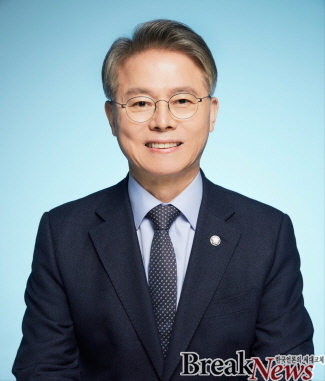
 ▲필자/ 김정기 칼럼니스트. ©브레이크뉴스 |
*필자/김정기
● 학력- 뉴욕주립대학교(Stony Brook) 정치학과 수석 졸업- 마케트대학교(Marquette) 로스쿨 법학박사- 하버드대학교(Harvard) 케네디스쿨 최고위 과정- 베이징대학교(Peking) 북한학 연구학자
● 경력
세계스마트시티기구(WeGO) 사무총장 (현) -유엔 국제전기통신연합 (UN ITU) 가상세계 및 AI 글로벌 이니셔티브 집행위원(현) -제8대 주상하이 대한민국 총영사 -2010 상하이 세계 엑스표 대한민국관 정부대표 -법무법인 대륙아주 중국 총괄 미국변호사 -동국대학교 경영전문대학원 석좌교수 –숭실사이버대학교 총장 –칼럼니스트.
● 저서
1. 대학생을 위한 거로영어연구[전 10권](거로출판사) 2. 나는 1%의 가능성에 도전한다(조선일보사) 3. 한국형 협상의 법칙(청년정신사) 4. 대한민국과 세계 이야기 (도서출판 책미듬) 5. Korea and the World (Advance Reader Copy). Jeongkeekim@naver.com
[영문 칼럼]● Persuade Trump — South Korea Is Not a Participant in the Iran War, but a Victim
(By Jeong-kee Kim, Secretary General of World Smart Sustainable Cities Organization[WeGO])
The war currently unfolding in the Middle East is not a war of legitimacy. It is a conflict triggered by the convergence of Israel’s survival and the strategic imperatives of the United States as a global hegemon. More fundamentally, it originated from the misjudgment of Donald Trump—the belief that the conflict could be concluded swiftly and that Iran could be easily subdued. This assumption underestimated Iran’s regime cohesion, its asymmetric warfare capabilities, and its strategic endurance for prolonged conflict. Iran is fundamentally different from Iraq or Afghanistan in the Middle East, or Venezuela and Cuba in Latin America. It is a regional power that constitutes one of the three pillars shaping the Middle Eastern order, with a distinct political system, military structure, and geopolitical weight.
As a result, the nature of the war has already shifted. The prospect of a short, decisive campaign has vanished, replaced by a prolonged asymmetric war of attrition. Iran is exerting pressure not through direct confrontation, but through missiles and drones targeting U.S. bases and maritime routes in the Gulf. The conflict has entered a phase where victory is no longer defined by battlefield outcomes, but by the accumulation of time and cost.
In such a structure, the first collapse occurs not on the battlefield, but in the economy.
And the country that absorbs this shock first—and most deeply—is South Korea. This point must be made clear. South Korea is not a party to this war, yet it has become one of its primary victims.
The impact is already unfolding along three simultaneous dimensions.
First, the exchange rate is destabilizing.
A weakening Korean won is not merely a financial issue. South Korea imports energy in U.S. dollars, meaning that currency depreciation directly translates into rising national costs.
Second, oil prices are rising.
Given Korea’s heavy dependence on Middle Eastern crude oil and LNG, increased energy costs immediately ripple through electricity, transportation, and manufacturing.
Third, logistics are being disrupted.
Instability in maritime routes drives up freight costs and delays shipments. For an export-driven economy like Korea, this is critical.
South Korea is not merely a country affected by higher oil prices. It is a nation facing a compound shock—currency, energy, and logistics collapsing simultaneously. Yet, despite this, Korea is now under another form of pressure: alliance pressure. Trump’s standard is clear—without troop deployment, there is no voice. However, applying this standard uniformly to Korea is excessive.
The Korea–U.S. Mutual Defense Treaty, signed in 1953, is a collective defense agreement designed for the defense of the Korean Peninsula. Its core principle is joint response to armed attacks within the territory of South Korea or the Pacific area, with its scope limited to the Korean Peninsula and its surrounding security environment. There is no clause mandating automatic participation in all U.S. military operations worldwide. Moreover, each party acts in accordance with its constitutional processes, meaning that military involvement remains a matter of sovereign decision. This allows Korea to make independent and strategic choices regarding external conflicts such as those in the Middle East.
This structure differs fundamentally from automatic collective defense systems like North Atlantic Treaty Organization (NATO). Under Article 5 of the NATO treaty, an attack on one member is considered an attack on all, establishing a principle of collective response. While the scale and method of military involvement may vary by national decision, the institutional premise is collective action.
Japan presents another model. Under its pacifist constitution, Japan has maintained its alliance position through non-combat contributions such as logistical support, maritime security, and intelligence cooperation. At the same time, Japan has preserved diplomatic channels with Iran, securing space for negotiation.
Ultimately, the essence of an alliance is not automatic military participation, but selective contribution. Korea must clearly articulate the scope of its treaty obligations and the realities of its security environment, while maintaining alliance balance through non-military means.
More importantly, Korea’s own security reality must be recognized. The Korean Peninsula is not a post-war region; it remains in a state of armistice. North Korea, equipped with nuclear and chemical capabilities and structured around asymmetric military power, continues to pose a constant threat. Deterrence is not complete, and the possibility of provocation is ever-present. Under these conditions, Korea’s military cannot be treated as deployable surplus. The peninsula remains a space where tension can escalate into conflict at any time.
Japan and Europe are fundamentally different. Japan contributes without engaging in war. Europe distributes burdens within a collective security framework. Korea, however, is itself a frontline state. Applying identical standards without acknowledging this structural difference is unreasonable. If this reality is ignored, the alliance becomes nothing more than a mechanism for cost extraction.
It is precisely at this point that a policy vacuum becomes evident. The structure is clear, but the response is absent. Here lies the heavy responsibility of Lee Jae-myung’s government. At present, Korea’s response is silence—no position, no strategy. If this continues, the outcome is inevitable: Korea will be categorized as a non-contributing ally. From that moment, all negotiations become unfavorable—defense cost-sharing, U.S. troop presence, and even the North Korea issue will be affected in sequence.
What must the government do?
First, persuade Trump directly.
Korea is not an ally avoiding responsibility—it is a nation already bearing one of the most dangerous frontlines in the world. This reality must be conveyed clearly and forcefully.
Second, redefine the mode of contribution.
Rather than military deployment, Korea should present concrete roles in maritime security, energy supply chain stabilization, and intelligence cooperation. Korea is not a combatant, but a key stakeholder in global supply chain stability.
Third, engage Washington’s power structure simultaneously.
Mobilize all key channels—National Security Advisor, Secretary of State, Secretary of Defense—to systematically embed Korea’s security reality into U.S. policymaking. Trump’s decisions may be personal, but policy is institutionalized through structure.
Fourth, link this response to the North Korea issue.
How Korea contributes in the Middle East is not merely a regional matter—it shapes how the United States perceives Korea as an ally. The mode and level of contribution become a measure of trust, and that trust directly translates into negotiating power on North Korea.
If Korea fails to play a strategic role in this war, it risks being perceived as an ally that does not act when called upon. In that case, Korea’s position in future negotiations on North Korea will shift—from a seat at the table to a position of receiving outcomes. Ultimately, the choice Korea makes in the Middle East is not a regional decision—it is a precondition for its negotiating power on the Korean Peninsula.
The conclusion is clear. The risks of military participation in this war are too great for Korea. Yet if Korea remains silent and neglects the effort to persuade, it will still pay the price of non-participation.
There is only one task before the government of South Korea: end the silence and change Trump’s judgment. Otherwise, Korea will become a country that pays the costs but makes none of the decisions.
*Author / Jeong-kee Kim
● Education
-B.A. in Political Science (Summa Cum Laude), State University of New York at Stony Brook -Doctor of Jurisprudence, Marquette University Law School -Senior Executive Program, Harvard Kennedy School -Research Scholar in North Korean Studies, Peking University
● Professional Experience
-Secretary-General, World Smart Sustainable Cities Organization (Current) -Executive Committee Member, Virtual World & AI Global Initiative, International Telecommunication Union (Current) -8th Consul General of the Republic of Korea in Shanghai -Commissioner General, Korea Pavilion, Expo 2010 Shanghai China -Senior Attorney-at-Law, DR& Aju LLC -Distinguished Chair Professor, Graduate School of Business, Dongguk University -President, Soongsil Cyber University -Columnist
● Publications
-Georo English Studies Series for College Students (Georo Publishing) -I Challenge the Possibility of One Percent (Chosun Ilbo) -The Art of K-Negotiation (Cheongnyeonjeongsin Publishing) -Korea and the World (Chaekmideum Publishing)
*Email: Jeongkeekim@naver.com