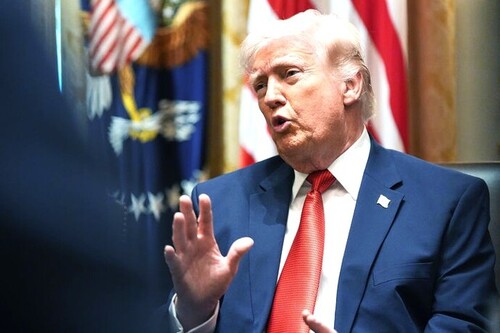
▲ 8월 1일 관세 협상 시한을 앞두고, 한국이 도널드 트럼프 미국 대통령과 무역 합의를 타결했다. 미국이 한국에 대한 상호관세를 15%로 낮추는 대가로, 수백조 원 규모의 투자를 약속한 것이 골자다. ©뉴시스 |
도널드 트럼프 미국 대통령이 31일(현지시간) 한국산 제품에 대한 새로운 무역관세율(15%)이 명시된 행정명령에 서명했다. 이미 협상을 마친 국가들에 대한 관세는 오는 7일 즉각 발효된다.
미 'CNN' 등에 따르면 트럼프 대통령은 이날 오후(현지시간) 그간 세계 주요 교역국과 진행한 무역 협상 결과를 반영해 새롭게 설정된 상호관세를 공식화하는 “상호 관세율 추가 수정” 행정명령에 서명했다.
이번 행정명령은 미국이 다른 국가들과 합의한 내용을 관계 부처가 이행하는 데 필요한 지시를 담은 절차에 해당되는 가운데 조정된 관세율은 행정명령 서명부터 7일 이후 0시 1분부터 적용한다고 명시됐다.
프랑스 'AFP 통신'은 이와 관련해 "국경세관 당국이 새 관세 체제를 시행할 시간을 보장하기 위해 관세 적용을 미뤘다"며 백악관 고위당국자 말을 인용해 보도했다.
'AFP'에 따르면 백악관은 관세율 조정 이유에 대해 "몇 국가는 미국과 의미 있는 무역·안보 합의를 하는 데 동의했거나 동의하기 직전"이라고 밝혔다.
앞서 미국과 무역 협상을 타결한 국가들 경우 일본·EU(유럽연합) 15%·베트남 20%·인도네시아·필리핀 19% 등이다.
미 백악관은 "일부 국가 경우 협상을 통해 조건을 제시했으나 트럼프 대통령 판단에 국가 비상사태를 해결하기에 충분하지 않았다"고 전했다.
특히 인도 경우 트럼프 대통령이 부과하겠다고 경고한 25%가 그대로 적용된 가운데 브라질은 트럼프 대통령이 정치적 이유로 전날 별도 행정명령을 통해 40% 추가 관세를 부과해 기존 상호관세 10%와 함께 총 50%를 적용받는다.
미국과 강하게 충돌 중인 캐나다 경우 기존 25%에서 35%로 조정된 반면 국경을 맞댄 멕시코와는 향후 90일간 관세율을 현행 25%로 유지키로 했다. 그외 협상을 타결 못한 대만은 20%,, 남아공 등엔 30% 관세율이 적용됐다.
트럼프 대통령은 이날 자신의 트루스소셜에 글에서 “방금 클라우디아 셰인바움 멕시코 대통령과 전화 회담을 성공적으로 마쳤다”며 이같이 밝힌 가운데 멕시코와의 일시휴전을 알렸다.
백악관에 따르면 일부 국가는 미국과 아예 협상 않은 가운데 관세를 피하기 위해 환적한 제품 경우 국가별 상호관세에 추가 40% 관세를 더 내야 하는 데 이는 모든 국가에 적용된다
또 백악관 측은 "무역관계에서 미국이 흑자를 기록하는 국가엔 10% 상호관세가 적용됐으며 무역 적자를 기록하는 국가엔 15% 이상 관세율이 적용됐다"고 밝혔다.
이번 행정명령 부속서에 따르면 69개 경제주체 중 관세율 10%는 영국을 비롯 3개국, 무역흑자국 가운데 최저 관세율 15%는 40개국, 15% 넘는 관세율이 적용되는 경제주체 경우 26개국 등으로 나타났다.
부속서에 없는 국가 경우 주로 미국과 교역량이 미미한 나라들로 이들에겐 10% 상호관세가 적용되는 가운데 중국·캐나다·멕시코는 별도 행정명령을 통해 관세를 부과받고 있어 이번 상호관세 행정명령엔 포함되지 않았다.
한편 한국 경우 이번 무역협상 결과 상세 내용이 아직 공개되지 않아 현재 갖은 논란이 일고 있는 가운데 특히 쌀·소고기 시장 개방 관련해 미국·한국 간 발표 내용이 상반되면서 문제가 되고 있다.
전날 대통령실(김용범 정책실장)·한국협상단은 미국과 관세 협상에서 쌀·소고기 시장 추가 개방은 없다고 발표한 가운데 송미령 농림축산식품부 장관 역시 1일 국회 법제사법위원회에 출석해 한·미 관세협상 농업 분야 관련 여야 질의에 "쌀·소고기에 대해선 추가 개방은 없다"며 같은 말을 되풀이 했다.
하지만 미국 측 발표 내용은 다르다. 전날(현지시간) 트럼프 대통령은 자신의 트루스소셜에서 "(한국은) 농산물 등을 포함한 미국산 제품을 받아들이기로 합의했다"고 언급한데다 캐롤라인 래빗 미 백악관 대변인 역시 언론 브리핑에서 이를 공식 재 확인(쌀·소고기 등 농축산물 완전 개방)시켰기 떼문이다.
굴욕적 졸속 협상 논란 역시 동시에 일고 있다. 기존 한미 FTA로 관세율이 0%이던 게 이번에 15%로 대폭 인상된 가운데 25%에서 15%로 관세율이 낮춰진 것으로 착시 현상을 불러 일으키고 있는 것이다.
여기다 대미투자펀드 3500억불(약 488조2500억) 조성과 미국산 액화천연가스(LNG) 1000억불(약 139조5000억·미 상무부 보고서엔 3년간 1500억불) 구매 약속 및 체결 등 무려 총 약 630조(환율 1400원 기준)에 더해 한국 대기업들의 추가 대미투자까지 포함하면 천문학적 수치로 자칫 감당 불능 상황까지 올 수 있다는 우려가 나오고 있다.
영문 기사의 [전문]입니다. '구글번역'은 이해도 높이기를 위해 노력하고 있습니다. 영문 번역에 오류가 있을 수 있음을 전제로 합니다.<*The following is [the full text] of the English article translated by 'Google Translate'. 'Google Translate' is working hard to improve understanding. It is assumed that there may be errors in the English translation.
US President Trump signs executive order imposing a new 15% tariff on South Korea, effective August 7th.
-kihong Kim reporter
U.S. President Donald Trump signed an executive order on the 31st (local time) specifying a new 15% tariff on South Korean products. The tariffs for countries with which negotiations have already been concluded will take effect immediately on the 7th.
According to CNN and other media outlets, President Trump signed an executive order on the afternoon of the same day (local time) titled "Additional Modifications to Reciprocal Tariff Rates," formalizing the newly established reciprocal tariff rates that reflect the results of trade negotiations with major global trading partners.
This executive order, which provides instructions for relevant agencies to implement agreements reached between the US and other countries, stipulates that the adjusted tariff rates will take effect at 00:01 on the 7th.
French news agency AFP quoted a senior White House official as saying, "The tariffs were delayed to allow border customs authorities time to implement the new tariff system."
According to AFP, the White House explained the reason for the tariff adjustments, stating, "Several countries have agreed or are close to agreeing to meaningful trade and security agreements with the United States."
Countries that previously concluded trade negotiations with the US include Japan and the EU at 15%, Vietnam at 20%, and Indonesia and the Philippines at 19%.
The White House stated, "While some countries presented conditions through negotiations, President Trump determined they were insufficient to address the national emergency."
India, in particular, was subject to the 25% tariff that President Trump threatened to impose. Brazil, for political reasons, was subject to an additional 40% tariff through a separate executive order issued the previous day. This brings the total tariff to 50%, along with the existing 10% reciprocal tariff.
Canada, a key trade conflicting with the US, saw its tariff adjusted from 25% to 35%, while its bordering Mexico will remain at 25% for the next 90 days. Taiwan, which has yet to reach an agreement, was subject to a 20% tariff, and South Africa, a 30% tariff.
President Trump announced a temporary ceasefire with Mexico in a post on his TruthSocial account that day, stating, "I just successfully concluded a phone call with Mexican President Claudia Sheinbaum."
According to the White House, some countries will face an additional 40% tariff on products transshipped to avoid tariffs without negotiating with the United States. This tariff will apply to all countries.
The White House also stated, "Countries with which the United States has a trade surplus have been subject to a 10% reciprocal tariff, while countries with a trade deficit have been subject to a tariff rate of 15% or higher."
According to the appendix to this executive order, among the 69 economic entities, three countries, including the United Kingdom, have a 10% tariff rate. Among countries with a trade surplus, 40 have a minimum tariff rate of 15%. 26 have tariff rates exceeding 15%.
Countries not included in the Annex are primarily those with minimal trade volume with the United States, and a 10% reciprocal tariff applies to them. However, China, Canada, and Mexico are subject to tariffs through separate executive orders and are therefore not included in this reciprocal tariff executive order.
Meanwhile, the details of the trade negotiations with South Korea have not yet been released, sparking controversy. The discrepancies between the US and South Korea regarding the opening of the rice and beef markets are particularly problematic.
The day before, the Office of the President (Director of Policy Kim Yong-beom) and the Korean negotiating team announced that there would be no additional opening of the rice and beef markets in the tariff negotiations with the United States, and on the 1st, Minister of Agriculture, Food and Rural Affairs Song Mei-ling also appeared before the National Assembly's Legislation and Judiciary Committee and repeated the same statement in response to questions from the ruling and opposition parties regarding the agricultural sector in the Korea-U.S. tariff negotiations, saying, "There will be no additional opening of the rice and beef markets."
However, the US announcement differs. The previous day (local time), President Trump stated on his TruSocial account that "(South Korea) has agreed to accept American products, including agricultural products," and White House Press Secretary Caroline Rabbit also officially reaffirmed this (completely opening up agricultural and livestock products such as rice and beef) in a press briefing.
Controversy is also brewing over the perceived humiliating and hasty negotiations. While the tariff rate under the existing Korea-US FTA was 0%, it was significantly increased to 15%, creating the illusion that the tariff rate was lowered from 25% to 15%.
Here, there are concerns that the total amount of approximately 630 trillion won (based on the exchange rate of 1,400 won), including the creation of a 350 billion won (approximately 488.25 trillion won) investment fund in the United States and the purchase of 100 billion won (approximately 139.5 trillion won; 150 billion won over three years according to a report from the U.S. Department of Commerce) of liquefied natural gas (LNG), as well as additional investments in the U.S. by large Korean corporations, could reach an astronomical figure that could easily become unmanageable.