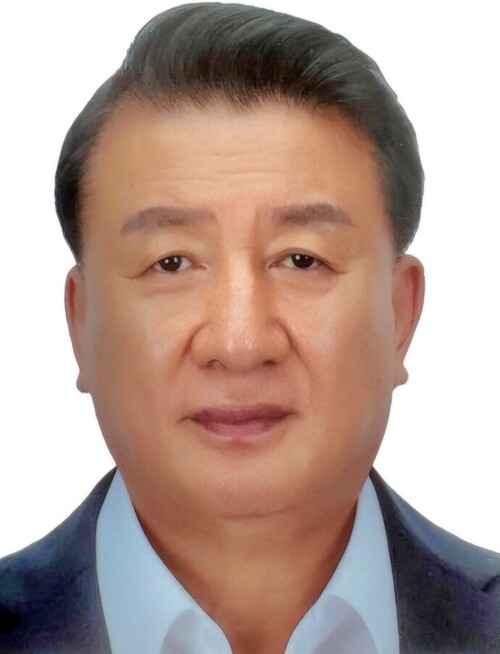
▲필자/ 곽인옥 교수. ©브레이크뉴스 |
1. 질서와 혼돈 사이, 새로운 경제 시스템의 탄생
북한은 여전히 사회주의 계획경제를 유지한다고 말하지만, 그 표면 아래서 움직이는 경제 질서는 단순하지 않다. 특히 평양은 중앙권력이 가장 깊이 자리한 공간임에도 동시에 가장 분주한 시장활동, 경제적 교환, 비공식 이권 네트워크가 뒤엉켜 있는 사회경제적 실험장이다. 이중성과 양가성. 그것은 실패한 계획경제 위에 새롭게 뿌리내린 ‘하이브리드식 생존경제’의 본질이다.
‘하이브리드’란 단순히 체제적 절충이 아닌, 모순되는 구조들이 공존하면서도 실질적으로 기능을 수행하는 복합 체계를 뜻한다. 필자(곽인옥 교수)는 이 용어를 통해 북한의 현 경제 실상을 정밀하게 해석하고자 했다. 이 경제는 단지 공식 제도의 붕괴도, 자본주의의 도입도 아니다. 시장과 국가, 개인이 서로 물러서지 않고 충돌하고 협력하며, 동시에 진화하는 메커니즘이다. 이런 접근은 어느 한 개념이나 학문으로는 설명될 수 없다. 카오스이론, 자기조직화 개념, 시스템사고, 네트워크이론이 모두 교차하면서, 우리는 평양의 구조를 단지 ‘장마당 경제’가 아닌 ‘체제 내적 자생경제 구조’로 읽을 수 있게 된다.
2. 평양을 움직이는 다층적 질서의 메커니즘
● 삼각 구성: 시장, 국가, 개인이 재조합되는 권력장
평양 시장경제를 3축 구조—국가, 시장, 개인의 상호작용 체계로 정의한다.
국가는 시장을 불법으로 규정하면서도 각종 인허가권, 단속권, 세금·뇌물 시스템 등을 통해 비공식적 수익을 취한다.
시장은 단지 거래장소가 아니라, 금융, 유통, 정보, 사법 등 다양한 기능이 내재된 사회경제적 플랫폼으로 성장한다. 개인은 배급체계의 붕괴 이후 새로운 생존 전략을 구사하며, 특히 여성들이 유통망 관리자, 거래 조직자, 협상가로 맹활약하고 있다. 이 삼각관계는 고정되지 않는다. 카오스처럼, 역할과 균형은 유동적이다. 그러나 아이러니하게도 이 불안정 구조는 곧 내부 질서를 만들어내는 자기조직화된 동역학을 보여준다.
● 자기조직화 시스템 : 혼돈에서 질서로의 자생
계획경제의 붕괴 뒤에도 외부 개입 없이도 경제 질서는 자생적으로 형성됐다. 이를 "자기조직화(self-organization)"라고 설명한다. 가격은 수요 공급에 따라 형성되며, 거래는 지역 단위 시장 규칙에 따라 조정된다. 물류망은 물자조달 브로커와 운송망을 통해 비공식화 된다.
이러한 경제 구조는 카오스 이론의 원리와 닮아 있다. 혼돈스럽고 통제가 부재한 상태에서, 그 자체로 내부 규범이 형성되고 안정된 시스템이 출현한다는 개념이다. ‘질서는 누가 만들어주는 것’이 아니라, 구성원들의 반복된 상호작용 속에서 ‘생성’되는 것이다.
 ▲ 곽인옥 ©브레이크뉴스 |
 ▲ 곽인옥 ©브레이크뉴스 |
● 생존 네크워크 : 관계자본이 지배하는 경제
북한에서 시장은 제도적 조건 없이 작동하지 않는다. 사람들은 ‘신뢰 가능한 관계’ 없이는 거래하지 않는다. 그래서 등장한 것이 사회적 생존 네트워크다.
▶ 혈연, 지연, 학연
▶ 권력 연계망(간부·보안원과의 연줄)
▶ 지역 기반 유통 연계망
이 다양한 정보·지원망은 사회적 자본이자 안전장치다. 비공식적으로 미리 정보를 입수하고, 단속을 피하고, 물품을 우회 수송하며, 뇌물을 계산에 넣어 가격을 형성하는 모든 과정이 관계 기반으로 돌아간다. 이는 단지 구조가 아닌, 경제적 신뢰를 제공하는 비공식 제도화라 할 수 있다.
● 뇌물과 먹이사슬 : 분전된 권력이 만든 새로운 질서
뇌물은 단순히 부패의 지표가 아니라, 시장경제를 작동하게 하는 실질적 '사용료'다. 중앙에서 내려온 명령은 현장에서 수정·협상되며, 시장 관리자–보위부–간부–상인 사이에 이권의 먹이사슬이 서열화되어 작동한다.
이 권력 구조는 수직적이면서도 동시에 수평적으로 확장된다. 이를 "수직 권력의 수평적 확산"이라 표현한다. 즉, 국가 권력 내부의 하위조직들이 자율적으로 재량권을 행사하고, 현장권력이 공식·비공식 이중 회로로 분화된다는 것이다.
● 시스템 사고의 관점 : 구조가 행태를 낳고, 반복된다.
이 경제는 ‘제도 붕괴 후 혼란’이 아니라, 혼란 속에서 규칙이 형성되고 강화되는 장기 시스템이다. 시장은 단지 제도나 정책의 부산물이 아니며, 경제 주체들이 반복적으로 마주치는 행태 속에서 새로운 경제 질서와 구조가 구성된다.
▶ 수급 불균형 → 거래 정보 교류 → 가격 협상 → 지역적 시세 형성
▶ 단속 위험 증대 → 생존 네트워크 활용 → 단속 회피 → 뇌물 시스템 정착
▶ 유통 변동성 증가 → 중개인 확대 → 지역별 창고 및 운송망 구축
이는 평양의 경제 질서를 단절적 이벤트가 아닌 진화하는 시스템 현상으로 보아야 한다는 시스템적 관점을 뒷받침한다.
3. 평양은 체제를 소비하는 것이 아니라, 다시 조직하고 있다.
하이브리드식 생존경제 이론은 북한을 바라보는 창을 근본적으로 바꾼다. 그동안 우리는 북한의 시장을 회색지대로 여겼고, 그것이 체제를 위협한다고도 생각했다. 그러나 현실은 훨씬 복잡하다. 시장은 국가에 대한 저항 공간이 아니라, 국가와 공존하며 체제 내부에서 새로운 질서를 만들어내는 공간이다. 국가는 시장을 억누르면서도 거기서 이익을 회수하고, 시장은 억제 속에서 유연한 질서를 만들어내며, 주민들은 불확실한 구조 속에서도 자기조직화된 생존 기제를 발전시킨다. 이는 단지 경제 체계의 변형이 아니라, 권력 구조, 사회적 관계망, 젠더 구성까지 들어올리는 ‘북한식 생존경제의 시스템 진화’다. 이제 북한을 이해하려면, 체제와 반체제가 아닌, 체제 속 하이브리드 질서를 읽는 법을 배워야 한다. 여기서 시작하는 질문은 단순하지 않다: “북한의 변화는 외부에서 오는 것인가, 내부로부터 이미 진행된 것인가?” 이론은 그 변화는 ‘안에서 조용히, 질서 있게, 스스로 만들어지고 있다’는 답을 준다.
*필자/곽인옥 교수.
[Pyongyang Market Economy Report] A Hybrid Subsistence Economy Driving Pyongyang
- Professor Kwak In-ok
1. Between Order and Chaos: The Emergence of a New Economic System
North Korea claims to maintain a socialist planned economy, but the economic order operating beneath the surface is complex. Pyongyang, in particular, is a socioeconomic laboratory, a place where central power is most deeply entrenched, yet also a bustling web of market activity, economic exchange, and informal interest networks. Duality and ambivalence are the essence of the "hybrid subsistence economy" that has taken root anew on the foundation of a failed planned economy.
"Hybrid" does not simply imply a systemic compromise; it signifies a complex system where contradictory structures coexist while simultaneously performing practical functions. Through this term, the author (Professor Kwak In-ok) sought to precisely interpret North Korea's current economic reality. This economy is not simply the collapse of formal institutions or the introduction of capitalism. It is a mechanism where the market, the state, and individuals clash, cooperate, and evolve simultaneously, without retreating. This approach cannot be explained by any single concept or discipline. When chaos theory, the concept of self-organization, systems thinking, and network theory all intersect, we can interpret Pyongyang's structure not simply as a "market economy," but as an "internal, self-sustaining economic structure."
2. The Mechanism of Multilayered Order That Drives Pyongyang
● Triangular Structure: A Power Field Where Markets, States, and Individuals Reassemble
Pyongyang's market economy is defined as a three-axis structure—a system of interactions between the state, markets, and individuals.
The state deems markets illegal, yet reaps unofficial profits through various licensing and enforcement powers, as well as tax and bribery systems.
The market is not merely a place for transactions; it has evolved into a socioeconomic platform embodying diverse functions, including finance, distribution, information, and judicial functions. Individuals have adopted new survival strategies since the collapse of the distribution system, and women, in particular, are actively engaged as distribution network managers, transaction organizers, and negotiators. This triangular relationship is not fixed. Like chaos, roles and balances are fluid. Ironically, however, this unstable structure reveals a self-organizing dynamic that creates internal order.
● Self-Organizing System: From Chaos to Order
Even after the collapse of the planned economy, economic order developed spontaneously, without external intervention. This is described as "self-organization." Prices are determined by supply and demand, and transactions are regulated by local market rules. Logistics networks are informalized through procurement brokers and transportation networks.
This economic structure resembles the principles of chaos theory. It posits that in a chaotic and uncontrolled environment, internal norms are formed and a stable system emerges. Order is not something that is created by someone else, but rather is created through the repeated interactions of its members.
● Survival Network: An Economy Dominated by Relational Capital
In North Korea, markets do not function without institutional conditions. People do not transact without "trustworthy relationships." This is why social survival networks emerged. ▶ Blood ties, regional ties, and school ties
▶ Power networks (connections with executives and security agents)
▶ Regional distribution networks
These diverse information and support networks serve as social capital and safety mechanisms. Unofficially obtaining information in advance, avoiding crackdowns, transporting goods indirectly, and calculating bribes to determine prices all operate based on relationships. This is not simply a structure; it is an informal institutionalization that fosters economic trust.
● Bribery and the Food Chain: A New Order Created by Conflicted Power
Bribes are not simply indicators of corruption; they are the actual "fees" that drive the market economy. Centrally mandated orders are revised and negotiated on the ground, and a hierarchical food chain of vested interests operates between market managers, security agents, executives, and merchants.
This power structure is both vertical and horizontal. This is referred to as the "horizontal diffusion of vertical power." In other words, lower-level organizations within state power autonomously exercise discretion, and on-site power is divided into two circuits: formal and informal.
● Systems Thinking Perspective: Structure creates behavior, and this is repeated.
This economy is not a "chaos after the collapse of a system," but a long-term system where rules are formed and reinforced amidst chaos. Markets are not simply byproducts of institutions or policies; new economic orders and structures are formed through the repetitive behaviors of economic actors.
▶ Supply and demand imbalance → Exchange of transaction information → Price negotiation → Formation of local market prices
▶ Increased risk of crackdown → Utilization of survival networks → Evasion of crackdowns → Establishment of a bribery system
▶ Increased distribution volatility → Expansion of intermediaries → Establishment of regional warehouse and transportation networks
This supports the systems perspective that Pyongyang's economic order should be viewed not as a discrete event, but as an evolving systemic phenomenon.
3. Pyongyang is not consuming the system, but rather reorganizing it.
The theory of a hybrid survival economy fundamentally changes our perspective on North Korea. We have long viewed North Korea's markets as a gray area, even threatening the system. However, the reality is much more complex. The market is not a space for resistance against the state, but rather a space for coexisting with the state and creating a new order within the system. The state suppresses the market while still reaping benefits from it; the market creates a flexible order amidst suppression; and the people develop self-organized survival mechanisms even within an uncertain structure. This is not simply a transformation of the economic system; it is a "systemic evolution of the North Korean-style survival economy," one that upends power structures, social networks, and even gender composition. To understand North Korea, we must learn to interpret the hybrid order within the system, not the system and its anti-system. The question we begin with here is complex: "Is North Korea's change coming from outside, or is it already underway from within?" Theory suggests that this change is "quietly, orderly, and self-generated from within."
*Author/Professor Kwak In-ok