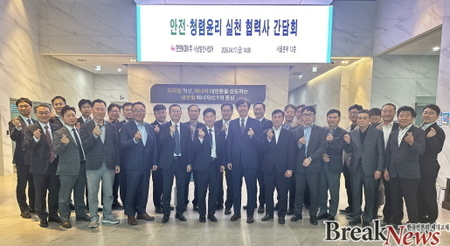
▲ 경남도의회 경제환경위원회가 KOTRA 싱가포르 무역관을 방문해 기념 촬영을 하고 있다 |
[브레이크뉴스=박찬호 기자] 경남도의회 경제환경위원회가 지난 25일부터 26일까지 싱가포르 공무 국외연수를 통해 경남 경제의 미래 청사진을 집중적으로 탐색했다. 위원회는 KOTRA 싱가포르 무역관과 현대자동차 글로벌 혁신센터(HMGICS)를 방문해, 경남 주력산업의 아세안 시장 진출 확대 방안과 미래형 제조 산업으로의 전환이라는 두 마리 토끼를 잡기 위한 전략을 집중적으로 논의했다.
위원회는 먼저 싱가포르 무역관을 찾아, 한국의 핵심 교역국이자 아세안 시장 진출의 전초기지인 싱가포르를 통한 경남 기업의 전략적 진출 방안을 논의했다. 무역관 측은 특히 전기차, 신재생에너지, 스마트시티 등 유망 산업 분야에서 한국 기업과의 협력 수요가 높다고 강조하며, 현지 네트워크와 파트너십 활용의 중요성을 역설했다.
박해영 의원은 “세계 무역의 중심지인 싱가포르에서 우리 청년들이 실질적인 무역 경험을 쌓을 수 있도록 워킹홀리데이 제도의 정착이 필요하다”고 제언했다. 이어 “경남의 주력 산업인 기계·조선·항공·화학 분야는 아세안 시장에서 충분한 경쟁력을 갖추고 있다”며, “KOTRA 무역관과의 긴밀한 연계를 통해 전략적 파트너를 발굴하고 수출·투자 기반을 확장해 나가겠다”고 밝혔다.
주봉한 의원은 방산업체의 동남아 진출 가능성과 ESG 경영 적용 사례를 확인하며, 기업들의 맞춤형 컨설팅 활용을 통한 시장 개척 성과 창출을 촉구했다. 위원회는 경남의 기계·조선·항공 등 주력산업이 아세안 시장에서 충분한 경쟁력을 가질 수 있다는 데 의견을 모았다.
이어진 현대자동차 글로벌 혁신센터(HMGICS) 방문에서는 경남 제조업의 대전환을 위한 실질적인 시사점을 도출했다. 혁신센터는 스마트 모빌리티, 친환경 생산, AI 기반 제조기술이 융합된 복합형 스마트공장으로, 연간 3만 대의 전기차 생산과 R&D, 고객 체험이 통합된 미래형 생산 시스템을 구현하고 있다.
특히, 위원들은 탄소 배출 최소화, 에너지 최적화 등 ESG 경영이 적용된 현장을 둘러보며 경남 제조업의 탄소중립 전환 모델을 확인했다.
권혁준 의원은 "연구개발·생산·물류·고객 체험이 결합된 혁신형 스마트공장이 경남 제조업이 지향할 방향"이라고 평가했고, 권원만 의원은 "AI 기반 제조혁신 사례가 경남 제조업 전반의 경쟁력 강화에 중요한 시사점을 주었다"고 밝혔다.
박준 의원은 “제조업의 뿌리가 튼튼한 창원에 스마트 물류와 AI 제조 혁신 모델을 접목한다면 지역 산업의 경쟁력이 한층 제고될 것”이라며, “이번 해외 연수를 계기로 창원산단의 미래형 전환 전략을 적극적으로 모색하겠다”고 강조했다.
허동원 위원장은 이번 연수 성과를 토대로 경남 제조업의 구조 전환과 해외 진출 지원 정책에 적극 반영하겠다고 밝혔으며, SMR(소형모듈원전) 분야 등 미래 세대를 위한 싱가포르와의 국제 협력 가능성도 모색할 필요가 있다고 덧붙였다.
*아래는 위 기사를 '구글 번역'으로 번역한 영문 기사의 [전문]입니다. '구글번역'은 이해도 높이기를 위해 노력하고 있습니다. 영문 번역에 오류가 있을 수 있음을 전제로 합니다.
*Below is the full text of the English article translated by Google Translate. 'Google Translate' strives to improve understanding. It assumes that there may be errors in the English translation.
The Gyeongnam Provincial Council's Economic and Environmental Committee conducted an overseas training program in Singapore from the 25th to the 26th to explore the future blueprint for the Gyeongnam economy. The committee visited the KOTRA Singapore Trade Center and the Hyundai Motor Company Global Innovation Center (HMGICS) and discussed strategies for achieving two goals: expanding Gyeongnam's key industries' access to the ASEAN market and transitioning to a future-oriented manufacturing industry.
The committee first visited the Singapore Trade Center and discussed strategic expansion plans for Gyeongnam companies through Singapore, a key trading partner and a launching pad for Korea's expansion into the ASEAN market. The Trade Center emphasized the high demand for collaboration with Korean companies in promising industries such as electric vehicles, renewable energy, and smart cities, emphasizing the importance of leveraging local networks and partnerships.
Councilmember Park Hae-young suggested, "The establishment of a working holiday program is crucial to enable our youth to gain practical trade experience in Singapore, a global trade hub." He continued, "Gyeongnam's key industries—machinery, shipbuilding, aviation, and chemicals—are sufficiently competitive in the ASEAN market." He added, "Through close collaboration with KOTRA's trade offices, we will identify strategic partners and expand our export and investment base."
Representative Joo Bong-han highlighted the potential for defense companies to expand into Southeast Asia and highlighted examples of ESG management practices. He urged companies to leverage customized consulting to achieve market development outcomes. The committee agreed that Gyeongnam's key industries, including machinery, shipbuilding, and aviation, are sufficiently competitive in the ASEAN market.
Following this, a visit to the Hyundai Motor Global Innovation Center (HMGICS) yielded practical implications for the transformation of Gyeongnam's manufacturing industry. The center is a hybrid smart factory that integrates smart mobility, eco-friendly production, and AI-based manufacturing technology. It produces 30,000 electric vehicles annually and implements a future-oriented production system that integrates R&D and customer experience.
In particular, the committee members toured sites where ESG management practices, such as carbon emissions minimization and energy optimization, were implemented, confirming the carbon-neutral transition model for Gyeongnam's manufacturing industry.
Representative Kwon Hyuk-joon stated, "Innovative smart factories that combine R&D, production, logistics, and customer experience are the direction Gyeongnam manufacturing should pursue." Representative Kwon Won-man stated, "AI-based manufacturing innovation cases have provided important implications for enhancing the overall competitiveness of Gyeongnam manufacturing."
Representative Park Jun stated, "Incorporating smart logistics and AI manufacturing innovation models into Changwon, a region with a strong manufacturing base, will significantly enhance the competitiveness of local industries." He emphasized, "We will actively explore future-oriented transformation strategies for the Changwon Industrial Complex, using this overseas training as an opportunity."
Chairman Heo Dong-won stated that the outcomes of this training will be actively reflected in policies to support the structural transformation and overseas expansion of Gyeongnam manufacturing. He also added that it is necessary to explore international cooperation with Singapore for future generations, such as in the small modular reactor (SMR) sector.
원본 기사 보기:브레이크뉴스경남