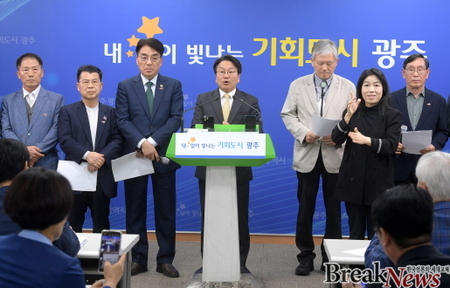
▲ 김선교 국회의원(국민의힘, 경기 여주·양평) |
브레이크뉴스 정명훈 기자= 한국농어촌공사가 관리하는 저수지의 수질 오염이 심각한 수준인 것으로 나타났다.
국회 농림축산식품해양수산위원회 김선교 국민의힘 의원이 한국농어촌공사로부터 제출받은 ‘지자체별 공사관리 저수지 수질점검 결과’에 따르면, 농업용수 수질측정망조사 대상시설 938개소(저수지 922개소, 담수호 16개소) 중 2025년 상반기 기준 ‘약간 나쁨(4등급)’ 이상으로 평가된 곳은 155개소(16.5%)에 달했다.
세부 등급별로는 ‘약간 나쁨’(4등급)이 74개소, ‘나쁨’(5등급)이 58개소, ‘매우 나쁨’(6등급)이 23개소로 조사됐다.
환경정책기본법상 호소 생활환경기준에 따르면, 4등급은 농업용수로 사용하거나 고도의 정수 처리 후 공업용수로 사용할 수 있는 수준이며, 5등급은 특수 정수처리 후 공업용수로만 사용할 수 있는 정도다. 6등급은 물고기가 살 수 없는 오염된 물에 해당한다.
농어촌공사는 농업용수 수질관리 목표를 4등급으로 설정하고, 5년 이상 4등급을 초과한 저수지와 담수호를 대상으로 수질개선사업을 추진해왔다. 총사업비 9082억 원을 투입해 130개소를 대상으로 진행 중이며, 2024년까지 61개소에서 수질개선시설 설치 등의 사업이 완료됐다.
그러나 사업 이후에도 수질이 다시 악화된 저수지가 6곳으로 확인됐다. 악화된 지역은 경북 의성 개천저수지, 전남 함평 월천저수지, 경기 이천 성호(설성)저수지, 경북 영천 대승저수지, 경기 안성 만수저수지, 전북 고창 덕림저수지 등으로, 상류 지역 오염원 증가 등이 원인으로 지목됐다.
한편, 농어촌공사가 관리하는 저수지 가운데 농업용수 외에 생활용수로도 활용되는 곳은 전국에 28곳뿐인 것으로 나타났다.
김선교 의원은 “안전한 먹거리를 생산하기 위해서는 깨끗한 농업용수가 필수적이고, 가뭄 등 기상이변이 잦아지는 만큼 효율적인 용수 관리체계가 중요하다”며 “과학적인 수질조사와 오염원 관리로 실효성 있는 대책을 마련하고, 공사관리 저수지의 활용 가치를 높여야 한다”고 강조했다.
*아래는 위 기사를 '구글 번역'으로 번역한 영문 기사의 [전문]입니다. '구글번역'은 이해도 높이기를 위해 노력하고 있습니다. 영문 번역에 오류가 있을 수 있음을 전제로 합니다.<*The following is [the full text] of the English article translated by 'Google Translate'. 'Google Translate' is working hard to improve understanding. It is assumed that there may be errors in the English translation.>
Rep. Kim Seon-kyo: "16.5% of Reservoirs Managed by the Korea Rural Community Corporation Have Poor Water Quality"
Water pollution in reservoirs managed by the Korea Rural Community Corporation has been found to be severe.
According to the "Water Quality Inspection Results of Reservoirs Managed by Local Governments" submitted by the Korea Rural Community Corporation to Rep. Kim Seon-kyo of the People Power Party, a member of the National Assembly's Agriculture, Food and Rural Affairs, Oceans and Fisheries Committee, 155 (16.5%) of the 938 facilities subject to the agricultural water quality monitoring network survey (922 reservoirs and 16 freshwater lakes) were rated as "slightly poor (Grade 4)" or higher as of the first half of 2025.
By sub-grade, 74 sites were rated "slightly poor" (Grade 4), 58 "poor" (Grade 5), and 23 "very poor" (Grade 6).
According to the Environmental Policy Framework Act's water quality standards for reservoirs, Grade 4 water can be used for agricultural purposes or for industrial purposes after advanced purification treatment. Grade 5 water can only be used for industrial purposes after special purification treatment. Grade 6 water is considered polluted and inhospitable to fish.
The Rural Development Administration (RDA) has set its agricultural water quality management target at Grade 4 and has been implementing water quality improvement projects for reservoirs and freshwater lakes that have exceeded Grade 4 for more than five years. A total project cost of KRW 908.2 billion is currently underway at 130 sites, with water quality improvement facilities installed at 61 sites by 2024.
However, water quality deteriorated again in six reservoirs after the projects. Areas with deteriorated water quality include Gaecheon Reservoir in Uiseong, Gyeongsangbuk-do; Wolcheon Reservoir in Hampyeong, Jeollanam-do; Seongho (Seolseong) Reservoir in Icheon, Gyeonggi-do; Daeseung Reservoir in Yeongcheon, Gyeongsangbuk-do; Mansu Reservoir in Anseong, Gyeonggi-do; and Deokrim Reservoir in Gochang, Jeollabuk-do. Increased pollution sources in upstream areas were identified as the cause.
Meanwhile, only 28 reservoirs managed by the Korea Rural Community Corporation (KRC) nationwide are used for domestic purposes in addition to agricultural purposes.
Representative Kim Seon-gyo emphasized, "Clean agricultural water is essential for producing safe food, and with the increasing frequency of extreme weather events such as droughts, an efficient water management system is crucial." He added, "We must develop effective measures through scientific water quality surveys and pollution source management, and enhance the utility of KRC-managed reservoirs."