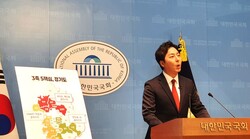
▲ 10일 오후 2시, 국회의원회관 제3세미나실에서 '통합 지방자치단체 행정구 인구감소지역 지정 대상 포함의 당위성'을 주제로 국회토론회를 개최했다. |
[브레이크뉴스=이성용 기자] 창원특례시는 10일 오후 2시, 국회의원회관 제3세미나실에서 '통합 지방자치단체 행정구 인구감소지역 지정 대상 포함의 당위성'을 주제로 국회토론회를 개최했다.
이번 토론회는 최형두 국회의원과 창원특례시가 공동 주최·주관했으며, 지방 소멸위기에 대한 인식 공유와 함께 통합 지자체의 특수성을 반영한 「지방분권균형발전법」 개정의 필요성에 대한 공감대를 확산시키기 위해 마련되었으며, 지역구 국회의원, 행안부 관계자, 전문가, 시민 등 100여 명이 참석해 뜨거운 관심을 보였다.
토론회에 참석한 지역구 국회의원들은 창원시의 문제 해결이 대한민국의 지방 균형발전에 직결된다는데 의견을 모았다.
먼저 최형두 의원은 "오늘 주제는 특정 행정구역 문제가 아닌 대한민국 전체 지역 균형발전이라는 큰 틀에서 반드시 해결해야 할 딜레마"라고 강조했다. 윤한홍 의원도 "제도적 허점으로 통합시가 인구감소 대응에 어려움을 겪는다면, 향후 다른 기초단체 간 통합 시도 역시 위축될 것이 자명하다"며 제도 개선의 시급성을 역설했다. 이종욱 의원은 "지난 9월 인구 50만 이상 시에 속한 행정구도 포함되도록 「지방분권균형발전법」 개정안을 대표 발의"했음을 밝히며 입법 추진 의지를 피력했다.
토론회 발제와 패널 토론에서는 통합시 행정구가 처한 심각한 현실이 여실히 드러났다. 창원시는 중앙정부 권장으로 2010년 3개 시(마산, 창원, 진해)를 통합한 모범 사례였으나, 통합 당시 110만에 육박하던 인구는 올해 100만 선이 붕괴되는 위기를 맞았다.
특히 구 마산지역은 최대 팽창기 대비 28% 이상 인구가 감소했으며, 고령화 지표는 마산합포구 27%, 마산회원구 24%로 이미 초고령사회(20% 이상) 기준을 크게 상회하고 있다. 롯데백화점 마산점 폐점, 대형사업 추진 부진 등 지역경제 불황까지 겹쳐 지속 가능성이 심각하게 위협받고 있다.
조성철 국토연구원 박사는 쇠퇴 추세가 비슷한 부산 동·서구, 대구 남·서구 등 광역 지자체의 자치구는 지정 대상에 포함되지만, 통합시 행정구는 배제되는 제도적 형평성 문제를 거론하며 다음과 같은 대안을 제시했다. “인구감소지역 지정에 따른 지방소멸기금은 창원시에 교부하되, 사업 대상지는 소멸지역으로 지정되는 행정구에 한정하는 목적 예산으로 집행해야 한다.”
이인숙 경남여성가족재단 박사는 법 개정이 단순히 기금 확보를 넘어 재정지원과 함께 규제 특례를 통한 지역 자립 기반 구축의 출발점임을 강조하며 정책적 실효성 확보를 촉구했다.
장금용 창원특례시장 권한대행은 ”법은 현실을 반영해야 한다. 인구감소지역을 자치구 단위로만 규정하고 있어 행정구 체계를 운영하는 창원특례시는 법의 사각지대에 있다“며 ”이번 토론회를 계기로 통합 지방자치단체 행정구를 인구감소지역 지정 범위에 포함하는 「지방분권균형발전법」 개정 등 제도적 개선을 위해 중앙정부 및 국회와 지속적으로 협력하겠다“고 밝혔다.
*아래는 위 기사를 '구글 번역'으로 번역한 영문 기사의 [전문]입니다. '구글번역'은 이해도 높이기를 위해 노력하고 있습니다. 영문 번역에 오류가 있을 수 있음을 전제로 합니다.
*Below is the [full text] of the English article translated using ‘Google Translate’.‘Google Translate’ is working to increase understanding.It is assumed that there may be errors in the English translation.
Changwon Special City Urges National Assembly to Address 'Local Extinction Dilemma'
Demands Reflection of the Special Characteristics of Integrated Local Governments' Administrative Districts Excluded from Population Decline Designation
Changwon Special City held a National Assembly debate on the topic, "The Justification for Including Administrative Districts of Integrated Local Governments in Population Decline Designation," at 2:00 PM on the 10th in Seminar Room 3 of the National Assembly Members' Hall.
This debate, co-hosted and organized by National Assembly Member Choi Hyeong-doo and Changwon Special City, aimed to share awareness of the local extinction crisis and foster consensus on the need to revise the "Local Decentralization and Balanced Development Act" to reflect the special characteristics of integrated local governments. Approximately 100 people, including local National Assembly members, Ministry of the Interior and Safety officials, experts, and citizens, attended the debate, demonstrating keen interest.
The local National Assembly members attending the debate agreed that resolving Changwon City's problems is directly linked to balanced regional development in South Korea.
First, Representative Choi Hyung-doo emphasized, "Today's topic is not a specific administrative district issue, but a dilemma that must be resolved within the larger framework of balanced regional development across the entire Republic of Korea." Representative Yoon Han-hong also emphasized the urgency of institutional reform, stating, "If the integrated city struggles to address population decline due to institutional loopholes, it's clear that future attempts at integration between other local governments will also be hampered." Representative Lee Jong-wook expressed his commitment to legislative action, stating, "Last September, I proposed an amendment to the Local Decentralization and Balanced Development Act to include administrative districts within cities with populations exceeding 500,000."
The presentations and panel discussions at the forum clearly revealed the dire situation facing administrative districts within integrated cities. Changwon City, which merged three cities (Masan, Changwon, and Jinhae) in 2010 at the recommendation of the central government, served as a model. However, its population, which had approached 1.1 million at the time of integration, is now facing a crisis of falling below 1 million this year.
In particular, the former Masan region has seen a population decline of over 28% compared to its peak expansion period, and the aging index stands at 27% in Masan Happo-gu and 24% in Masan Hoewon-gu, already significantly exceeding the threshold for a super-aged society (over 20%). The closure of the Lotte Department Store Masan branch and the slowdown in large-scale projects, coupled with the local economic downturn, pose a serious threat to sustainability.
Dr. Cho Seong-cheol of the Korea Research Institute for Human Settlements (KRIHS) raised the issue of institutional equity, citing the exclusion of administrative districts in the integrated city from autonomous districts in metropolitan areas with similar decline trends, such as Busan's Dong and Seo districts and Daegu's Nam and Seo districts. He proposed the following alternative: "The local extinction fund resulting from the designation of areas with declining population should be allocated to Changwon City, but the project targets should be allocated to the designated administrative districts."
Dr. Lee In-sook of the Gyeongnam Women and Family Foundation emphasized that the revision of the law goes beyond simply securing funds and serves as a starting point for establishing a foundation for regional self-reliance through financial support and regulatory exemptions, urging policy effectiveness.
Acting Mayor of Changwon Special City Jang Geum-yong stated, "The law must reflect reality. Changwon Special City, which operates an administrative district system, is in a legal blind spot because it only defines depopulated areas at the autonomous district level." She added, "We will continue to work with the central government and the National Assembly to improve the system, including revising the 'Local Decentralization and Balanced Development Act' to include administrative districts of integrated local governments in the scope of depopulated areas."
원본 기사 보기:브레이크뉴스경남