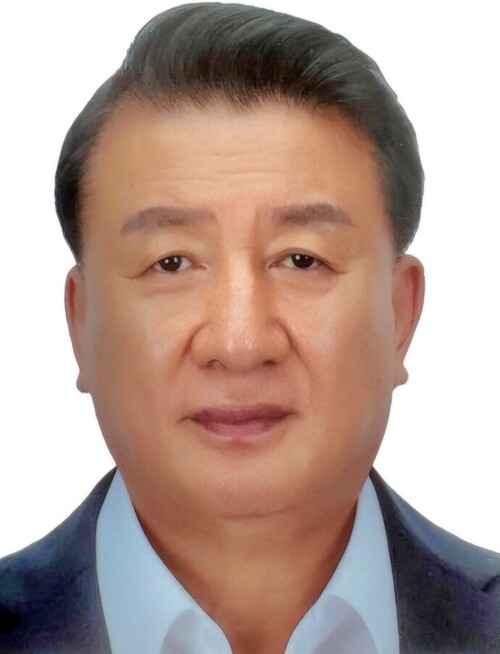
▲ 필자/권기환 박사. ©브레이크뉴스 |
위르겐 하버마스(1929-현재)는 20세기 사회철학에서 상당한 영향력을 행사한 철학자 중 한 사람이다. 특히 하버마스는 이른바 테오도어 루트비히 비젠그룬트 아도르노(1903-1969)와 막스 호르크하이머(1895-1973), 헤르베르트 마르쿠제(1898-1979), 발터 벤야민(1892-1940), 에리히 프롬(1900-1980) 등의 프랑크푸르트학파 1세대 이후 2세대의 선두 주자였다. 하버마스가 펼친 사회철학은 비판이론, 실증주의, 실용주의에도 상당한 영향을 끼쳤으며, 오늘날 3세대를 대표하는 악셀 호네트(1949-현재)의 사회 철학적 지반을 제공하기도 했다. 그런데 하버마스는 1세대의 프랑크푸르트학파의 문제 설정을 수용하면서도 20세기에 변화된 자본주의(하버마스에 따르면 후기 자본주의)의 현실에 합당한 비판이론을 재구상하고자 했다. 프랑크푸르트학파의 1세대에서 주춧돌을 다졌던 인사들은 대체로 정신분석학을 출발점으로 삼으면서도 철학적으로 헤겔-마르크스의 구도에서 도출된 변증법(계몽의 변증법 혹은 부정의 변증법)을 재구성하고자 했다. 그들은 근본적으로 마르크스주의가 자본주의의 대안으로서 구체적 실천을 제시하고 있음에도 불구하고, 경제결정론 및 소비에트 철학에서 변질된 독단적 마르크스주의에 대한 비판에 몰두했다. 더 나아가 그들은 당시 파시즘에 영합하는 군중 심리를 분석함으로써, 경제적 생산관계뿐만 아니라 인간의 의식 구조 등이 생산되는 방식에도 주목했다.
그러나 하버마스는 1세대들과 거리감을 두는데, 이때 중요한 것은 기존 마르크스주의에서 벗어나서 급속도로 고도화되는 자본주의에 대한 정당성과 이에 합당한 사회 비판이론의 담론을 만들어 내고자 했다. 하버마스에 따르면 그와 같은 자본주의는 고전 마르크스주의에서 말하는 토대-상부구조, 계급투쟁, 프롤레타리아 독재 및 계급 의식 등의 개념으로 해명되지 못한다. 이러한 진단은 어느 정도 타당하다. 고도로 산업화된 자본주의는 계급투쟁의 약화, 대중매체의 발전에 따라 대중의 소비와 욕구를 조작하고, 기술적 방식이 전 분야에 걸쳐 확산하기 때문에 관료적 지배는 대중을 통제하기 마련이다. 사실 하버마스의 관점은 1세대들의 이른바 ‘도구성 이성’에 대한 비판을 수용하면서도, 그들이 합리성을 도구적 합리성으로 축소하거나 환원한다는 데에 비판적이다. 하버마스는 제대로 된 합리성을 바로 ‘의사소통 행위’에서 발견하고 이를 통해 ‘공론의 장’으로 나아가고자 했다. 이것은 의사소통 능력을 통해 이루어지는 ‘보편적 화용론’(Universalpragmatk)에서 세련되고 구체적으로 된다. 보편적 화용론은 그와 같은 능력에 기반해서 비판이론에 기준을 제공할 뿐만 아니라 이를 가능하게 하는 보편적 조건을 재구성하려는 시도라 하겠다.
하버마스가 구상했던 의사소통 행위론은 결국 합리성을 갖춘 이상적이고 자율적인 주체를 비역사적으로 형성된 언어의 구조에 의해 만들어진 이상으로 대치시켰고, 더 나아가 언어철학의 특징을 사용해서 논리적으로 만드는 데에 성공적일 수는 있다, 그러나 그와 같은 성취는 의사소통 행위가 전제하는 주체들 사이에서 발생하는 상호성 – 이것이 호네트에게는 인정투쟁이 될 것이다 – 의 원칙에 근거하지 않으면 안 된다. 즉 의사 소통 행위에 관여하는 모든 주체가 합리적이고 이성적인 존재들일 경우 타당하다. 문제는 우리가 일반적으로 서로 소통하는 경우 과연 주체들이 서로 합리적이고 이성적으로 문제를 해결하고 공론의 장에서만 가능한가에 있다. 오늘날 사회는 이미 매우 복잡하고 수많은 관계가 복잡하게 얽혀 있는 상황에서 소통이 왜 소통의 방식이 합리적이고 이성적인 주체들이어야 하고 거기에서 논의되는 모든 것도 그래야만 하는지다. 실제로 현대 사회를 살아가는 인간들은 그렇게 이성적이지도 합리적이지도 않고 어떤 문제를 소통할 때 이성적이고 합리적이기보다 그렇지 않은 경우가 훨씬 더 많다. 또 소통의 방식이 합리성보다 비합리성에 근거하는 경우도 많다. 각종 매체에서 벌어지는 다양한 소통방식이 합리적이고 이성적이어야 하고 공론의 장만이 중요하지는 않은 것이다. 더 나아가 하버마스의 의사 소통행위론은 이론적으로 인식의 계몽적 차원과 더불어 결단 혹은 성찰만으로도 이미 실천적으로 전환될 수 있다고 전제하는 것에 지나지 않는다. 그러나 이러한 방식으로 정치적 실천을 위한 실재적 차원은 제거될 수밖에 없다.
프랑크푸르트학파에 대한 비판적 담론은 그 구성원들이 현실 정치에 참여하지도 않았고, 이른바 몇몇 엘리트 지식인들이 모여서 단지 이론적 담론을 만들었을 뿐이다. 그 때문에 현실에 대한 비판은 있지만, 그 비판이 ‘비판을 위한 비판’이며, 실천적으로 비판 이후에 무엇을 어떻게 할지에 대한 전략을 지니지 못한다. 하버마스도 마찬가지다. 하버마스의 철학적 담론은 물론 고도로 산업화된 자본주의 사회에 대한 예리한 분석과 합리성을 통한 의사소통이론의 담론을 해명한 것은 철학적으로 의미가 상당하다. 그러나 이것도 과연 복잡하고 다양한 현실 사회에서는 근본적으로 한계에 봉착하기 마련이다. 니클라스 루만(1927-1998)은 사회학에 대한 개념을 주제로 하버마스와 치열한 논쟁을 벌였다. 루만은 이분법적으로 세계를 도식화된 사회이론으로 분화되고 복잡하고 고도화된 사회를 이해하기 어렵기 때문에, 이를 대신해서 복잡성을 척도로 한 사회 체계론을 제시한다. 사회 체계론에서는 의미도 기능주의적이기 때문에 인간 주체의 행위 차원을 넘어서기 마련이다. 즉 루만의 관점은 사회의 복잡성에서 이루어진 다른 체험의 가능성들의 총체성에서 차이와 통일성이 나타나고 이를 처리하는 개별적 인간들의 체험들을 질서 지우는 형식이 바로 체계다. 이 체계 속에서 개별적 인간들의 질서는 기능적으로 작용할 뿐이기 때문에 비판은 자연스럽게 배제되기 마련이다. 이에 대해 하버마스는 의미가 상호주관성 없이 생각할 수 없고, 루만의 사회 체계론은 사회공학적이라는 점을 지적한다. 그러나 반대로 하버마스의 이론이 합리성과 비합리성의 기준만으로 복잡한 사회를 분석하기 어렵고, 단지 사회이론일 뿐이라는 점을 루만은 의식하는 것이다.
그런데 이 논쟁은 해묵은 논쟁일 수도 있다. 하버마스는 자신의 비판이론에서 출발점으로 삼은 것이 막스 베버(1864-1920)의 종교사회학을 출발점으로 삼고 있는 반면, 루만은 탤컷 파슨스(1902-1979)의 구조기능분석론을 출발점으로 삼고 있다. 이들 모두는 사회학에서 마르크스와 다른 길을 추구했다는 점에서 공통 분모를 지닌다. 그렇다! 하여튼 하버마스와 루만의 논쟁은 사회학을 어떻게 바라볼 것인가에 중요한 시사점을 던져주기는 한다. 이 논쟁을 계기로 한국에서도 루만이 잠깐 부상하기도 했지만, 그때에도 루만의 방대한 저술에 대한 체계적이고 전문적인 연구를 감당하기에는 솔직히 역량이 부족했다. 더 나아가 이러한 논쟁이 철학과 사회학의 학제적 연구하기에 매우 중요한 이슈였지만, 논쟁의 치열함보다는 하버마스든 루만이든 각자의 입장만을 대변하거나 이해하는 수준에 그치고 말았다.
다시 하버마스로 되돌아 가보자. 한국에서도 하버마스의 저술들은 상당히 많이 번역되었고, 그 때문인지 모르겠지만 하버마스가 생존하는 철학자인 까닭에 그의 철학을 전문적으로 연구하기 위해 많은 한국인도 독일 유학길에 올랐다. 필자도 이미 상당히 많은 하버마스의 저술을 읽었지만, 사실 그 당시 필자의 느낌으로는 상당히 예리한 하버마스의 사회에 대한 분석에 상당히 흥미로웠다고 기억한다. 그러나 동시에 불현듯 과연 하버마스의 이론이 과연 정당한가라는 합리적 의심도 들었다. 하버마스의 예리한 이론이 독일이나 유럽 사회에 적용하거나 분석 도구로 활용할 수 있을지는 모르겠지만, 전 세계에 모든 사회에 보편적으로 적용되지는 못할 것이라는 필자의 생각 말이다. 필자에게 기이했던 것은 하버마스의 이론을 파면 팔수록 오히려 이래서야 실천적으로 무슨 의미가 있을 것인지도 회의감이 짙어졌다. 그러던 와중에 필자에게 다소 하버마스 이론에 대한 비판을 제공했던 사회학자가 루만이었다. 필자에게 루만은 하버마스에 대한 비판적 태도를 지니게끔 했다. 그러나 루만도 역시 한계가 있을 수밖에 없다. 루만처럼 사회공학적으로 사회에 접근하고 기능적으로만 이해할 때 우리가 처한 현실 사회에서 미래를 위한 실천적 전망을 실천적으로 제시하기 어렵지 않을까! jgfichte@naver.com
*필자/권기환
철학박사. 동국대에서 석사학위를, 독일 지겐대 제 1학부(역사-철학과)에서 철학박사학위(Dr. phil.)를 취득했다. 경희대, 경기대, 명지대, 상명대, 강남대, 홍익대 등에서 강의를 했다. 현재는 가천대에서 강의를 하고 있다. 주요 관심사는 독일 관념론, 독일 초기 낭만주의, 프랑스 현상학, 해석학, 동서 비교 철학 등이다. 한국 헤겔학회, 한국칸트학회, 한국해석학회, 한국 현상학회(전 정보이사), 서양 근대철학회 등에서 활동하고 있다.
*아래는 위 기사를 '구글 번역'으로 번역한 영문 기사의 [전문]입니다. '구글번역'은 이해도 높이기를 위해 노력하고 있습니다. 영문 번역에 오류가 있을 수 있음을 전제로 합니다.<*The following is [the full text] of the English article translated by 'Google Translate'. 'Google Translate' is working hard to improve understanding. It is assumed that there may be errors in the English translation.>
Habermas: The Absence of Practical Perspective Hidden in Sharp Critical Theory
- Kwon Ki-hwan, Columnist
Jürgen Habermas (1929–present) is one of the most influential philosophers in 20th-century social philosophy. In particular, Habermas was a leading figure in the second generation of the Frankfurt School, following the first generation of philosophers such as Theodor Ludwig Wiesengrund Adorno (1903–1969), Max Horkheimer (1895–1973), Herbert Marcuse (1898–1979), Walter Benjamin (1892–1940), and Erich Fromm (1900–1980). Habermas's social philosophy significantly influenced critical theory, positivism, and pragmatism, and also laid the foundation for the social philosophy of Axel Honneth (1949–present), a representative of the third generation. While Habermas embraced the problematics of the first-generation Frankfurt School, he sought to reimagine critical theory appropriate to the realities of capitalism (late capitalism, according to Habermas) that had transformed in the 20th century. The first-generation Frankfurt School leaders, while largely starting from psychoanalysis, sought to philosophically reconstruct the dialectic derived from the Hegelian-Marxist framework (the dialectic of enlightenment or the dialectic of negation). Despite the fact that Marxism fundamentally offered concrete practical alternatives to capitalism, they focused on critiquing the dogmatic Marxism that had been corrupted by economic determinism and Soviet philosophy. Furthermore, by analyzing the crowd psychology that catered to fascism at the time, they focused on the ways in which not only economic relations of production but also human consciousness were produced.
However, Habermas distanced himself from the first generation. His key point was that he sought to break away from conventional Marxism and create a discourse on social critique appropriate to the rapidly advancing capitalism. According to Habermas, such capitalism cannot be explained through the concepts of base-superstructure, class struggle, the dictatorship of the proletariat, and class consciousness articulated in classical Marxism. This diagnosis is somewhat valid. Highly industrialized capitalism manipulates mass consumption and desires through the weakening of class struggle and the development of mass media. Furthermore, as technological methods spread across all sectors, bureaucratic rule inevitably controls the masses. Indeed, while Habermas's perspective accepts the first generation's critique of the so-called "instrumental reason," he is critical of their reduction or reduction of rationality to instrumental rationality. Habermas sought to discover proper rationality in "communicative acts" and, through them, advance to the "public sphere." This is refined and concreted in "universal pragmatics" (Universalpragmatism), achieved through communicative competence. Based on this capacity, universal pragmatics not only provides a standard for critical theory, but also attempts to reconstruct the universal conditions that make it possible.
Habermas's theory of communicative acts ultimately replaced the ideal, autonomous subject possessing rationality with an ideal created by the ahistorically formed structure of language. Furthermore, it may succeed in logically constructing this theory using features of the philosophy of language. However, such an achievement must be grounded in the principle of reciprocity—what Honneth would call a struggle for recognition—between the subjects presupposed by communicative acts. In other words, communicative acts are valid only if all subjects involved are rational and reasonable beings. The question is whether, in our normal communication, subjects truly resolve issues rationally and rationally, and whether this is only possible in the public sphere. In today's society, where countless relationships are intricately intertwined, why must communication be conducted by rational and reasonable subjects, and why must everything discussed there be conducted in a rational manner? In reality, people living in modern society are neither rational nor reasonable, and when communicating about issues, they are often far more likely to be irrational than rational. Furthermore, communication often relies on irrationality rather than rationality. The diverse modes of communication across various media must be rational and reasonable, and the public sphere is not the only important forum. Furthermore, Habermas's theory of communicative action merely assumes that, theoretically, the enlightened dimension of cognition, along with decisions or reflection, can already be transformed into practice. However, this approach inevitably eliminates the substantive dimension of political action.
The critical discourse on the Frankfurt School argues that its members did not participate in real-world politics; rather, it merely constituted a theoretical discourse formed by a small group of so-called elite intellectuals. Therefore, while there is criticism of reality, it is "criticism for the sake of criticism," and there is no practical strategy for what to do after the critique. Habermas is no exception. Habermas's philosophical discourse, not to mention his incisive analysis of highly industrialized capitalist society and his elucidation of the discourse of communication theory through rationality, holds significant philosophical significance. However, even these approaches inevitably face fundamental limitations in the complex and diverse real world. Niklas Luhmann (1927-1998) engaged in a fierce debate with Habermas on the concept of sociology. Luhmann argued that dichotomous, schematic social theories divide the world into categories, making it difficult to understand complex and sophisticated societies. Instead, he proposed a social systems theory based on complexity. Because social systems theory is functionalist in its meaning, it transcends the level of human subjectivity. In other words, Luhmann's perspective is that differences and unity emerge from the totality of possibilities for different experiences within the complexity of society, and that a system is the form that organizes the experiences of individual humans who process these differences. Within this system, the order of individual individuals operates only functionally, so criticism is naturally excluded. Habermas points out that meaning cannot be conceived without intersubjectivity and that Luhmann's social systems theory is sociotechnical. Conversely, Luhmann recognizes that Habermas's theory struggles to analyze complex societies solely through the criteria of rationality and irrationality, and that it is merely a social theory.
However, this debate may be a stale one. Habermas's critical theory begins with Max Weber's (1864-1920) sociology of religion, while Luhmann's begins with Talcott Parsons' (1902-1979) structural-functional analysis. Both share a common denominator: they pursued different paths in sociology than Marx. Indeed! In any case, the debate between Habermas and Luhmann does offer important implications for how we view sociology. This debate briefly brought Luhmann to the forefront in Korea, but even then, we frankly lacked the capacity to undertake a systematic and specialized study of Luhmann's extensive writings. Furthermore, while this debate was crucial for the interdisciplinary study of philosophy and sociology, it ended up being limited to simply representing or understanding the respective positions of Habermas and Luhmann, rather than the intensity of the debate.
Let's return to Habermas. Habermas's writings have been widely translated in Korea, and perhaps because he is a living philosopher, many Koreans have traveled to Germany to study his philosophy professionally. I myself had already read a considerable amount of Habermas's writings, and I remember being deeply intrigued by his incisive analysis of society at the time. However, I also suddenly had a reasonable doubt about the validity of Habermas's theory. While Habermas's incisive theory might be applicable to German or European society or serve as an analytical tool, I doubt it would be universally applicable to all societies worldwide. What struck me was that the more I delved into Habermas's theory, the more skeptical I became about its practical significance. During this time, the sociologist who offered me a critique of Habermas's theory was Luhmann. Luhmann encouraged me to adopt a critical attitude toward Habermas. However, even Luhmann has limitations. If we approach society through sociotechnical methods like Luhmann and understand it only functionally, wouldn't it be difficult to offer practical visions for the future in the current society we live in?
jgfichte@naver.com
*Author/Kwon Ki-hwan
Doctor of Philosophy. He received a master's degree from Dongguk University and a doctorate in philosophy (Dr. Phil.) from the Department of History and Philosophy at the University of Siegen in Germany. He has lectured at Kyung Hee University, Kyonggi University, Myongji University, Sangmyung University, Kangnam University, and Hongik University. He currently teaches at Gachon University. His main interests include German idealism, early German Romanticism, French phenomenology, hermeneutics, and Eastern-Western comparative philosophy. He is active in the Korean Hegel Society, the Korean Kant Society, the Korean Society for Hermeneutics, the Korean Phenomenological Society (former Director of Information), and the Society for Western Modern Philosophy.